

Best Mowing Height for Bermuda Grass in North Carolina
By Ken Erickson · Updated June 2026
Bermuda Grass Mowing Height: Mowing Height Is Half of Bermuda Care
Bermuda grass mowing height is the single biggest lever on turf density — and most people mow too high. A thick Bermuda lawn starts with mowing at the right height for the season and the property. The best mowing height for Bermuda grass in North Carolina is around 2 inches in spring as it starts growing, moving up to 2.5 to 3 inches for a normal residential lawn once summer growth speeds up. For a full month-by-month plan, follow our Bermuda grass care guide.
Those numbers run a little taller than the textbook — and that’s on purpose. Here’s why they work, and how mowing height ties into everything else that makes Bermuda thick.
Key takeaways
- For a normal residential Bermuda lawn: ~2 in. in spring, 2.5–3 in. in summer — taller than the ¾–1 in. textbook number.
- Those super-low heights need a reel mower and dead-level ground; a rotary on a real yard scalps that low.
- Follow the one-third rule — never cut more than a third of the blade at once. Mow often, cut little.
- Leave the clippings (free fertilizer), and scalp + dethatch once in spring to reset for the season.
Why We Mow Taller Than the Textbook
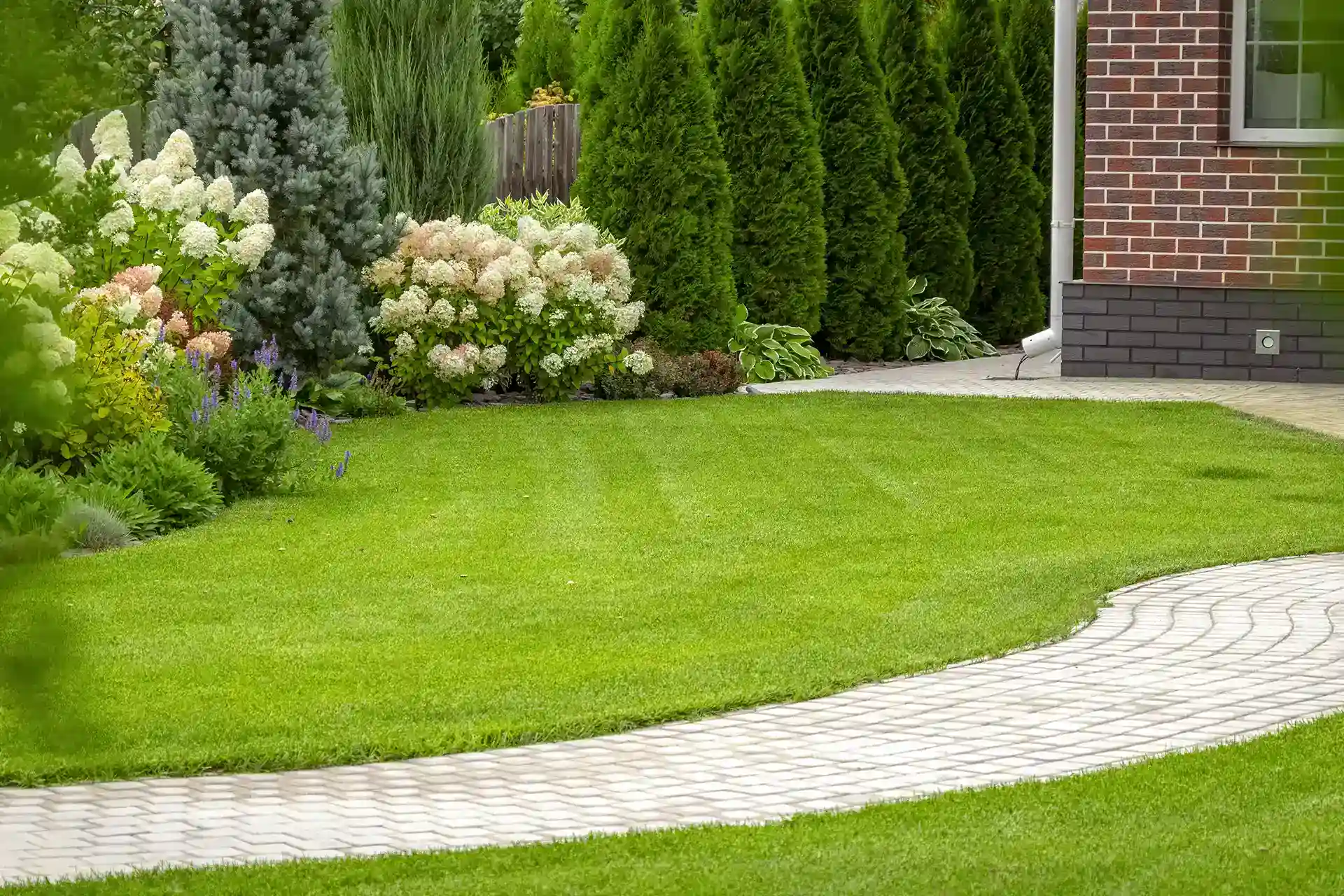
NC State’s book number for Bermuda is ¾ to 1 inch — and it’s correct for a golf-style setup: a reel mower and ground that’s laser-level. Almost no home lawn is either. On a typical yard with a rotary mower, cutting that low scalps every high spot, stresses the turf in July heat, and opens thin patches that crabgrass walks straight into.
So for a normal residential Bermuda lawn we run it taller — about 2 inches in spring, 2.5 to 3 in summer. A little more leaf means deeper roots, better heat and drought tolerance, and enough canopy to shade out weeds. You give up a hair of that putting-green look and gain a lawn that actually holds up.
Reel vs. Rotary
If you genuinely want Bermuda under an inch, you need a reel mower and a level lawn to pull it off without scalping — plus the mowing frequency that comes with it. With the rotary mower most people own, 2 to 3 inches is the honest sweet spot.
Short Grass Means Mowing Constantly
And here’s the part nobody mentions: the shorter you keep it, the more often you have to mow. The one-third rule sets the schedule. Say the grass is 3 inches and you cut a third off — down to 2 inches, fine, maybe once a week. But to keep it at 2 inches, you can only let it grow about half an inch before you’re breaking the one-third rule again — and in summer Bermuda puts on that half inch in about four days. So holding a lawn at 2 inches means mowing every four days, not weekly. Going lower isn’t just “can your mower do it” — it’s “can you mow twice a week all summer without scalping,” and that takes a reel mower, level ground, and a lot of time. Taller heights buy you a saner schedule.
Grass / situation | Height | Mower | Note |
|---|---|---|---|
Bermuda — spring | ~2 in. | Rotary fine | Lower first mow to reset |
Bermuda — summer | 2.5–3 in. | Rotary fine | Taller = heat & weed help |
Bermuda — putting-green | ¾–1 in. | Reel + level only | High upkeep |
Zoysia | 1–2 in. | Rotary fine | Finer types lower |
Tall fescue | 3–4 in. | Rotary fine | Never scalp it |
One-third rule | Cut ≤ ⅓ at once | Any mower | Mow when ~⅓ taller |
Frequency (summer) | Every 4–7 days | Sharp blade | Mow often, cut little |
Clippings | Leave them | Mulching deck | Free nitrogen |
How Bermuda Spreads — and Why Mowing Feeds It
Bermuda spreads by stolons (above-ground runners), rhizomes (underground stems), and seed. Mow it often and those runners branch and knit tighter — frequent mowing literally makes Bermuda denser, because cutting the tips pushes it to spread sideways instead of up.
That’s the logic behind “mow often, cut little.” Every cut within the one-third rule nudges the lawn to thicken. Let it get tall and shaggy, then hack it back, and you stress it and open gaps for weeds.
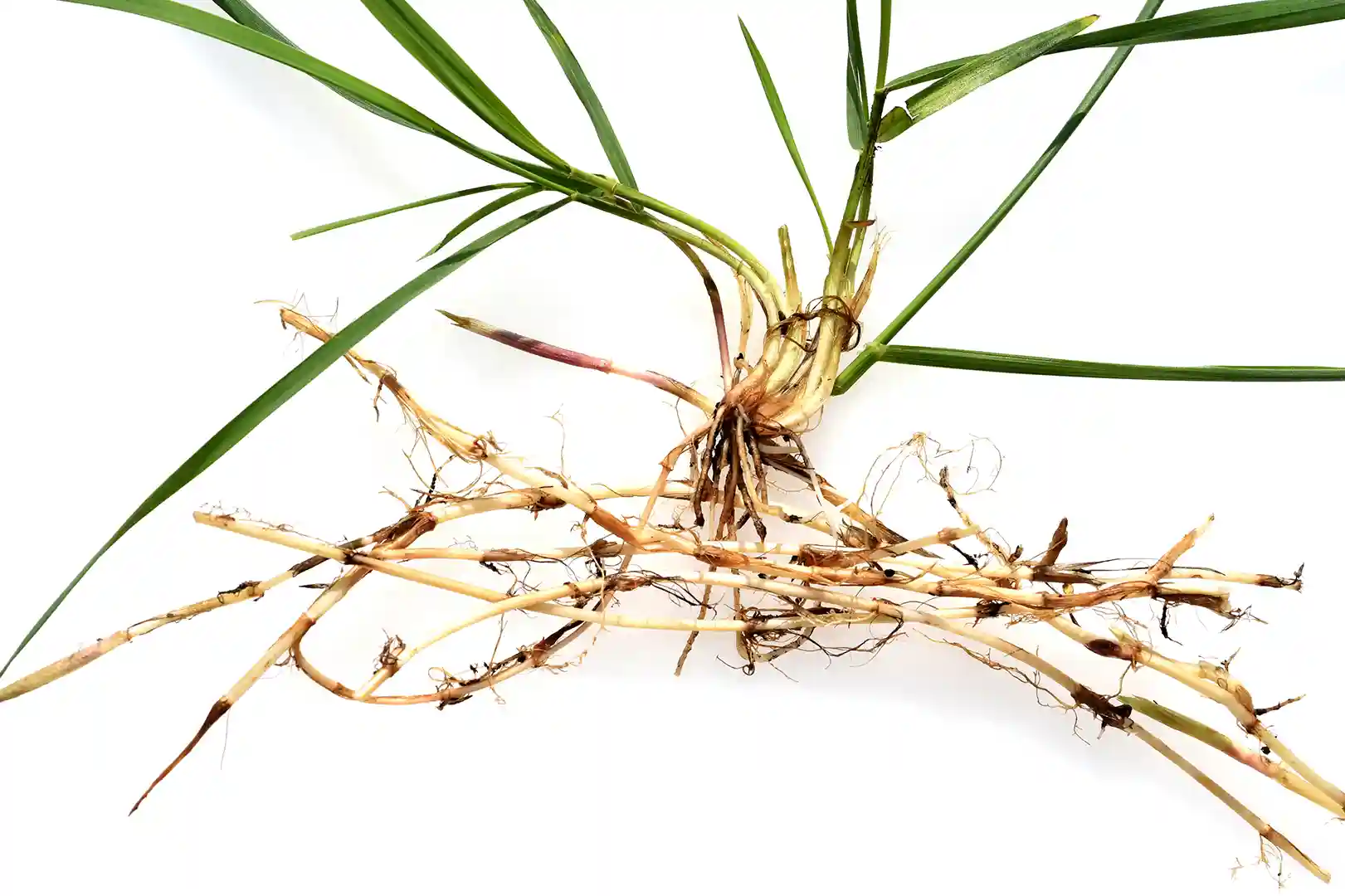
It also means a well-mowed Bermuda lawn is partly self-repairing — the runners fill small bare spots on their own as long as you keep the canopy dense.
Mowing height isn’t just cosmetic. It’s how you steer the lawn toward thick or thin.
Mow Often, Cut Little
The one rule that matters most: never remove more than a third of the blade in a single mow. Cut more than that and you shock the grass, expose the soil, and brown it out.
What That Looks Like in Summer
If you’re holding Bermuda at 2.5 inches, mow when it hits about 3.75 — roughly every 4 to 7 days in peak summer. It feels like a lot, but short, frequent cuts are exactly what builds density.
Keep the Blade Sharp
A dull blade tears the grass instead of slicing it, leaving frayed brown tips that invite disease. Sharpen a few times a season — it matters as much as the height.
Don’t Bag the Clippings
Short clippings are free fertilizer — they break down fast and return nitrogen to the lawn. Leave them (a mulching deck helps). Bagging hauls off nutrients you already paid for. The only time to bag is if the grass got too tall and you’re cutting clumps. Clippings supplement your feeding, though — they don’t replace it. Here’s how to fertilize Bermuda grass on a real schedule.
Mow on the right cadence and you feed the lawn a little every time you cut it.
Bermuda Mowing Height by Season
Spring: take the first mow low to scalp off dead winter growth, then settle around 2 inches as the lawn greens up. Summer: raise to 2.5–3 inches so the taller canopy shades roots and weeds through the heat. Fall: keep mowing on schedule until growth slows; a slightly taller last cut before dormancy helps the lawn hold up over winter. Don’t scalp going into cold weather.
Scalping and Dethatching: The Spring Reset
Scalp Once, in Spring
A one-time low spring mow — scalping — strips the brown, dead top growth from winter so sun reaches the soil. The ground warms faster and the lawn greens up earlier and more evenly. Do it once, as the lawn starts to wake up, then return to normal heights. It’s a spring reset, not a regular practice.
Thatch is the other side of it. Bermuda’s aggressive stolons and rhizomes build thatch faster than almost any grass. Up to about a half inch is healthy — it cushions traffic and insulates soil. Past that it becomes a roof: water, fertilizer, and air stop reaching the roots. The fix is dethatching (power raking) in late spring, once the lawn has fully greened up and can recover fast.
Both are heavy-debris, right-timing jobs — if you’d rather not haul ten bags of dead grass to the curb, they’re part of what we do. Homeowners who want it handled all season put it on our Bermuda and Zoysia lawn maintenance plan.
Mowing Alone Won’t Beat Weeds
A dense, properly mowed Bermuda lawn is its own best weed control — but it can’t do the whole job. Mowing height and a pre-emergent program work together: the canopy shades out what tries to sprout, and the pre-emergent stops the seeds the canopy misses. When you do need to spray, here is the best weed killer for Bermuda grass and how a pro times it.
Free Bermuda Plugs From Your Own Yard
A pro move: if you’ve got thick Bermuda in one area and bare spots in another, cut small plugs from the thick area and transplant them into the thin spots. Bermuda’s runners take over from there — it’s basically free sod. Just keep the plugs watered until they root.
Aeration and Top Dressing Help Too
Mowing sets the canopy; aeration and top dressing fix the soil under it. On compacted Triangle clay, a summer aerate-and-top-dress lets those runners spread into soft, fresh soil — the lawn thickens from below while mowing thickens it on top. If you would rather not rent the machine, see our lawn aeration service.
Feed It Right
Bermuda is a heavy feeder in summer. Mowing tall and often only pays off if the lawn has the nitrogen to grow into — pair the mowing program with proper fertilization and the right soil pH.
Water Deep, Not Often
Deep, infrequent watering drives roots down; light daily sprinkles keep them shallow. Aim for about an inch a week, early morning, and let the top dry between soakings.
We Run the Whole Program
Mowing height is one lever; it works best alongside the rest. We set the height by season, scalp and dethatch in spring, and tie it to the fertilization, pre-emergent, and aeration schedule as part of our program — so the lawn gets thick and stays thick.
Get the height right and everything else gets easier.
Mow tall enough to be practical, often enough to stay dense, and sharp enough not to tear — that’s the whole game.
Can You DIY It?
What to Watch
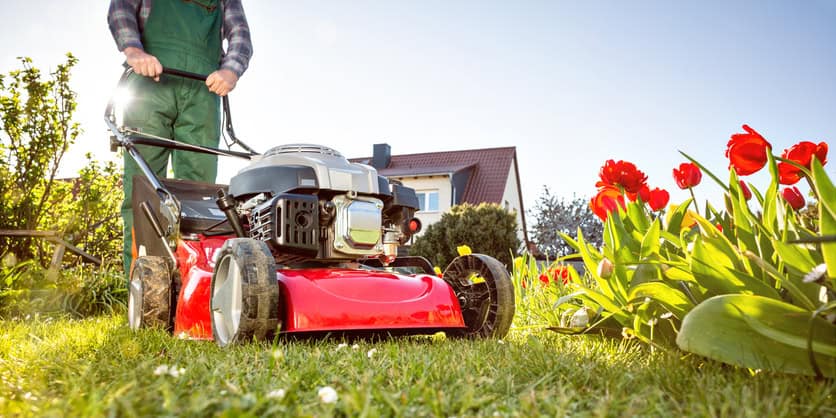
Mowing your own Bermuda is totally doable — the height and the one-third rule are simple once you know them. The parts people get wrong are the spring scalp timing, dethatching without tearing the lawn up, and keeping a sharp blade. Nail those and a rotary mower at 2–3 inches will give you a great Bermuda lawn.
Mowing Bermuda in the Raleigh Climate (Zone 7a/7b)
The Triangle sits in the transition zone, so Bermuda greens up later here than in the Deep South — usually mid-April to early May, once soil temperatures hold above 60 to 65 degrees. Once it wakes up, summer growth is aggressive. From June through August Bermuda can need mowing every 5 to 7 days, and every few days if you keep it cut short. That pace is the whole reason the one-third rule matters here: cut at 1 inch and you have to mow before it hits 1½ inches, which in July means staying on it. Then in mid-to-late September, raise your height about ½ inch to protect the crowns before frost. Skip a couple of weeks during the surge and you’re stuck choosing between a shaggy lawn or a scalp — and Bermuda doesn’t forgive either.
Bermuda Mowing FAQs
Need Help Keeping Your Bermuda Lawn Healthy?
Mowing height is one piece — it works best with the right scalp and dethatch timing, fertilization, pre-emergent, and aeration. We run the whole program for Bermuda lawns across the south Raleigh suburbs as part of our lawn care program. Text us at 984-284-5399 — text is fastest. Want it mowed to the right height every week without the guesswork? Lawn Panther’s lawn mowing service keeps Bermuda cut to spec across Fuquay-Varina, Holly Springs, Apex, and the rest of Raleigh’s southern suburbs — call or text 984-284-5399 for a fast quote. Growing fescue on the cool-season side of the transition zone? Here is the best mowing height for tall fescue in NC. Running Zoysia instead? See the best mowing height for Zoysia in NC.
