

Top Dressing vs. Biochar: The Secret to Healthier NC Lawns
By Ken Erickson · Updated June 2026
Top dressing vs biochar confuses a lot of homeowners — they solve different problems. Two soil amendments get mixed up all the time in the Raleigh area: top dressing and biochar. They do different jobs — and on our heavy clay, the best lawns use both. Here is what each one does, and when to reach for it.
Key takeaways
- Top dressing and biochar are not rivals. They fix different problems, and the best lawns use both.
- Top dressing (compost, soil, or sand) feeds the surface and levels the lawn. You see it in weeks.
- Biochar is a permanent fix for our compacted clay. It holds water and nutrients in the root zone for years.
- The biggest payoff here: aerate first, then top-dress with a compost-biochar blend.
- Base the rate on a soil test, not a guess.
Here is the short answer: top dressing feeds and levels your lawn now; biochar rebuilds the soil for years. They are not competitors. In our heavy clay, the best results come from using both. I formulate Lawn Panther’s soil and turf programs, and the difference between a lawn that struggles and one that thrives is almost always what is happening underneath it. Here is what each one does, what it costs, and how I use them on a North Carolina lawn.

What is top dressing?
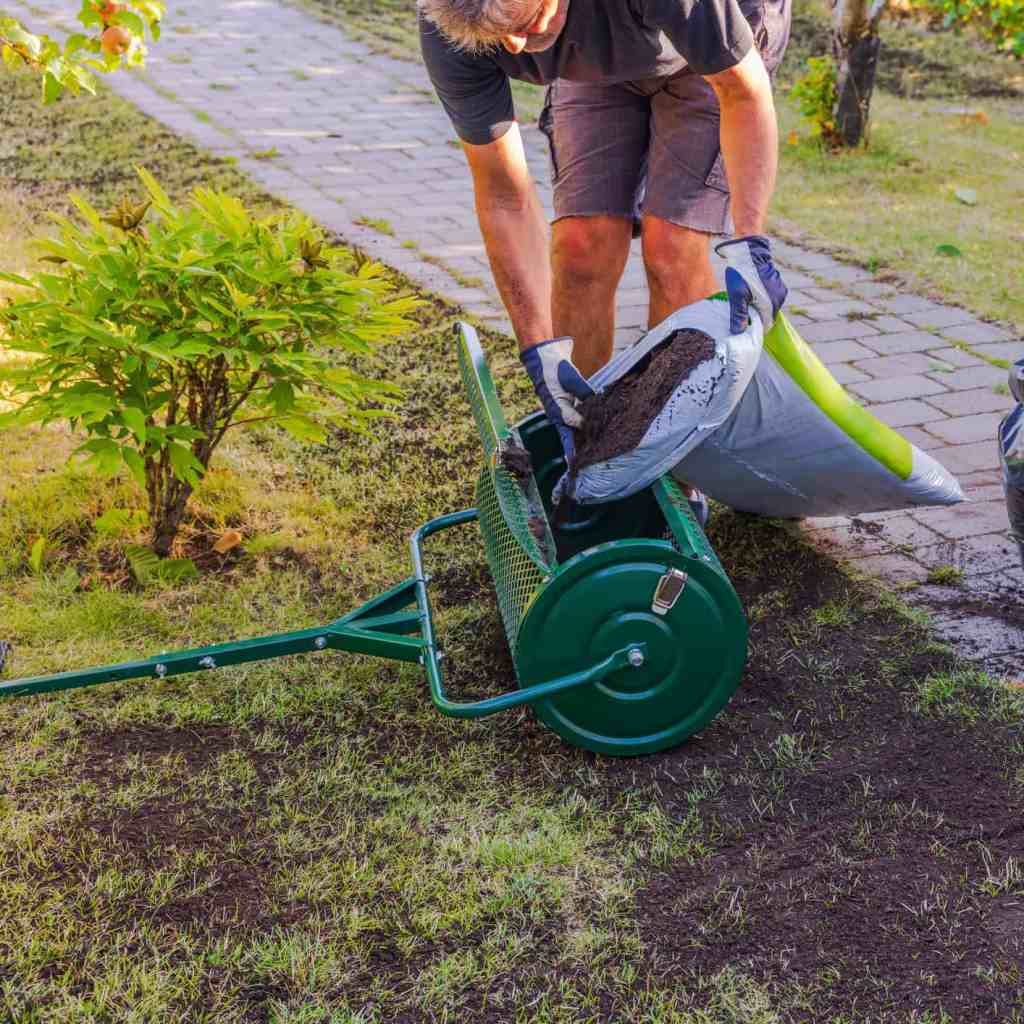
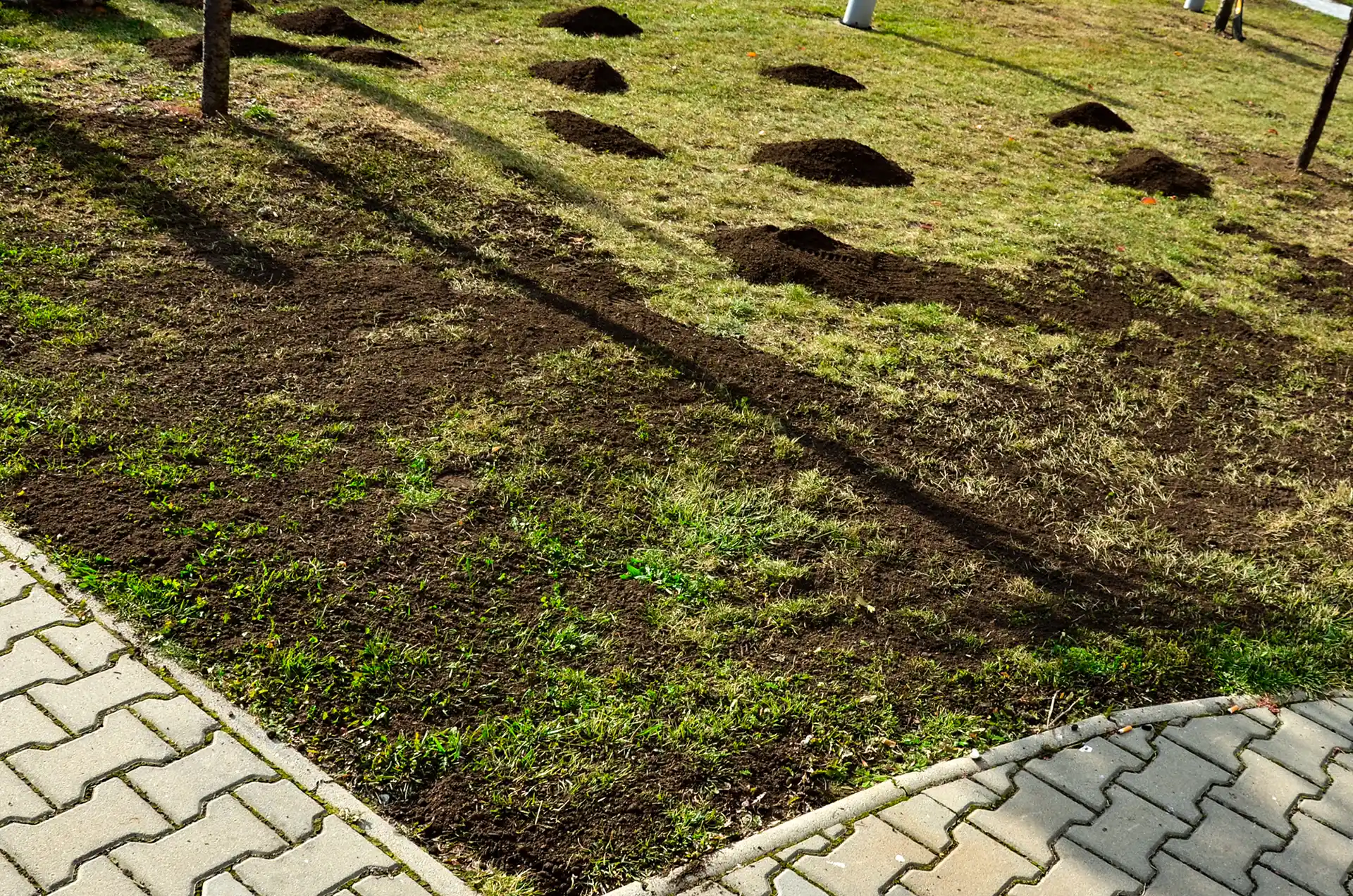
Top dressing is a thin layer of organic material – usually screened compost, a compost-soil blend, or sand – raked across the lawn, almost always right after aeration. It feeds the surface, smooths bumps, fills low spots, and levels the yard. When we install sod, we top-dress to fill the seams and then add more with sand to level it – that is how you get a golf-course-flat Bermuda lawn. You see a greener, thicker lawn within a few weeks.
What is biochar?

Biochar is a porous charcoal made for soil. Think of a sponge with a huge surface area – it holds water and nutrients and gives the good soil microbes a place to live. Worked into the root zone it loosens compaction, holds moisture in sandy spots, drains better in clay, and keeps nutrients from washing straight through. Unlike compost, it does not break down. Every application stacks on the last and keeps working for years. Blends like CarbonizPN pair granulated biochar with humic acid, so you get a quick response and the long-term soil building in one pass.
Top dressing vs. biochar, head to head
Factor | Top dressing | Biochar |
|---|---|---|
What it is | Compost / soil / sand layer | Porous charcoal soil amendment |
Main job | Feed and level the surface | Rebuild soil structure |
How long it lasts | One season (breaks down) | Years (it stacks) |
Best for | Quick green, bare spots, leveling | Compacted clay, holding water |
Results show | Weeks | Builds over seasons |
Relative cost | Low (bulk compost) | Higher up front, near one-time |
Soil structure and compaction
Top dressing adds organic matter at the surface. Biochar physically opens the soil and keeps it open. For the dense clay we deal with, biochar is the longer-term structural fix.
Water and nutrient retention
Biochar holds water and nutrients in its pores and feeds them back slowly – even a small amount improves drought resistance. Top dressing helps too, but the organic matter gets used up over the season.
How long it lasts
This is the big one. Compost top dressing feeds the lawn now and breaks down within a season, so you repeat it yearly. Biochar is permanent – you build it up over a few applications and it keeps working.
Cost
Bulk compost for top dressing is cheap per thousand square feet. Biochar costs more up front but it is closer to a one-time investment. I do not chase the cheapest input. I chase the result that lasts.
Can you use them together?

Yes, and that is how I do it. Aerate first to open the soil, then top-dress with a compost-biochar blend so the biochar gets into the root zone while the compost feeds the surface. We time it with the season – fall for fescue, late spring for Bermuda and Zoysia. On a new sod lawn we wait until it is established, and we skip herbicides that first year, running only fertilizer and soil amendments.
How we apply each in North Carolina
For top dressing, spread about a quarter inch after aeration and drag it in – never bury the grass blades. For biochar, a common rate is 1 to 2 pounds per 100 square feet, raked in after aeration and watered so it settles, then kept lightly moist for the next week. Mixing biochar into compost before you spread gives you immediate nutrients plus the long-term structure. And remember why we aerate and top-dress first: our clay bakes hard in summer, and those holes are what let either amendment reach the roots instead of sitting on top.
Which is right for your lawn?
Compacted clay or a long-term fix? Biochar. Quick green-up, bare spots, or leveling? Top dressing. For most lawns here the honest answer is both – and the order matters: aerate, then amend. The right grass matters too (see Bermuda vs. fescue for NC lawns).
But the soil is the whole game
Grass type gets all the attention, but the soil under it decides everything. You can lay the best sod or the right seed and still lose it if the roots cannot get into the ground. That is why we put topsoil under our sod instead of rolling it onto bare clay, and why we aerate and top-dress every established lawn. Start with a soil test so you amend for what the lawn actually needs.
And straight up: if you have got a couple of low spots, a few bags of compost and a rake will handle a light top dressing yourself – you do not need a service call for that. Where we earn our keep is the aeration, the right blend, and the timing that turn a tired lawn around. Learn how to test your soil pH at home, and see our lawn aeration service.
Tired lawn that will not turn around?
If your lawn looks tired no matter what you feed it, the problem is usually the soil – and that is fixable. We will pull a soil test and tell you straight whether you need aeration, top dressing, biochar, or all three. No contracts, same-day quotes. Text the main number – that is fastest – or request a quote.
