

Growing Hydrangeas in North Carolina: Types, Care, Why They Won’t Bloom, and Changing the Color
By Ken Erickson · Updated June 2026
Growing hydrangeas in North Carolina is equal parts joy and frustration. Hydrangeas are one of the most-loved and most-frustrating shrubs in the South. When they are happy, nothing beats those big blue or pink heads. When they are not, you get a healthy-looking plant that stubbornly refuses to bloom, and the owner has no idea why. Almost all of that frustration comes down to one thing most people never learn: what type of hydrangea they have. Get that straight and everything else – pruning, color, why it is not blooming – falls into place. Here is the whole picture for a North Carolina yard.
Key takeaways
- The type decides everything. Bigleaf, oakleaf, and mountain hydrangeas bloom on old wood (last year’s growth); panicle and smooth bloom on new wood (this year’s growth).
- The number-one reason a hydrangea won’t bloom in NC is a late spring freeze killing the old-wood buds – plus pruning at the wrong time and too much shade.
- Prune by type: old-wood types right after they finish blooming (before August 1); new-wood types in late winter or early spring.
- Only bigleaf and mountain hydrangeas change color – acidic soil turns them blue, limed or alkaline soil turns them pink. Panicle, smooth, and oakleaf do not change.
- Site them for our heat: morning sun with afternoon shade for bigleaf; panicle takes the most sun. Midday wilting in July is normal if the soil is moist.
Growing Hydrangeas in North Carolina: The Types That Thrive Here
There are five types you will run into here, and the one thing you must know about each is whether it blooms on old wood or new wood, because that drives when you prune and why it might not flower:
Type | Blooms on | Sun in NC | Note |
|---|---|---|---|
Bigleaf (mophead / lacecap) | Old wood | Morning sun, afternoon shade | The classic blue/pink; changes color with pH; most likely to lose buds to a late freeze |
Panicle (e.g. Limelight) | New wood | Full sun to part sun | Most sun- and cold-tolerant; the most reliable bloomer; white aging to pink |
Smooth (e.g. Annabelle) | New wood | Part shade | NC native; very cold-hardy; big white heads; forgiving of pruning mistakes |
Oakleaf | Old wood | Part shade / shade-tolerant | NC native; best fall color and bark; tough and low-fuss |
Mountain | Old wood | Morning sun, afternoon shade | Looks like bigleaf but more bud-hardy – a better bet where late frosts hit |
Why won’t my hydrangea bloom?
This is the most common hydrangea question I get, and here in the transition zone the usual culprit is a late spring freeze. Bigleaf and other old-wood hydrangeas leaf out early in a warm March, set their buds, and then an April cold snap kills them – so you get a big, leafy, healthy plant with no flowers. The other big causes are pruning at the wrong time (cutting off the old-wood buds), too much shade, too much nitrogen fertilizer (which pushes leaves instead of blooms), and a plant that is simply too young and not established yet. New-wood types like panicle and smooth rarely have the freeze problem, which is exactly why they are more reliable here.
When and how to prune hydrangeas by type
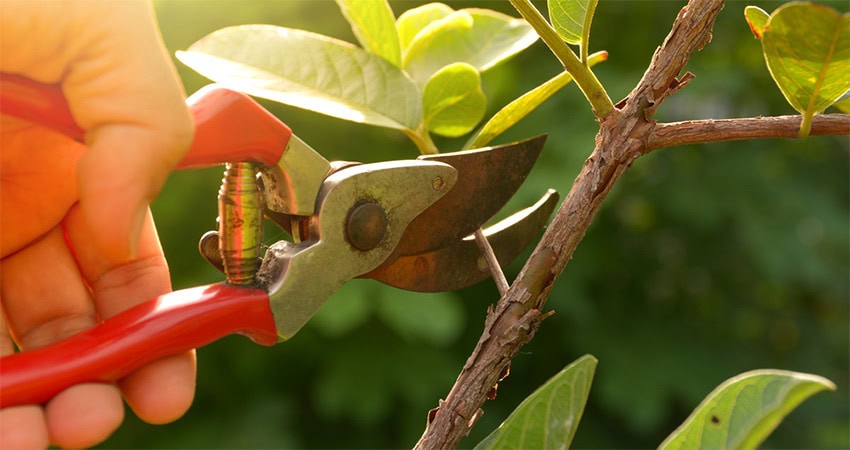
Once you know your type, pruning is simple. Old-wood hydrangeas – bigleaf, oakleaf, and mountain – get pruned right after they finish blooming, before about August 1, because after that they are setting next year’s buds and you would cut them off. New-wood hydrangeas – panicle and smooth – get pruned in late winter or early spring before growth starts, since they will bloom on the fresh growth that follows. When in doubt on an old-wood type, prune less: just remove dead wood and spent flowers, and you cannot go wrong.
How to change hydrangea color to blue or pink
First, the reality check: only bigleaf and mountain hydrangeas change color. Panicle, smooth, and oakleaf are white (or age to pink on their own) and no amount of soil tinkering changes that. For the ones that do change, color is really about aluminum in the soil, which pH controls. Acidic soil frees up aluminum and turns the blooms blue; higher-pH, limed soil locks it up and turns them pink. To go blue, lower the pH with soil sulfur or aluminum sulfate; to go pink, add garden lime to raise it. It takes a season or two to fully shift, and here is a local note: our Piedmont soils are naturally acidic, so a lot of Triangle bigleaf hydrangeas lean blue on their own.
Planting and siting hydrangeas in the Raleigh area
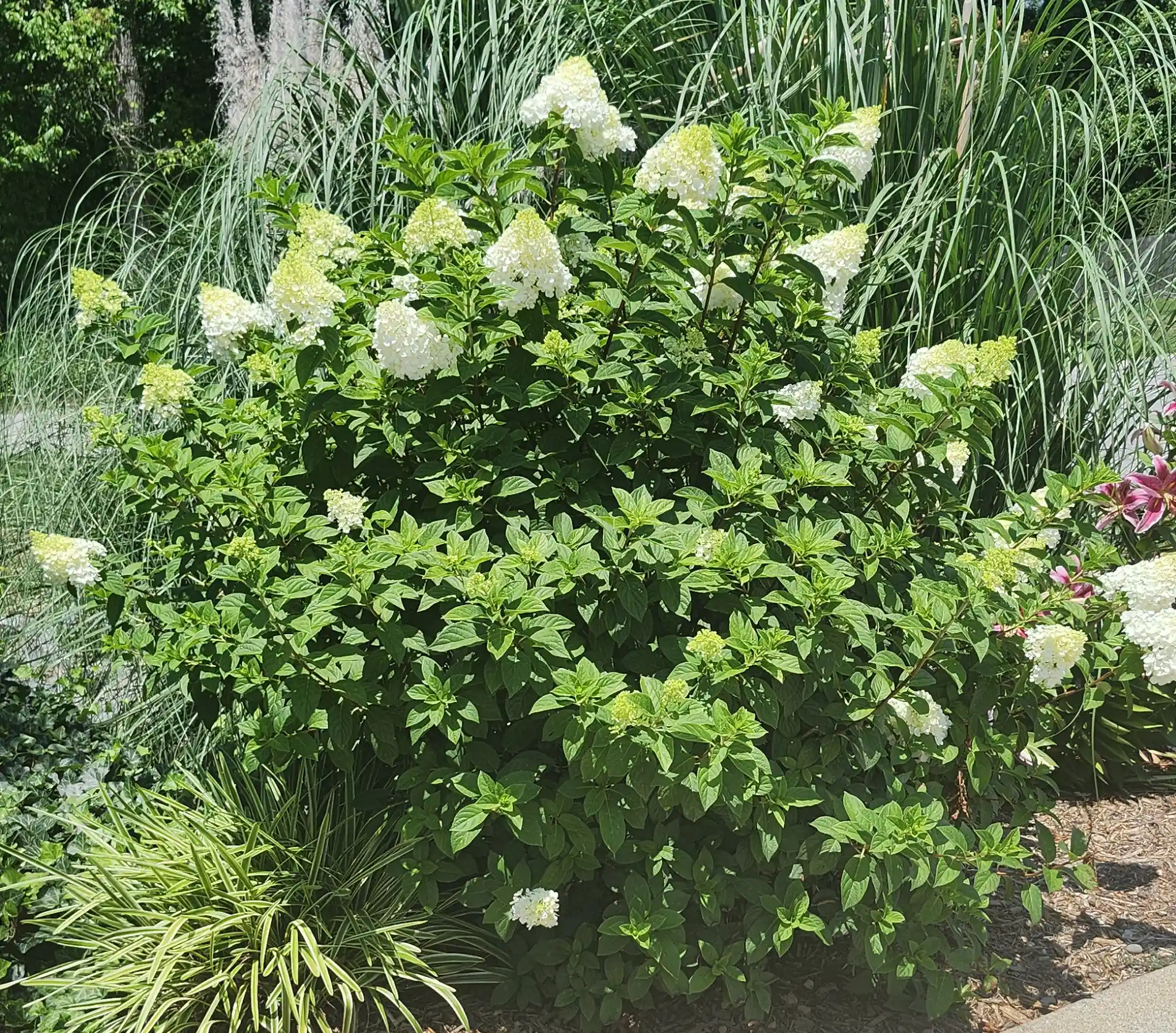
Siting is where you prevent problems. For bigleaf and mountain, give them morning sun and afternoon shade, ideally on a north or east side under a high canopy – that eastern exposure also helps them leaf out a touch later and dodge some late-freeze damage. Panicle is the exception and wants more sun to bloom well. All of them want moist, well-drained soil rich in organic matter; hydrangeas are thirsty and do not like to dry out. Fall is the best time to plant, so the roots settle in before summer.
Watering, wilting, and common problems
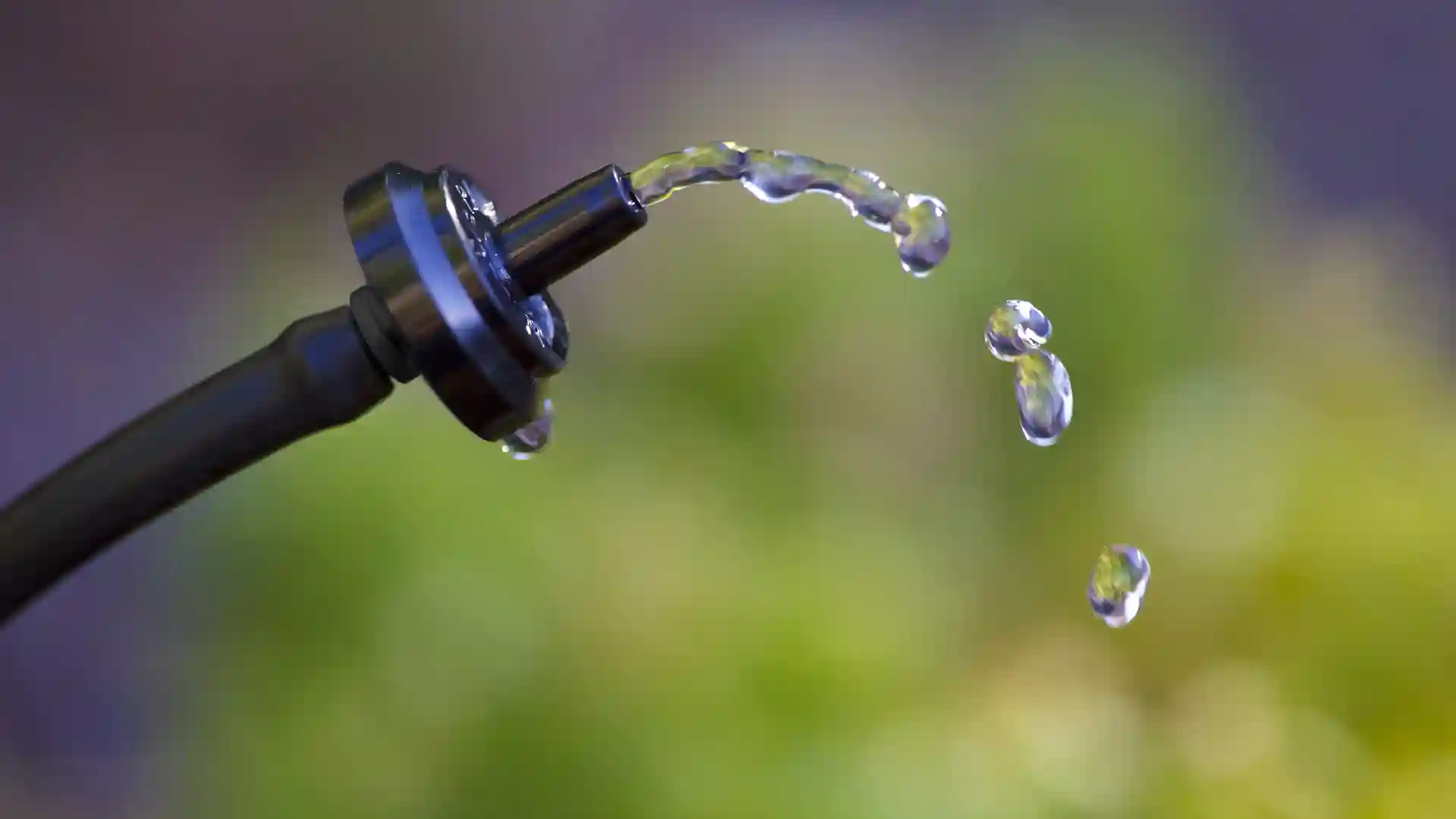
Hydrangeas want about an inch of water a week, more in the heat, and those big leaves will wilt dramatically on a hot July afternoon. Do not panic – if the soil is moist and the plant perks back up in the evening, that midday flop is normal. If the soil is dry, water deeply. Beyond that they are pretty trouble-free; you may see some leaf spot or powdery mildew in a humid stretch (airflow and avoiding overhead watering help), and deer will nibble them. Mulch to hold moisture and keep the roots cool, and they will reward you. The easiest way to keep hydrangeas evenly watered through a hot NC summer is drip irrigation – a line of emitters at the base soaks the roots slowly and deeply, so the plant never swings between bone-dry and soggy. If you would rather not babysit a hose, we install and service drip irrigation for shrubs and beds.
Which hydrangea should you plant in NC?
Here is my honest steer. If you want the most reliable bloom with the least fuss, plant a panicle – it takes our sun, shrugs off cold, and blooms on new wood so a late freeze cannot rob you. If you want a tough native, oakleaf and smooth are excellent and forgiving. If you have your heart set on the classic blue mophead, plant a bigleaf but go in knowing you will occasionally lose a year’s bloom to a late frost, and consider a reblooming or mountain type to hedge against it. A panicle hydrangea is genuinely a plant-it-and-prune-it-once DIY shrub – where we earn our keep is diagnosing the bigleaf that will not bloom and fixing the pruning-timing problems. Text us at 984-284-5399 if yours has you stumped.
Frequently Asked Questions
Hydrangea That Won’t Bloom?
Most no-bloom hydrangeas come down to the type, a late freeze, or wrong-time pruning. We diagnose it, prune it right, and plant the types that actually perform here. Text us about yours.
Sources
NC State Extension Gardener Plant Toolbox – Hydrangea macrophylla
NC State Extension Gardener Plant Toolbox – Hydrangea (genus)
Clemson Cooperative Extension HGIC – Pruning Hydrangeas
Clemson Cooperative Extension HGIC – Hydrangea
