

Leaf Spot and Anthracnose on Trees and Shrubs: A NC Homeowner’s Guide
By Ken Erickson · Updated June 2026
Leaf spot treatment starts before the spots ever show — our warm, wet springs are exactly what the fungus waits for. Here in Raleigh’s southern suburbs, our springs come in warm and wet, and that is the exact recipe fungal leaf diseases wait for all year. Every April and May, I get calls from homeowners in Fuquay-Varina, Holly Springs, Apex, and Cary who walk outside to find their dogwoods, photinias, cherry laurels, and Indian hawthorns covered in reddish-purple spots or brown blotches, with leaves already dropping. Leaf spot and anthracnose are two of the most common problems on trees and shrubs across the Triangle, and while most cases are more ugly than dangerous, the repeat infections our humid climate produces can genuinely wear a plant down over time. This guide walks through what these diseases look like, what causes them, which plants get hit hardest here in North Carolina, and how to prevent and treat them.
Key takeaways
- Leaf spot and anthracnose are fungal leaf diseases that show up as spots, blotches, or scorched edges on leaves, and in bad years they cause early leaf drop. Most are cosmetic, but heavy infections year after year can weaken a plant.
- Our warm, wet Triangle springs and falls are exactly what these fungi love. Splashing rain and overhead irrigation spread the spores, and crowded plantings that stay damp make it worse.
- The usual NC suspects are dogwood anthracnose and spot anthracnose, Entomosporium leaf spot on red tip photinia and Indian hawthorn, cherry laurel shot hole, and Cercospora or Septoria spots on maple.
- You can prevent most of it with airflow, watering at the base instead of overhead, raking up and destroying fallen infected leaves, and choosing resistant varieties.
- We are licensed by the state of North Carolina to treat diseases on shrubs and trees. If you want it handled on a schedule, text us at 984-284-5399 for a look at your plants.
What is leaf spot and anthracnose, and what does it look like?
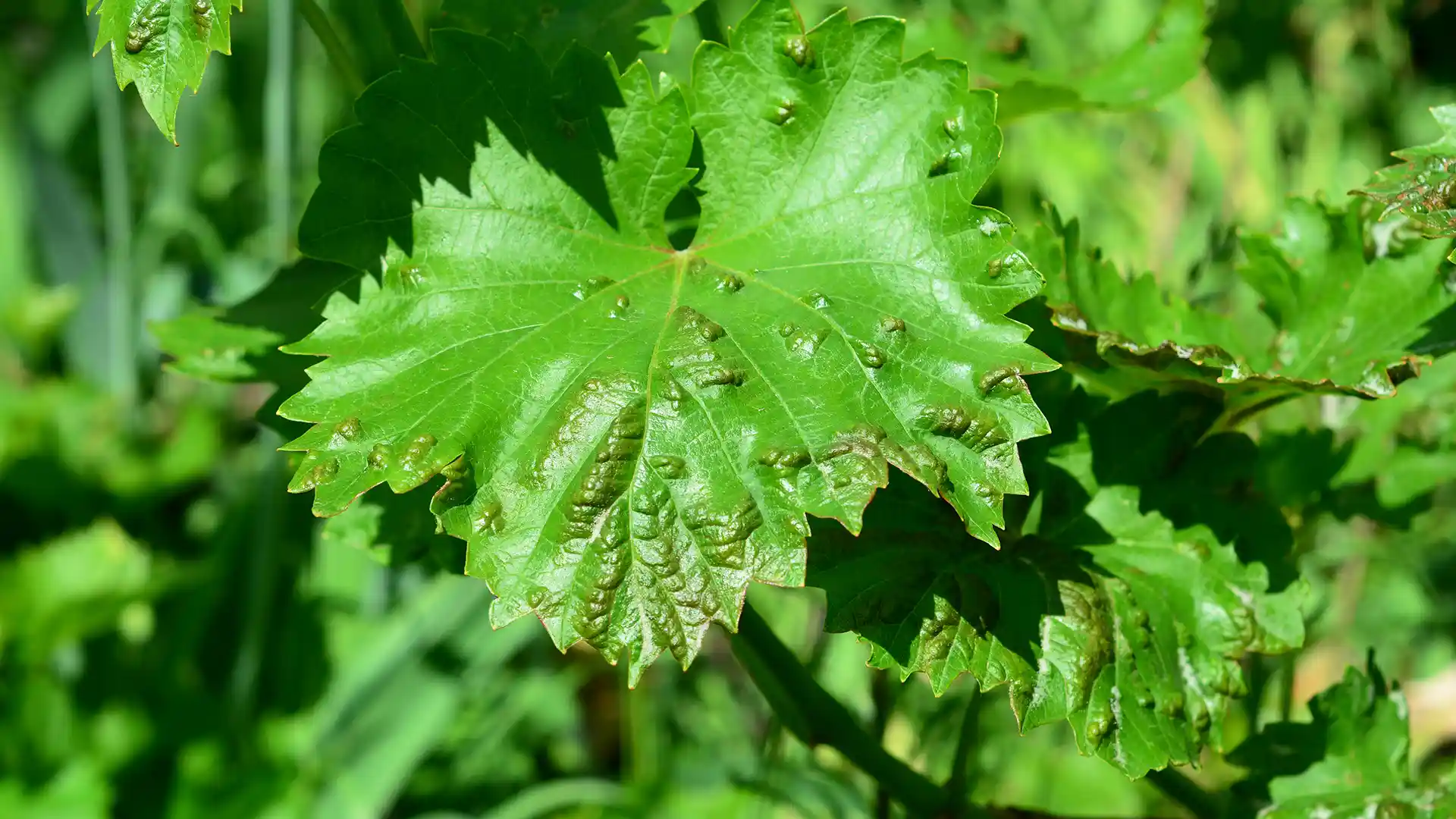
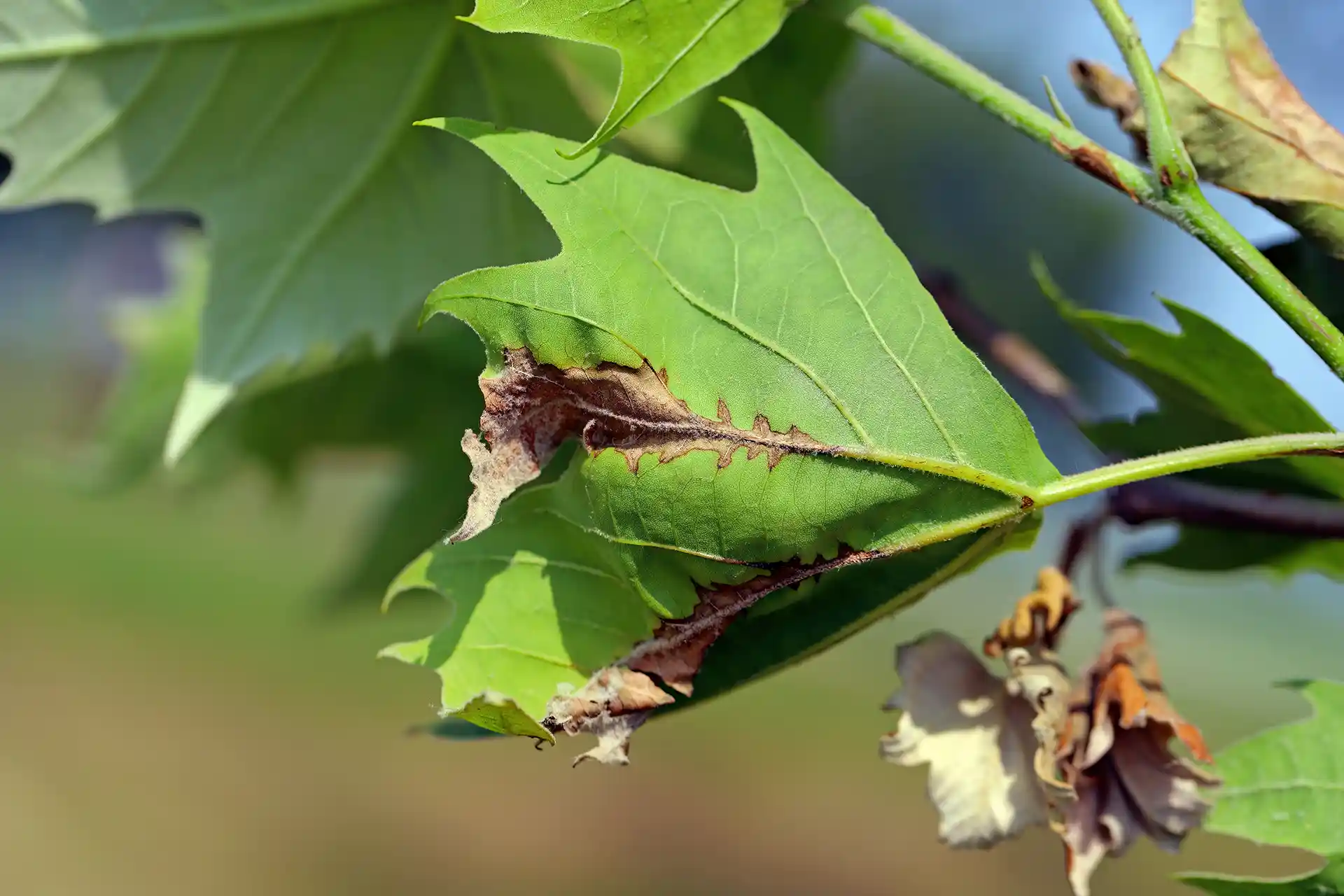
Leaf spot and anthracnose are both fungal diseases of the leaves, and in practice they overlap a lot. Leaf spot shows up as discrete spots, usually with a tan, brown, or gray center and a darker or reddish-purple border, sometimes with a yellow halo around the edge. Anthracnose tends to look more like irregular tan to brown blotches that follow the leaf veins and edges, and infected leaves can look scorched, curled, or distorted. As spots enlarge and merge, they cover more of the leaf surface, block photosynthesis, and trigger early leaf drop. In many cases the damage is mostly cosmetic and the plant survives fine, but severe or repeated infections can thin out a shrub or tree and reduce its vigor. Knowing the pattern of the spots is the first step to figuring out which disease you are dealing with.

What causes leaf spot and anthracnose on shrubs and trees?
Most leaf spot and anthracnose diseases are caused by fungi that thrive in cool-to-warm, wet, humid weather, which is why they explode in our North Carolina springs and again in fall. The fungi survive the off-season in fallen infected leaves and in dead twigs, then release spores when the wet weather returns. Those spores spread mainly by splashing water, so rainfall and overhead sprinklers fling them from the ground and from leaf to leaf. Crowded plantings with poor air movement stay wet longer, which gives the fungus more time to infect. Wind, insects, and even garden tools can move spores from one plant to the next. In short: warm wet weather, splashing water, crowded plants, and last year’s infected leaves left on the ground are what keep the cycle going.
Common NC hosts: dogwood, photinia, Indian hawthorn, cherry laurel, and maple
A handful of plants get hit hardest here in the Triangle. Flowering dogwoods get both spot anthracnose, which causes small red-to-purple bordered spots on leaves and flower bracts and is mostly a cosmetic issue, and the far more serious dogwood anthracnose, which starts as tan spots with purple borders and can spread into twigs. Red tip photinia and Indian hawthorn are the classic Entomosporium leaf spot hosts, showing tiny round red spots that merge into big blotches and cause heavy leaf drop, and this is exactly why red tip photinia is barely sold anymore. Cherry laurels develop shot hole, where reddish leaf spots dry up and fall out, leaving the leaf looking like it was hit with buckshot. Maples and many shade trees get anthracnose plus Cercospora and Septoria leaf spots, which produce brown spots with yellow or dark borders during wet summers. If you can identify the host, you are most of the way to identifying the disease.
Disease | Main NC hosts | What it looks like | How serious |
|---|---|---|---|
Spot anthracnose | Flowering dogwood | Small red-to-purple bordered spots on leaves and bracts | Mostly cosmetic; rarely needs spraying |
Dogwood anthracnose | Flowering dogwood | Tan spots with purple borders; spreads to twigs and cankers | Serious; can kill susceptible trees |
Entomosporium leaf spot | Red tip photinia, Indian hawthorn | Tiny round red spots merging into blotches; heavy leaf drop | Serious on photinia; often cosmetic on hawthorn |
Cherry laurel shot hole | Cherry laurel, other Prunus | Reddish spots that dry and fall out, leaving holes | Usually cosmetic; not fatal |
Cercospora / Septoria leaf spot | Maple, dogwood, shade trees | Brown spots with yellow or dark borders in wet summers | Usually minor; repeated leaf drop weakens the tree |
How to prevent leaf spot and anthracnose
Prevention is where you get the most bang for your buck, because it breaks the disease cycle before spores ever get started. Space and prune plants for good airflow so the leaves dry out faster after rain and dew, since a dry leaf is a lot harder to infect. Water at the base of the plant with drip or a soaker hose instead of overhead sprinklers, because splashing water is the main way these spores spread, and members of the rose family like photinia and Indian hawthorn should never get overhead irrigation. Rake up and destroy fallen infected leaves in fall and winter, then refresh the mulch, so the fungus cannot overwinter and re-infect in spring. When you are replacing plants, choose resistant varieties, for example resistant Indian hawthorn cultivars or the more resistant Kousa-type dogwoods. These cultural steps alone will keep most cases mild.
How to treat leaf spot and anthracnose once you have it
Once you already see spots, start with cleanup and airflow. Prune out and remove diseased leaves and dead twigs during dry weather to cut down on the spore supply, and rake up anything that has fallen so it does not reinfect new growth. Improve air circulation by thinning crowded branches, and switch off any overhead watering that is keeping the foliage wet. For plants with a history of bad infections after wet springs, a properly timed treatment program, applied by a licensed professional starting when new leaves emerge and repeated through the wettest stretch, protects that fresh growth as it comes in. Timing matters more than anything, because these treatments protect new leaves from getting infected rather than curing spots that are already there. For most shrubs, the combination of good cultural practices plus targeted, well-timed protection is what actually keeps them clean. For a professional diagnosis and treatment, see our tree and shrub pest control service, or keep disease pressure down all season with our tree and shrub maintenance plan. Leaf spot is one of several problems covered in our shrub and tree disease treatment guide.
What else looks like leaf spot?
Not every spot or blotch is a disease. Before you spray a fungicide, rule these out — they need a different fix, or none at all:
Fertilizer or chemical burn — brown, dead spots and scorched edges in a pattern that matches where spray or granules landed. It shows up fast, doesn’t spread on its own, and no fungus is involved.
Insect damage — stippling from mites and lace bugs, or ragged holes from chewers, can look spotty from a distance. Flip the leaf and look for the pest instead of spores.
Edema — small, corky, blister-like bumps on the leaf underside from the plant taking up more water than it can release. It’s a watering and humidity issue, not a disease.
Sunscald and mineral water spots — bleached or brown patches on sun-exposed leaves, or harmless white spots from hard sprinkler water, both mimic leaf spot.
True leaf spot and anthracnose spread over time, favor wet foliage, and show spots with defined edges or rings, or blotches that follow the leaf veins. If it’s spreading in humid weather and getting worse, it’s the disease.
Leaf spot treatment: DIY vs. hiring a pro
A lot of leaf spot is genuinely a DIY job. If your plant just has a light case of cosmetic spotting, cleaning up fallen leaves, watering at the base, and giving it better airflow will usually handle it, and there is no need to spray or call anyone. Where it is worth bringing in a pro is when a valuable dogwood, a whole hedge of photinia or Indian hawthorn, or a specimen tree gets hit hard year after year, because that is when timing, plant health, and correct diagnosis really matter. We are licensed by the state of North Carolina to treat shrubs and trees, so we can identify what you actually have, put it on a properly timed schedule, and keep it protected through our wet Triangle springs. That is the difference between guessing and getting it handled right. If you are not sure which camp your plants fall in, text us a photo at 984-284-5399 and we will tell you honestly whether it is a DIY fix or worth a visit.
Frequently Asked Questions
Spots and Blotches Taking Over Your Shrubs Every Spring?
Leaf spot is beaten with airflow, base watering, and well-timed protection on new growth. We are licensed to treat shrubs and trees in NC. Text us a photo for an honest read.
Sources
NC State Extension – Diseases of Dogwood in North Carolina
Clemson Cooperative Extension HGIC – Indian Hawthorn
Clemson Cooperative Extension HGIC – Photinia (Red Tip)
NC Cooperative Extension – Shothole Disease on Cherries
