

Root Rot in Trees and Shrubs: Why Plants Wilt and Die in Wet NC Clay
By Ken Erickson · Updated June 2026
Root rot treatment starts with the soil — our heavy red clay is where it thrives. If you garden anywhere in Raleigh’s southern suburbs, you already know our dirt: heavy red clay that turns to soup after a storm and drains like a bathtub with the plug in. That is the exact condition root rot loves. Most of the mystery shrub deaths I get called out to look at across Fuquay-Varina, Holly Springs, Apex, and Cary are not a bug or a spray-away disease – they are roots that have been sitting in wet, airless clay too long. The plant wilts, yellows, and thins out from the bottom, the owner assumes it is thirsty and waters more, and that makes it worse. I am licensed by the state of North Carolina to work on trees and shrubs, and I will tell you straight up front: root rot is more of a drainage-and-water problem than a spray problem. This guide walks through what root rot actually is, how to recognize it, which plants get it here, and, honestly, when a plant can be saved and when it cannot.
Key takeaways
- Root rot is a water problem before it is a disease problem. Phytophthora, the soil-borne organism behind most root rot, only takes hold when soil stays wet – from heavy clay, poor drainage, or overwatering.
- The classic tell is a plant wilting while the soil is wet. Rotted roots cannot move water up to the leaves, so the plant droops and yellows even though the ground is soaked.
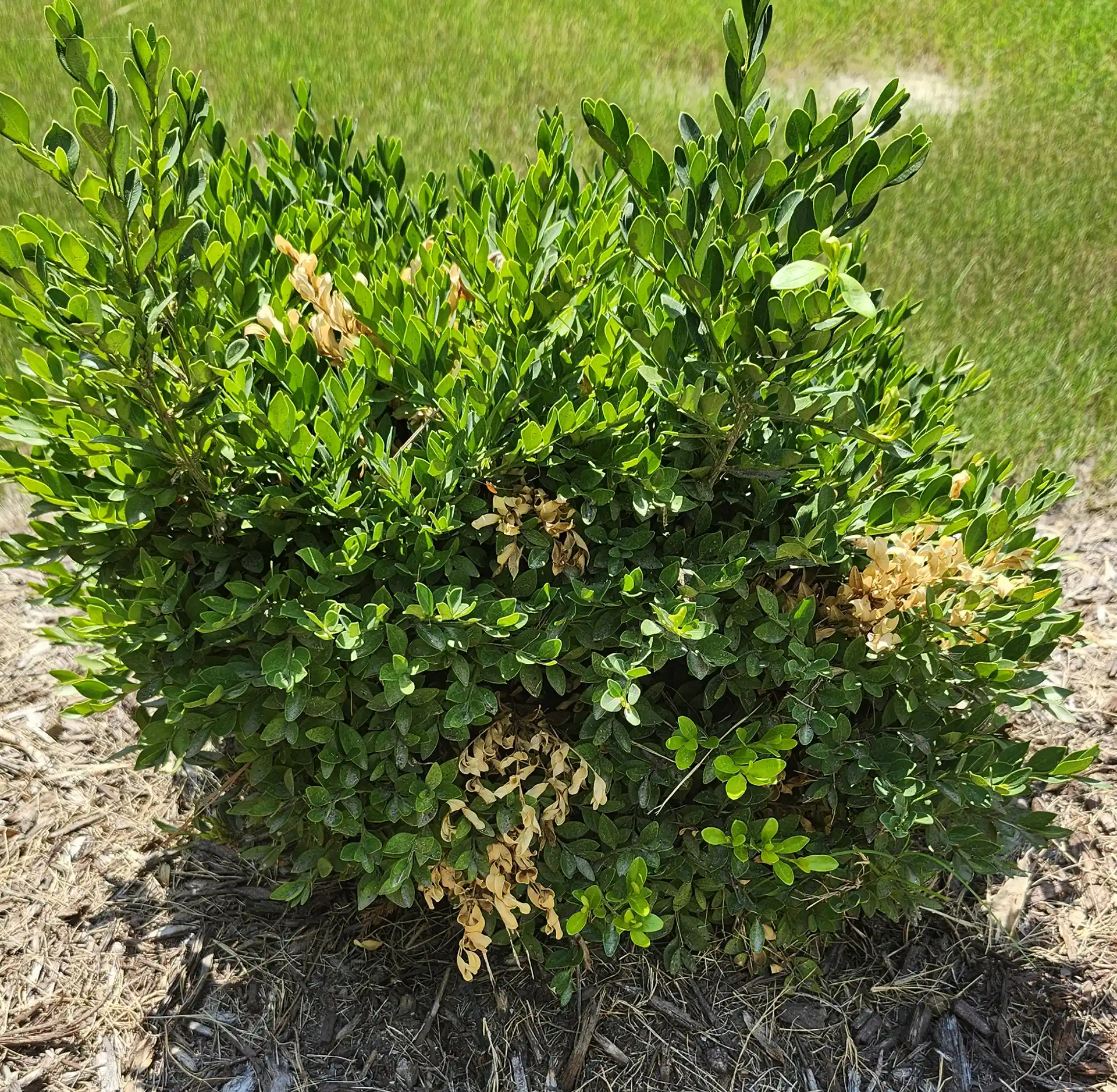
- It hits our common Triangle shrubs hardest – boxwood, azalea, rhododendron, juniper, holly, dogwood, and Leyland cypress are all prone in North Carolina’s heavy, wet soils.
- Once it is advanced, it usually cannot be reversed. Dark, mushy, dead roots do not come back. Caught very early, a plant sometimes recovers if you correct drainage fast; a badly declined plant almost never does.
- Prevention beats any spray. Improving drainage, planting high, watering less, and correct siting protect plants far better than treatment, which rarely cures an infected plant.
Root Rot Treatment: What is root rot, and what is Phytophthora?
Root rot is exactly what it sounds like: the roots of a tree or shrub rot away underground, so the plant can no longer pull up water and nutrients. The most common cause in landscapes is a group of soil-borne organisms called Phytophthora – technically not a true fungus but a water mold that lives in the soil and infects plants through their roots. These organisms can survive in the soil for several years, waiting for wet conditions and a susceptible plant. They become active when the soil warms up in spring and summer and stays saturated – roughly above the mid-50s Fahrenheit and wet. That is why root rot is fundamentally a wet-soil disease: no standing water and airless soil, no outbreak.
What does root rot look like above ground?
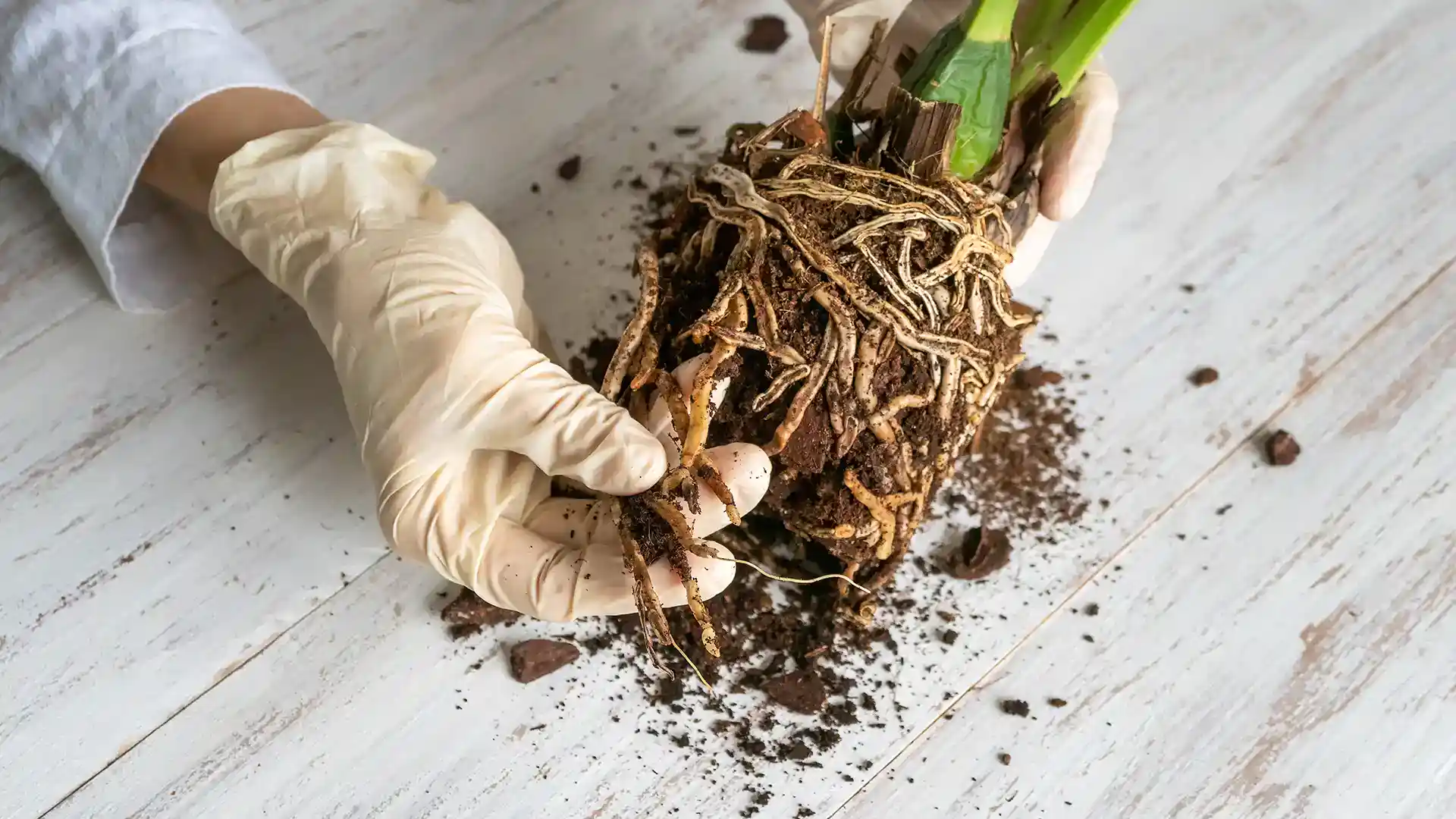
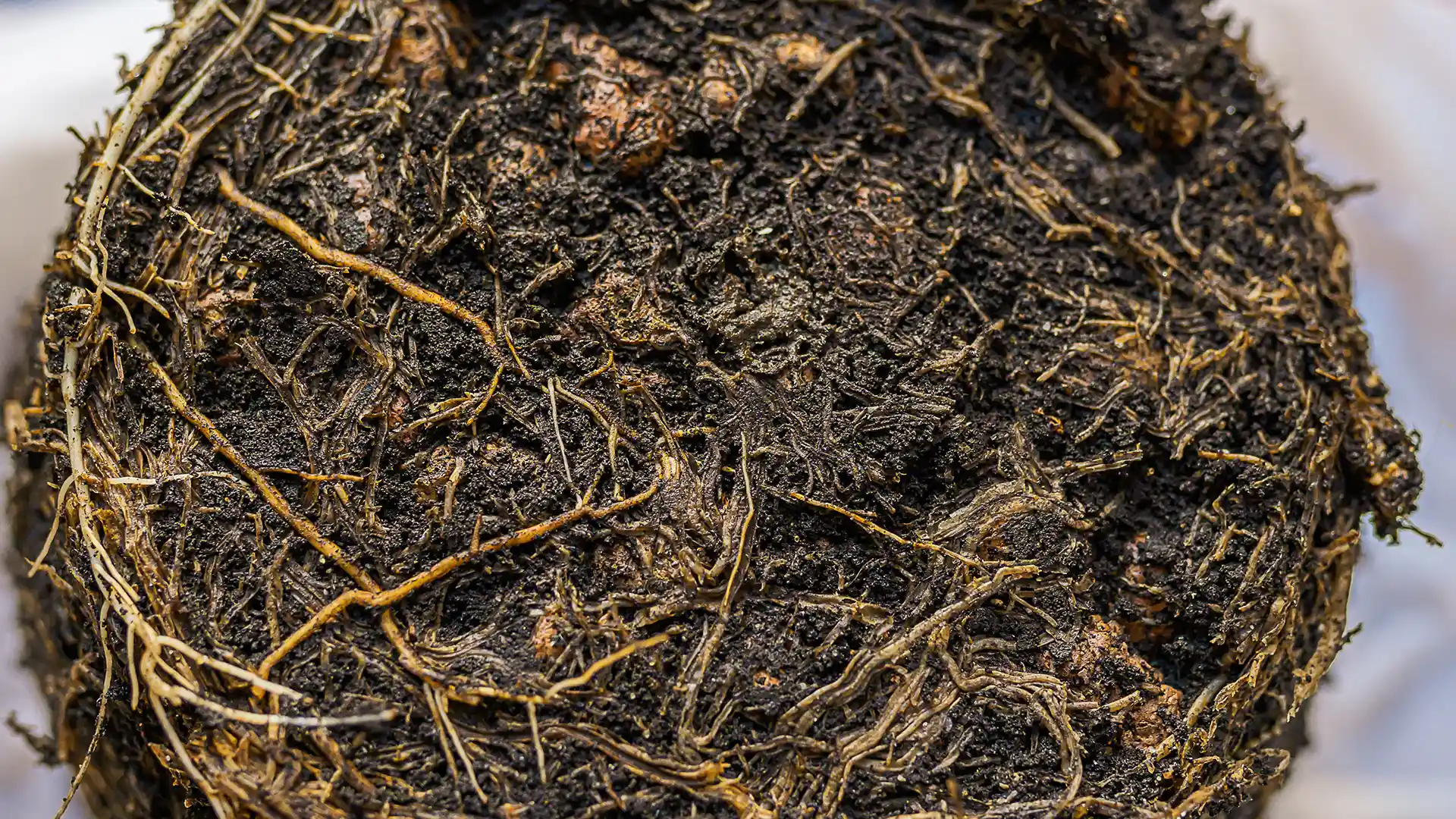
The frustrating part is that root rot shows up in the leaves, so people treat the top of the plant while the real problem is underground. Watch for wilting or drooping foliage even when the soil is wet, a fading from healthy dark green to yellow or light green, thinning canopy, and branch-by-branch dieback that often starts low and works up. On azaleas and rhododendrons, leaves commonly roll inward and droop, especially in the heat of the day. The confirming check is below ground: healthy roots are firm and light-colored, while root-rot roots are dark brown to black, soft, and mushy, and they may smell sour. If you gently pull back the soil at the base and the roots slough off or the bark peels at the crown, that is root rot, not drought.
Clue | Root rot (Phytophthora) | Drought / underwatering | Other decline |
|---|---|---|---|
Soil moisture | Soil is wet or soggy, yet the plant still wilts | Soil is dry several inches down | Varies – often normal moisture |
Roots when you dig | Dark brown/black, soft, mushy; bark peels at crown | Firm and light-colored, just dry | Usually firm; roots not the problem |
How it spreads | Wilting and dieback from the bottom up; moves in a wet bed | Whole plant droops, rebounds after watering | Often one side, or tied to a cold snap or recent planting |
What triggered it | Poor drainage, heavy clay, overwatering, planting too deep | Missed watering, heat, fast-draining spot | Hard freeze, transplant, or wrong location |
Does watering help? | No – more water makes it worse | Yes – recovers with watering | No clear response either way |
What causes root rot in shrubs?
Almost every case traces back to roots sitting in too much water for too long. The big drivers are poor drainage, overwatering, heavy clay soil that holds moisture, and low spots where water collects after rain – all common in our area. Planting too deep is another major culprit: when the root ball is buried below grade, the crown suffocates and rots. So is piling mulch up against the trunk – that mulch volcano traps moisture right where the plant is most vulnerable. Root rot is more severe in heavy clays and poorly drained soils, which is most of the Triangle. Fix the water and the airless soil, and you take away the conditions the disease needs.
Which trees and shrubs are prone to root rot in North Carolina?
Some of the most popular plants in local landscapes are also the most susceptible. Boxwood, azalea, and rhododendron top the list, and all three are everywhere in Raleigh-area yards. Juniper, holly, and dogwood are also commonly hit, and Leyland cypress – the go-to privacy screen around here – is notably prone to root rot when it is planted in wet or poorly drained ground. The pattern is consistent: these are plants that want good drainage and resent wet feet, yet they often get planted in exactly the heavy, soggy clay that sets them up to fail. If you are replacing a plant that died of root rot, do not put the same susceptible species back in the same wet spot.
How do you prevent and manage root rot?
Because you cannot spray your way out of root rot, management is about the soil and the water. Improve drainage first – that means amending heavy clay with a porous material like composted pine bark, raising beds, or planting on a berm or mound so roots sit above the wet zone. Plant high, never deep: set the root ball slightly above grade, and keep mulch a few inches back from the trunk instead of piled against it. Water only when the plant genuinely needs it, and side with under- rather than over-watering in clay. And site plants correctly from the start – put root-rot-prone shrubs in your best-draining spots, not the low corner where water pools. Prevention like this protects plants far better than any treatment after the roots are already rotting.
DIY vs. hiring a licensed pro: getting the diagnosis right
Plenty of this you can handle yourself: checking soil moisture, digging to inspect the roots, correcting how deep a plant sits, and fixing obvious mulch and watering mistakes are all reasonable DIY. Where it is worth calling a pro is diagnosis – root rot, drought stress, winter injury, and a couple of other decline problems can look almost identical from the driveway, and treating the wrong one wastes a season while the plant slides. I am licensed in North Carolina to work on trees and shrubs, so I can tell you whether you are actually looking at root rot, whether the plant is worth saving, and what drainage fix the site really needs. If several shrubs are declining, or a screen of Leyland cypress is thinning, that is the point to get eyes on it before it spreads down the row. Text me at 984-284-5399 and I will take a look.
Frequently Asked Questions
Shrubs Wilting and Dying in Wet Ground?
Root rot is a drainage problem, not a spray problem – and advanced cases do not come back. We diagnose it honestly and fix what is actually causing it. Text us for a look.
Sources
NC State Extension – Phytophthora Root and Crown Rot in the Landscape
Clemson Cooperative Extension HGIC – Boxwood Diseases and Insect Pests
Clemson Cooperative Extension HGIC – Leyland Cypress Diseases and Insect Pests
NC State Extension – Phytophthora Root Rot
