


How Often and How Long to Water Your NC Lawn
Key takeaways
- Most NC lawns want about 1 inch of water per week, including rain. Fescue leans higher in summer heat; Bermuda and Zoysia lean lower.
- Water deep and infrequent — two or three longer soakings a week beat a light daily sprinkle that trains roots to stay shallow.
- The best time to water is early morning, roughly 4 a.m. to 9 a.m., so blades dry before dark and you dodge disease.
- On our red clay, run the sprinkler in cycles (cycle-and-soak) so water sinks in instead of running down the driveway.
- Use the tuna-can test to learn how long your system runs to put down half an inch. Then stop guessing.
How much water does my NC lawn actually need?
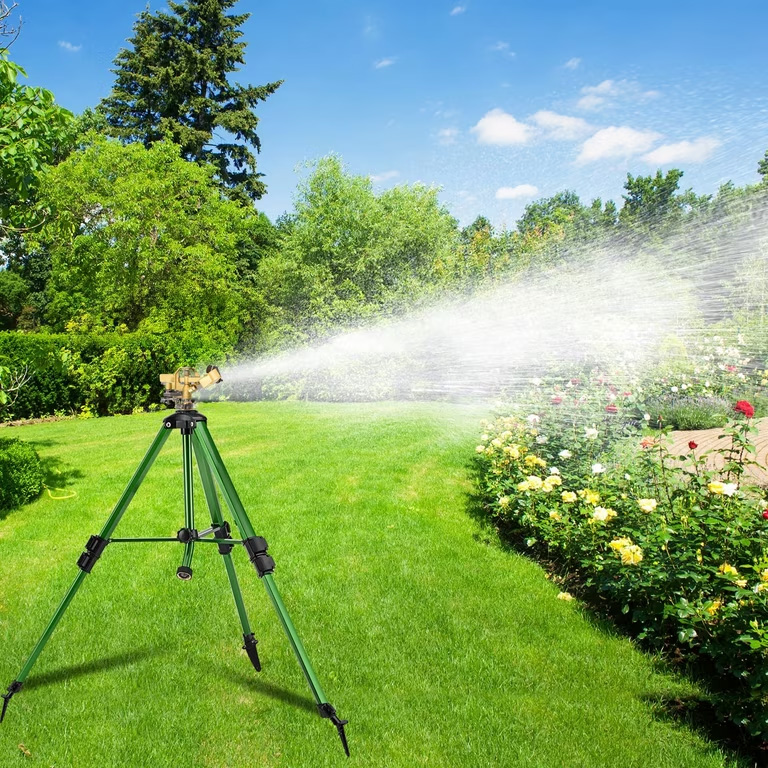
The working rule is about 1 inch of water per week, and that inch includes rainfall. It is a starting point, not a law. A tall fescue lawn baking through a Triangle July may want 1 to 1.5 inches a week to hold color, while an established Bermuda or Zoysia lawn is happy on 0.5 to 1 inch because it roots deeper and handles drought far better. NC State’s turf specialists frame it by the season and the grass rather than a flat number.
One inch is easier to picture than it sounds. Most home sprinklers put down roughly half an inch in 30 minutes, so an inch a week usually means two soakings of about 30 minutes each — not a daily splash. Our tight clay holds water long and needs less than you would think.
The other half of the answer is your rain gauge. If we get a good soaking storm, skip your next cycle. Watering an inch on top of an inch of rain is how you drown a lawn and grow mushrooms.
Is it better to water deep and infrequent or a little every day?
Deep and infrequent, almost every time. When you water lightly every day, the moisture never gets past the top inch of soil, so the roots have no reason to chase it down. You end up with a shallow-rooted lawn that wilts the moment you miss a day. Water deeply two or three times a week instead and the roots grow down toward the moisture, which carries a lawn through a Triangle drought.
Daily watering causes disease too. Grass that stays wet, especially overnight, is an open door for brown patch and other fungal problems that thrive in our humid summers. Fewer, deeper cycles let the surface dry between waterings.
You can DIY this: setting a smart controller or hose timer to two or three deep cycles a week is a weekend job. Call a pro if your lawn keeps browning in patches no matter how you water — that is usually disease or insects, not thirst, and diagnosing it is where our turf background earns its keep.
What is the best time of day to water grass?
Early morning. NC State points to late evening through early morning as the most efficient window, and I tell every client to aim for roughly 4 a.m. to 9 a.m. Water then and the wind is calm, evaporation is low, and the blades dry off as the sun comes up.
Avoid midday, when a big share of your water evaporates before it does any good, and avoid evening. Watering at dusk leaves the lawn wet all night, and wet grass in the dark is how fungal disease gets started here.
How do I measure how long to water with a tuna can?
The tuna-can test tells you exactly how long your sprinkler needs to run, and it takes ten minutes to set up. Put three or four empty tuna cans around the zone. Run the sprinkler for 30 minutes, then measure the depth in each can with a ruler.
If you catch about half an inch in 30 minutes, then an hour a week — two 30-minute cycles — gets you to your inch. Catch less and you run longer; catch more and you run shorter. Averaging several cans also shows the dry spots where coverage is weak. Back it up by pushing a screwdriver into the ground an hour after watering to confirm moisture reached 6 inches deep.
How do I water on Triangle clay without runoff?
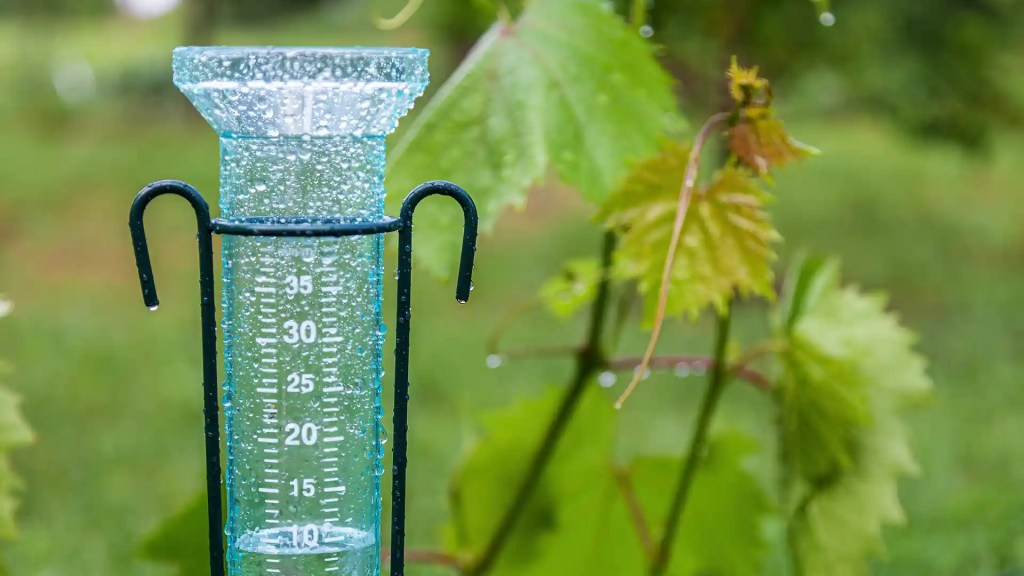
This is the local catch. Our red clay takes water in slowly, so a straight 30-minute run often means the last 15 minutes sheet off into the street. The fix is cycle-and-soak: split the run into shorter bursts with soak time between. Instead of one 30-minute cycle, run 10 minutes, let it soak for 20 to 30, then run another 10, until you have put down your target.
NC State specifically recommends cycling irrigation on soils that resist infiltration. Compacted clay makes it worse, which is one more reason core aeration pays off here. If you see water running down the curb, you are watering the storm drain, not the lawn.
How does watering change for Bermuda, Zoysia, and fescue?
This is the warm-season versus cool-season fork, and it matters. Bermuda and Zoysia are warm-season grasses built for heat. They root deep, use water efficiently, and get by on roughly 0.5 to 1 inch a week once established. In a hard drought they can go tan and dormant and green back up when water returns.
Tall fescue is a cool-season grass, and NC summers are its hardest season. It roots shallower and does not go dormant gracefully in our heat, so it needs 1 to 1.5 inches a week through July and August just to hold on. Fescue stays greener in winter but is thirstier and more disease-prone in summer. Match your watering to the grass you have.
For season-by-season detail, see our Bermuda grass care month-by-month guide and our expert fescue lawn maintenance plan.
How do I water new sod and new seed?
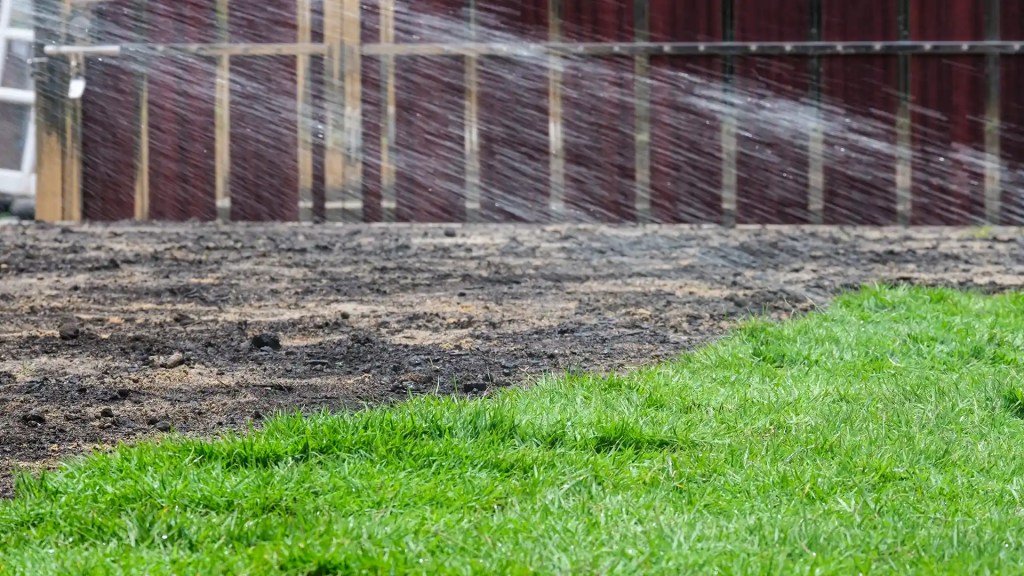
New lawns break every rule above, because they have no roots yet. New sod needs to stay consistently moist for the first two weeks — usually light watering once or twice a day so the soil under the sod never dries out and the roots knit in. Then taper off until you are down to the normal deep-and-infrequent schedule by week four or five. Our walkthrough: how to care for new sod after installation.
New seed is even more delicate. The top inch of soil has to stay damp until the seed germinates and the seedlings reach about 3 inches, which means very short waterings — one or two a day in mild weather, three or four on a hot, windy one. That is a weather call, not a grass call. Fescue goes down in September as things cool off, so most days sit at the low end. Bermuda has to wait for 65°F soil, usually early May here, and it germinates into rising heat, so plan on the high end. Keep it up for two to three weeks and taper off over about a month. Once established, transition to the same deep, infrequent routine.
What are the signs of over-watering versus under-watering?
Both show up as a lawn that looks off. Under-watered grass turns a dull blue-gray, the blades wilt and fold, and footprints linger — NC State calls this footprinting, where your tracks do not spring back within an hour. The soil is dry an inch down.
Over-watered grass is spongy underfoot, may show standing water or constant sogginess, and often grows mushrooms. The bigger tell is disease: soft, wet turf is where brown patch and root rots start. If you see disease patches, the answer is usually less frequent watering plus a licensed treatment, not more water.
Watering schedule by season and grass type
Use this as a starting point for the Triangle and adjust for rain. Amounts are total per week, including rainfall.
Season | Fescue (cool-season) | Bermuda / Zoysia (warm-season) | Notes |
|---|---|---|---|
Spring | ~1 inch/week | 0.5–0.75 inch/week | Let spring rain do most of the work |
Summer | 1–1.5 inches/week, 2–3 cycles | 0.5–1 inch/week | Early morning only; watch for disease on fescue |
Fall | ~1 inch/week | 0.5 inch/week or rain | Fescue seeding season needs steady moisture |
Winter | Rain usually enough | Little to none (dormant) | Water only during dry warm spells |
Ready to take the guesswork out of your lawn?
Watering is the foundation, but the payoff comes from pairing it with the right program — the correct grass plan, disease and weed control, and proper aeration on our clay. We are a weed-control and turf-management company with a background in turf management and environmental biology, licensed by the state of North Carolina to apply herbicides and pesticides on turf and ornamental plants such as shrubs and trees. To build a plan that fits your grass and soil, grab a super fast quote or call or text us at (984) 284-5399.
Frequently Asked Questions
Not Sure Your Watering Is Right?
I set run times off what your zones actually put down, measured, not off a timer preset someone guessed at. Call or text us at (984) 284-5399.
Sources
