

The Best Landscape Lighting Brands — and Why We Install FX Luminaire
By Ken Erickson · Updated July 2026
Not All Landscape Lighting Brands Are Built the Same
The best landscape lighting brands are what separate a system that lasts fifteen years from a box-store kit that quits in two. When you compare landscape lighting, the brand of fixture matters more than most people realize. A $30 box-store kit and a professional brass system both “light the yard,” but one lasts a season and one lasts decades.
We install FX Luminaire, and here is an honest look at the brands that matter — what separates the good ones, and why we chose the one we did.
Key takeaways
- The fixture brand decides material, optics, control, and warranty — it matters more than most people think.
- Brass-forward pro brands (FX Luminaire, Kichler, VOLT, Unique) last 20-plus years; box-store aluminum kits fail in a season or two.
- We install FX Luminaire and are a Certified Hunter Lighting Specialist.
- FX’s smart line gives you app scheduling, dimming, and color, zone by zone.
What Separates the Best Landscape Lighting Brands
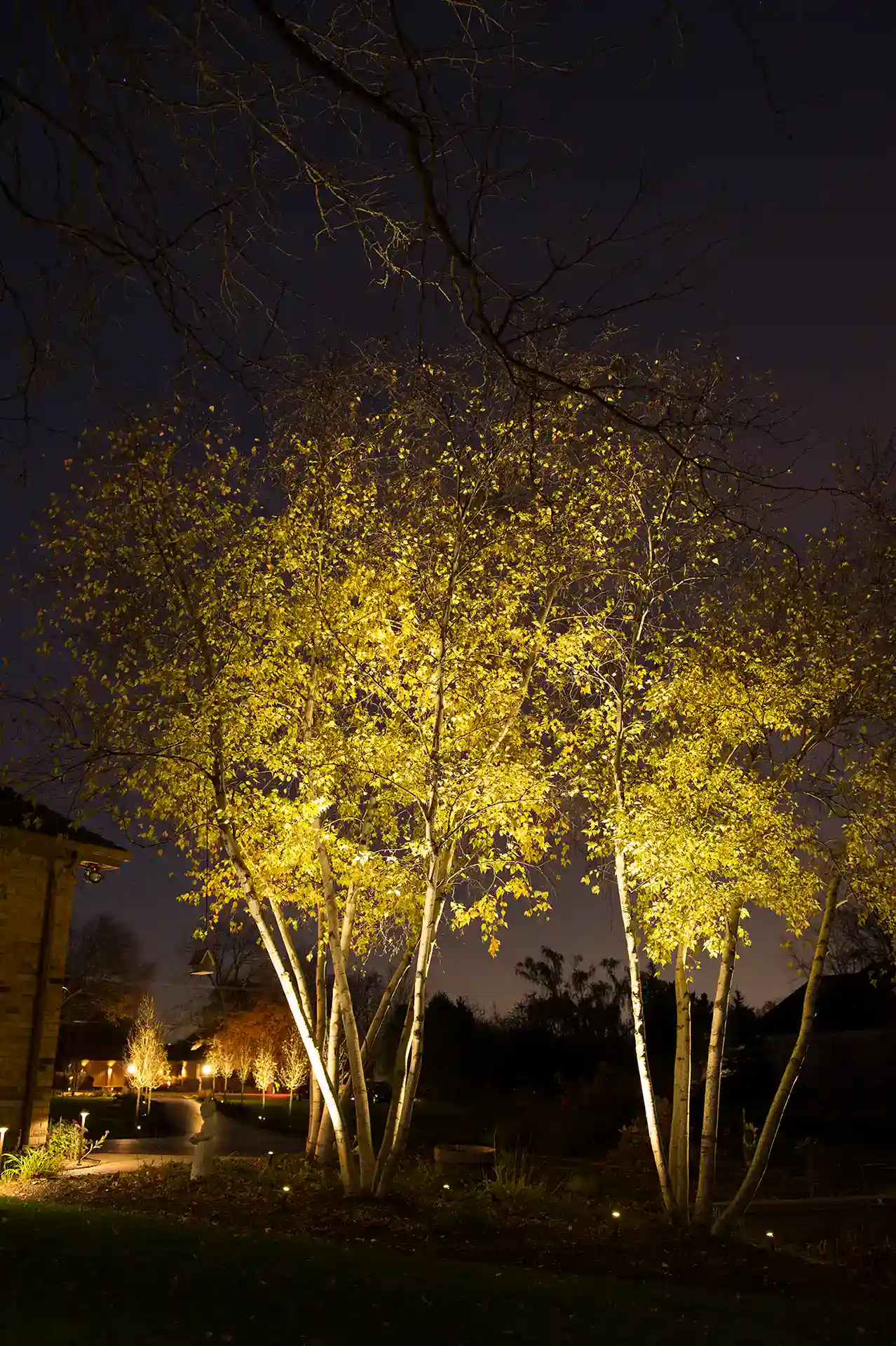
A quality landscape lighting brand comes down to four things: the fixture material, the light source and its optics, the controller that runs the system, and the warranty behind all of it. Everything past that is finish options and marketing. Two fixtures can look identical in a photo and be ten years apart in service life, and the difference is almost always the metal, the lamp, and whether the part still exists when you need one.
Get those right and the system disappears into the landscape and runs for 20-plus years — you see the light, not the fixtures. Get them wrong and you are back at the store next spring, buying the same lights a second time and digging up the same beds to put them in.
Brass Over Aluminum
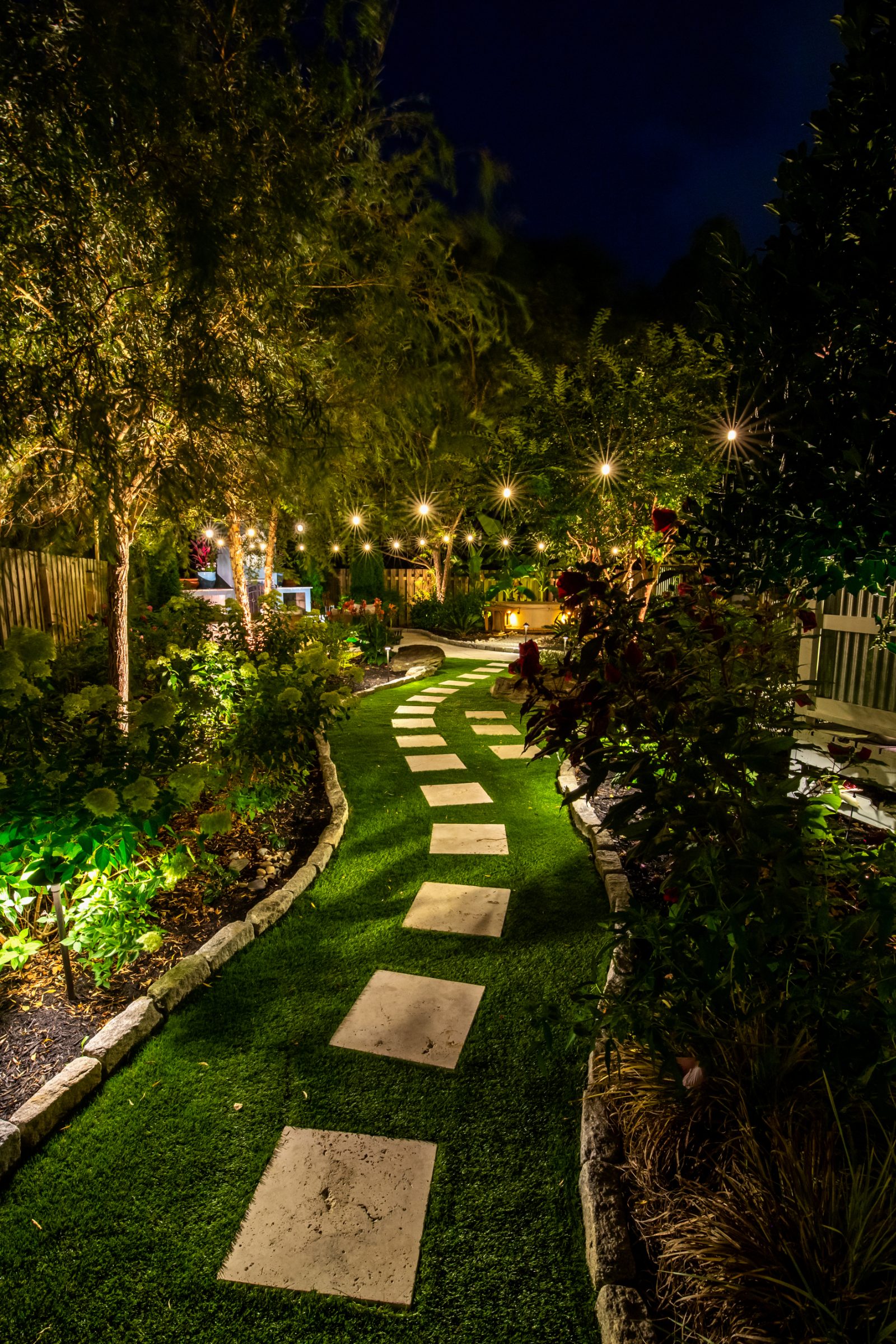
Solid brass and copper hold up in North Carolina humidity and clay. Brass does not rust. It darkens into a patina, keeps its shape, and is still serviceable in year fifteen. Stamped aluminum and plastic go the other direction: the finish chalks, the housing cracks at the stake, and water finds the socket. Corrosion starts where the fixture meets wet ground, which is exactly where a cheap fixture is thinnest. There is a second half to the material question, and it is what happens when something does fail. A brass fixture with a replaceable LED lamp is a ten-minute repair. A sealed fixture with an integrated LED is a replacement.
Brand | Fixtures | Smart control | Best for |
|---|---|---|---|
FX Luminaire | Brass + composite | Excellent — app + color | Premium designed systems |
Kichler | Brass, many finishes | Good | Clean white light |
VOLT | Brass, value-priced | Basic | Budget DIY |
Unique | Durable brass | Good | Pro installs |
Sollos / WAC | Quality brass | Varies | Pro installs |
Hinkley / CAST | Brass, well-built | Good | Pro installs |
Box-store (Malibu) | Aluminum / plastic | None | Temporary — avoid |
What we install | FX Luminaire | Yes — certified | Systems built to last |
The Best Outdoor Lighting Brands Worth Knowing
Among professional low-voltage brands, a handful come up again and again. All of them are a big step above box-store kits — real brass or copper, sealed connections, and fixtures meant to be serviced rather than thrown away. The differences show up in three places: the control platform, the finish and optics, and what support looks like five years after the install.
The right pick depends on whether you want simple, bulletproof white light or a smart, color-changing system you run from your phone.
Below that, the box-store kits — and why we steer people away from them.
Here is how the main ones stack up.
FX Luminaire — What We Install
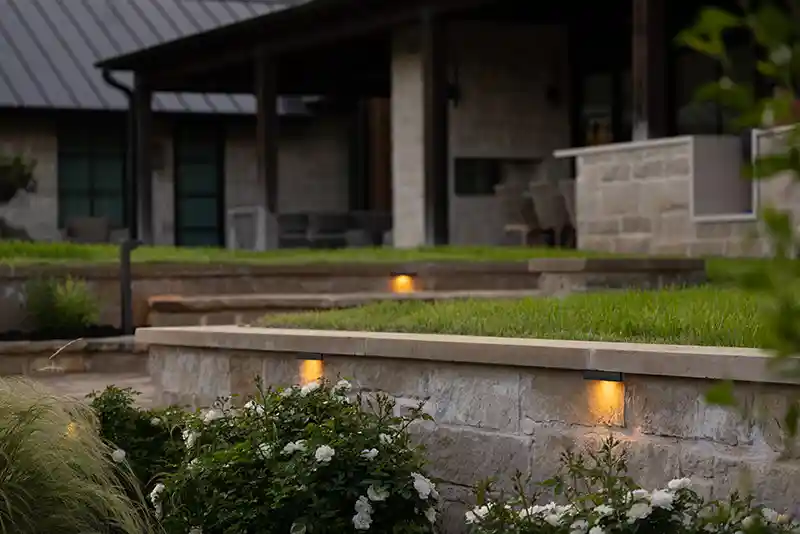
FX Luminaire, part of Hunter Industries, is our pick. It is a premium, professional-grade line sold through installers rather than off a shelf: solid brass and composite fixtures, tight beam optics, replaceable LED lamps, and the Luxor controller platform behind all of it. The fixtures alone would put FX near the top of this list. Luxor is what actually separates it, because it turns a set of lights into a system you can zone, dim, color, and schedule from your phone. We install it as our primary line — see our FX Luminaire and Luxor ZDC page for how the system goes in and what it costs.
Smart and Color Control
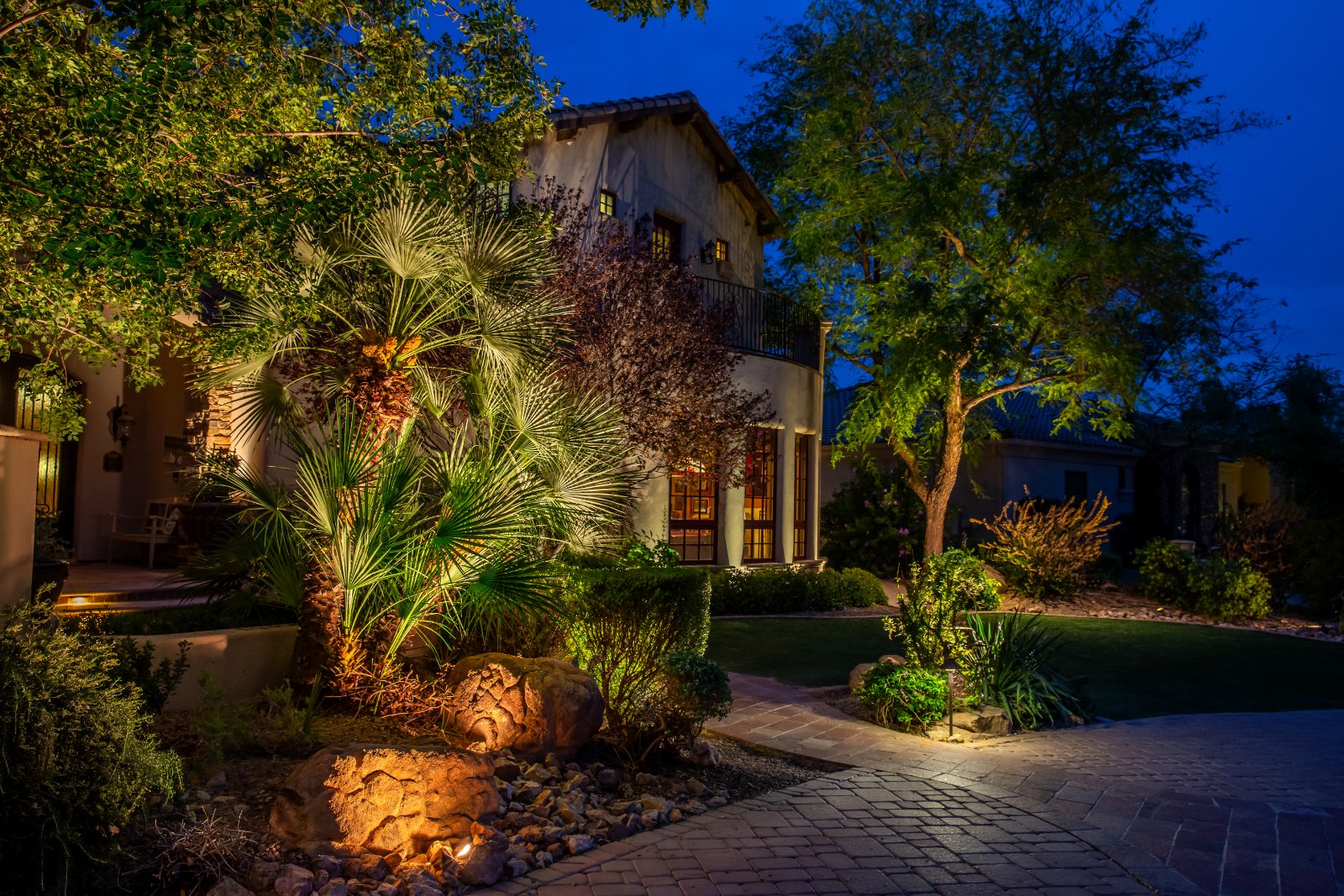
FX’s smart line is built around Luxor, and Luxor is where the zoning, dimming, and color live. FX calls it ZDC. Zoning means the controller addresses fixtures in groups instead of all at once — up to 250 separate zones — so the oaks, the front elevation, the walkway, and the pool surround are each their own control. Dimming runs zero to one hundred percent per zone, which is how you keep a wash on a stone wall from overpowering the trees behind it. Color is per zone as well, roughly 30,000 of them, so a property can sit in warm white all year and turn red and green for two weeks in December without anyone touching a fixture. All of it travels on the same two-wire low-voltage cable that already feeds the lights, so there is no separate communication wire to trench. You can start with simple warm white and add color later without replacing fixtures.
Built to Last
Brass construction, quality LEDs, and a serious warranty make an FX system a long-term install, not a seasonal purchase. The Luxor transformer sits in a stainless steel enclosure rated to stay outside year-round. Lamps are replaceable, so a failed LED is a lamp and not a fixture. We wire with heavy low-voltage cable — 12-2 or 10-2 depending on the run — and size the runs so voltage at the last fixture is still where it belongs, which is the quiet reason some systems look even end to end and others fade at the back of the bed.
Why It Matters for You
Because we are a Certified Hunter Lighting Specialist, we know the FX platform inside out — the fixtures, the optics, and the Luxor programming, which is the half most installers skip. Putting brass in the ground is the easy part. Building zones that make sense, dimming each one to the right level, saving themes you will actually use, and handing you an app that does what you expect on a Friday night is the part that takes training.
That combination of premium fixtures plus certified know-how is hard to match locally. It also changes what a change costs. Once the system is in, a new zone, a different color scene, or a schedule that follows a new bedtime is a programming job, not a construction project.

Kichler Landscape Lighting
Kichler is a solid premium brand with a wide range of finishes and bright, consistent LEDs. Breadth is its strength — if you want a specific fixture look to match a specific house, Kichler usually has it, and the white light is clean and predictable. Its smart control has improved, but the platform does not go as deep as Luxor once you move past on, off, and a timer. For a homeowner who wants good brass, a polished look, and light that comes on at dusk without any further thought, it is a legitimate choice.
VOLT Landscape Lighting
Good Value, DIY-Friendly
VOLT built its name selling quality brass fixtures direct at a lower price, which made it popular with DIY installers and with contractors watching a budget. The metal is real and the fixtures work. What you give up is the professional support layer and the control platform — you are buying hardware rather than a system, and the warranty conversation is with a website instead of the person who installed it.
For a homeowner who wants to do it themselves, VOLT is a reasonable path, and I will say plainly that a careful DIYer can get a good result with it. Just know the fixture is the cheap part of a lighting system. Design and placement decide whether a yard looks lit or looks spotted, and burying wire, sizing the transformer, and balancing voltage across the run is where most DIY installs go sideways.
For a designed, installed, warrantied system, a professional brand and installer win.


WAC, Vista, Unique, and Other Quality Landscape Lighting Fixtures
A few more professional lines are worth knowing:
Unique Lighting Systems
Unique, also a Hunter brand, is a respected professional line known for durable brass fixtures and clean beam quality. It sits alongside FX in the Hunter family, and the installers who favor it do so for the same reasons we favor FX: the metal is honest, the optics are consistent, and the parts are still available years after the install.
Sollos, WAC, Hinkley, CAST
All make quality professional fixtures, and any of them beats a box-store kit. Installed correctly, any of them will still be in the ground in ten years. The differences come down to optics, finish options, warranty terms, and how quickly a local distributor can put the one part you need in your hand.
What They Share
Every one of these is low-voltage, brass-forward, and built for professional install — a different category from a plastic kit in a bag. They run on 12 volts through a transformer, they use replaceable lamps or serviceable heads, and they assume someone designs the layout before anything goes in the ground. That last assumption is the one homeowners underestimate.
The Control Question
If app control and color matter to you, the controller platform is the real differentiator, and it is the piece most people do not think about until the fixtures are already in. At this level the fixtures are close to interchangeable. The controllers are not. Ask what the system does past on and off: can it dim one zone without dimming the rest, can it hold a color scene and recall it, and can you change any of it yourself from a phone. That question narrows the field quickly.
The Warranty Question
A warranty is only as good as the company behind it. Professional brands back their fixtures for years and, more to the point, still make the lamp you need when one fails in year seven. A kit brand discontinues the line, and the only fix left is a new fixture.
That is a big part of what you are paying for with a pro-grade system.
It is the difference between a one-time investment and a recurring expense.
What About Malibu and Box-Store Kits?
Why the Cheap Ones Fail
Malibu, Moonrays, and similar big-box kits are cheap up front, but the aluminum and plastic fixtures corrode, the low-grade LEDs dim, and there is no real design or support. Most fail within a season or two. For a system you install once and forget, they are a false economy. The wiring is the other half. Kit connectors pierce the cable and let water into the copper, and once a splice corrodes the run goes dim from that point out to the end.
Landscape Lighting Brand FAQs
See the Difference Yourself
The best way to compare is to see quality lighting after dark. We offer a free evening demo — we place FX fixtures on your trees, beds, and walkways so you can see the effect before you decide. Call or text Lawn Panther to set one up. We also service and repair fixtures of any brand — see our landscape lighting repair service.
Sources
Premier Ponds — Best Landscape Lighting Brands
Ralph’s Way — Kichler vs Volt
FX Luminaire (Hunter Industries)
