

Fire Ants in Your NC Lawn: How to Get Rid of Them (and Keep Them Gone)
By Ken Erickson · Updated June 2026
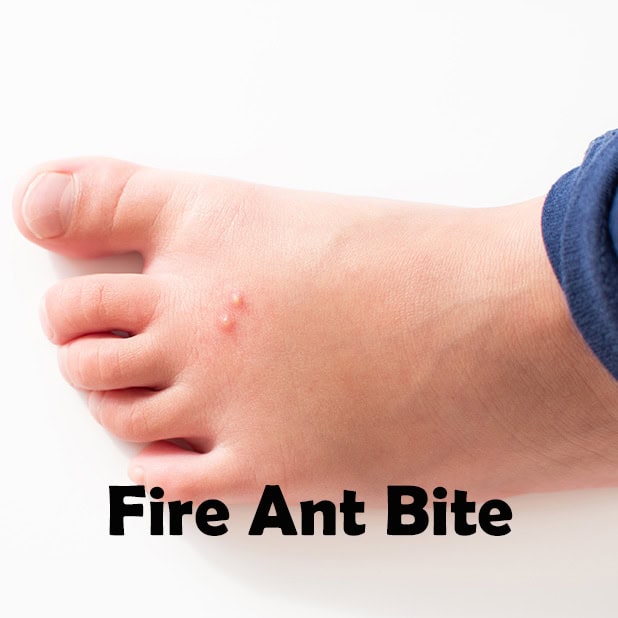
Fire ant control is less about killing one mound and more about wiping out the colony under it. Fire ants are the one lawn pest that bites back. Bump a mound with the mower and you have got hundreds of them swarming up your leg leaving welts that blister for days. They are established across most of North Carolina now, they are spreading, and they are not going away on their own. The good news is there is a proven way to knock them down and keep them down – it just is not the way most people try. Here is how to actually get rid of them.
Key takeaways
- The two-step method is the proven fix: broadcast a bait across the whole yard so the ants carry it to the queen, then treat problem mounds directly.
- Timing is everything – treat when ants are foraging and the soil is warm, roughly 70 to 90 degrees. Spring and fall are the two windows; skip the peak of summer.
- You can ID a fire ant mound by what is missing: a dome of loose soil with no hole in the center, and it erupts with stinging ants the second you disturb it.
- Bait around the mound, never on top – ants forage from the base – and keep the bait fresh and dry, with no rain for a day or two.
- No treatment is permanent. New colonies move in, so the real goal is ongoing seasonal control, not one-and-done.
Fire Ant Control: How to Tell If You Have Fire Ants
The giveaway is the mound. A fire ant mound is a dome of fluffy, loose soil, and here is the tell: there is no hole in the center. Fire ants come and go through underground tunnels that open several feet away, not through the top. So a mound with no visible opening that boils over with aggressive, stinging ants the moment you disturb it is fire ants. They pop up in sunny spots and love the warm soil right along driveways, sidewalks, and foundations, and they get bigger after a heavy rain.
Why fire ants are a problem here
Beyond the painful stings – which are a real danger to small kids, pets, and anyone with an allergy – the mounds are unsightly and can wreck mower blades and trimmer line. Fire ants are now found in the large majority of NC counties and they keep spreading, so this is an established local problem, not a Texas thing. Once they are in your yard, ignoring them just lets the colonies multiply.
The two-step method: how to actually get rid of them
This is the part people get wrong. They see one mound, drench it, and feel good – and two weeks later there are three new mounds. That is because you only killed one colony and there are others you cannot see. The method that works treats the whole yard:
Method | How it works | When |
|---|---|---|
Step 1: Broadcast bait | A slow-acting bait the foragers carry down to the queen, collapsing colonies you cannot even see. Spread it over the whole yard. | Spring and fall, when ants are foraging and soil is 70-90 degrees, on a dry day |
Step 2: Treat problem mounds | A mound drench or granule that soaks down to the queen for a fast kill on the mounds that matter most. | On mounds near the house, walkways, and play areas, as needed |
Broadcast the bait first to hit the whole population, then spot-treat the mounds you want gone now. That one-two punch is what actually clears a yard.
Treating individual mounds
For the mounds you want dead today, use a drench or a granule and get it down to the queen – a mound treatment that only kills the surface ants leaves the queen alive and the colony rebuilds. Pour or apply around and into the mound without stomping it first (disturbing it just sends the queen deeper). Do it in the cool of the morning when the ants are near the surface. If you keep getting satellite mounds, the queen survived and you need to go back to the broadcast bait.


DIY vs. hiring a pro
You can absolutely do this yourself if you bait the whole yard correctly and stay on the spring-and-fall schedule – that honestly handles most yards. Where people call us is the timing and the follow-through: a big property, a bad infestation, ants in the electrical box or AC unit, or a household with a sting allergy where you cannot afford a miss. We are licensed by the state of North Carolina to apply on turf, and the number-one reason DIY fire ant control fails is bad timing – baiting when the ants are not foraging. A pro gets the product, the coverage, and the timing right, and keeps you on a schedule so they do not come back. Text us at 984-284-5399 and we will handle it.
Frequently Asked Questions
Fire Ants Taking Over the Yard?
We run the two-step program on the right NC schedule – whole-yard bait plus mound treatment – so they go down and stay down. Text us to get on the schedule.
Sources
NC State Extension TurfFiles – Fire Ants in Turf, Home Lawns and Landscapes
Texas A and M – The Two-Step Method (fireant.tamu.edu)
Clemson Cooperative Extension HGIC – Fire Ant Management with Broadcast Baits
NC Cooperative Extension – Control Fire Ants in Fall
