

Forsythia in North Carolina: How to Grow, Care For, and Prune the First Yellow Shrub of Spring
By Ken Erickson · Updated June 2026
Knowing how to prune forsythia comes down to timing — cut at the wrong moment and you lose next spring’s flowers. When the forsythia lights up, spring is coming – it is one of the first things to bloom around here, a fountain of bright yellow while everything else is still bare and brown. It is also one of the toughest, easiest shrubs you can plant. The only place people go wrong is pruning, and they go wrong the same way every time. Here is how to grow forsythia and, more importantly, how to prune it so you actually get the show every year.
Key takeaways
- Forsythia is one of the first shrubs to bloom in NC – brilliant golden-yellow flowers in late winter to early spring, usually March, before the leaves come out.
- It is tough and low-maintenance: fast-growing, arching, 8 to 10 feet tall, thrives in full sun, and tolerates clay, drought, and poor soil once established.
- The number-one rule: prune right after it blooms, before mid-July. Forsythia blooms on old wood, so fall or winter pruning cuts off next spring’s flowers.
- Rejuvenate an overgrown, leggy plant by removing the oldest third of the canes at ground level each year – or hard-cut the whole shrub to renew it.
- It is great for an informal hedge, screen, or bank – and you can cut branches in late winter and force them into bloom indoors.
What is forsythia?
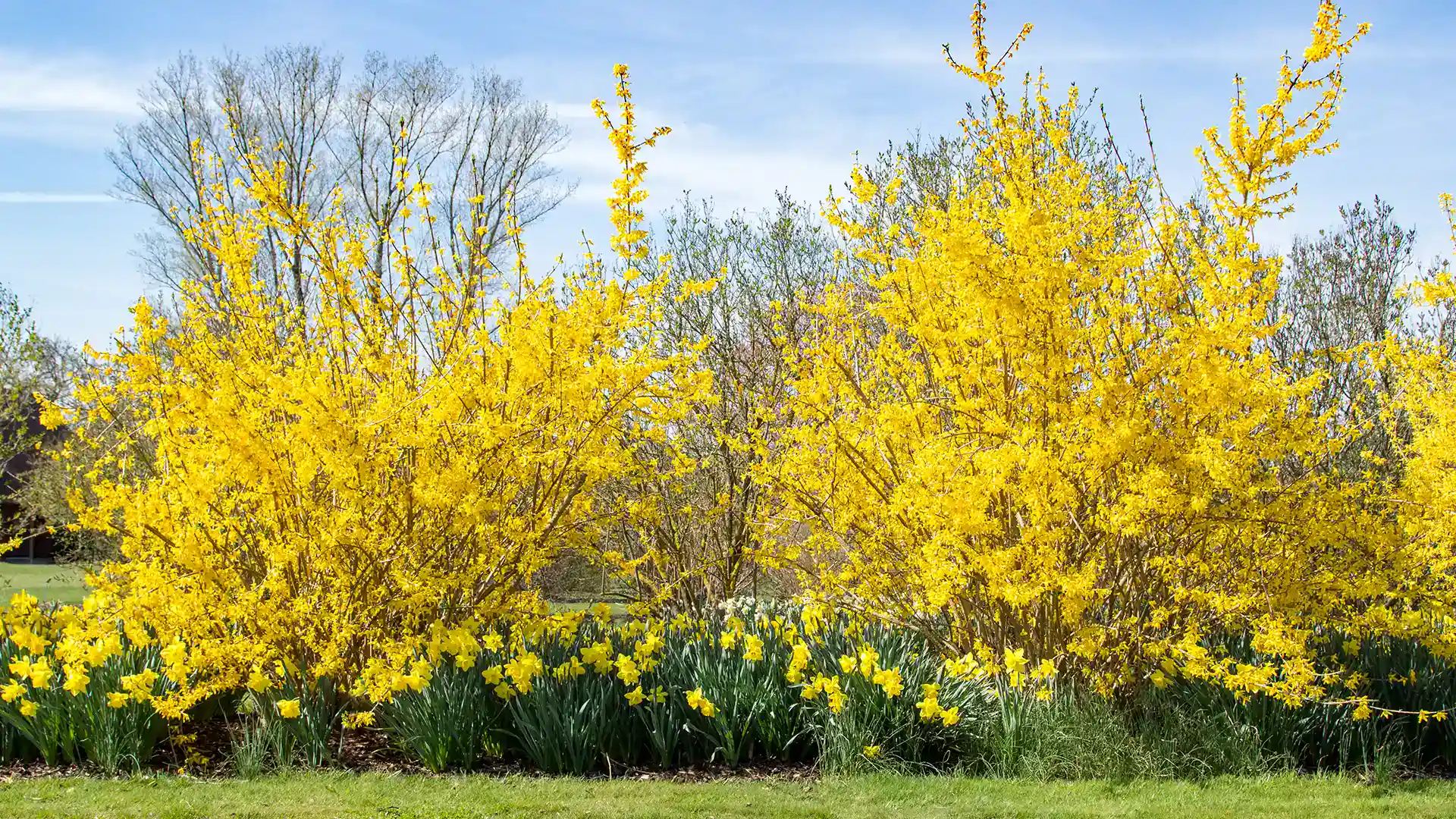
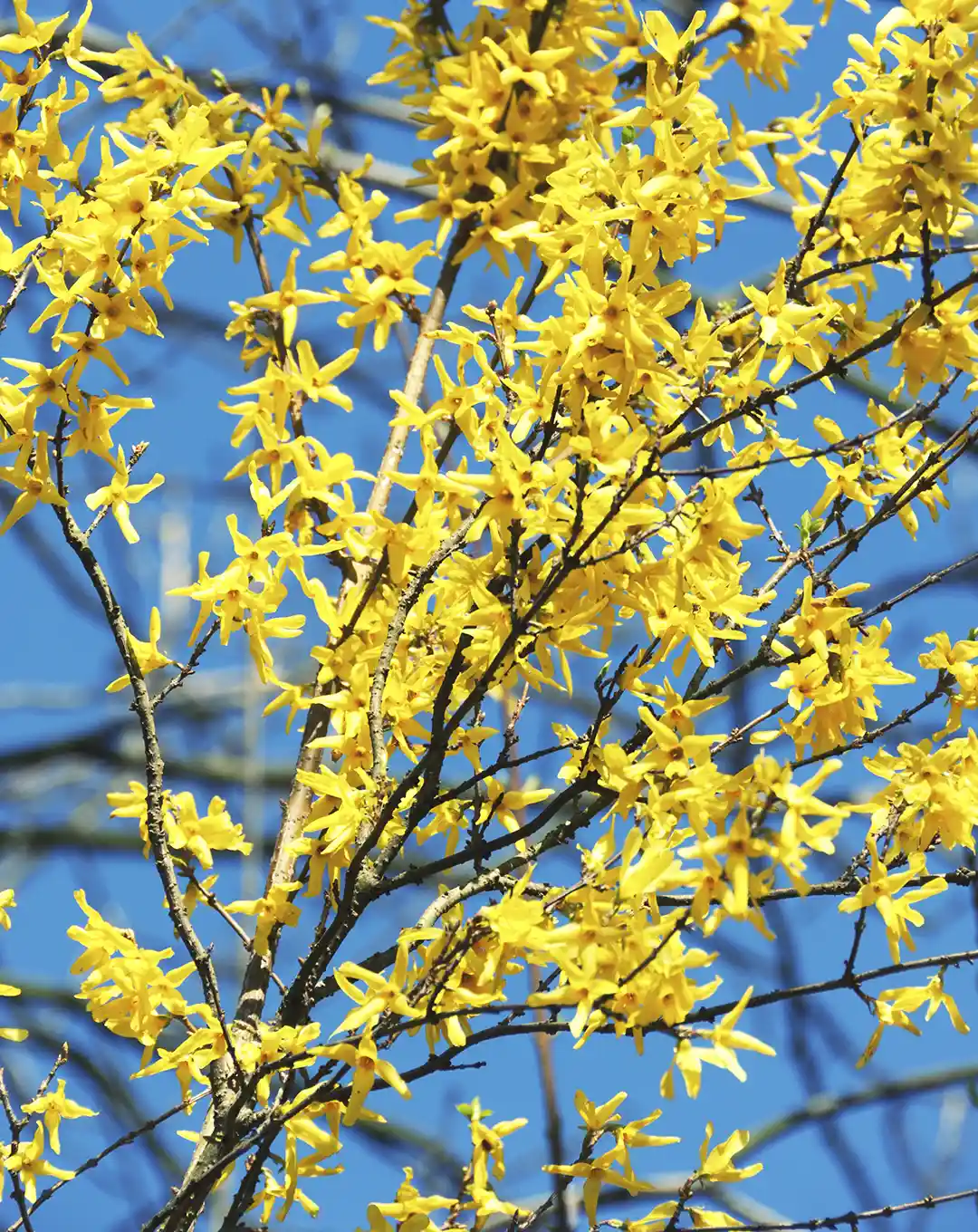
Forsythia is a deciduous shrub – the common landscape one is the border forsythia, also called golden bells. It has a fast-growing, arching, fountain-like habit and covers its bare stems with small yellow bell-shaped flowers in late winter to early spring, before the leaves appear. After it blooms, it leafs out into a plain green shrub for the rest of the year, which is why most people grow it toward the back of a bed or as an informal screen – it earns its keep for a few glorious weeks and then fades into the background.
How big does forsythia get, and how fast?
A standard border forsythia reaches about 8 to 10 feet tall and can spread even wider, and it grows fast – a foot or two a year. That size surprises people who bought a modest little plant, so give it room, or choose one of the dwarf cultivars that stay 2 to 3 feet for a foundation bed. Knowing the mature size up front saves you from the endless shearing that ruins the plant’s natural form.
Planting and siting forsythia in NC
Plant forsythia in full sun for the best bloom – it will grow in part shade but flowers far less. It is not picky about soil and tolerates our heavy clay, drought, and even salt and pollution once established, which is why you see it thriving in tough spots. The one thing it does not like is constantly soggy ground, so on a low, wet spot plant it a little high for drainage. For an informal hedge, space plants about 3 to 4 feet apart. It transplants easily and establishes quickly.
Forsythia care: water, feed, mulch
Water it through the first season to get it established, and after that forsythia is genuinely drought-tolerant and low-maintenance. A light feeding in spring and a couple of inches of mulch are plenty; it does not need pampering. It is also largely free of pests and diseases, so there is no spray program to worry about – this is one of those honest cases where the shrub really does take care of itself once it is in the ground.
When and how to prune forsythia (the key to more flowers)
Do | Don’t |
|---|---|
Prune right after the flowers fade (before mid-July) | Prune in fall or winter (cuts off next year’s flowers) |
Thin the oldest canes at the base | Shear it into a formal ball (ruins the form and the bloom) |
Remove the oldest third of canes yearly to renew | Let it go years with no thinning until it is leggy |
Hard-cut to 6-12 inches to fully rejuvenate | Assume it will not recover – it bounces back fast |
Here is the whole ballgame, so read this twice. Forsythia blooms on old wood, meaning it sets next spring’s flower buds on this year’s growth over the summer. So you prune immediately after it finishes blooming in spring, and no later than mid-July. Prune it in fall or winter – the way most people and most mow-and-blow crews do – and you are cutting off every flower bud for next spring, which is exactly why so many forsythias never seem to bloom well.
When you do prune, thin the oldest canes out at the base rather than shearing the whole thing into a ball. Shearing a forsythia into a gumdrop destroys its graceful arching form and takes off the flowering wood – it is the fastest way to a plant that looks bad and blooms worse.

Rejuvenating an overgrown forsythia
If yours has gone leggy, woody, and out of control, you have two ways to fix it. The gentle route: remove the oldest one-third of the canes at ground level each year for three years, and the plant gradually renews itself. The drastic route: cut the whole shrub down to 6 to 12 inches and let it regrow – you sacrifice a season of bloom, but forsythia bounces back vigorously and you get a fresh, well-shaped plant. Either way, it is nearly impossible to kill a forsythia by pruning it too hard.
Best uses and forcing branches indoors
Forsythia shines as an informal hedge or screen, and its spreading roots make it useful for holding a slope or bank – handy on the rolling lots common out here. And here is a fun one for late winter: cut a few 18-to-24-inch branches with plump buds, bring them inside, put them in water in a cool room, and in a week or two they burst into yellow bloom while it is still gray outside. It is the easiest way to pull spring forward by a month.
Frequently Asked Questions
Want Your Flowering Shrubs Pruned at the Right Time?
Most forsythias bloom poorly because they get pruned in the wrong season. We prune your flowering shrubs on the right schedule so you actually get the show. Text us about your beds.
Sources
NC State Extension Gardener Plant Toolbox – Forsythia x intermedia
Clemson Cooperative Extension HGIC – Forsythia
Iowa State University Extension – Growing Forsythias
The Old Farmer’s Almanac – Forsythia Growing Guide
