

How to Identify and Kill Crabgrass and Nutsedge
By Ken Erickson · Updated August 2026
If two grassy weeds are taking over your lawn here in the Triangle, they are almost always crabgrass and nutsedge — and the mistake I see most is treating them as the same problem. They are not. One is a grass and one is a sedge, and the product that kills one does nothing to the other. Get the diagnosis right first, then match the treatment and the timing to it. That is the whole game.
Key Takeaways
- Crabgrass and nutsedge are two different weeds — one is a grass, one is a sedge — and no single product kills both.
- Crabgrass is a prevention game: a prodiamine pre-emergent in late winter, before the forsythia blooms, is the highest-value move you can make.
- Nutsedge has no useful pre-emergent — it regrows from underground nutlets and needs a sedge-specific post-emergent like halosulfuron (Sedgehammer).
- Weed-and-feed won’t touch either one; the chemistry and the timing have to match each weed.
- Real control is a program — the right product, on the right grass, at the right time — not a panic jug bought in July.
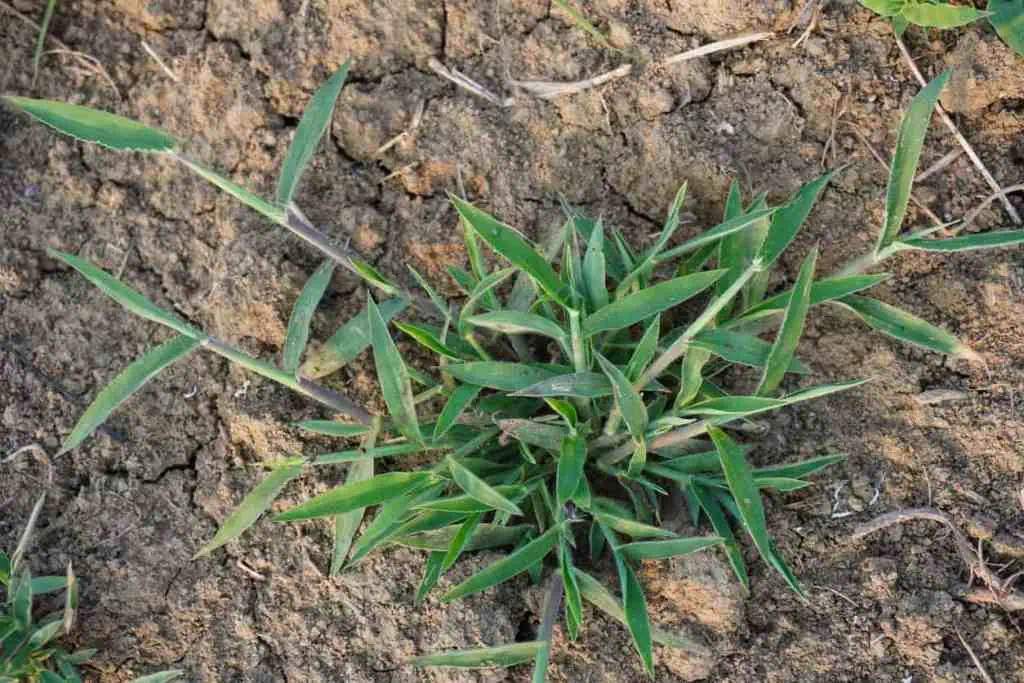
How do I tell crabgrass from nutsedge?
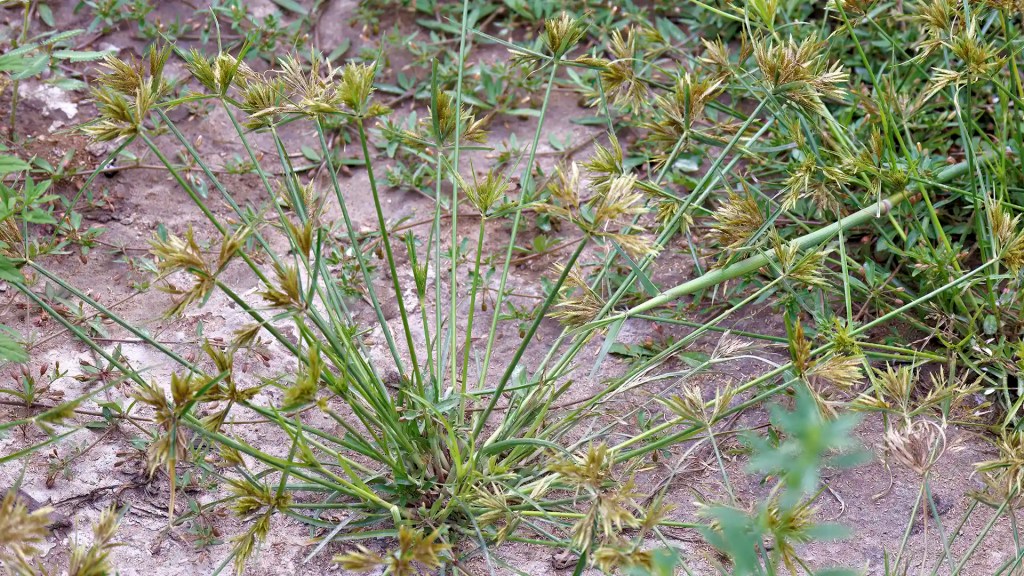
Stand on your lawn and look at where the weed is and how it grows. Crabgrass is the low, spreading clump that hugs the hot edges — along the driveway, the sidewalk, and the thin, compacted strips where the good grass gave up. It grows outward and flat, dull green, in a star pattern from a central crown. Nutsedge does the opposite. It stands straight up, a bright, waxy yellow-green, and it grows so fast it is back above the turf about three days after you mow — mow Saturday and it is standing tall again by Tuesday.
There is a quick field test the pros use: sedges have edges. Roll a nutsedge stem between your fingers and it feels triangular; a crabgrass stem is round or flat. Here is how they line up.
That last row is why nutsedge feels impossible. Pull one plant and you tear the top off while leaving a chain of nutlets in the soil, each one ready to sprout. Crabgrass has no such trick — kill the plant or stop the seed and it is done.
Crabgrass | Nutsedge | |
Plant family | annual grass | perennial sedge (not a grass) |
Where it shows up | driveway and sidewalk edges, thin compacted spots | scattered spikes standing above the lawn, often in wet low spots |
Growth habit | low, spreading, flat clumps | upright, straight up, taller than the turf |
Color | dull green, coarse blades | bright, almost neon yellow-green, waxy |
Stem shape | round or flat | triangular (“edges”) |
After you mow | stays low, spreads out | back above the lawn in about 3 days |
How it spreads | seed only — one plant sets tens of thousands of seeds | underground tubers (“nutlets”) plus seed |
Comes back how | dies at frost, returns from seed each spring | regrows from tubers year after year |
Why doesn’t my weed-and-feed kill either one?
Because weed-and-feed is built for the wrong targets. The “feed” is fertilizer, and the “weed” side is usually a broadleaf herbicide made for dandelions, clover, and chickweed. Crabgrass is a grass, so a broadleaf product mostly ignores it — and by the time crabgrass is up and visible in summer, the pre-emergent window that would have stopped it has already closed. Nutsedge is neither a broadleaf nor a true grass, so the common selective herbicides largely slide right off it. On top of that, feeding your lawn in the heat of summer, when most people finally reach for a weed-and-feed bag, can actually push crabgrass and disease. The label just is not written for these two weeds. You need to treat each one on its own terms.
How do I stop crabgrass in an NC lawn?
Crabgrass is a prevention story. The single most effective thing you can do is a pre-emergent herbicide in late winter, before the seed ever germinates. My workhorse is prodiamine (sold as Resolute or LESCO Stonewall). It sets a barrier at the soil surface that stops crabgrass seedlings as they try to come up.
Timing is everything here. Crabgrass germinates when the soil at a couple of inches deep holds around 55°F for several days running — and the reliable natural marker for that in our area is the forsythia bloom. When the forsythia lights up yellow, your window is closing. Get the pre-emergent down before that, not after. If the forsythia is already blooming, you are late, and you have just traded a cheap preventive for a more expensive rescue.
For the crabgrass that still slips through — and some always does — the fix is a post-emergent made for grassy weeds. Quinclorac (Drive XLR8) is the standard, and it works best on young crabgrass while it is small and actively growing; mature summer clumps are much harder to kill. One label truth worth stating plainly: MSMA has been off residential turf since 2009, so ignore any old advice pointing you there.
How do I kill nutsedge, and why is it different?
Nutsedge breaks the crabgrass playbook. There is no useful pre-emergent for it, because it comes back from those underground nutlets rather than from surface seed — a soil-barrier product has nothing to stop. So nutsedge is controlled after it is up, with a product built specifically for sedges.
The go-to is halosulfuron (Sedgehammer, also sold as ProSedge). It is taken in by the plant and moves down into the tubers, which is the only way to get real, lasting control instead of just burning off the tops. Sulfentrazone (Dismiss) is another effective option and works faster on contact. Hit nutsedge while it is young and actively growing, and plan on more than one application — the nutlets do not all sprout at once, so a single pass rarely finishes the job. This is exactly why a generic weed spray leaves it standing: nutsedge needs a sedge-specific chemistry, and nothing on the weed-and-feed bag qualifies.
Here is the fork, side by side:
When do I treat each one — warm-season versus cool-season?
North Carolina sits in the transition zone, so the calendar depends on your grass, and the two families run on different clocks. On warm-season lawns (Bermuda and Zoysia), the spring crabgrass pre-emergent goes down in late winter as the lawn is still dormant; nutsedge treatment lands in early summer once it is actively growing. On cool-season lawns (tall fescue), the same crabgrass pre-emergent timing applies in late winter, but be careful — a pre-emergent will also block grass seed, so it cannot go down right before a fall overseeding, and a fescue lawn’s real weak season is summer heat, which is exactly when crabgrass and nutsedge press hardest.
Grass type also decides which post-emergents are safe. Quinclorac and halosulfuron are labeled across common warm- and cool-season turf, but some tools are not universal: mesotrione (Tenacity) is a cool-season product that lists Bermuda and Zoysia as sensitive, so it belongs on fescue, not on your Bermuda. Reading the grass line on the label is not optional — it is the difference between killing the weed and thinning the lawn.
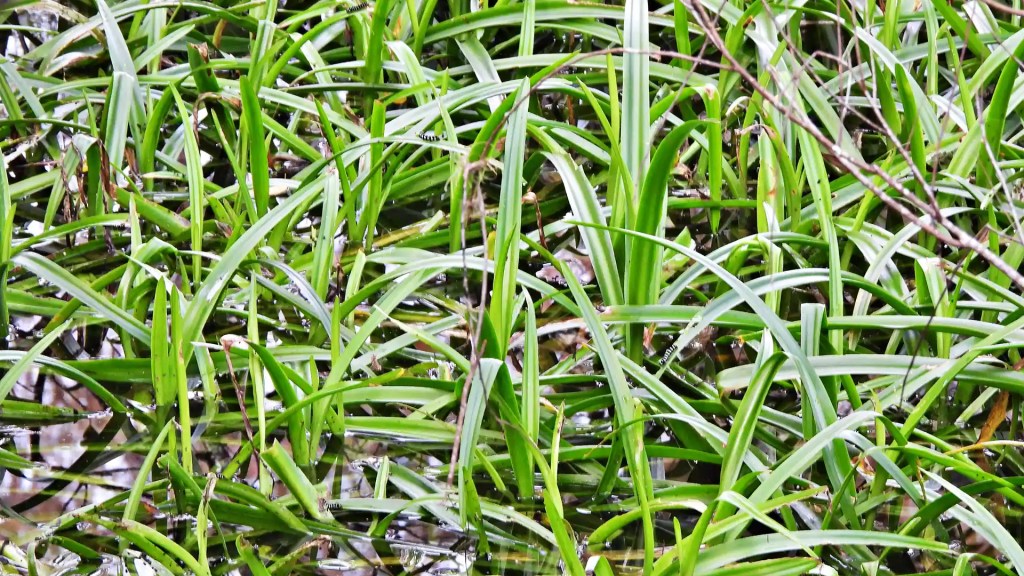
Program versus panic: why timing beats spraying
Here is the honest truth after years of doing this: there is no perfect herbicide, and no single spray that fixes both weeds for good. Real control is a program — the right product, on the right grass, at the right time, in the right sequence. Crabgrass is won in February with a pre-emergent you cannot see working. Nutsedge is won by hitting it early and coming back for the tubers. The homeowner who waits until July, sees a lawn full of both, and buys the biggest jug at the store is in panic mode — spending more for worse results, because the best windows already passed. The program is cheaper and it actually works. That difference is the whole reason a treatment plan beats a trip to the store aisle.
Can I DIY this, or should I call a pro?
I will be straight with you. If you have a small lawn, a bag of quality prodiamine, and you can get it down before the forsythia blooms, you can absolutely handle crabgrass prevention yourself — that is the highest-value DIY move in lawn care. Spot-spraying a few nutsedge plants with a sedge product is also within reach for most people.
Where a pro earns his keep is diagnosis, grass-type safety, and timing across a whole season — knowing that a product safe on fescue can thin your Bermuda, respecting each label’s annual limits, and getting the pre-emergent down on the right week instead of the right month. Lawn Panther is licensed by the state of North Carolina to apply herbicides and pesticides on turf and ornamental plants such as shrubs and trees. We spray metered and low, on target, and we tell you the exact time to stay off — stay off the treated area until it is dry, per the product label. If you would rather not track soil temperatures and label caps yourself, that is what we are here for.
If crabgrass along your driveway or nutsedge popping up between mows has gotten ahead of you, our weed control program is built to handle exactly this — the right product, on the right grass, at the right time, all season. Call or text Aidan at (984) 284-5399 for your lawn’s plan.
Frequently Asked Questions
Ready to Get Ahead of Crabgrass and Nutsedge?
We time the pre-emergent, match the chemistry to your grass, and treat both weeds on the right schedule so you are not chasing them all summer. Call or text Aidan at (984) 284-5399 for your lawn’s plan.
