

Japanese Maple Care in North Carolina: Siting, Leaf Scorch, and the Best Spot for Our Heat
By Ken Erickson · Updated August 2026
A Japanese maple is the kind of tree people plan a whole bed around – the layered branches, the lacy leaves, the fall color that stops you in the driveway. They are also the tree I get the most panicked calls about, almost always for the same thing: crispy brown leaves in July. Nine times out of ten that is not a disease, it is the spot. Here is how to site and care for a Japanese maple so it thrives in our heat instead of just surviving it.
Key takeaways
- Japanese maples (Acer palmatum) are slow-growing focal trees, and size is all about the cultivar – from 4-to-6-foot dwarfs to 15-to-25-foot uprights.
- Siting is the whole game in NC: morning sun with afternoon shade, or dappled light, and shelter from drying wind. Hot afternoon sun scorches the leaves.
- Leaf scorch – crispy brown leaf edges – is a cultural problem, not a disease. Fix it with the right spot, mulch, and steady deep watering.
- Plant in moist, well-drained, slightly acidic soil, and never plant too deep. The shallow roots want even moisture but hate wet feet.
- The serious disease to know is verticillium wilt – a soil fungus that causes one-sided branch dieback with no cure. Reduce stress and choose a heat-tolerant cultivar to prevent it.
Types and forms of Japanese maple
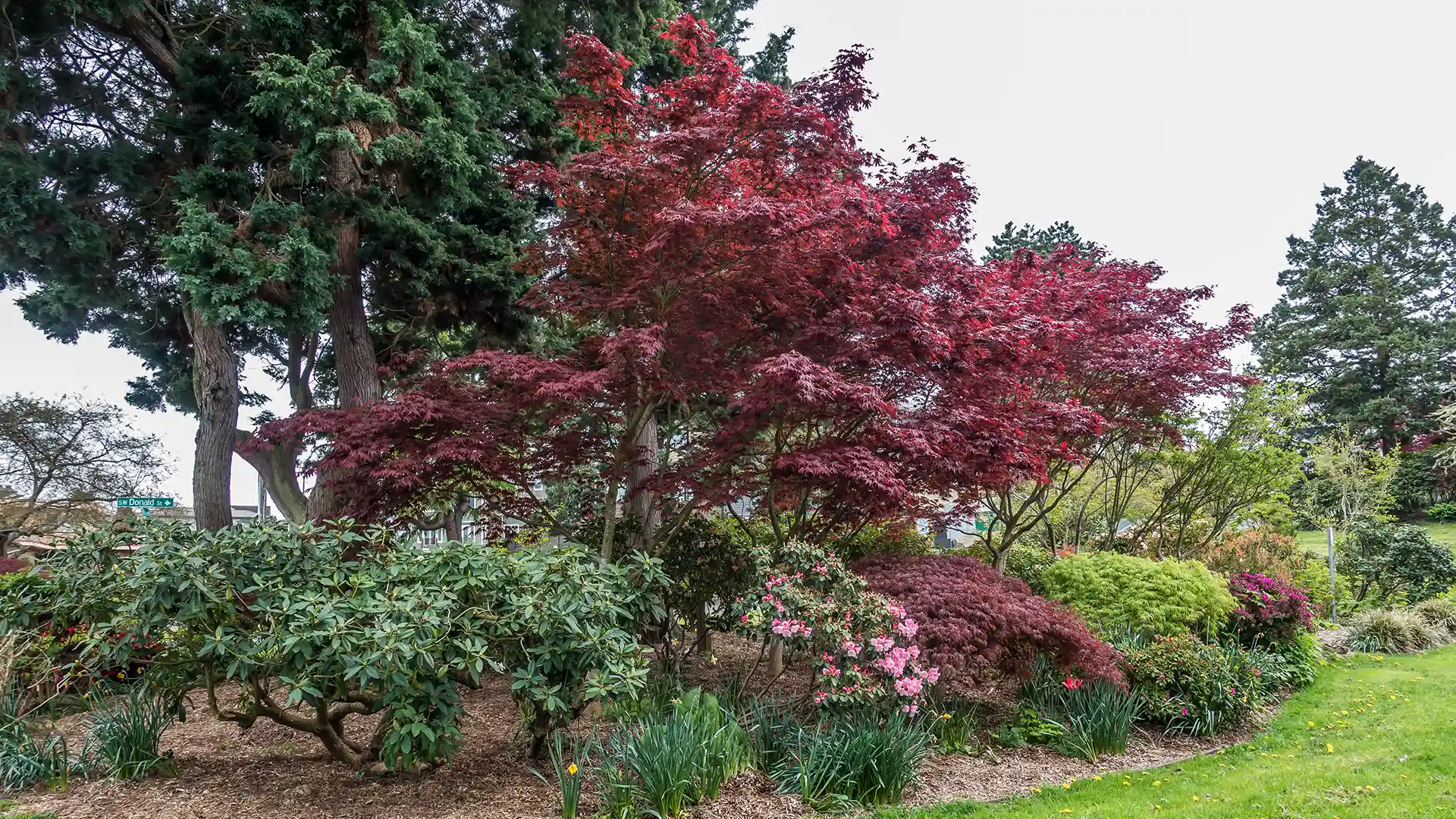
There is no one Japanese maple – there are hundreds, and the differences matter before you buy. The two big forms are upright types, which grow into small trees 15 to 25 feet, and the weeping or laceleaf types (the dissectum group), which stay low, mounded, and cascading. Leaf color ranges from deep red to green to variegated, and nearly all of them put on a spectacular fall show. Size is entirely cultivar-dependent, so match the plant to the space – a dwarf for a bed corner, an upright for a focal specimen.
How much sun does a Japanese maple need in NC?
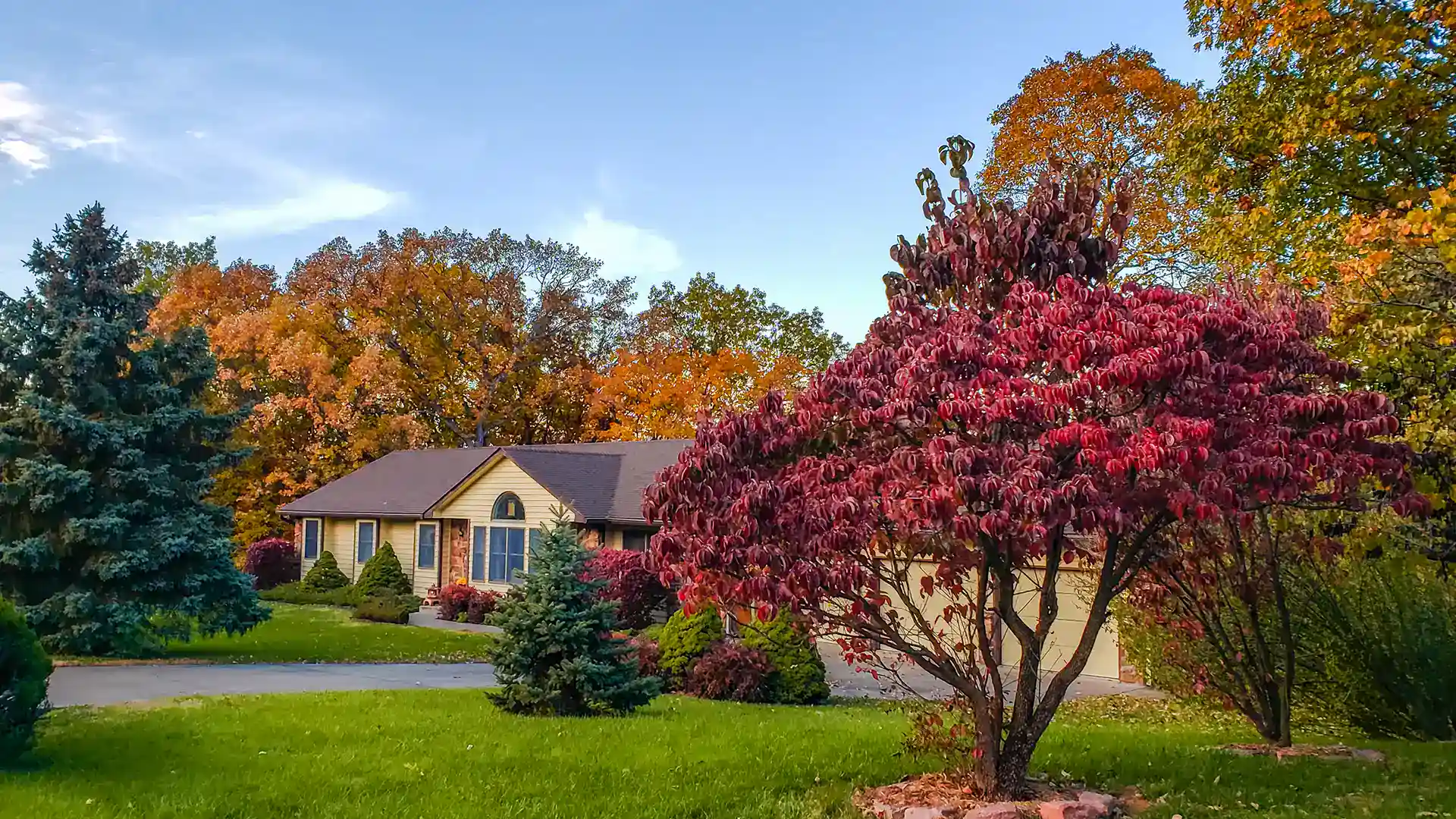
This is the single most important decision, and it is where most Japanese maples fail here. They want morning sun with afternoon shade, or bright dappled light under a high canopy – roughly four to six hours of gentle morning sun is ideal. What they cannot take is our hot, direct afternoon sun and drying wind, which pulls water out of those thin leaves faster than the roots can replace it. Plant one out in a full-sun lawn or against a hot west-facing wall and you are signing up for scorched leaves every summer. The laceleaf types are even more sensitive and want the most shade. If the spot you have in mind is an open, full-sun lawn, put a Chinese pistache there instead and save the maple for a shadier corner.
How to plant a Japanese maple
Plant in spring or fall in moist, well-drained, slightly acidic soil. Dig the hole about one and a half times the width of the root ball and set the tree at the same depth it was in the pot – never bury the crown, and if your spot is heavy, wet clay, plant a little high or build up a raised bed, because these roots rot in soggy ground. Water it in well and keep the soil evenly moist while it establishes. Want it planted right the first time? We handle shrub and tree planting across the Triangle.
Watering, mulching, and ongoing care
Deep-water once or twice a week through spring and summer, more for a young tree, a sunny spot, or a drought – the goal is soil that stays evenly moist, never bone-dry and never swampy. Keep two to three inches of mulch over the root zone, pulled back off the trunk, to hold that moisture and keep the shallow roots cool. Japanese maples need little to no fertilizer; a lush push of growth from heavy feeding actually makes them weaker, not stronger. If you would rather not babysit the watering and feeding, our tree and shrub maintenance plan covers it.
Leaf scorch and other Japanese maple problems
Most of what goes wrong is on this list – and the most common one is the least serious:
What you see | Cause | What to do |
|---|---|---|
Crispy brown leaf edges, worst mid-to-late summer | Leaf scorch (sun, wind, drought – not a disease) | Better siting (afternoon shade), mulch, deep steady watering |
Wilt and dieback on ONE side; dark streaks in the wood | Verticillium wilt (soil fungus) | Prune out, sterilize tools, reduce stress; no cure – often fatal |
Sticky leaves, black sooty film, stippling | Aphids, scale, or mites | Horticultural oil; usually minor |
Leaf spots and blighted leaves after a wet spring | Anthracnose / leaf spot | Sanitation and airflow; rarely needs spraying |
Decline and wilt in soggy soil | Root rot (poor drainage / planted too deep) | Improve drainage; plant at the correct depth |
When and how to prune a Japanese maple
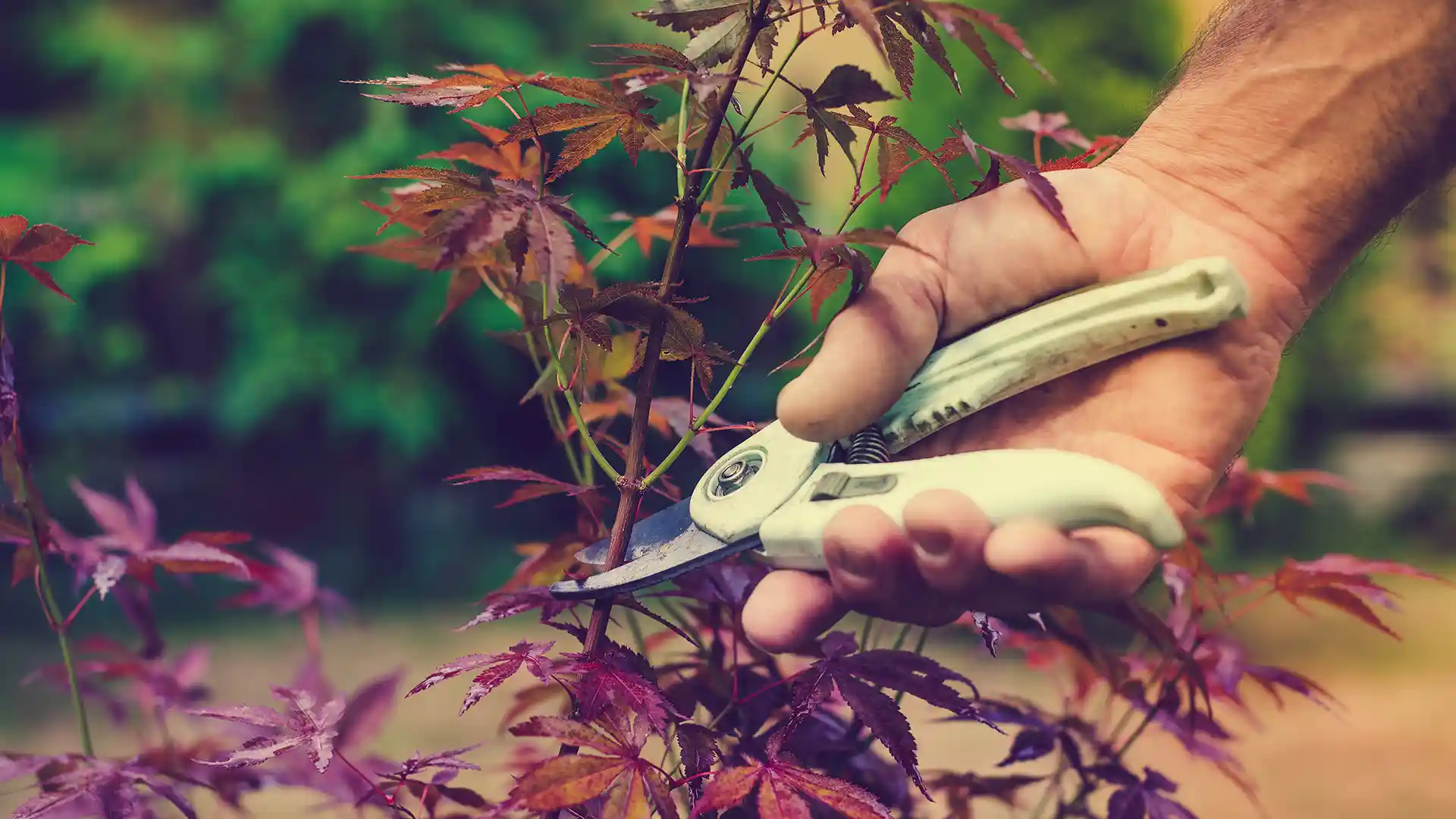
Less is more. Prune lightly for structure when the tree is dormant in late fall or winter, or just after the spring leaves harden off – avoid heavy late-winter cuts, which make the tree bleed sap. Take out dead, crossing, or crowded branches to open up that beautiful layered form, and then stop. Over-pruning a Japanese maple ruins the natural shape it took years to build, so resist the urge to shape it into something it is not. For a mature specimen you do not want to risk, we offer tree and shrub pruning.
DIY vs. hiring a pro
The watering, mulching, and light pruning are absolutely a homeowner job – and if you get the spot right, most Japanese maples are low-maintenance. Where a call earns its keep: planting a pricey specimen at the correct depth in the correct spot the first time, structural pruning on a mature tree, and figuring out whether that dieback is harmless scorch or serious verticillium wilt. We plant and care for specimen trees across the Triangle – text us at 984-284-5399 if you want yours sited right or you are not sure what the leaves are telling you.
Frequently Asked Questions
Want Your Japanese Maple Sited Right?
Getting the spot right is the whole game in our heat. We plant specimen trees at the correct depth in the correct place – and we can tell scorch from real disease. Text us to get yours going right.
Sources
NC State Extension Gardener Plant Toolbox – Acer palmatum
Clemson Cooperative Extension HGIC – Maple Diseases and Insect Pests
NC State Extension Master Gardeners – Japanese Maple Leaf Scorch
NC State Extension Gardener Plant Toolbox – Acer palmatum ‘Bloodgood’
