

The Cost of Lawn Care and Fertilization in the Triangle
Key takeaways
- Most Triangle homeowners pay roughly $60 to $140 per fertilization and weed-control visit, and a full-season program runs about $500 to $1,200-plus per year depending on lawn size and how much protection you add.
- Price is driven almost entirely by measured lawn size, priced per 1,000 square feet — not by a guess off a map.
- A program beats one-off treatments because turf care is a calendar, not a single spray.
- The cheapest “spray-and-pray” quote usually costs more over time in re-dos, weed breakthrough, and disease.
- The only honest number is the one measured for your yard. Ask for your lawn’s price.
What does lawn care actually cost in the Triangle?
Here is the straight answer. Across the Raleigh Triangle, a single professional fertilization and weed-control visit on an average suburban lawn runs about $60 to $140, and a full season of care lands somewhere around $500 to $1,200 or more per year. National fertilization data puts a per-application cost near $65 to $100, while North Carolina program figures often run higher, into the $80 to $195 range per visit, once you factor in our long growing season and transition-zone weed pressure.
Those are ranges on purpose. Anyone who quotes you a flat price before measuring your lawn is guessing. Below is a realistic snapshot for the Triangle.
Numbers move with your lawn’s size, its condition when we start, and how much protection you want. That is why the next question matters more than any single dollar figure.
Service | Typical Triangle range | Priced by |
|---|---|---|
Fertilization and weed-control visit | $60 to $140 per visit | 1,000 sq ft of turf |
Full-season program (7 to 12 rounds) | $500 to $1,200+ per year | lawn size and tier |
Core lawn program (Lawn Panther) | From $49 per application | lawn size |
Aeration (one-time) | $135 to $210 | lawn size and access |
Grub or disease add-on | $80 to $140 per treatment | lawn size |
Why is my quote priced per 1,000 square feet?
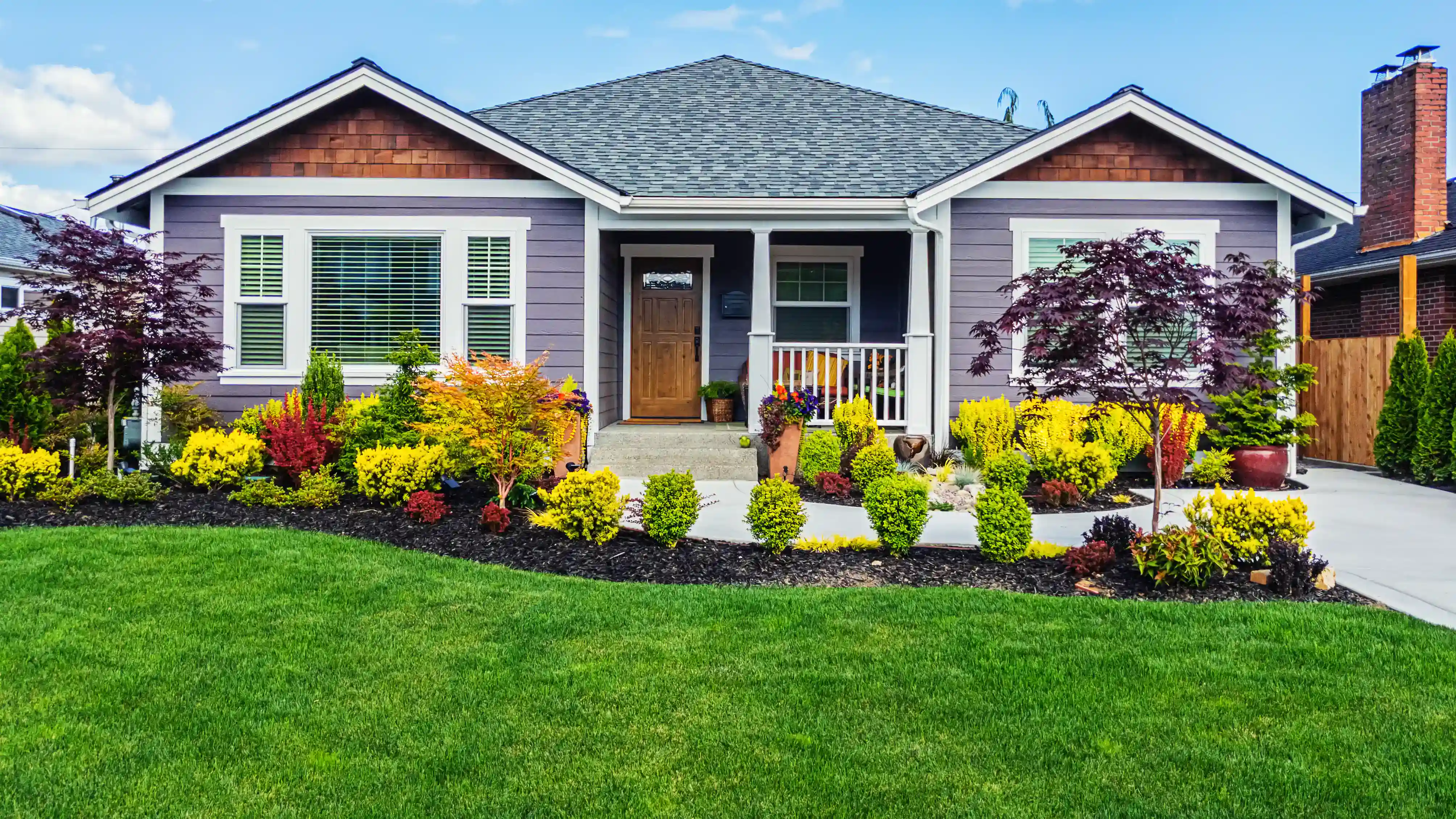
Turf products are applied by area, so we price by area. Fertilizer, pre-emergent, and post-emergent herbicides all have a labeled rate per 1,000 square feet. A crew treating 4,000 square feet of turf uses a fraction of the product and time that a 12,000-square-foot lawn needs. Charging both the same would be a made-up number.
This is also why a lot size off a county map is useless for pricing. Your lot includes the house, the driveway, the beds, and the trees. Your lawn is only the grass we actually treat. We measure the turf, divide by 1,000, and price from there. That single step is the difference between a real quote and a dart throw, and it is why two houses on the same street can pay very different amounts.
Program or one-off: which is cheaper?
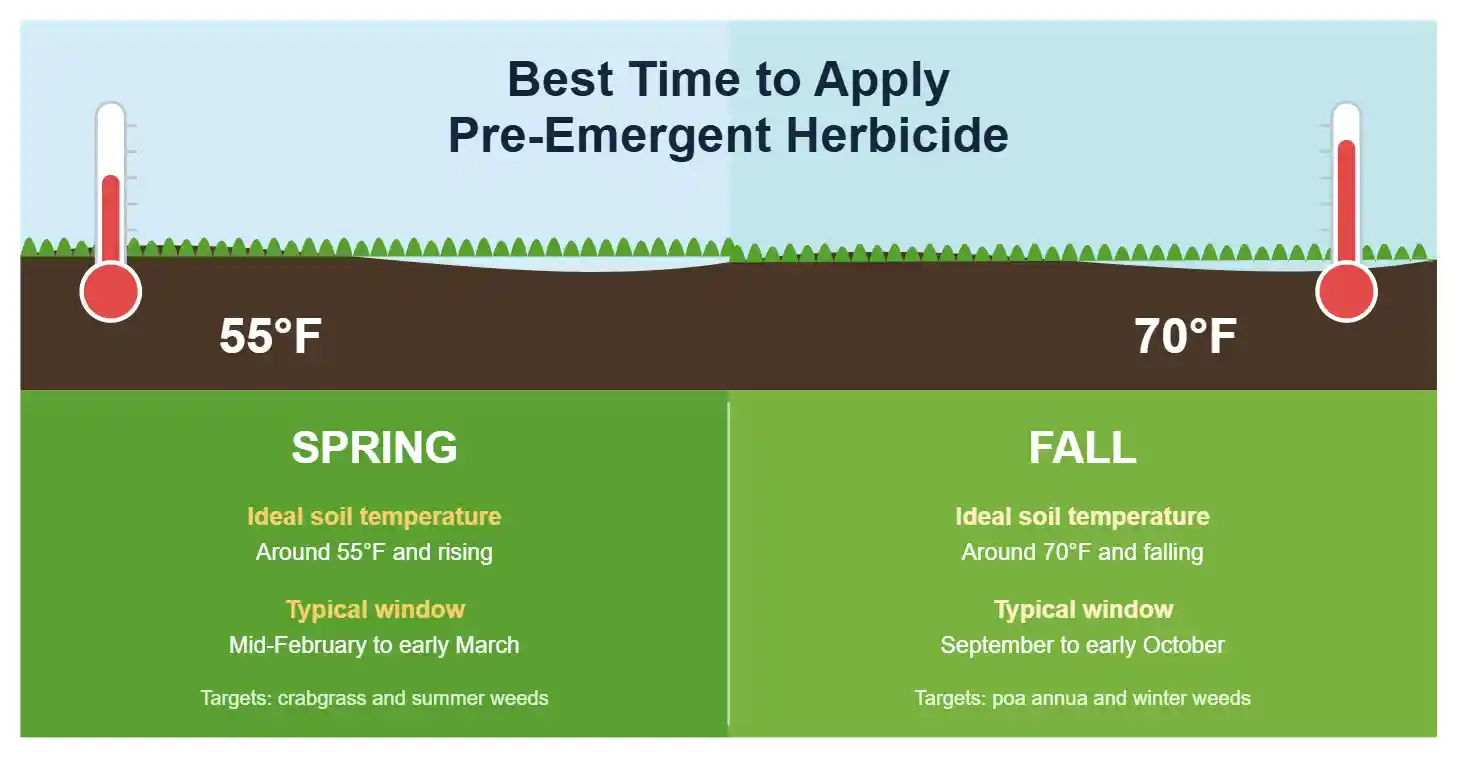
A one-off treatment feels cheaper because you only pay once. It rarely is. Lawn care in the transition zone is a calendar, not an event. Crabgrass has to be stopped with a spring pre-emergent before it germinates. Poa annua and winter weeds need a fall pre-emergent. Broadleaf weeds get knocked out in between. Nitrogen has to be timed to the grass type so you feed the lawn, not the weeds.
Buy those piecemeal and each visit carries its own trip charge and full retail rate. A program spreads the same work across a season at a lower per-round rate, and the timing is handled for you. On top of that, in-program add-ons like grub or disease control are priced below the one-time rate — a member typically saves about $20 per treatment versus buying it alone. A program is not an upsell here. It is simply the cheaper way to buy the same result.
What is included in a real fertilization and weed-control program?
Not all programs cover the same ground, so compare what is inside before you compare price. We build ours as three tiers so you only pay for what your lawn needs.
Core is the foundation: a full season of weed control plus fertilization, timed to your grass type, with a re-service guarantee if weeds break through between visits.
Complete adds preventive grub control and an insect guarantee covering army worms and chinch bugs, the two pests that can shred a Triangle lawn in a single hot week.
Signature adds a full disease and fungus program for the lawns most prone to brown patch, large patch, and spring dead spot.
What you should check on any quote — ours or a competitor’s — is how many rounds you get, whether weed re-service is included, and whether pests and disease are covered or billed as surprises later. We are a weed-control and turf-management company with a background in turf management and environmental biology, not just another landscaper. We are licensed by the state of North Carolina to apply herbicides and pesticides on turf and ornamental plants such as shrubs and trees.
Does fescue cost more than Bermuda or Zoysia?
It usually does, and grass type is one of the biggest reasons two neighbors pay different prices. The Triangle sits in the transition zone, so we treat both warm-season and cool-season lawns, and their calendars are different.
Cool-season tall fescue is under stress all summer and needs disease protection through the heat, so a full fescue program can run a couple more rounds than a warm-season one. Warm-season Bermuda and Zoysia do their growing and feeding in the summer and go dormant in winter, which shifts both the timing and the product list. Neither is “better,” but they are not the same job, and the price follows the work.
Why does cheap spray-and-pray cost more long term?
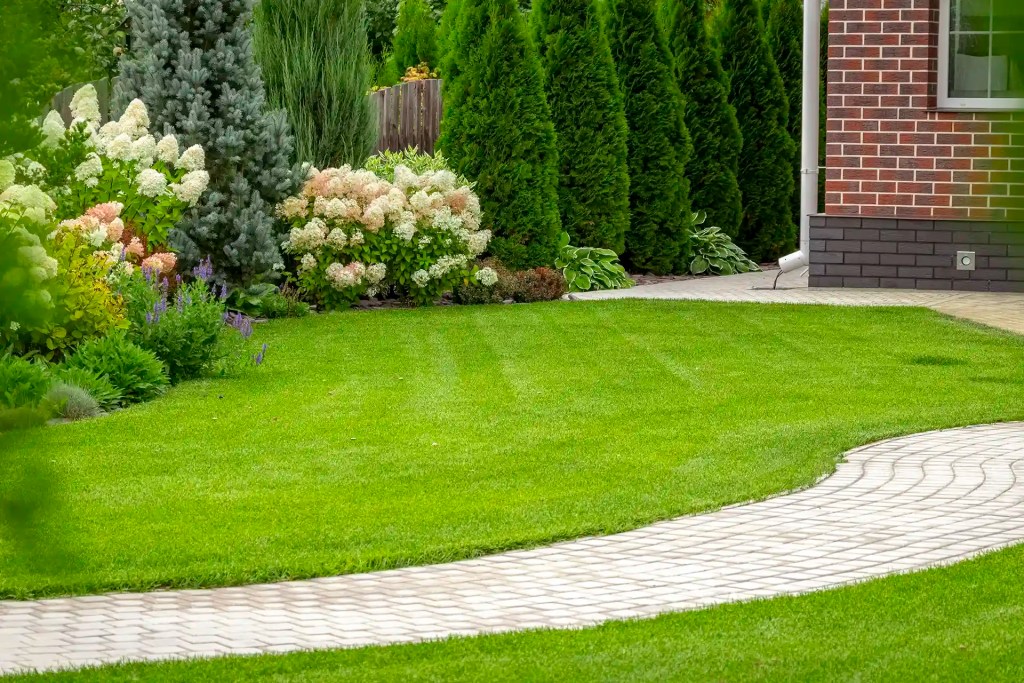
The lowest quote in your mailbox is almost always a generic tank mix sprayed on the same date for every customer, regardless of grass type or what is actually growing. It looks cheap on visit one. Then the crabgrass comes up because the pre-emergent went down late, the weeds come back because the rate was light, or the wrong product burned a warm-season lawn. Now you are paying again to fix it.
Real turf care is diagnosis first: the right pre-emergent at the right time, the right nitrogen for the grass, the correct product for the weed you actually have — Celsius for dallisgrass in warm-season turf, mesotrione only where the label allows it, and never a banned product like MSMA. That precision is the whole value, and we treat safety by the label every time: stay off the treated area until it is dry, per the product label. Cheap is not cheap when you buy it twice.
Should I DIY or hire a pro?
Here is the honest line I give everyone. If you have a small, healthy lawn, enjoy the work, and are willing to read labels and calibrate a spreader, you can absolutely fertilize and spot-spray yourself. A bag of quality fertilizer runs $45 and a spreader is $150, so materials are not the barrier.
Call a pro when the stakes go up: a large lawn, a chronic weed you cannot identify, disease pressure, or restricted products that require a license to apply correctly and legally. The math usually favors a program once you value your weekends and the cost of guessing wrong. If you are not sure which camp you are in, ask — I will tell you straight.
Ready for a real number?
Stop guessing from a range. The only price that means anything is the one measured for your lawn. We will measure your turf, look at your grass type and its condition, and build a program — Core, Complete, or Signature — that fits your yard and budget. Start with our weed control program or lawn fertilization service, see the warm-season options on our Bermuda and Zoysia maintenance plans or the expert fescue maintenance plan, then grab your super fast quote. For your lawn’s price, call or text us at (984) 284-5399.
Frequently Asked Questions
Not Sure What Your Lawn Would Cost?
I price off a satellite measurement of your actual lawn, not a range off a website. Call or text us at (984) 284-5399 and I will measure yours.
Sources
