

Modern Landscape Design Elements: How to Give Your Yard a Clean, Current Look
By Ken Erickson · Updated June 2026
Walk past a yard with a clean, current look and you can feel it even if you cannot name it – it looks calm, intentional, uncluttered. That is modern landscape design, and it is less about buying special plants than about restraint and structure. It also happens to be a great fit for the blank, new-build lots all over the southern suburbs. Here is what actually makes a landscape read modern, and how to bring that look to your own yard.
Key takeaways
- A modern yard is defined by restraint, not decoration – clean geometric lines, simple bed shapes, and intentional open space do more than any single feature.
- Limit the plant palette and plant in masses – repeat two or three species in blocks rather than one of everything.
- Structure comes from architectural plants plus strong evergreen bones – boxwood, ornamental grasses, yucca, a specimen Japanese maple – so the yard holds its shape in every season.
- Hardscape carries the look: clean pavers, gravel, and crisp steel or metal edging give the sharp lines plants alone cannot.
- Modern done right in NC is built for our zone 7b heat and clay, and it leans low-maintenance – tough structural plants, defined edges, less fussy lawn.
Modern Landscape Design: What Makes a Landscape Look Modern?
Modern landscaping comes down to a handful of ideas: clean straight lines, simple geometric shapes, a limited plant palette, restrained color, quality hardscape, and – this is the one people miss – intentional open space. Where a traditional yard tends to fill every inch with a different plant, a modern one uses simplicity and negative space as design features. It is the difference between a busy, ornate look and a sharp, editorial one. Nail that mindset first and every specific choice below gets easier.
Element | Traditional look | Modern look |
|---|---|---|
Bed shapes | Ornate curves, scalloped edges | Straight lines, geometric shapes, crisp edges |
Plant palette | One of everything, many colors | Two or three species repeated in mass |
Plant type | Mixed, wandering shrubs | Architectural, strong-form plants |
Hardscape | Many mixed materials | Two or three materials, clean stone/gravel |
Edging | Soft or none; mulch bleeds into lawn | Sharp steel/metal or clean stone edge |
Open space | Crowded, filled borders | Intentional negative space as a feature |

The design principles that actually matter
A few timeless principles do the heavy lifting. Unity and repetition tie the yard together – repeating the same plant or material creates rhythm and calm. Balance can be formal (symmetrical, mirrored) or informal (asymmetrical but weighted), and modern usually leans toward clean symmetry. Proportion and scale mean sizing everything to the house, so a big two-story home carries bold plantings a small ranch cannot. And every good design has a focal point – one thing your eye lands on. Get unity, balance, scale, and a focal point right and the yard works, whatever the style.
Clean lines and geometry: beds, borders, and shapes
This is where modern really shows. Straight lines and crisp geometric bed shapes – rectangles, clean arcs, defined squares – read modern; fussy scalloped curves read traditional. Give your beds sharp, defined edges instead of letting mulch bleed into the lawn. And leave some space empty on purpose. A clean sweep of lawn, gravel, or groundcover next to a simple planting is far more striking than cramming in more plants. Negative space is not wasted space; in a modern design it is the point.
A limited plant palette and mass planting
Here is the single biggest shift from a typical yard: stop planting one of everything. A modern landscape repeats just two or three species in generous masses – a block of the same grass, a row of matching shrubs, a drift of one perennial. Mixing many different plants and colors is the fastest way to look busy and dated. Keep the color restrained too, leaning on greens, whites, and the silvers and burgundies of foliage rather than a rainbow of blooms. Fewer kinds of plants, more of each – that restraint is what reads as designed.
Structural plants and evergreen bones
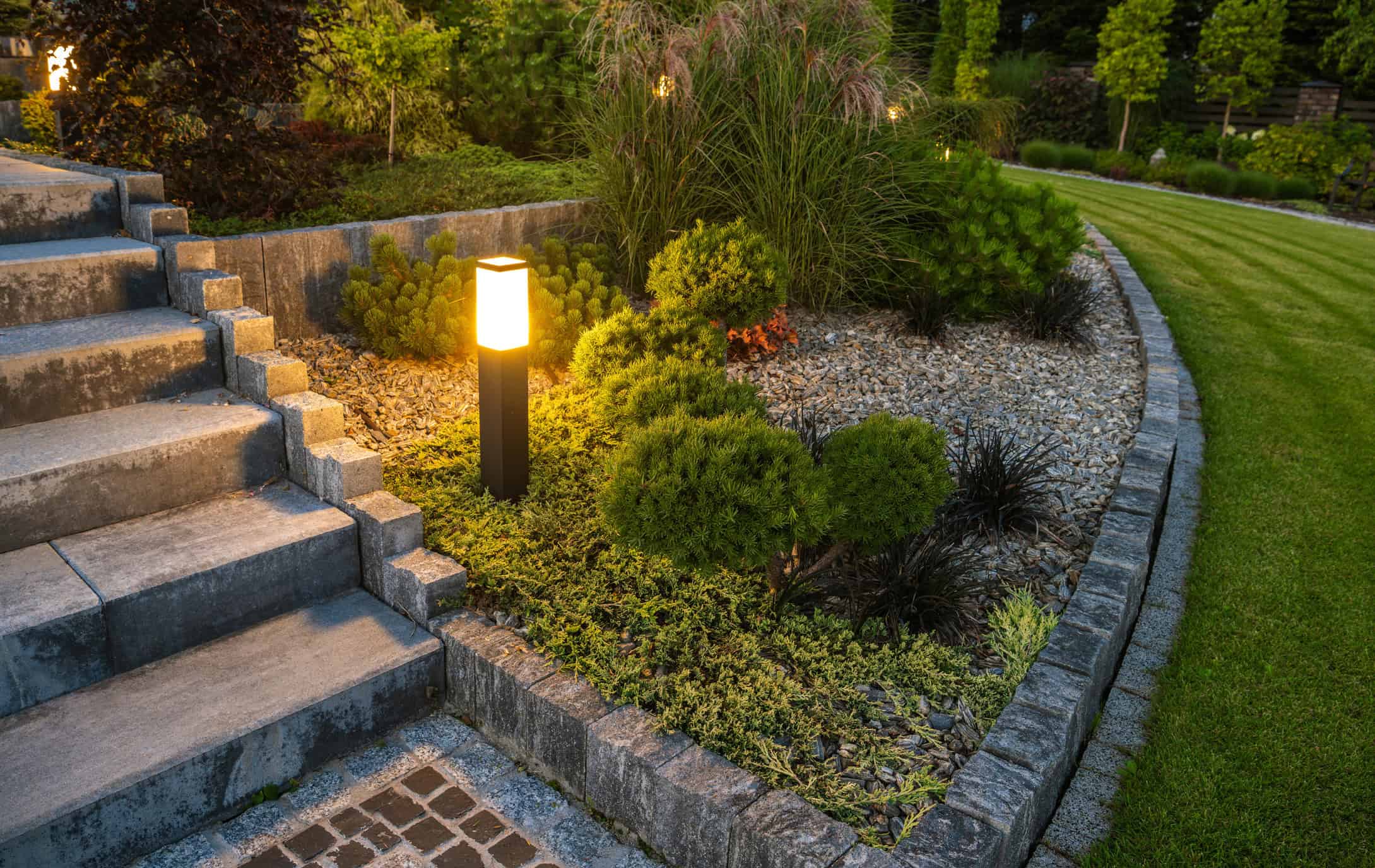
Modern design leans on plants with strong, architectural form and on evergreens that hold the structure through winter. Boxwood clipped into clean shapes, ornamental grasses for movement and texture, the bold spikes of yucca, and a single specimen Japanese maple as a focal point all pull their weight. In our zone 7b heat and heavy clay, favor the tough, structural, drought-tolerant picks that look sharp with little fuss. The goal is a yard that has good bones in February, not just a burst of color in May – and evergreen structure is what delivers that.
Hardscape and edging: where the clean look comes from
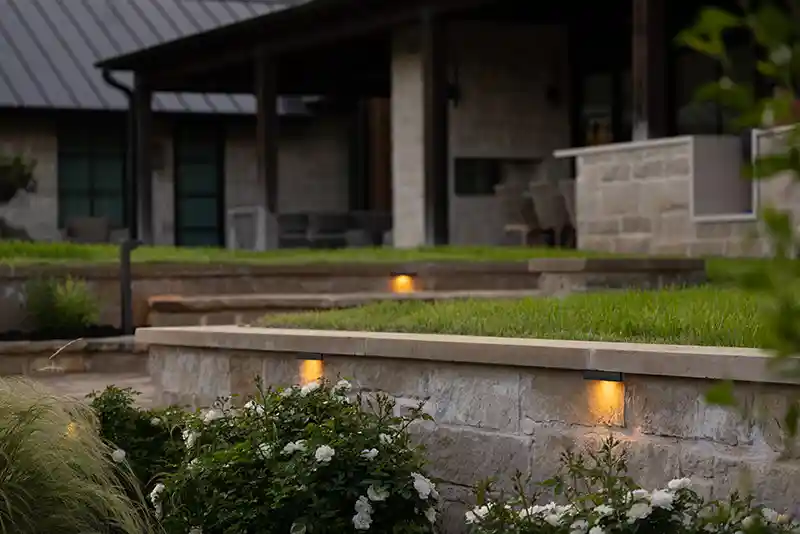
Plants alone cannot give you the crisp lines that define modern design – the hardscape does. Clean concrete pavers, a bed of gravel or decomposed granite, and sharp steel or metal edging create the geometry and the borders. Keep the materials limited – two or three at most – so the look stays cohesive instead of busy. Well-defined edges, clean paths, and simple patios also create outdoor rooms and a smooth flow from indoors out. This is the layer that separates a landscape that looks designed from one that just looks planted.
Landscape lighting and low-maintenance design
Two finishing pieces. Layered landscape lighting extends the clean look after dark – a few well-placed uplights on a specimen tree or wall wash across a clean facade turn the yard into an evening space and highlight the structure you built. And modern design, done right here, is low-maintenance by nature: a limited palette of tough plants, more hardscape and gravel, less thirsty lawn, and defined edges all mean less pruning, watering, and cleanup. That is the practical payoff for a busy Triangle homeowner – a yard that looks sharp and does not run your weekends. If you want that look designed and installed, that is what we do – text us at 984-284-5399.
Frequently Asked Questions
Want a Clean, Current Look for Your Yard?
We design and install modern landscapes built for our heat and clay – clean lines, structural plants, and low upkeep. Text us to plan yours.
Sources
NC State Extension Gardener Handbook – Landscape Design
Michigan State University Extension – Principles of Landscape Design
UF/IFAS – Basic Principles of Landscape Design
Garden Design – Elements and Principles of Landscape Design
