

Sap-Sucking Pests on NC Trees and Shrubs: Aphids, Lace Bugs, Mites, Whiteflies
By Ken Erickson · Updated June 2026
Sap sucking insects are usually behind bleached leaves, black sooty mold, and sticky residue. If your azaleas look bleached, your gardenia leaves are turning black, or something sticky is dripping onto your patio furniture, you are almost certainly dealing with a sap-sucking pest. Here in Raleigh’s southern suburbs, aphids, lace bugs, spider mites, whiteflies, and adelgids all make a living the same way – they pierce leaves and stems and drink the plant’s fluids. That shared feeding style is why they share a signature: pale stippled or yellowing leaves, a sticky honeydew film, and the black sooty mold that grows on top of it. We are licensed in North Carolina to treat trees and shrubs, and below we will walk you through how to identify each one and what actually gets rid of it.
Key takeaways
- Sap-sucking pests all feed the same way – they pierce leaves and drain plant fluids – so they leave the same tell-tale signs: pale stippling, sticky honeydew, and black sooty mold.
- If your shrub’s leaves are sticky or turning black, that is not a disease attacking the plant – it is sooty mold growing on the honeydew a sap-sucker left behind.
- Azalea lace bugs are the most-reported landscape insect in North Carolina, running two-plus generations a year, with the spring hatch doing the most damage.
- Spider mites are not insects, and they thrive in the hot, dry stretches of a Raleigh-area summer, bronzing evergreens and drawing fine webbing over the foliage.
- Timing beats brute force: catching these pests early – at the first stippling or the first nymphs – controls them far more easily than waiting until the plant is bleached out.
Sap Sucking Insects: What are sap-sucking pests, and how do you know you have them?
Sap-sucking pests are insects and mites that use needle-like mouthparts to pierce plant tissue and drain the sap inside. Because they all feed this way, they all leave the same three warning signs. First, feeding damage shows up as stippling – tiny pale or bronzed flecks on the leaves where the cells have been drained. Second, most of these pests excrete the excess sugar they cannot use as honeydew, a clear, sticky film that coats leaves and drips onto anything below – cars, decks, patio furniture. Third, a black fungus called sooty mold grows on that honeydew, turning leaves and stems dark, sometimes almost coal-black. Ants are a fourth clue: they farm honeydew-producing pests for the sugar, so a trail of ants marching up a shrub often means a sap-sucker is feeding above. The pests themselves are small and usually hide on the undersides of leaves, so most people notice the damage long before they spot the bug.
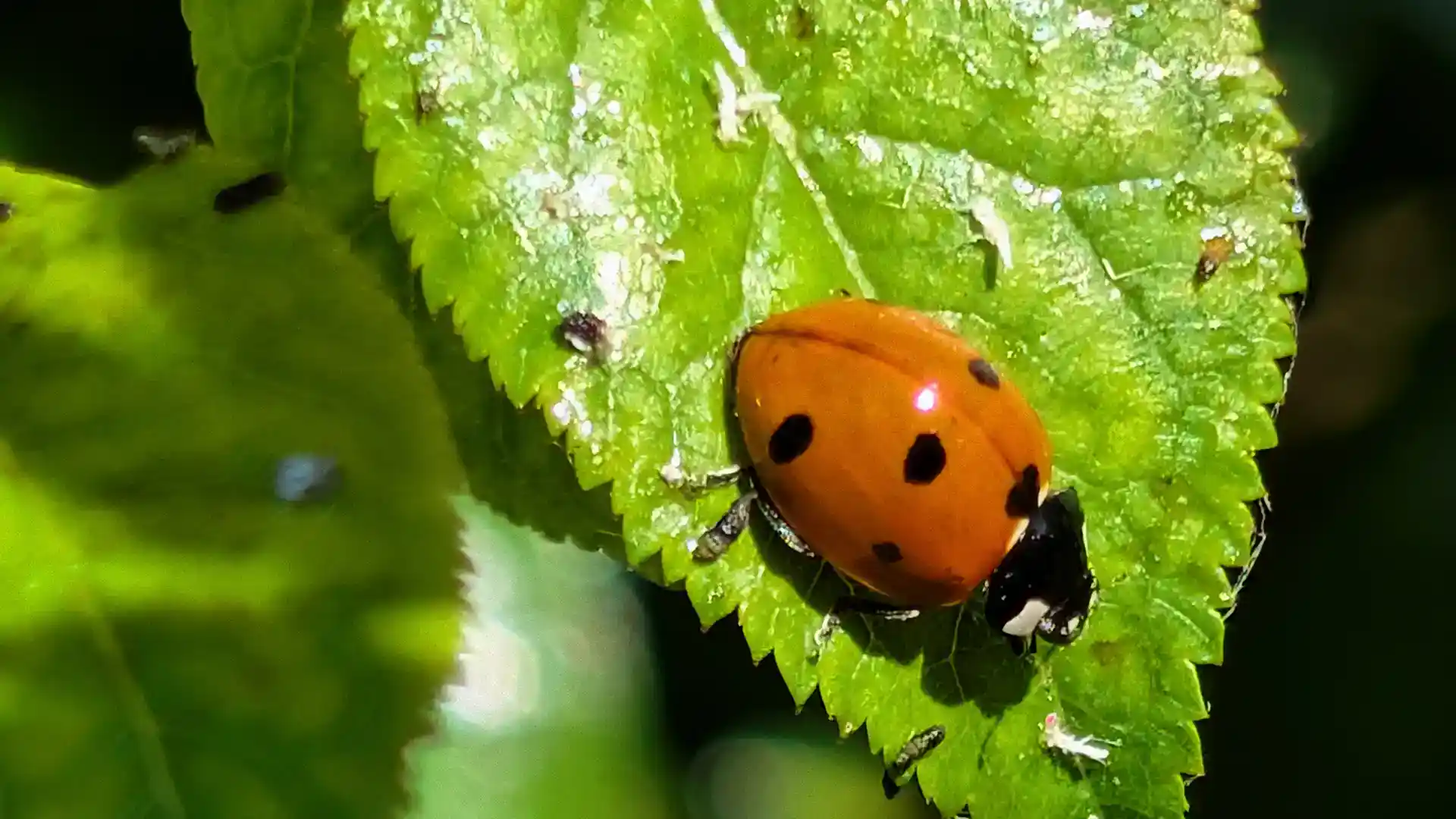
Aphids on shrubs and trees
Aphids are soft, pear-shaped insects about an eighth of an inch long, usually green or yellow but sometimes black, red, or gray, and they cluster in colonies on tender new growth and the undersides of leaves. In our area they hit crepe myrtles, roses, tulip poplars, oaks, and vegetable-garden edges especially hard, and populations explode fastest in spring on flushes of new growth. Heavy feeding causes leaves to curl, pucker, and yellow, and stunts new shoots. Aphids are the classic honeydew producer – they are the pest most often behind sticky leaves, sooty mold, and the trail of ants working a shrub. The good news is aphids are one of the easier sap-suckers to knock down, and beneficial insects like ladybugs and lacewings help keep them in check when a yard is not over-sprayed.

Lace bugs: the azalea lace bug is the big one in NC
Lace bugs are the single most-reported landscape insect in North Carolina, and the azalea lace bug is the one homeowners here fight most. Adults are about an eighth of an inch long with clear, lacy, patterned wings, and they feed on the undersides of leaves – where you will also find their dark, varnish-like excrement specks. Their damage is unmistakable: the top of the leaf turns pale, silvery, and stippled, and heavy feeding bleaches azalea and rhododendron foliage until it looks gray or bronzed and washed-out. Those bug specks on the leaf underside are the key tell that separates lace bug damage from spider mite damage. In North Carolina lace bugs run at least two generations a year, and the spring generation does the most harm, so azaleas planted in hot, full-sun spots get hammered the worst. Because the damaged leaves never fully recover their color, catching the first nymphs on the leaf undersides in spring is what saves the plant’s appearance for the season.
Whiteflies
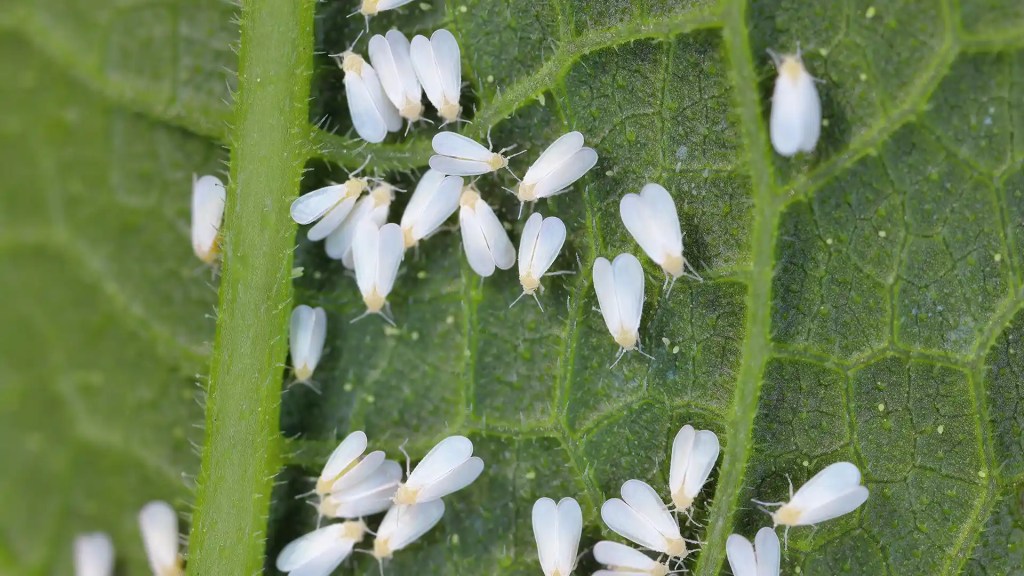
Whiteflies are the tiny white bugs that puff up in a little cloud when you brush a shrub and settle right back down. Adults look like tiny white moths about a sixteenth of an inch long, and their flat, scale-like nymphs sit on the undersides of leaves. Locally they favor gardenias, azaleas, and many soft-leaved ornamentals, along with vegetable gardens. Like aphids, whiteflies excrete honeydew, so an infested plant turns sticky and then black with sooty mold, and heavy feeding leaves the foliage pale, yellowed, and weak. They are easiest to control early, when you first see a few – once a colony builds up on the leaf undersides they get much harder to clear, so noticing that little white cloud early matters.
Spider mites
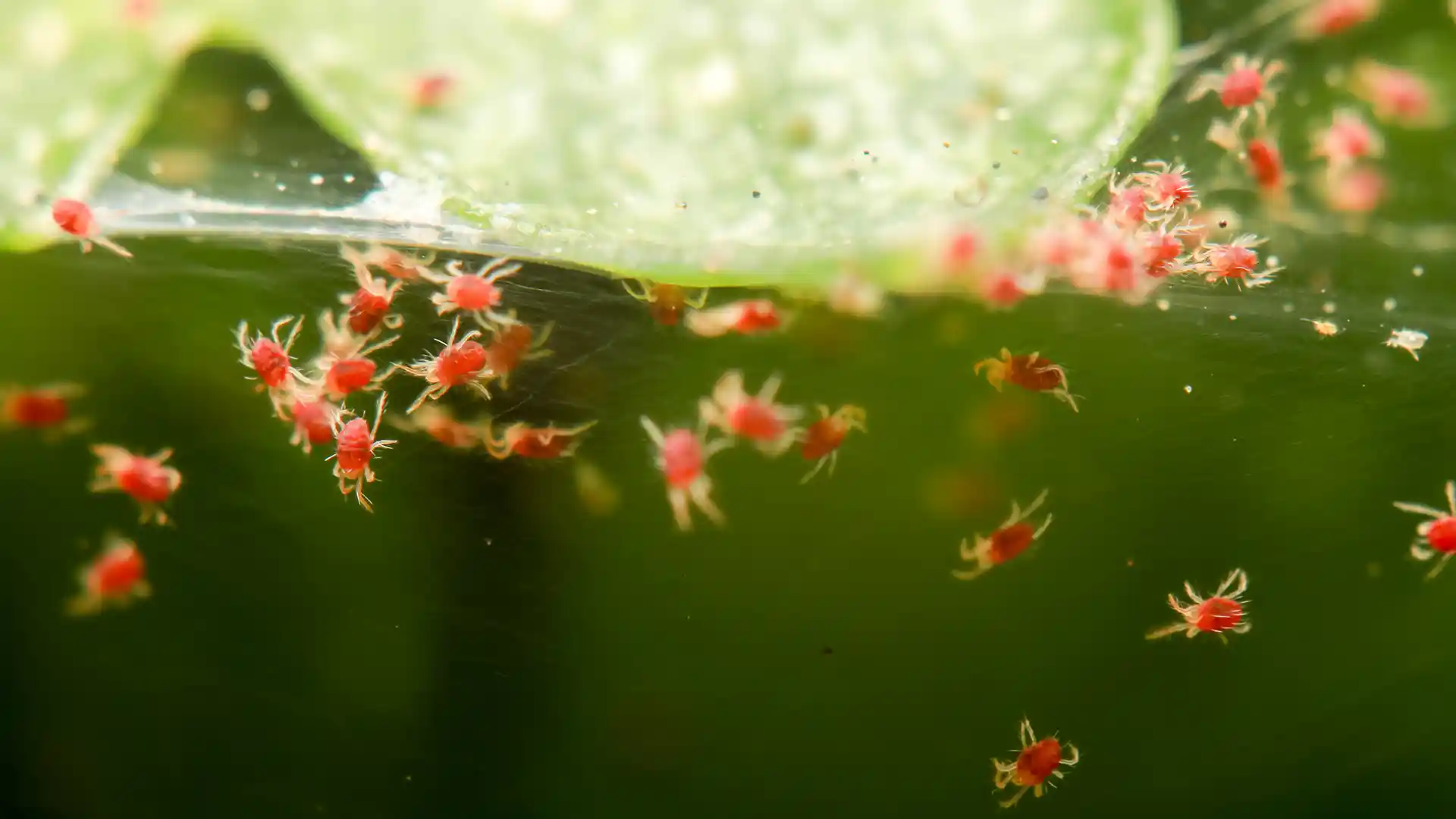
Spider mites are not insects – they are tiny relatives of spiders, so small you often need to look closely or tap a branch over white paper to see them move. They flare up in the hot, dry stretches of a Triangle summer and attack a huge range of plants: junipers, arborvitae, boxwoods, hollies, roses, and burning bush are common local targets. Their feeding produces fine stippling that gives leaves a dull, sandy, or bronzed cast, and in a bad infestation you will see delicate webbing strung across the leaves and stems – a sign the population has already gotten high. Because mites do not leave the dark excrement specks lace bugs do, that clean-but-stippled look, plus the webbing, is how you tell them apart. They multiply blisteringly fast in heat, so a plant can go from healthy to bronzed in a couple of weeks during a dry summer.
Pest | What you see | Common NC hosts | Tell-tale sign |
|---|---|---|---|
Aphids | Soft green/black clusters on new growth; sticky leaves | Crepe myrtle, roses, tulip poplar, oaks | Honeydew + sooty mold, ants trailing up the plant |
Lace bugs | Pale, silvery, bleached-out upper leaves | Azalea, rhododendron | Dark varnish-like specks on the leaf undersides |
Spider mites | Dull, sandy, bronzed stippling; fine webbing | Junipers, arborvitae, boxwood, holly, roses | Webbing over the foliage, but NO excrement specks |
Whiteflies | Tiny white moths that fly up in a cloud when disturbed | Gardenia, azalea, soft-leaved ornamentals | White cloud on disturbance + sticky, sooty leaves |
Adelgids | White cottony/woolly tufts on twigs and needles | Hemlock (hemlock woolly adelgid) | Cotton-swab tufts at the base of needles; graying needles |
Adelgids
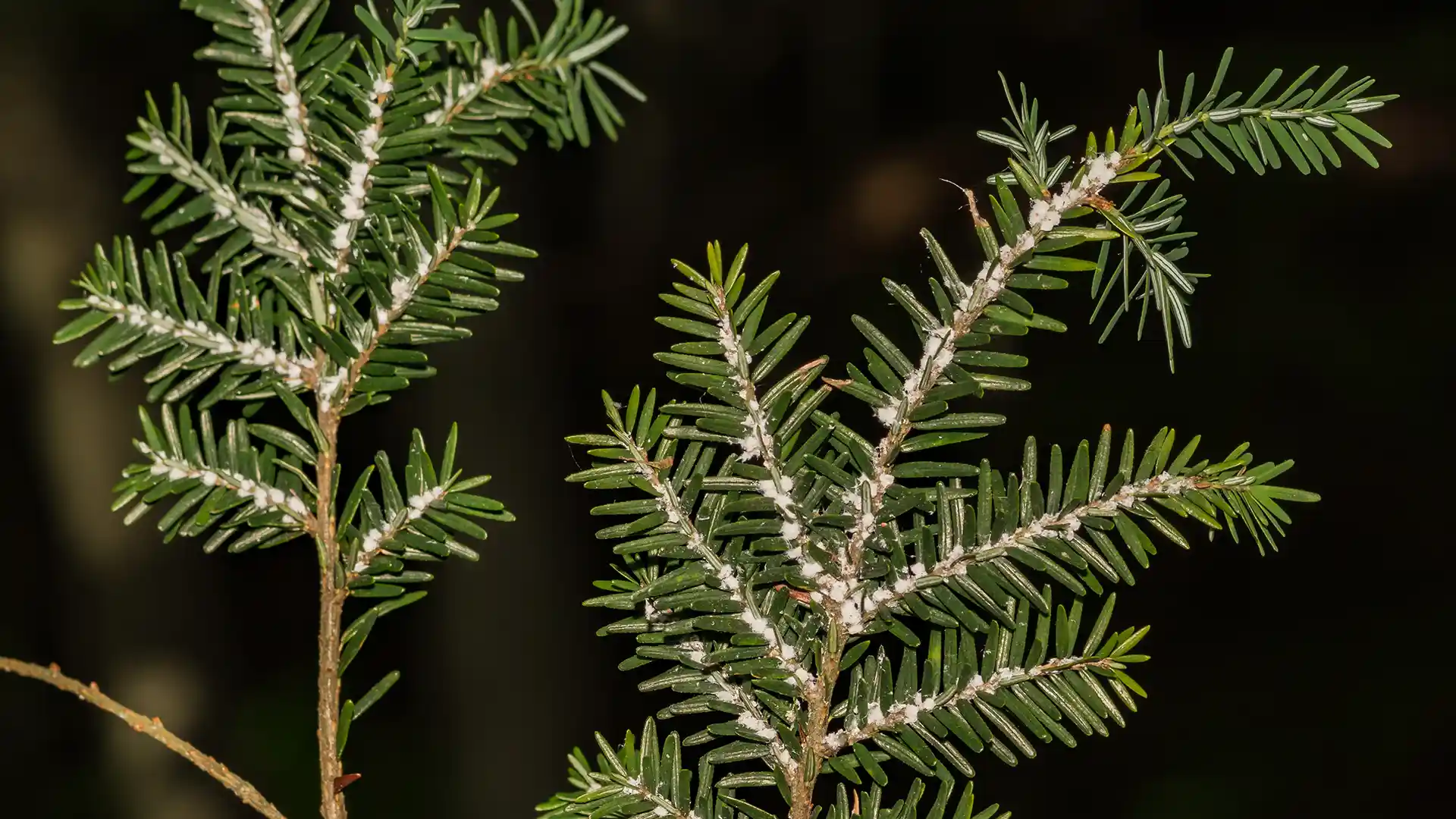
Adelgids are small, aphid-like insects that cover themselves in a white, cottony or woolly wax, which is usually the first thing you notice – little tufts that look like dabs of cotton on the twigs. The one that matters most in North Carolina is the hemlock woolly adelgid, which forms white woolly masses at the base of the needles on the undersides of hemlock branches. As it drains sap from the twigs, needles turn grayish-green and drop, growth stalls, and an untreated tree can decline and die within a few years. Because hemlocks are a signature tree in our region’s landscapes and wooded lots, an adelgid problem is one you do not want to sit on – those cottony tufts are the cue to have the tree looked at.
Treating sap-suckers: what you can do yourself, and when to call us
A lot of light sap-sucker problems you can handle yourself. A firm spray from the garden hose – aimed at the undersides of the leaves – knocks aphids, mites, and whiteflies off and drowns many of them, and repeating it every few days keeps numbers down. Keeping plants healthy and correctly sited helps too: an azalea in blazing full sun is stressed and far more attractive to lace bugs than one with afternoon shade. Where it pays to call a licensed pro is when the plant is large, the infestation is established, the damage keeps coming back, or the pest is one that kills – like the hemlock woolly adelgid. Timing is the other reason: these pests are far easier to control at the first stippling or the first nymphs than after the foliage is bleached out, and a pro knows the local hatch windows for each one. We are licensed in North Carolina to treat trees and shrubs – if your plants are showing stippling, stickiness, black leaves, or cottony tufts, text us at 984-284-5399 and we will take a look. For a professional inspection and treatment, see our tree and shrub pest control service, or keep pests out year-round with our tree and shrub maintenance plan.
Frequently Asked Questions
Sticky Leaves, Bleached Azaleas, or Cottony Tufts?
Sap-suckers are beaten by hitting them early, at the right stage – and some of them kill. We are licensed to treat trees and shrubs in NC. Text us and we will take a look.
Sources
NC State Extension – Azalea Lace Bug
NC State Extension – Twospotted Spider Mites on Landscape Plants
NC State Extension – Sooty Molds
Clemson Cooperative Extension HGIC – Azalea Lace Bugs
