

Tea Olive in North Carolina: The South’s Most Fragrant Evergreen (and Which Type Survives the Triangle)
By Ken Erickson · Updated August 2026
If you have ever walked through a Southern garden in October and stopped dead because something smelled incredible, odds are it was tea olive. The flowers are tiny and easy to miss, but the fragrance carries across a whole yard. It is one of my favorite shrubs to plant near a patio or front door – but there is a catch in our climate, because the most fragrant type is not the hardiest. Here is how to grow it and which one to actually plant in the Triangle.
Key takeaways
- Tea olive (Osmanthus) is a dense broadleaf evergreen grown for tiny, intensely fragrant fall flowers – the scent gets compared to peaches, jasmine, and orange blossom.
- Size runs from 6 to 30 feet by type; most are kept at 8 to 15 feet and shear into a fragrant hedge or screen.
- It is slow-to-moderate growing, long-lived, drought-tolerant once established, and deer-resistant – about as low-maintenance as a shrub gets.
- In the colder Triangle (zone 7b), holly tea olive and Fortune’s tea olive are the reliably hardy picks. The classic fragrant tea olive is marginal here and needs a warm, protected spot.
- Plant it in full sun to part shade in well-drained, slightly acidic soil, near a patio, entry, or window where you will actually enjoy the fall fragrance.
What is tea olive?
Tea olive, or Osmanthus, is a broadleaf evergreen in the olive family. Some types have holly-like leaves and get mistaken for holly – the easy tell is that tea olive leaves grow opposite each other on the stem, while holly leaves alternate. Depending on the type, the leaves can be smooth or spiny, and the plant forms a dense, handsome shrub. What everyone grows it for is the flowers: small, creamy clusters that punch way above their size in fragrance.
Which tea olive is hardy in North Carolina?
This is the part that matters most here, and where a local pro can save you a plant. The most fragrant one – fragrant tea olive (Osmanthus fragrans) – is marginal in the colder Triangle. It can take cold damage in a hard winter, so if you plant it, put it in a warm, protected spot against a south-facing wall. The reliably hardy picks for us are holly tea olive and Fortune’s tea olive, both rated to zone 7. Same wonderful fragrance, tougher plants.
Type | Fragrance | Hardiness | Note for the Triangle |
|---|---|---|---|
Holly tea olive (O. heterophyllus) | Intense | Zone 7-9 | Best hardy pick here; holly-like leaves, great fragrant hedge |
Fortune’s tea olive (O. x fortunei) | Strong, fall | Zone 7+ | Reliable in NC; larger, good screen |
Fragrant tea olive (O. fragrans) | The most fragrant | Zone 7b-9 (marginal) | Site warm and protected in the colder Triangle |
Devilwood (O. americanus) – native | Sweet, early spring | Native Coastal Plain | Native option; more a coastal/naturalized pick |
How big does tea olive get, and how fast?
It depends on the type. Tea olives can run anywhere from 6 to 30 feet, but most in a landscape are kept around 8 to 15 feet and shear cleanly into a hedge – you can hold one as low as about 4 feet with regular trimming. Growth is slow to moderate, roughly a few inches to a foot a year, faster in rich, well-watered soil. So a fragrant hedge fills in over a few seasons, not one – worth knowing before you space them.
When and how does tea olive bloom?
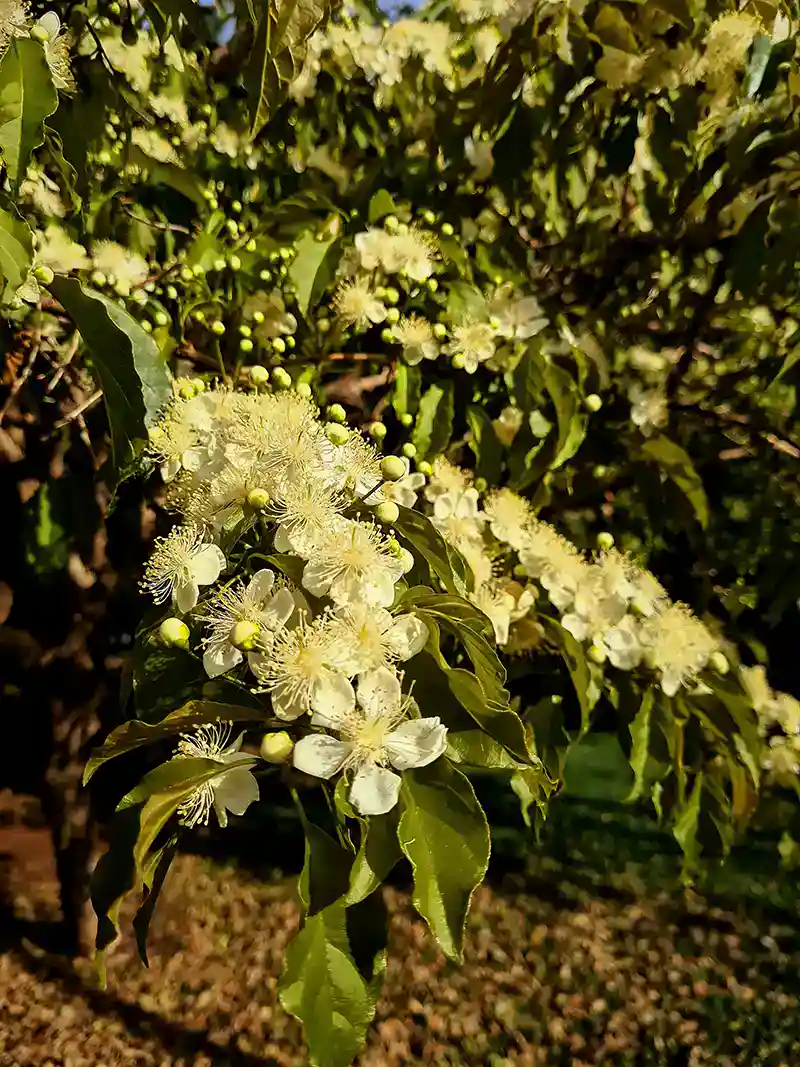
The main show is fall, usually October into November, when the little flowers open and perfume the yard. Fragrant tea olive is the overachiever – it blooms for a couple of months in fall and then throws scattered flowers through winter into spring. The flowers are small and mostly creamy-white, with some cultivars in orange or gold. You plant tea olive for the nose, not the show, so put it where people walk by.

How to plant and care for tea olive
Give it full sun to part shade – full sun gives the densest growth and the heaviest bloom, while deep shade makes it thin and leggy. It wants moist, well-drained, slightly acidic soil; like most shrubs, it will not tolerate soggy feet. Water it in well and keep it watered its first year, and after that it is quite drought-tolerant. For a tight privacy screen, space plants a few feet apart on center. Feeding is light – a spring feed is plenty – and pruning is minimal; shear to shape after it blooms so you are not cutting off next season’s flowers.
Is tea olive deer-resistant, and what problems does it have?
Good news on both counts. Tea olive is fairly deer-resistant – the aromatic foliage, and the spiny leaves on the holly types, put deer off – and it is close to pest-free, which is a big part of why I like it. The few things to watch: occasional scale insects (a horticultural oil handles them), and root rot if it sits in wet soil, which comes back to planting it somewhere well-drained. Otherwise this is one of the most trouble-free fragrant shrubs you can grow.
Frequently Asked Questions
Want a Fragrant Evergreen Hedge That Survives Our Winters?
We plant the hardy tea olives that actually thrive in the Triangle – sited and spaced right for a fragrant privacy screen. Text us to plan your hedge.
Sources
Clemson Cooperative Extension HGIC 1083 – Tea Olive
NC State Extension Gardener Plant Toolbox – Osmanthus fragrans
NC State Extension Gardener Plant Toolbox – Osmanthus heterophyllus
NC Cooperative Extension – Plant Spotlight: Tea Olive
