

Winterberry Holly in North Carolina: Native Red Winter Berries (and Why You Need a Male Plant)
By Ken Erickson · Updated June 2026
If you want a real show of color in the dead of winter, nothing beats a winterberry holly loaded with brilliant red berries against the snow or a gray January sky. It is native, the birds love it, and it grows in the soggy spots where your other shrubs drown. But there is one catch that trips up almost everyone who buys one, and it is the reason so many people end up with a berry-less plant. Let me walk you through it so yours actually berries.
Key takeaways
- Winterberry holly is a native, deciduous holly – it drops its leaves in fall, which is exactly why the bright red berries pop so hard on the bare stems all winter.
- You must plant a male pollinator near your females or you get zero berries. Only female plants fruit, and only if a compatible male is within about 50 feet.
- Match the bloom-time group, not just any male. Jim Dandy (early) pollinates Red Sprite; Southern Gentleman (late) pollinates Winter Red and Winter Gold.
- It thrives in wet, acidic clay where most shrubs fail – ideal for soggy low spots and rain gardens common in Triangle yards.
- One male covers several females, the berries feed dozens of bird species, and deer leave it alone – low-maintenance native winter interest.
What is winterberry holly?
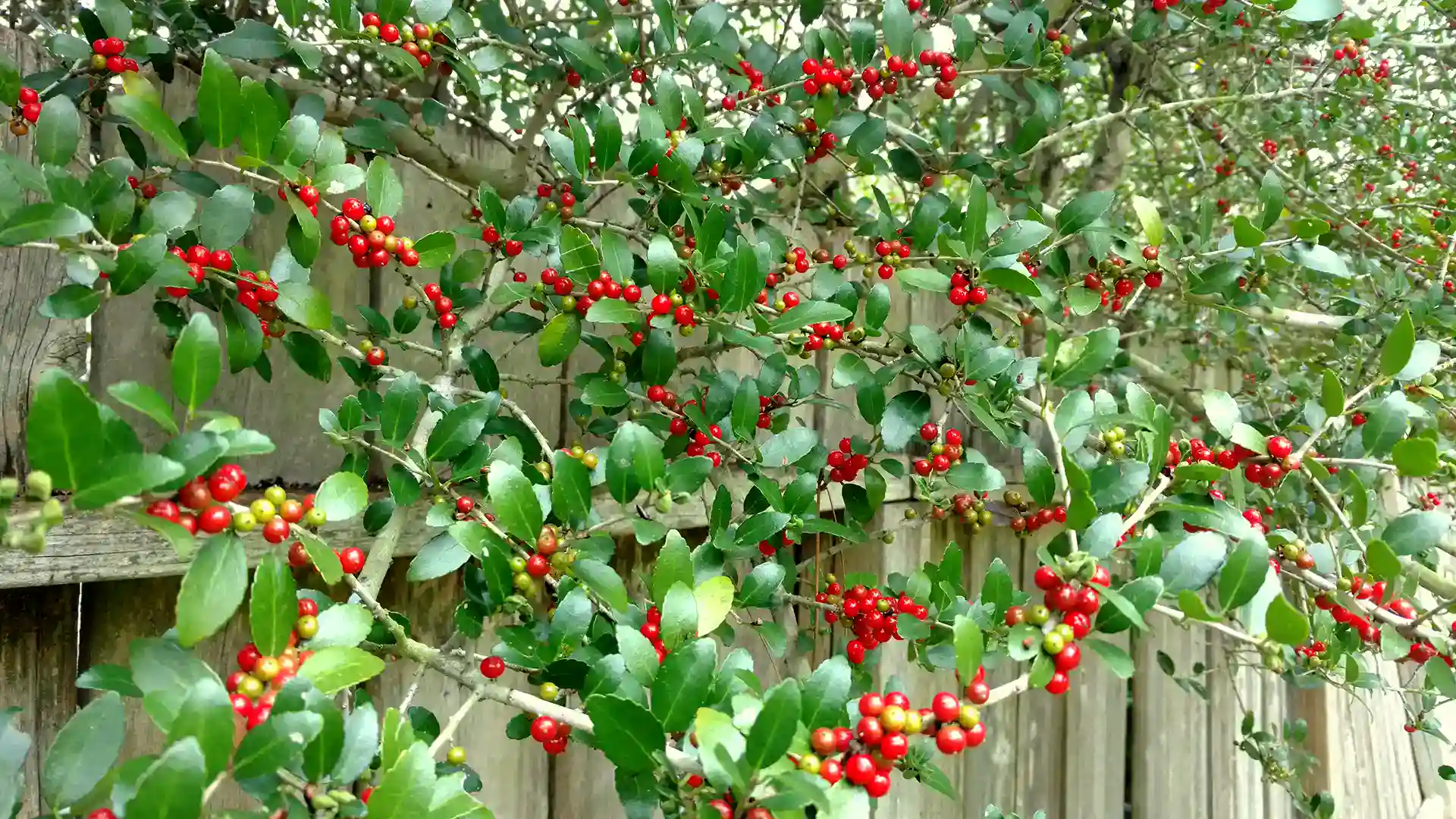
Winterberry (Ilex verticillata) is a holly – but not the kind you are picturing. Unlike the evergreen Christmas hollies, winterberry is deciduous: it drops all its leaves in fall. That sounds like a downside until you see it in December, when the bare stems are absolutely lined with dense clusters of bright red berries. Losing the leaves is the whole point – it is what lets the berries steal the show. It is native to North Carolina, grows slowly to anywhere from 3 to 12 feet depending on the variety, and the cut branches are gorgeous in holiday arrangements.
Do you need a male and female winterberry holly?
Yes – and this is the single most important thing to know. Winterberry is dioecious, meaning male and female flowers grow on separate plants. Only the female plants produce those famous berries, and they will only do it if there is a compatible male plant nearby to pollinate them – within about 50 feet. One male will pollinate roughly five to ten females, so you do not need a male for every plant, but you need at least one. Buy a single female by itself and you will get a healthy green shrub and not one single berry. This is the mistake behind almost every disappointed winterberry owner.
The number-one reason for no berries: matching bloom times
Here is the part that even catches people who knew to buy a male: you have to match the bloom times. Winterberry cultivars fall into an early group and a late group, and the male’s flowers have to be open at the same time as the female’s to pollinate her. Pair an early female with a late male and you still get no berries. So it is not just any male – it is the right male. The classic proven pairs make it easy: Jim Dandy (early) pollinates Red Sprite; Southern Gentleman (late) pollinates Winter Red and Winter Gold. Other no-berry causes are too much shade, drought stress, a plant that is just too young, and pruning in spring, which cuts off that year’s flowers.
Female cultivar | Mature size | Bloom group | Male pollinator |
|---|---|---|---|
Winter Red | 6-9 ft | Late | Southern Gentleman |
Winter Gold | 6-8 ft | Late | Southern Gentleman |
Red Sprite (dwarf) | 3-5 ft | Early | Jim Dandy |
Berry Heavy | 6-8 ft | Early | Jim Dandy / Mr. Poppins |
Berry Poppins (dwarf) | 3-4 ft | Early | Mr. Poppins |
Where to plant winterberry holly (wet spots and clay are a feature)
This is where winterberry earns its keep in a Triangle yard. It wants full sun to part shade – at least four hours of sun for the best berry set – and it loves moist, acidic soil. Here is the good part: it actually thrives in wet, poorly drained clay, the exact soggy low spots and downspout areas where azaleas and boxwoods rot and die. It is a classic rain-garden plant. So that back corner that stays wet, the ditch line, the spot at the bottom of the slope – that is not a problem for winterberry, it is the perfect home.


How to care for winterberry holly
Once it is established, winterberry is genuinely low-maintenance. Keep two to three inches of mulch over the roots, and water it during droughts – a dry spell can make it drop its developing berries. It likes acidic soil, so it is right at home in our naturally acidic ground. The one care rule to remember: do not prune it in spring, because it blooms on old wood and you would be cutting off that year’s berries. Cutting a few branches for winter arrangements is fine. It has few pests and diseases, and the deer leave it alone.
Wildlife value and best uses
Beyond the winter color, winterberry is a wildlife powerhouse – its berries feed dozens of songbird species through the cold months, including cedar waxwings and robins, and it is a host plant for native butterflies. Use it in a native or wildlife garden, in that wet spot or rain garden, as informal winter interest along a wood line, or simply as a source of cut branches for the holidays. One honest note for families: the berries are mildly toxic to people and toxic to dogs, cats, and horses, so plant it where pets and small kids are not tempted to snack. Plant a matched male and female, give it a sunny wet spot, and it rewards you every winter.
Frequently Asked Questions
Want Winterberry That Actually Berries?
Most DIY winterberry fails because people buy one female and no male. We source a matched pair, site it in that wet spot where it thrives, and get you a real winter show. Text us about your yard.
Sources
NC State Extension Gardener Plant Toolbox – Ilex verticillata
Clemson Cooperative Extension HGIC – Rain Garden Plants: Winterberry
Proven Winners – Ultimate Guide to Winterberry Holly
Piedmont Master Gardeners – Winterberry Holly
