

Camellia Problems in North Carolina: Tea Scale, Sooty Mold, and What to Do
By Ken Erickson · Updated June 2026
Most camellia problems in North Carolina come down to a short, familiar list. Camellias are one of the most popular shrubs in the Triangle, and they are tough – but they do have a short list of problems that show up again and again. The big two are tea scale and the black sooty mold that comes with it. I deal with both constantly. Here is how to tell what is wrong with your camellia and what to actually do about it.
Key takeaways
- Tea scale is the number-one camellia pest in NC. The tell: yellow mottling on top of the leaf and white, waxy specks on the underside – that white fuzz is the male scales.
- Black sooty mold is a symptom, not the disease. It grows on the sticky honeydew that scale, aphids, and whiteflies leave behind. Control the insect and the mold weathers off.
- Horticultural oil is the frontline fix, sprayed to cover the leaf undersides, usually a couple of applications in mild weather.
- Timing matters here: crawlers hatch from about March through November, and the best window is early spring after bloom once hard freezes are past.
- Other camellia issues – petal blight, root rot, yellowing, leaf gall – look scary but are usually fixable once you know what you are looking at.
Tea scale: the number-one camellia pest in NC
Tea scale is a tiny insect that feeds on the underside of camellia leaves. You usually notice the top of the leaf first – a yellow, blotchy mottling. Flip the leaf over and you will see the real problem: white, waxy specks and cottony fuzz packed onto the underside. That white material is the male scales, and a heavy infestation makes the whole underside look furry.
Left alone for years, tea scale saps the plant’s vigor – you get leaf drop, fewer blooms, and a shrub that slowly declines. It is persistent because the broods overlap: crawlers keep hatching across a long season, so there is almost always a new generation coming.
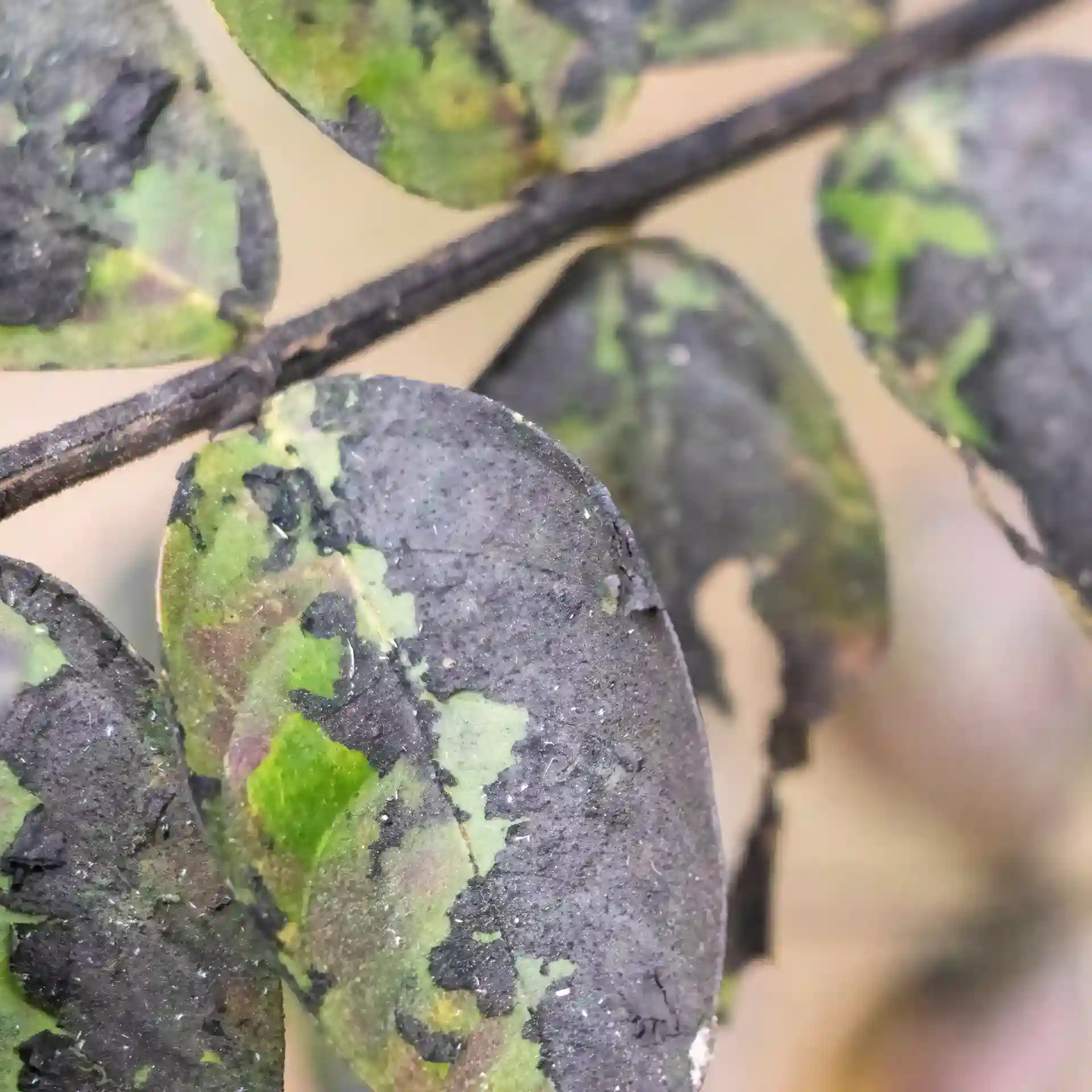
Sooty mold: why your camellia leaves are turning black
If the leaves are coated in a black, sooty film, that is sooty mold. Here is the part that surprises people: the mold is not attacking your plant. It is a harmless fungus that grows on honeydew – the sticky, sugary waste that sap-feeding insects excrete. On camellias that honeydew comes from soft scales, aphids, and whiteflies feeding nearby, and a bad tea scale problem usually travels with them.
The mold itself does not infect the leaf, but a heavy black coating blocks sunlight and slows photosynthesis, so over time it does weaken the plant. It wipes and weathers off once the insects are gone.
How tea scale and sooty mold are connected
This is the whole thing in one sentence: the black mold grows on insect honeydew, so if you want the mold gone, you have to stop the insects making the honeydew. Spraying the mold by itself does nothing – it just grows back. Treat the scale, aphids, and whiteflies, and the mold has nothing left to feed on and weathers away on its own.
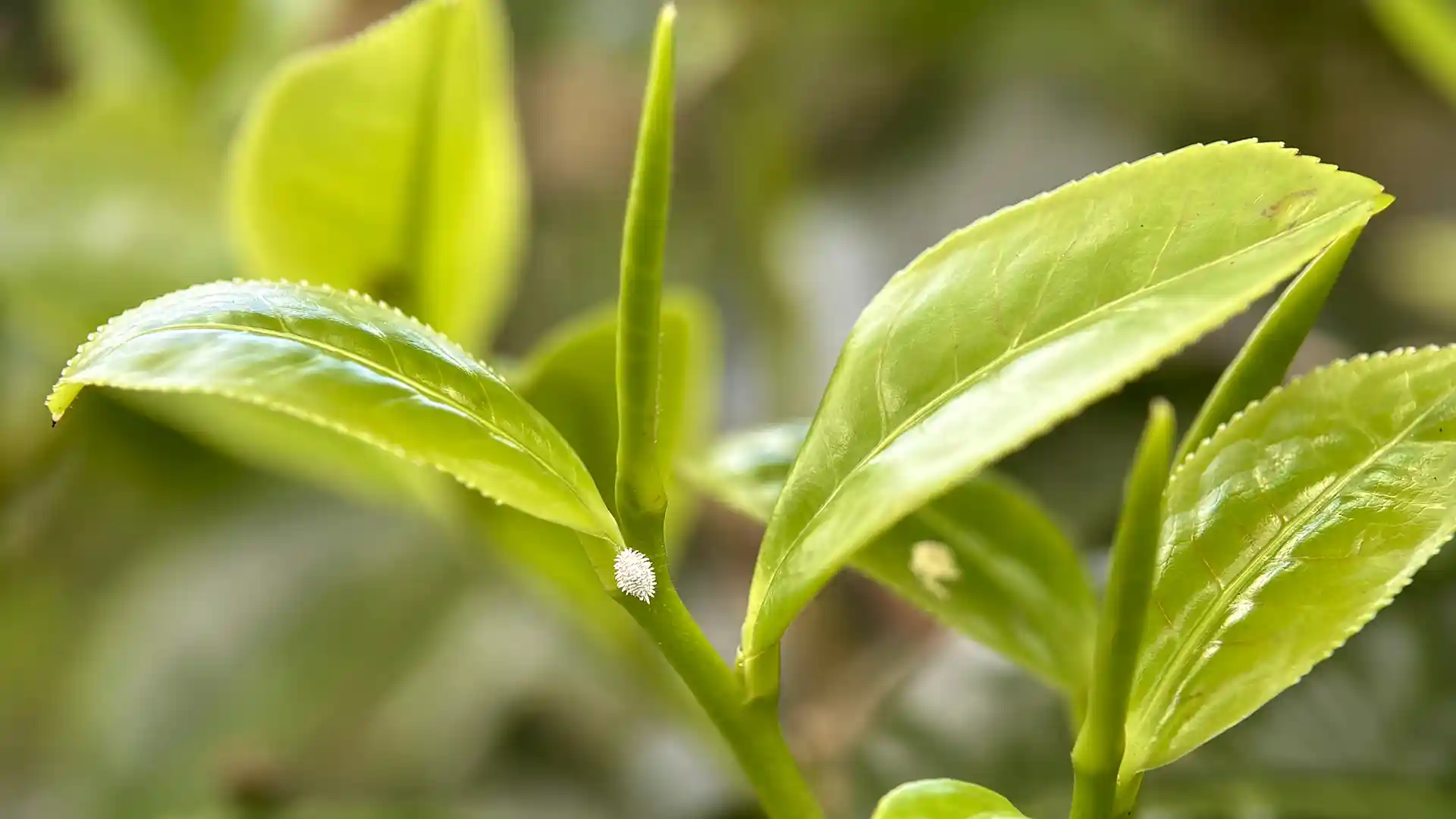
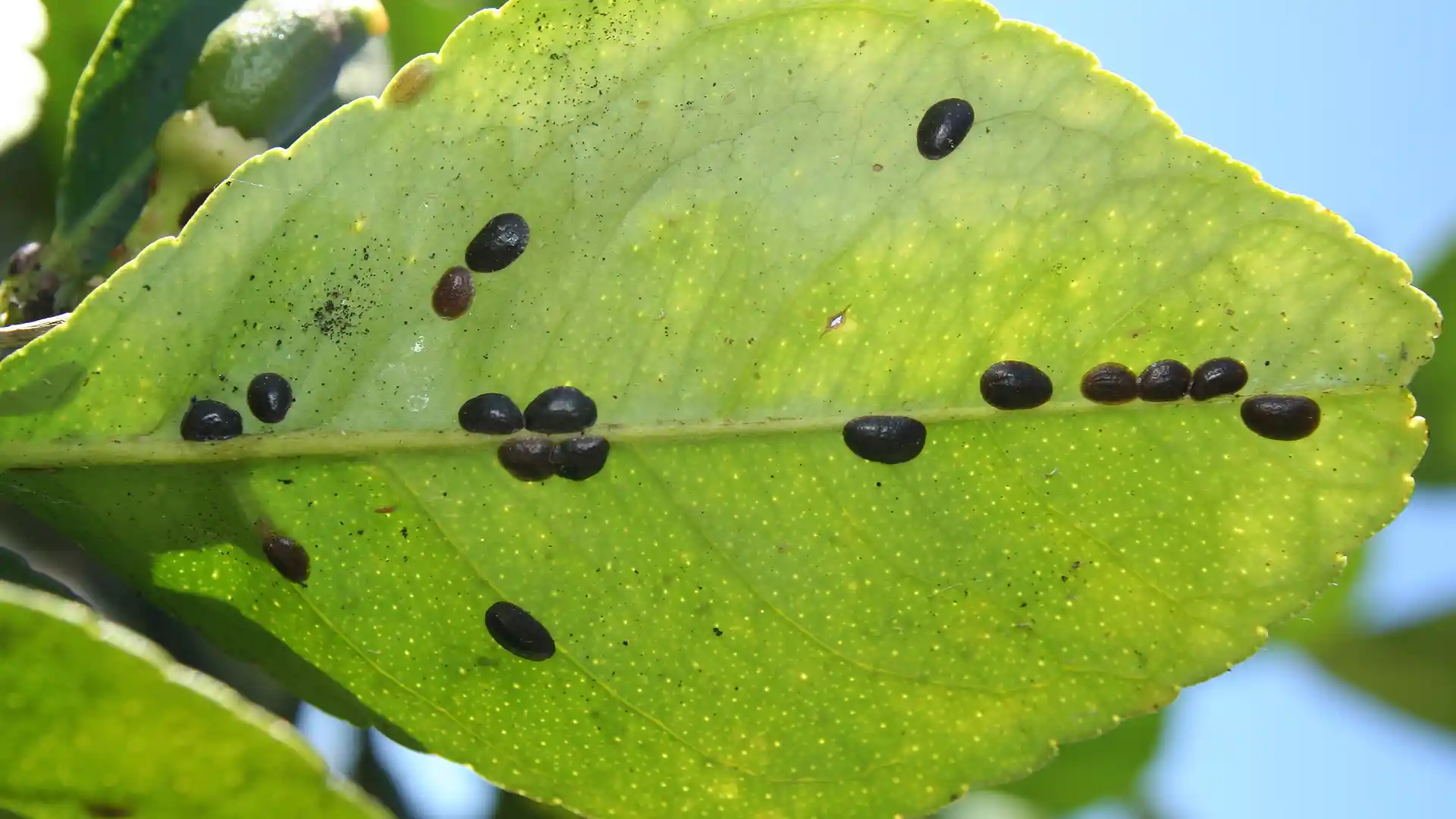
How to treat tea scale and sooty mold (and when to spray in NC)
Horticultural oil is the frontline treatment. The oil smothers the scale, so coverage is everything – you have to spray the undersides of the leaves thoroughly, to the point of dripping, not just mist the top. It usually takes more than one application in mild weather to catch the overlapping crawlers.
Timing for North Carolina: the best window is early spring, after the camellia finishes blooming and once the hard freezes are behind us. Crawlers hatch from about March through November, so you monitor and re-treat as needed through the season. Spray in mild conditions – not in a heat wave and not on a drought-stressed plant. For heavy infestations there are systemic options, but note that the common one (imidacloprid) does not work well on armored scales like tea scale, so this is a spot where the right product matters. Follow the product label for any mix and rate – I am not going to print a recipe here, because it varies by product and it is exactly the kind of thing worth getting right.
Prune for airflow while you are at it – an open, airy shrub dries faster and is less hospitable to pests. Once the insects are controlled, hose or wipe the worst of the black mold off and let the rest weather away.
Other camellia problems to know
Tea scale and sooty mold are the headliners, but a few others show up. This table is the quick version:
What you see | Likely cause | What to do |
|---|---|---|
Yellow mottling on top, white specks underneath | Tea scale | Horticultural oil on the leaf undersides |
Black sooty coating on leaves | Sooty mold on insect honeydew | Control the insect; mold weathers off |
Flowers turn brown and mushy | Petal blight | Remove and trash fallen blooms; avoid overhead water |
Yellow leaves with green veins | Chlorosis (pH or nutrients) | Soil test and correct pH/nutrition |
Wilting, dieback, poor growth | Root rot from poor drainage | Improve drainage; do not plant too deep |
Thick, pale, fleshy leaves in spring | Leaf gall | Pick off and destroy the galls |
DIY vs. calling a licensed pro
A few infested leaves is a homeowner job. Hand-remove what you can, hit the undersides with horticultural oil in mild weather, and prune for airflow. You do not need to hire anyone for that.
Where it is worth a call is the tough stuff: a big, tall camellia where you cannot get full coverage on the undersides, a shrub that has been infested for years, or a case that needs a soil-applied systemic to knock it back. We are licensed by the state of North Carolina to apply pesticides on ornamental plants like shrubs and trees, and we deal with camellia tea scale and sooty mold all the time. If yours is past the DIY point, text us a photo at 984-284-5399 and we will tell you what it needs.
Frequently Asked Questions
Camellia Covered in Scale or Black Mold?
We are licensed to treat pests on shrubs and trees in North Carolina, and we handle camellia tea scale and sooty mold all the time. Text us a photo and we will tell you what it needs. Tea scale is a scale insect – see our full guide to scale insects and mealybugs on trees and shrubs.
Sources
NC State Extension – Pests of Camellia (AG-189)
Clemson Cooperative Extension HGIC 2053 – Camellia Diseases and Insect Pests
UF/IFAS Gardening Solutions – Tea Scale
UGA Extension – Tea Scale (Fiorinia theae)
