

Scale Insects and Mealybugs on Trees and Shrubs in NC: How to Spot Them
By Ken Erickson · Updated June 2026
Scale insect treatment trips people up because scale does not look like a bug at all. Here in Raleigh’s southern suburbs, one of the most common calls I get is not about a bug people can see moving – it is about bumps, crust, or a sticky black film on a favorite crepe myrtle, camellia, or maple. Nine times out of ten, that is scale insects or mealybugs. They are sap-sucking pests that spend most of their lives locked onto one spot under a coat of wax, so they look more like bark texture or mold than an insect. As they feed, the soft scales and mealybugs drip out a sugary waste called honeydew, and a harmless-but-ugly black fungus called sooty mold grows on it – which is usually what tips a homeowner off. The one worth watching closely is crepe myrtle bark scale: a newer arrival that is now established and spreading across North Carolina. We are licensed by the state of North Carolina to treat pests on trees and ornamental shrubs, so if you would rather skip the guesswork, text me at 984-284-5399.
Key takeaways
- Scale insects and mealybugs are tiny sap-suckers that often do not look like bugs at all – they show up as waxy bumps, crusty patches, or white cottony fuzz stuck to bark, twigs, and leaf undersides.
- Most are noticed by their mess, not the insect: soft scales and mealybugs excrete sticky honeydew, and black sooty mold grows on top of it. If your plant looks dusted with soot, look for scale.
- Crepe myrtle bark scale is the big new problem in North Carolina – white to gray felt-like bumps on the bark that ooze pink when crushed, and it is spreading fast.
- The armored-vs-soft split matters: armored scales make no honeydew; soft scales and mealybugs are the honeydew-and-sooty-mold crowd. Correct ID drives the right timing.
- Timing is everything. These pests are protected by wax most of the year – the window to hit them is the tiny mobile crawler stage, which usually appears with the spring flush of new growth.
Scale Insect Treatment: What are scale insects, and how do I identify them?
Scale insects are small, stationary sap-suckers that attach to bark, twigs, and the undersides of leaves and cover themselves in wax, which is why they are so easy to miss – they look like bumps, crust, or discolored bark rather than insects. Adults may be white, gray, or brown and round, pear-shaped, or oyster-shell-shaped depending on the species. Because they do not move once they settle and feed, people usually notice the damage first: yellowing or mottled leaves, thinning canopies, branch dieback, and often a sticky coating with black sooty mold. They are one of the most common landscape pests submitted to Southeastern plant clinics, and warmer winters have let more species push farther north. The key to control is knowing that the armor protects them nearly year-round – you have to catch them at the right life stage, which I cover below.
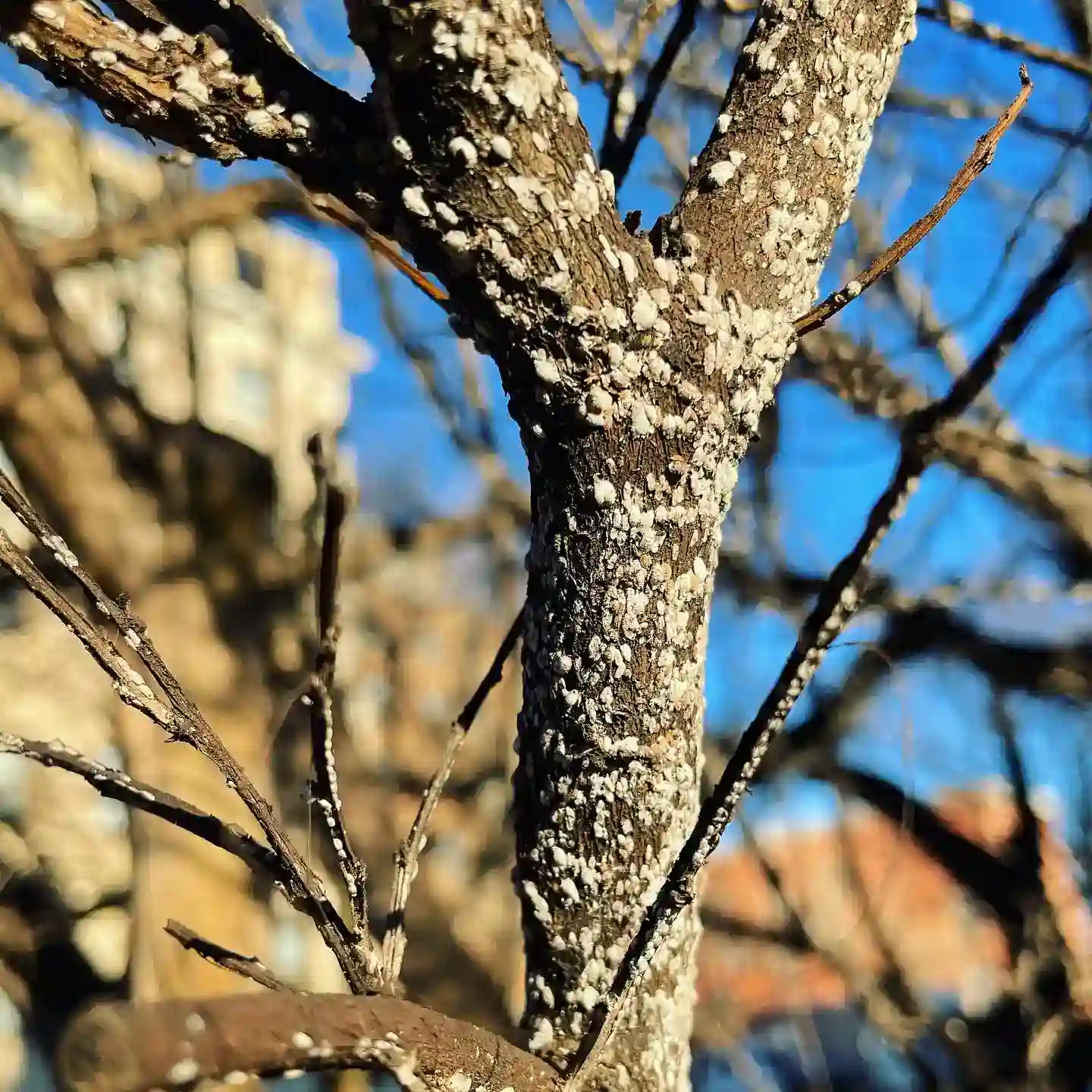
Crepe myrtle bark scale: the white bumps taking over NC crepe myrtles
If your crepe myrtle’s smooth bark is turning gray and grimy with white or gray felt-like bumps, that is crepe myrtle bark scale, and it is the pest I am asked about most right now. A quick field test: press one of the white bumps and it bleeds a pink to reddish-purple fluid – that is diagnostic, because the female’s eggs and body inside the waxy sac are that color. The scales cluster in the rough areas around branch collars and twig crotches, then spread up the trunk and out the limbs. As they feed they pour out honeydew, and black sooty mold coats the bark and disfigures the tree. It has established across North Carolina, and crepe myrtle is by far its main host here. The good news: it generally will not outright kill a healthy tree, but it wrecks the tree’s looks and can reduce bloom, so it is worth treating. For the full playbook, see our guide to crepe myrtle bark scale.
Soft scale vs. armored scale: what’s the difference, and why honeydew matters
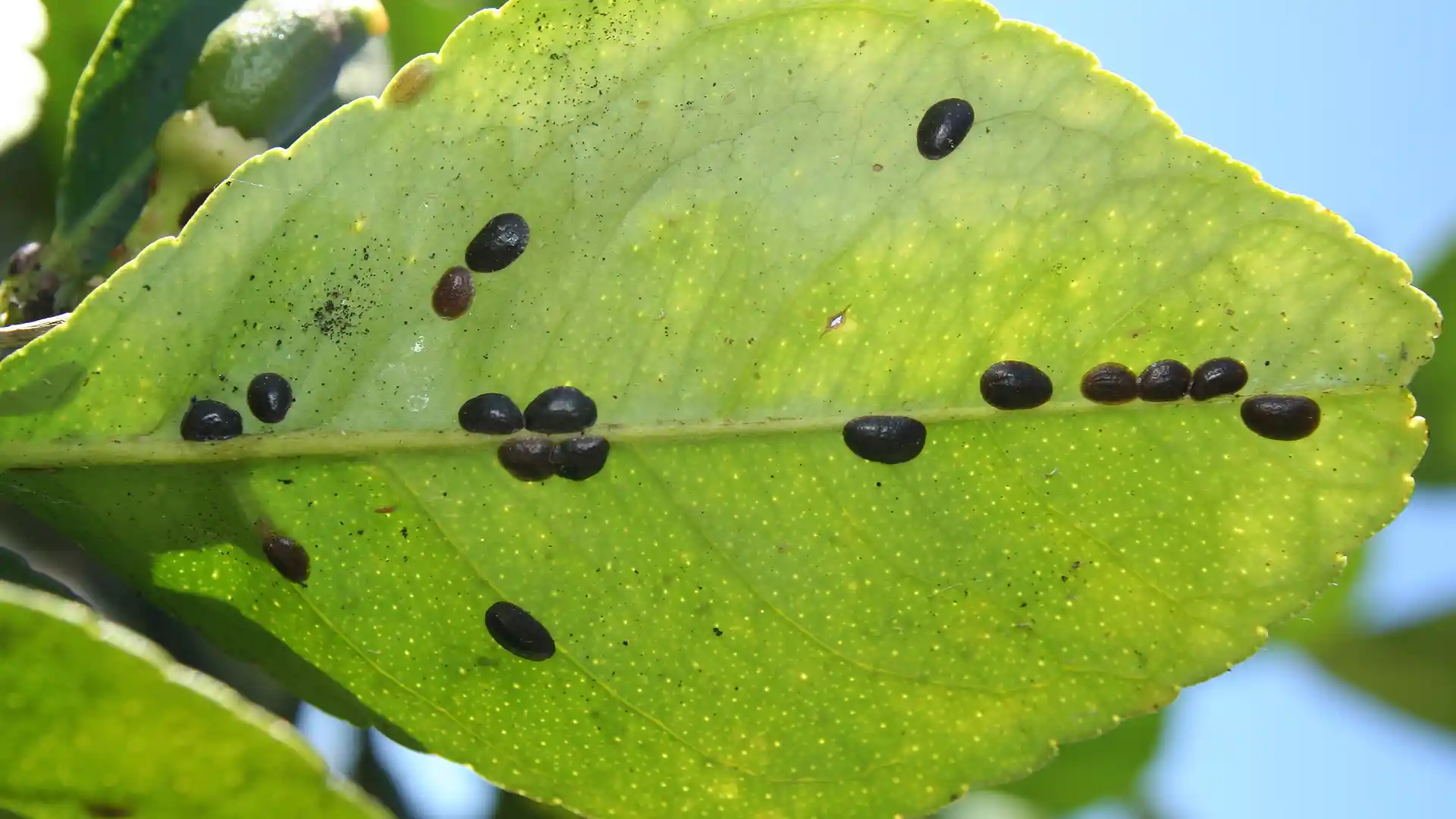
This is the split that determines how we treat. Soft scales secrete a waxy layer that is fused to their body, they excrete honeydew, and that honeydew grows the black sooty mold you see on leaves and pavement below the plant. Armored scales live under a hard, separate cover you can flip off with a fingernail – and, importantly, they do not produce honeydew. So a plant dripping sticky sap with sooty mold usually points to soft scale or mealybugs, while a crusty infestation with no stickiness points to armored scale. Crepe myrtle bark scale is a felt scale that behaves like the honeydew crowd, which is why sooty mold is such a giveaway on crepe myrtles. Knowing which camp you are in tells us where to look and when to strike.
Pest | What you see | Common NC hosts | Sign |
|---|---|---|---|
Crepe myrtle bark scale | White to gray felt-like bumps on bark; bleeds pink when crushed | Crepe myrtle (main host) | Honeydew + heavy black sooty mold on the trunk |
Tea scale | Yellow mottling on upper leaf, white waxy specks on leaf undersides | Camellia, holly, southern magnolia | Mottled yellowing leaves; no honeydew (armored) |
Gloomy scale | Dark, almost-black bumps blending into gray bark | Maples, especially red maple | Branch dieback, thinning canopy; no honeydew (armored) |
Euonymus scale | Small oyster-shaped gray covers on leaves and stems | Euonymus, holly, pachysandra, camellia | Yellow-spotted, dropping leaves; no honeydew (armored) |
Mealybugs | White cottony fuzz in stem crotches and leaf joints | Wide range of shrubs; loves new growth | Honeydew + sooty mold; sticky residue |
Tea scale, gloomy scale, euonymus scale, and other scale common in NC
Beyond crepe myrtles, several armored scales are regulars on Triangle-area plants. Tea scale is the top offender on camellias and hollies – look for yellow mottling on the upper leaf surface and white, waxy specks crowded on the leaf undersides. Gloomy scale hides on the bark of maples, especially red maples, appearing as dark, almost-black bumps that blend into gray bark and, in heavy cases, cause branch dieback. Euonymus scale hits euonymus, and also shows up on hollies, pachysandra, and camellias, with elongated oyster-shaped covers on leaves and stems. Others we see around here include pine needle scale, white peach scale on flowering cherry, and oystershell scale. They all feed the same way – the differences are mostly which plant they favor and what the cover looks like.
Mealybugs: the white cottony masses on stems and leaves
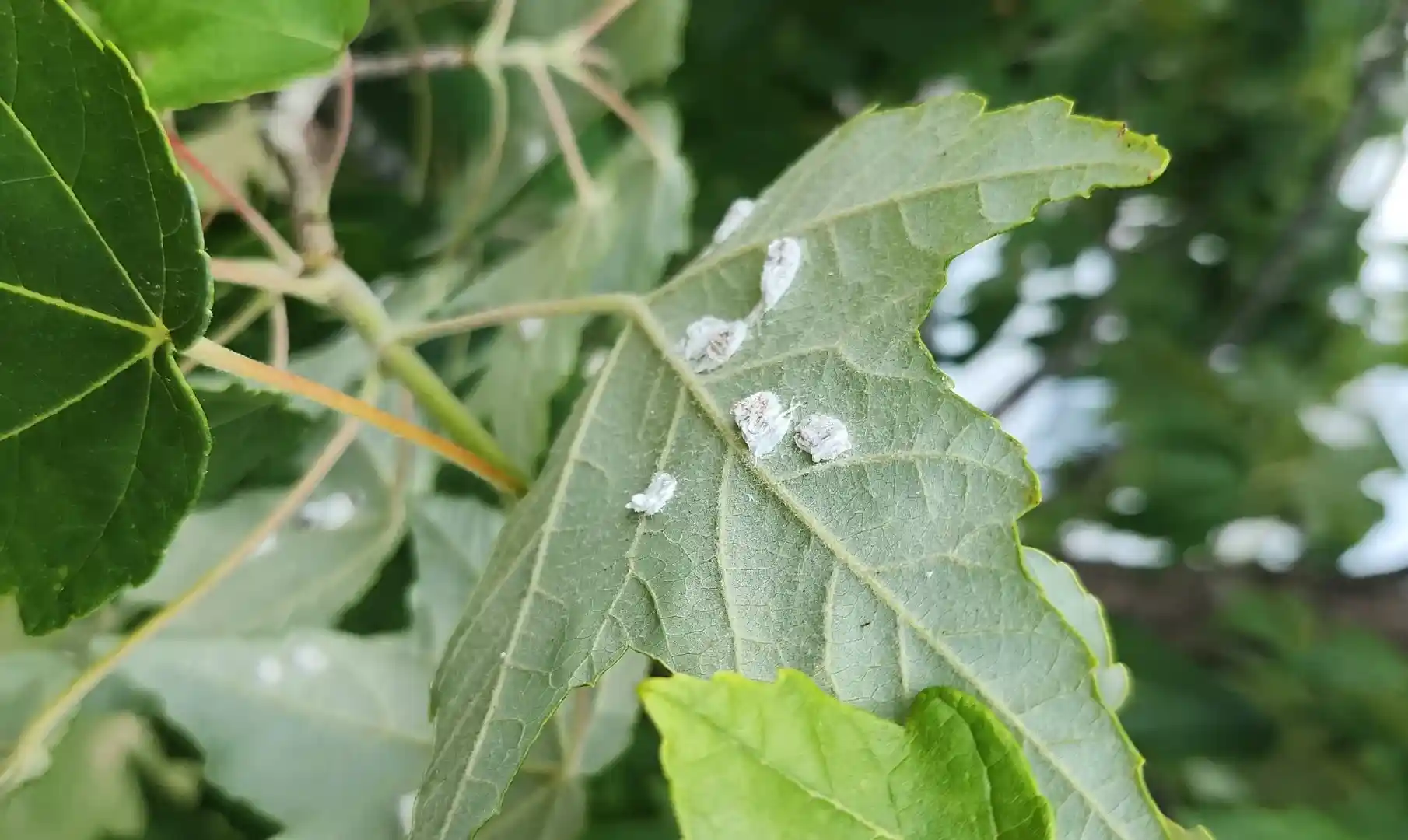
Mealybugs are close cousins of soft scale, but instead of a hard shell they wrap themselves and their eggs in white, waxy, cottony fuzz – so an infestation looks like little cotton balls tucked into stem crotches, leaf joints, and the undersides of leaves. Underneath the fluff the insect is a soft, pinkish, oval body a few millimeters long. Like soft scale, they suck sap and excrete honeydew, so you will often see the same sooty mold and sticky residue. On landscape plants they weaken and stunt growth, causing yellowing, leaf drop, and general decline in heavy infestations, and they are especially fond of tender new growth. Because they hide in crevices and reproduce fast, they are persistent – spotting the white cotton early makes a big difference.
How to treat scale and mealybugs, and why crawler timing is everything
Here is the part most DIY sprays get wrong: for most of the year these pests are sealed under wax that ordinary sprays cannot penetrate. The one vulnerable window is the crawler stage – the tiny newly hatched young that move around before they settle and build their cover. Crawler emergence usually lines up with the spring flush of new growth, and some species have a second round later in the season, so a single application often is not enough. Beyond timing, plant health is real prevention: stressed, over-fertilized, or drought-stressed plants get hit harder, so proper watering, mulching, and pruning out heavily infested limbs all reduce pressure. Because the treatment has to hit a moving target on a precise schedule – sometimes several rounds weeks apart – this is a pest where professional timing and monitoring pay off. We monitor for crawler activity and time treatments to the plant and the species, rather than spraying once and hoping. For a professional inspection and treatment, see our tree and shrub pest control service, or keep scale and mealybugs off your plants year-round with our tree and shrub maintenance plan.
Scale and mealybugs: should you DIY or call a pro?
I am honest about this: if you catch a light infestation early on a small, reachable shrub, you can often knock it back yourself by pruning out infested wood and staying on top of it. Where it goes sideways is timing and reach – a mature crepe myrtle or a 20-foot maple is not something you can cover thoroughly from a hose-end sprayer, and if you miss the crawler window the population just rebounds. It also pays to have the pest identified correctly, because armored scale, soft scale, and mealybugs do not all respond to the same approach. When an infestation is widespread, high in a tree, or keeps coming back, that is when to bring us in. We are licensed by the state of North Carolina to treat pests on turf and ornamental plants like shrubs and trees, and we build the treatment around the crawler timing for your specific pest. Text me at 984-284-5399 for a look.
Frequently Asked Questions
White Bumps or Cottony Fuzz on Your Shrubs?
Scale and mealybugs are beaten by hitting the crawler stage on the right schedule. We are licensed to treat trees and shrubs in NC and time it to your plant. Text us for a look.
Sources
NC State Extension – Crapemyrtle Bark Scale
NC State Extension – Armored Scale Identification and Management on Ornamental Plants
Clemson Cooperative Extension HGIC – Armored Scale Insects on Ornamental Plants
Clemson Cooperative Extension HGIC – Camellia Diseases and Insect Pests
