

How to Grow and Care for Dogwood Trees in North Carolina (Our State Flower)
By Ken Erickson · Updated June 2026
Dogwood trees in North Carolina are as tricky to keep healthy as they are beautiful. There is a reason the dogwood is North Carolina’s state flower – come April, they light up the edge of every woodland in the Triangle. They are one of my favorite trees to plant, but they are also one of the most misused: people stick them out in the middle of a hot, full-sun lawn and then wonder why they scorch and struggle. Get the spot right and a dogwood is a low-fuss, four-season beauty. Here is how to grow one and how to handle the problems when they come up.
Key takeaways
- Flowering dogwood (Cornus florida) is North Carolina’s state flower – a native understory tree about 15 to 30 feet tall, with white or pink spring blooms, red fall berries, and burgundy fall color.
- Site it in part shade, not full sun. In our area it wants morning sun with afternoon shade and moist, well-drained, acidic soil – like the woodland edge it grows in naturally.
- Plant it shallow, mulch it wide, and water it in drought. Dogwood roots are shallow, so never plant too deep and never let a new tree dry out.
- The two diseases to know are powdery mildew (the most common now) and dogwood anthracnose (the serious one) – both are mostly prevented by cultivar choice, airflow, and a healthy tree.
- Choose a disease-resistant cultivar up front – the resistant Cornus florida selections and the tougher kousa dogwood sidestep most problems before they start.
Dogwood Trees in North Carolina: Is the Dogwood Really Our State Flower?
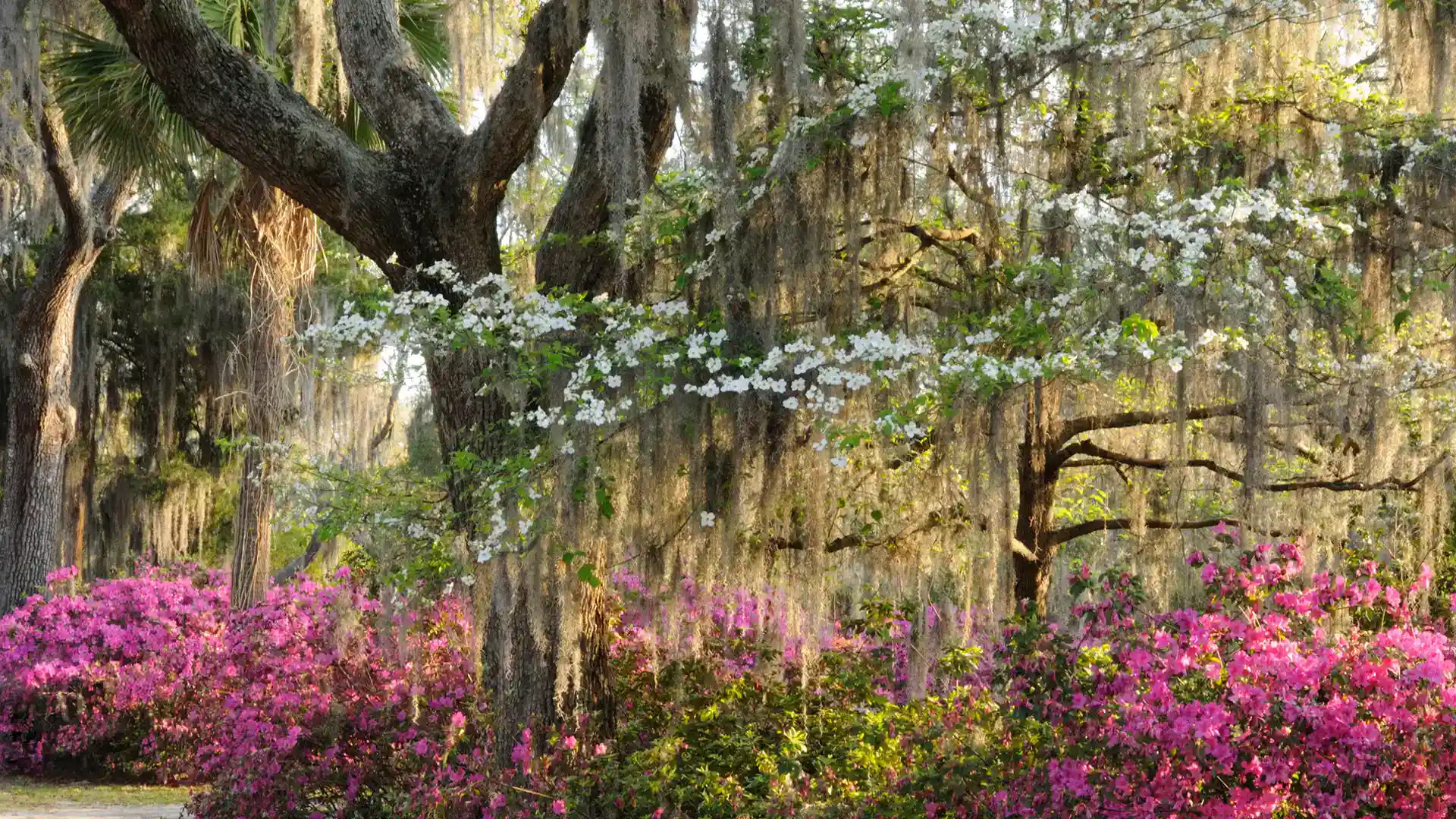
It is – flowering dogwood (Cornus florida) is the official state flower, and it grows natively across most of the state. In the wild it is an understory tree, meaning it grows at the edge of the woods under the taller canopy, which tells you exactly where it wants to be in your yard. It tops out around 15 to 30 feet with a graceful, layered branching habit. What everyone loves is the spring show, but it earns its keep all year: red berries and burgundy leaves in fall, then handsome branching in winter.
Where should you plant a dogwood in NC?
Part shade, not full sun. In our Piedmont summers a dogwood does best with morning sun and afternoon shade, or bright dappled light under taller trees – mimic that woodland edge. Give it moist, well-drained, acidic soil with plenty of organic matter, and some shelter from harsh wind. Dogwoods do well across most of North Carolina; the places they struggle are soggy low spots and the hot, exposed middle of a lawn. If your only option is full sun, be ready to water it faithfully, because scorch and stress follow sun-baked dogwoods. The Japanese maple is another understory tree that wants the exact same spot — see our Japanese maple care guide.
When do dogwoods bloom, and what are those flowers?
The bloom hits early to mid spring here – usually late March into April – before or just as the leaves come out, and it lasts about two weeks. Here is a fun fact for the neighbors: those four showy white or pink parts are not petals, they are bracts, a kind of modified leaf. The actual flowers are the tiny green cluster in the center. After bloom, the tree greens up for summer, then throws red berries the birds love and deep burgundy foliage in fall.
How do you plant and water a dogwood?
Two rules save most dogwoods. First, plant shallow – dig a hole no deeper than the root ball and twice as wide, and set the tree so the top of the root ball sits at or slightly above grade. Planting too deep is a top cause of a slow, declining dogwood. Second, mulch and water. Keep a 2-to-4-inch ring of mulch out over the root zone (never piled against the trunk), and give it about an inch of water a week, with deep soaks during dry spells – especially the first two summers while it establishes. Go easy on fertilizer, and prune only lightly in the dormant season.

What’s wrong with my dogwood? Anthracnose vs. powdery mildew
Most dogwood trouble comes down to a few things. This table sorts the common ones:
What you see | Likely cause | What to do |
|---|---|---|
White powdery coating on leaves; leaves scorched or dropping | Powdery mildew (most common) | Improve airflow, rake fallen leaves, plant resistant cultivars |
Tan spots with purple edges starting low and moving up; branch dieback | Dogwood anthracnose (the serious one) | Prune out cankered wood in dry weather, rake leaves; get a pro diagnosis |
Small tan spots with reddish borders on the flower bracts | Spot anthracnose | Usually cosmetic – thin canopy for airflow, rarely needs treatment |
Dry, browning leaf edges on a stressed tree | Leaf scorch (drought/too much sun) | Water deeply, mulch, and re-site out of full sun |
Sawdust-like frass and bark damage on trunk | Dogwood borer (attacks stressed trees) | Keep the tree healthy and unwounded; pro treatment if active |

Which dogwoods are most disease-resistant for NC?
The smartest move you can make is to plant resistance from the start. Among the native flowering dogwoods, cultivars like ‘Cherokee Brave’ and the Appalachian series were selected for powdery-mildew resistance. If anthracnose is a concern – it tends to hit shady, cool, wet sites hardest – the kousa dogwood (Cornus kousa) is the tougher species, with better anthracnose resistance and a later bloom, and it makes a great replacement tree. The Rutgers hybrids between the two are another strong, disease-resistant option. Resistance is not immunity, but it stacks the deck heavily in your favor.
DIY or hire a pro?
The everyday stuff – picking the right cultivar, planting it shallow in the right spot, mulching, and watering – is a homeowner job, and honestly getting the site right is 90 percent of dogwood success. Where a call is worth it: telling anthracnose apart from ordinary leaf spot before you overreact, dealing with borers on a stressed specimen, and protecting a valuable, established tree on the right schedule. We are licensed by the state of North Carolina to work on ornamentals, and our background with tree and shrub problems runs deep. If your dogwood is struggling and you cannot tell why, text us a photo at 984-284-5399 before you do anything drastic.
Frequently Asked Questions
Dogwood Struggling or Not Sure Where to Plant One?
We site, plant, and care for dogwoods across the Triangle – and we are licensed to diagnose and treat tree disease. Text us a photo and we will tell you what it needs.
Sources
NC State Extension Gardener Plant Toolbox – Cornus florida
Clemson Cooperative Extension HGIC – Dogwood Diseases and Insect Pests
The Old Farmer’s Almanac – How to Grow a Dogwood Tree
NC State Extension Gardener Plant Toolbox – Cornus kousa
