

How Much Does Landscape Lighting Installation Cost in NC?
By Ken Erickson · Updated July 2026
Landscape Lighting Installation Cost: The Real Range
Search “landscape lighting cost” and you’ll see figures from $55 to nearly $3,000 on the same page, because they lump a big-box solar kit in with a professionally installed low-voltage system. Those are not the same product, and they do not last the same amount of time.
For a real installed low-voltage landscape lighting system here in Raleigh’s southern suburbs, most of our clients land between $2,000 and $6,000, with the average right around $3,500. Here is what actually moves that number.
Key takeaways
- Most professionally installed landscape lighting in the Triangle runs $2,000 to $6,000, averaging about $3,500.
- Budget roughly $100 to $300 per fixture, installed.
- Brass fixtures cost more up front but last 20-plus years; box-store kits fail in a season or two.
- The biggest cost drivers are the number of fixtures, the fixture material, and how far the wire runs.
Cost of Landscape Lighting: What You’re Actually Paying For

A landscape lighting job is four things: the fixtures, the transformer, the wire, and the labor and design to place it all well. The fixtures are usually the biggest line item.
The transformer and timer or photocell are the brain of the system, and the wire and labor cover getting power out to each fixture cleanly and burying the runs so nothing shows in daylight.
Brass vs. Aluminum Fixtures
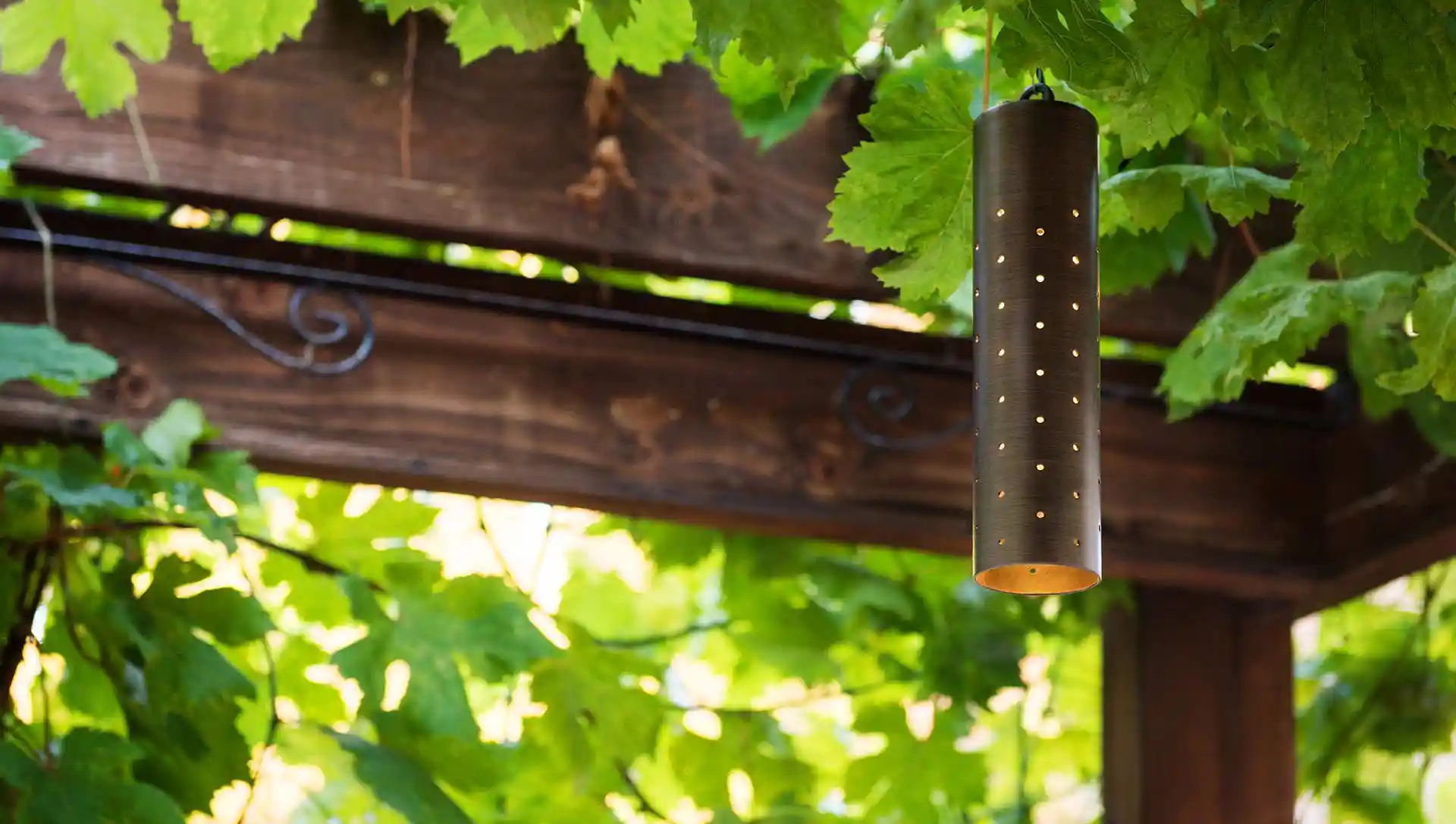
A solid brass fixture costs more than a stamped-aluminum one, but brass shrugs off NC humidity and clay for 20-plus years while cheap aluminum and plastic corrode and cloud over in a couple of seasons. Paying more up front for brass is almost always cheaper over the life of the system.
What | Typical cost | What it covers | Note |
|---|---|---|---|
Per fixture, installed | $100–$300 | Light, wire, and labor | Brass at the higher end |
Small system (6–10 lights) | $1,500–$3,000 | Entry, a few trees, main walk | Big curb-appeal jump |
Medium system (12–20 lights) | $3,000–$6,000 | Beds, trees, paths, house accent | Most common range |
Large / estate (25+ lights) | $6,000–$12,000+ | Full property, front and back | Often smart / color control |
Transformer + timer | $200–$600 | The brain of the system | Photocell or app control |
Smart / color control | Add-on | Scheduling, dimming, color | FX Luminaire smart line |
Trenching under hardscape | Add-on | Wire under a drive or walk | Adds labor vs a mulch run |
Add to an existing system | Per fixture + short run | Expanding a system | Cheapest way to grow |
Cost to Install Landscape Lighting, Per Fixture
The most useful way to budget is per fixture: about $100 to $300 each, installed. That number covers the light, its share of the wire and transformer, and the labor to place and bury it.
The spread comes down to fixture quality (brass versus aluminum), how far the light sits from the transformer, and whether the wire runs easily under mulch or has to cross a driveway or walk.
A path light in an open bed sits at the low end. A moonlighting fixture 25 feet up in a hardwood, or a run that crosses a paver patio, sits at the high end.
Most yards use a mix, which is why the per-fixture average lands in the middle once the whole system is added up.
Landscape Lighting Installation Cost by Project Size
Every yard is different, but here is where most systems land once everything is added up:
Small System (6–10 lights)
$1,500 to $3,000. Enough to light a front entry, a couple of specimen trees, and the main walkway — a big jump in curb appeal for a modest budget.
Medium System (12–20 lights)
$3,000 to $6,000. The most common range — front and side beds, several trees, path and step lighting, and some accent on the house itself.
Large / Estate System (25+ lights)
$6,000 to $12,000 and up. Full-property lighting, front and back, with extensive tree work, hardscape and water-feature lighting, often with smart or color control.
Adding to an existing system is the cheapest way to expand, since the transformer and much of the wire are already in place.
Why the Cheap Kits Cost More
A $99 solar or aluminum kit from a big-box store looks like a bargain until it dims, corrodes, and fails within a season or two — then you buy it again, and again. A professionally installed low-voltage brass system is a 20-plus year investment, not an annual purchase. You pay once and it lasts.
Outdoor Lighting Installation Cost Factors
Trenching Under Hardscape
Running wire under mulch is quick. Crossing a driveway, walkway, or patio means trenching or boring, which adds labor and cost.
We bury every run either way — it is the trenching under hard surfaces that adds the time.
It is worth it: a clean, hidden install is the difference between a professional system and a DIY look.
What Else Moves the Landscape Lighting Cost
A few other choices push the number up or down:
Smart and Color Controllers
App control and color-changing systems, like FX Luminaire’s smart line, cost more than a basic timer but give you scheduling, dimming, and color from your phone. Many clients start basic and add smart control later.
Number of Fixtures and Zones
The single biggest lever on price is simply how many fixtures and zones the design calls for. More light means more cost, but also more of the effect you are paying for.
Tall Tree Moonlighting
Mounting fixtures high in a mature hardwood for that soft, moonlit effect takes more time, taller ladders, and careful aiming, so those fixtures run at the higher end.
Brass and Finish
Solid brass costs more than aluminum but is the right call in our climate. Specialty finishes and larger specimen fixtures add cost too.
What We Don’t Cut Corners On
We use solid brass fixtures, a quality transformer, and buried runs on every job — because the cheapest system is the one that stops working.
That is the difference between lighting that still looks great in ten years and lighting you are replacing next spring.
A system built right is quiet, reliable, and something you stop thinking about — it just comes on every night.
Professional Landscape Lighting Cost vs. DIY: Is It Worth It?
The Value, and the DIY Question
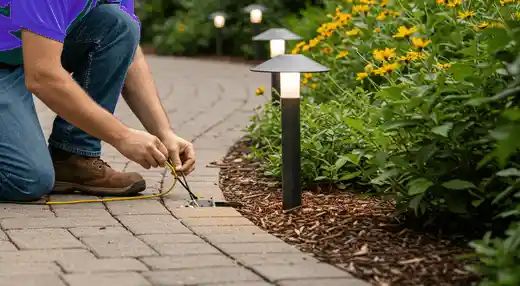
For most homes, yes. Lighting pays back three ways at once — curb appeal, safety, and security — and it stretches how long you use the yard after dark. You can buy a DIY kit, but the fixtures and transformer are lower quality and the design is the hard part; a poorly placed system reads as amateur. For a system that lasts and looks designed, a pro is worth it.
Landscape Lighting Cost FAQs
See It Lit Before You Decide
The best way to know what your yard will cost, and what it will look like, is a free evening demo. We place the lights, show you the effect after dark, and quote it on the spot. Call or text Lawn Panther to set one up. Already have a system that stopped working? A landscape lighting repair usually costs far less than a new install.
Sources
Angi — Landscape Lighting Costs (2026)
HomeGuide — Landscape Lighting Installation Cost (2026)
LawnStarter — How Much Does Landscape Lighting Cost (2026)
