

How to Fertilize a Tree or Shrub in NC (DIY)
By Ken Erickson · Updated August 2026
Most of the trees and shrubs I see in Triangle yards don’t need feeding nearly as often as people think — and half the ones that do get fed get the wrong product. It isn’t complicated once you know two things: what the plant actually wants, and how much nitrogen you’re really putting down. Here’s how I feed trees and shrubs, how you can do it yourself, and the one premium service to stop paying extra for.
Key Takeaways
- Most established trees and shrubs in decent soil need little or no fertilizer. Soil-test before you feed — North Carolina’s test is free.
- Match the product to the plant: a balanced 10-10-10 for most trees and shrubs; an acid fertilizer (like Holly-tone) for azaleas, rhododendrons, hollies, blueberries, and most evergreens.
- Feed in early spring as growth starts, or in fall with a slow-release product. Never late-summer quick-release nitrogen — it forces tender growth that winter kills.
- Know the math: pounds of product equals the pounds of nitrogen you want divided by the first number on the bag.
- I feed with a drill-and-fill, but broadcasting and watering in gets most yards the same result. You don’t need a $3,000 injection rig.
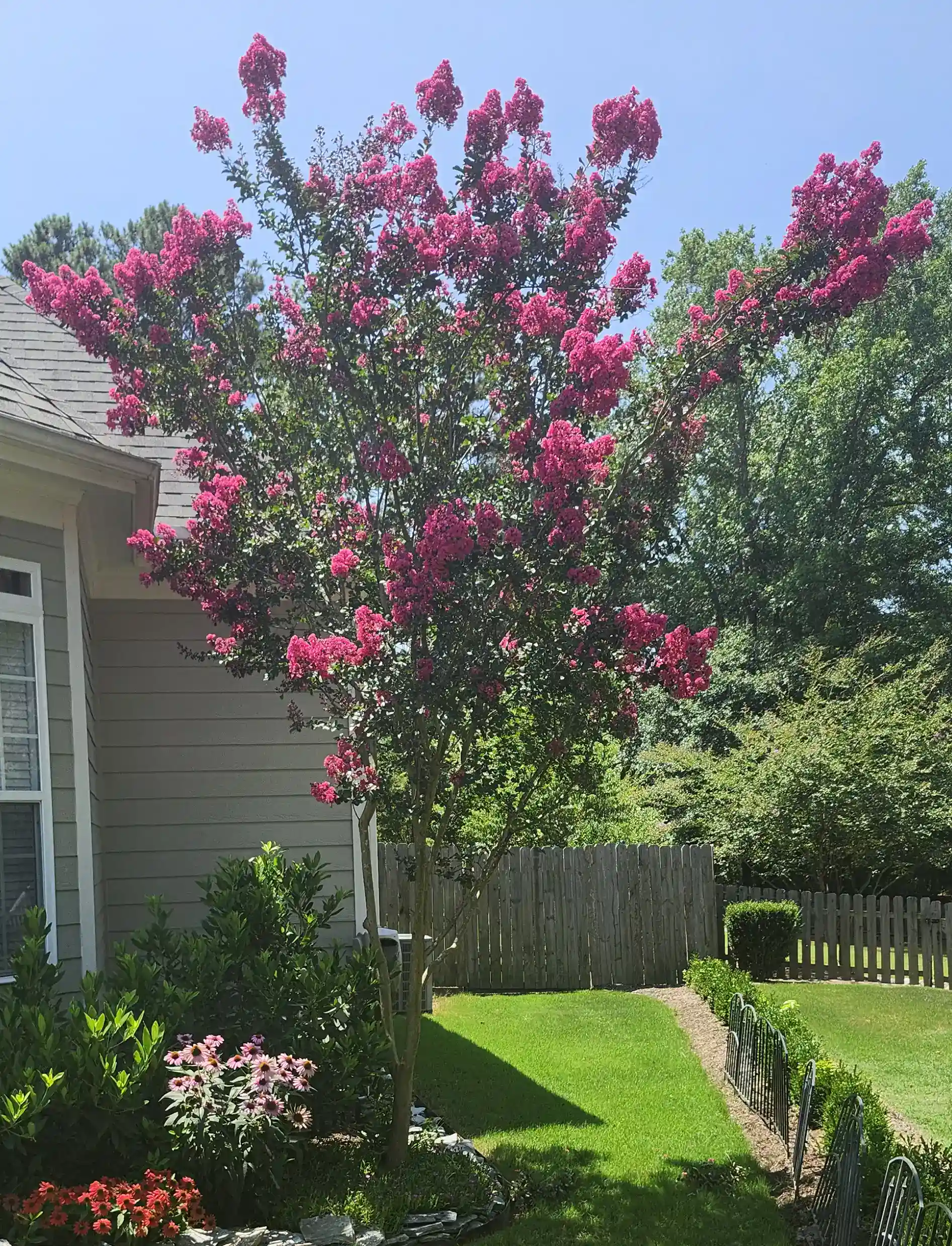
Do your trees and shrubs even need fertilizer?
Usually less than you’d think. A tree or shrub growing in decent soil, putting on new growth each year with good leaf color, is telling you it’s fed. NC State’s guidance is blunt about it: established, healthy woody plants often need no fertilizer at all, and the fastest way to hurt one is to feed it to fix a problem fertilizer won’t solve.
So look at the plant first. Steady new growth and good color? Leave it alone. Weak growth, small pale leaves, a thin canopy? Now it’s worth feeding — but start with a soil test, not a guess. North Carolina’s soil test is free through the state, and it tells you what the plant is actually short on, including pH. Feeding blind is how people burn roots and chase the wrong problem.
Question | The short answer |
|---|---|
What fertilizer? | Balanced 8-8-8 or 10-10-10 — skip the “bloom booster.” |
When? | Early spring, after leaf-out — mid-to-late April in the Triangle. |
How much (established)? | About 1 lb per 100 sq ft, once in spring. |
How much (young)? | About 1 tsp per plant, monthly, April–August. |
When to stop? | By mid-summer — never late summer or fall. |
Where? | Under the canopy, off the trunk, then water it in. |
What fertilizer should you use? It depends on the plant
This is where most people go wrong: they grab one bag for everything. The right product depends on the plant. For the bulk of trees and shrubs — maples, oaks, crepe myrtles, boxwood, most deciduous stuff — a balanced complete fertilizer like a 10-10-10 (or a 16-4-8) is exactly right. Those numbers are nitrogen, phosphorus, and potassium, and balanced means they’re roughly even.
Acid-loving plants are the exception, and it’s a big one. Azaleas, rhododendrons, camellias, hollies, blueberries, and most needled evergreens want an acid fertilizer — something like Holly-tone — and a soil pH down around 5.0 to 5.5. Feed those the same 10-10-10 in our sometimes-alkaline clay and the iron locks up, the new leaves go yellow with green veins, and people reach for more fertilizer when the real fix was pH. If you’re not sure whether a plant is an acid-lover, that’s one more reason to soil-test.
Evergreens and conifers versus deciduous trees matters for timing more than product: feed evergreens in early spring before the new growth pushes, and deciduous trees in early spring or fall. A quick example of matching the plant — crepe myrtles are not fussy acid-lovers, so they take the plain balanced fertilizer; I break their feeding down in our crepe myrtle care guide.
When do you fertilize trees and shrubs in NC?
Early spring, as growth begins, is the primary window — for us in the Triangle that’s once things warm up and buds break. Fall is the other good window: from about October into early December, with a slow-release nitrogen, the roots are still active and take it up without pushing tender top growth. NC State actually favors the fall and winter soil window for woody plants.
What you avoid is late-summer and early-fall quick-release nitrogen. That forces a flush of soft growth right when the plant should be hardening off, and the first hard freeze burns it. Same goes for dumping soluble nitrogen in the dead of winter on frozen ground — it just leaches past the roots before the plant can use it. Match the feeding to when the roots are actually working.
How much fertilizer? Here’s the simple math
This is the part nobody explains, and it’s the whole game. The number that matters is actual nitrogen, and you get it from the first number on the bag.
The formula: pounds of product = the pounds of nitrogen you want ÷ the first number on the bag (as a decimal). A 10-10-10 is 10 percent nitrogen, so to put down 1 pound of nitrogen per 1,000 square feet you spread 10 pounds of product per 1,000 square feet.
How much nitrogen to aim for: young, establishing trees and shrubs can take 2 to 3 pounds of actual nitrogen per 1,000 square feet a year; mature plants on maintenance want 1 to 2 pounds, split or slow-release. Plenty of healthy mature trees need none. There’s also a by-the-trunk rule of thumb — roughly a quarter pound of actual nitrogen per inch of trunk diameter.
Spread it over the root zone, not against the trunk. The feeder roots run from near the trunk out past the drip line, so treat that whole area, keep the granules off the bark, and water it in so it moves down to the roots.
And never feed a plant you just put in the ground. First-year trees and shrubs get no fertilizer — let them root in, then feed the following season.
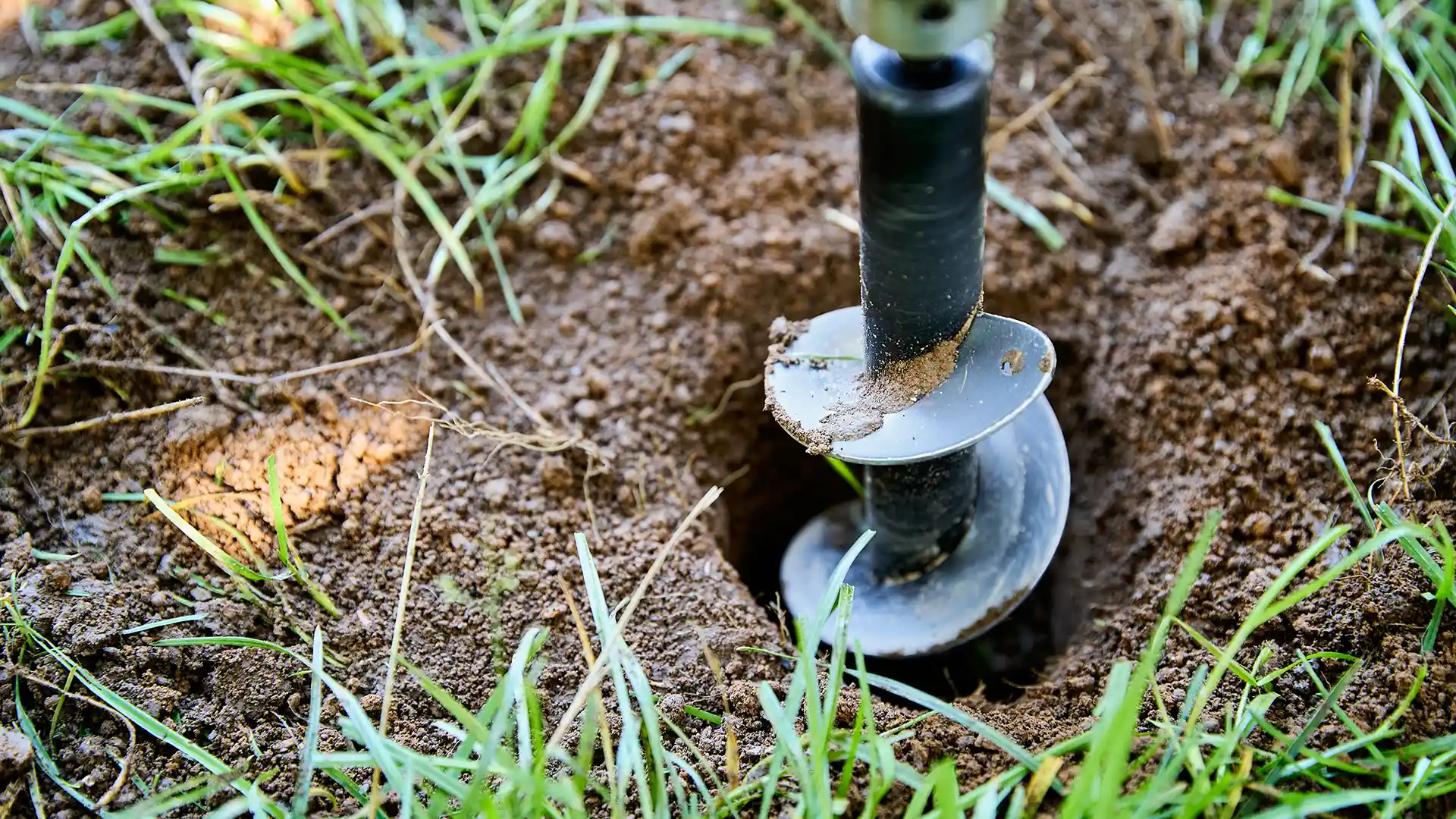
How I actually feed them: drill-and-fill (and the DIY version)
Here’s how we do it, and how close you can get on your own.
How I do it — drill-and-fill. When the root zone is under turf or packed clay, I don’t just throw fertilizer on top for the grass to eat. I drill a grid of holes about 8 to 12 inches deep, roughly two feet apart, from near the trunk out past the drip line — a rough guide is about five holes per inch of trunk diameter. I split the measured fertilizer evenly between the holes, funnel it in, and water it down. The holes get the food past the turf to the tree’s roots and loosen compacted soil while I’m at it.
The DIY version — you don’t need my equipment. Broadcast and water in: if the ground under the plant is mulched or bare, just spread the measured amount of granular fertilizer evenly over the root zone with a hand spreader and water it in well. Extension calls this economical and effective, and for most homeowners it’s all you need.
Or drill it yourself: if the plant sits in the lawn and you want the food reaching the roots instead of the grass, punch the same 8-to-12-inch holes with an auger bit or a punch bar, divide the fertilizer between them, and water. It’s a little labor, but it’s the exact same method I use.
What about fertilizer stakes? They’re the easiest option — you just hammer them in — and for a couple of small shrubs they beat doing nothing. But they’re the weakest way to feed a tree: the fertilizer only reaches the few inches of soil right around each stake, so most of the root system never sees it, and the concentrated spot can burn roots. Extension calls them inefficient and doesn’t recommend them over broadcasting. If you already own a box, crumble them and spread the material under the canopy — that turns a poor delivery method into a broadcast.
If that sounds like more work than you want, that’s what we’re for. We fold tree and shrub feeding into our tree and shrub maintenance plan — call or text (984) 284-5399.
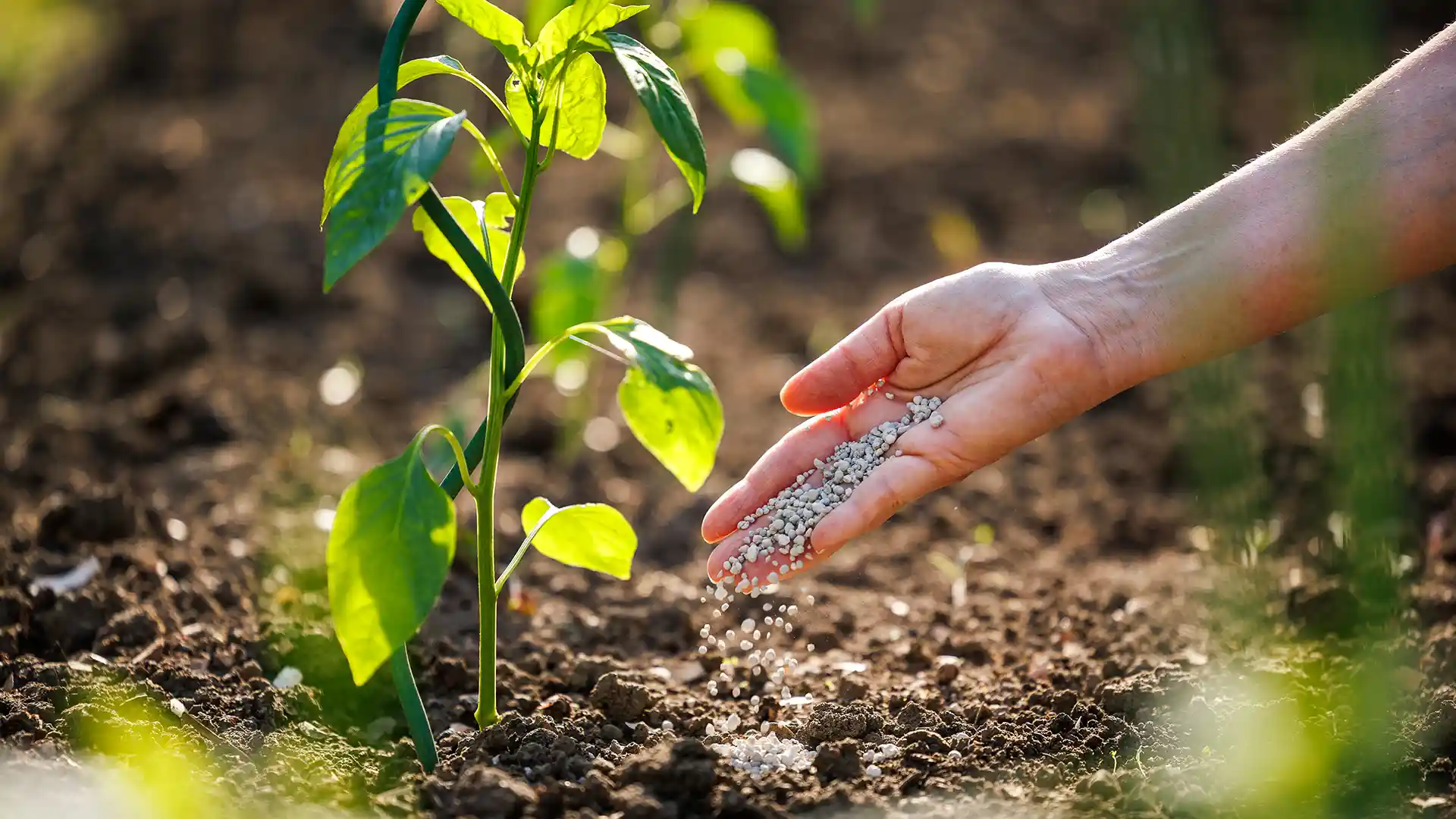
What about deep-root injection — isn’t it better?
You’ll see the big companies sell deep-root injection as a premium — a probe in the ground, fertilizer pushed in under pressure. Here’s the straight truth, and I’ll stand on it: injection is not proven to feed a tree any better than drilling holes or broadcasting and watering in. It’s faster and easier for a crew to run, and it’s easy to charge extra for a machine — but the university research (NC State, Virginia Tech, ISA, and a peer-reviewed review of the field) all lands in the same place: surface and drilled applications work as well as injection.
Two reasons it doesn’t out-perform, especially here. Most feeder roots sit shallow — the top six to eight inches — so injecting at eight to twelve inches often shoots under the roots you’re trying to feed. And in our heavy clay, pressurized liquid mostly follows the probe hole and the cracks; it doesn’t spread through tight clay any better than fertilizer washing down from a drilled hole. You need a slow leach, and clay gives you that either way.
So don’t pay a premium for injection thinking it feeds better. It doesn’t. It just lets a company treat more trees per hour. The equipment makes the job easier, not better. If you want the same breakdown for one specific tree, here’s how to fertilize a crepe myrtle.
Feeding, yellow leaves, and when to call a pro
One honest caution: most of the time, a struggling tree or shrub doesn’t need more fertilizer — it needs the right diagnosis. Yellow leaves with green veins usually mean pH or an iron problem, not a nitrogen shortage. Scorched edges often mean water, not food. And insects and disease cause far more damage than a missed feeding — those are the primary culprits, with water and cultural issues behind them. Feeding a sick plant harder can make it worse.
If a plant is declining and you can’t tell why, get eyes on it before you throw fertilizer at it. We’re licensed by the state of North Carolina to apply herbicides and pesticides on turf and ornamental plants such as shrubs and trees, so we can tell a feeding issue from a pest or disease and treat the real thing — that’s our tree and shrub pest control. When a plant is genuinely just hungry, feed it right and then leave it alone.
Feed them right and most trees and shrubs will run for decades with very little from you. Here are the questions we get asked most about feeding them.
Frequently Asked Questions
Want Your Trees and Shrubs Fed Right?
We match the fertilizer to the plant, put it where the roots are, and time it to the season — so you don’t have to think about it. It’s part of our tree and shrub maintenance plan. Call or text (984) 284-5399 for a quote.
Sources
- NC State Extension — A Gardener’s Guide to Fertilizing Trees and Shrubs
- Clemson Cooperative Extension (HGIC) — Fertilizing Trees and Shrubs
- UMass Extension — Fertilizing Trees and Shrubs
