

Anchor Plants: How to Give Your NC Landscape Year-Round Structure
By Ken Erickson · Updated August 2026
Most landscapes that look unfinished are missing the same thing: structure. People fill beds with pretty seasonal color, winter comes, everything dies back, and the yard looks bare. The fix is anchor plants – the permanent, structural plants that hold a landscape together all year. Get these right first and everything else you plant has something to build on.
Key takeaways
- Anchor plants are the large, permanent shrubs and small trees you design a bed around – they hold the structure when everything else dies back.
- Put anchors at the corners of the house, the ends of beds, and entries, and repeat the same plant for a cohesive look. Plant in odd numbers.
- Lean on evergreens so your beds still have shape through a North Carolina winter.
- The number-one mistake is planting too close to the house – space by the plant’s mature size, not the size it is in the pot.
- On a blank new-build lot, anchors are step one: they tuck the house into its site and create instant curb appeal.
What is an anchor plant?
An anchor plant is the large, permanent plant – usually a tall shrub or a small tree – that you design a bed around. It is the backbone. Think of it as the bones of the landscape: the form that is there in July and still there in January when the perennials are gone. Picking the right one for your soil and space is what we do — see our shrub and tree planting service.
It helps to keep three roles straight. Anchors are the big structural plants. Foundation plants are the shrubs that soften the base of the house and tie it to the ground. Fillers and accents are the perennials and annuals that come and go with the seasons. The anchors and foundation plants are the permanent framework; the fillers are the flair. A lot of yards are all flair and no framework.

Where do anchor plants go?
Anchors belong at the spots that need weight and definition:
• The outside corners of the house, to soften those hard square edges.
• The ends of beds, to give the bed a clear start and stop.
• Entries and focal points, where you want the eye to land.
Then repeat. Using the same anchor in a few spots across the yard creates rhythm and makes the whole landscape feel intentional instead of random. And plant in odd numbers – threes, fives, sevens – which reads more natural than pairs and rows.
How to choose anchor plants
Three things guide the pick. Scale: match the plant to the house – a two-story home can carry a big anchor that would swallow a ranch. Layering: put the tallest material near the house or the back of the bed and step down to the front, so nothing hides behind anything. And year-round structure: lean on evergreens, because they are the plants still doing the job in winter. A strong deciduous plant like a Japanese maple or a crepe myrtle can anchor a bed on form alone, but most of your anchors should be evergreen.
Best anchor plants for North Carolina
These all perform in our zone 7b climate. Match the mature size to the spot – that is the part people skip.
Plant | Evergreen? | Mature size | Role |
|---|---|---|---|
Nellie Stevens holly | Yes | 15-25 ft tall, 8-15 ft wide | Corner anchor / privacy screen |
Green Giant arborvitae | Yes | 40-60 ft tall – large lots only | Tall screen anchor |
Fragrant tea olive | Yes | 10-12 ft (to 20+) | Fragrant entry anchor |
Boxwood | Yes | 4-5 ft | Low formal anchor, repeated |
Little Gem magnolia | Yes | 15-25 ft | Evergreen focal anchor |
Japanese maple | No | 6-25 ft (by cultivar) | Deciduous focal point |
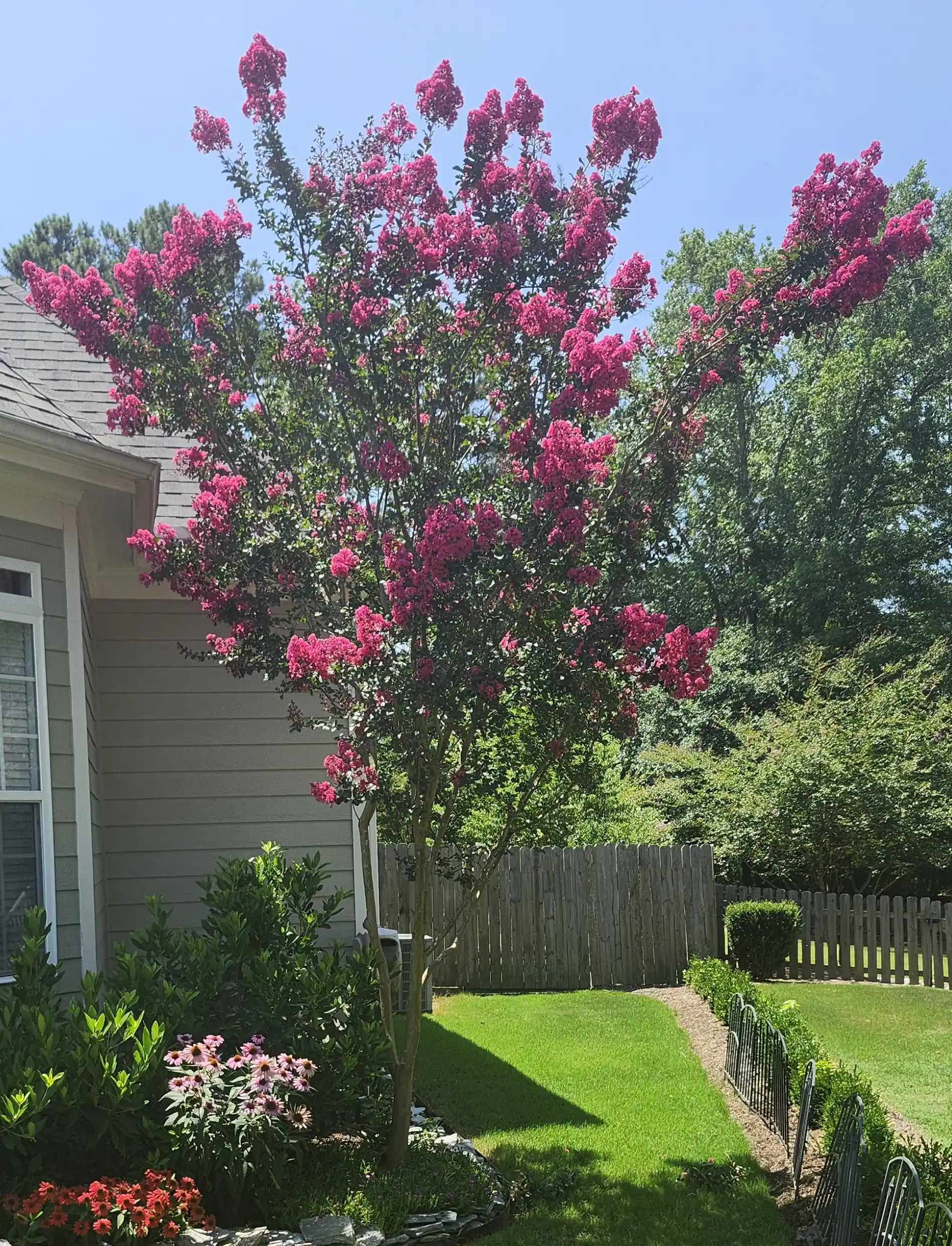
Crepe myrtle | No | 8-30 ft (by variety) | Deciduous corner anchor, summer bloom |
Yaupon or inkberry holly | Yes | 5-15 ft | Native boxwood alternative |
Anchor planting mistakes to avoid
The big one, every time, is planting too close to the house. That cute three-gallon shrub at the nursery is a 12-foot wall in ten years. Space by the mature size: small shrubs at least a couple of feet off the foundation, medium ones about three feet, and tall shrubs or small trees four to eight feet out. Jam them against the siding and you trap moisture, choke airflow, invite pests, and block your windows. When in doubt, plant it farther out.
Two more: do not make everything deciduous, or the beds go bare all winter – that is the whole reason to anchor with evergreens. And avoid planting in straight even-numbered rows; odd-number groupings look far more natural.

Anchoring a new-construction blank yard
This is where anchors matter most. A lot of the new builds out here in the southern suburbs go up on cleared farmland – no mature trees, no beds, just a raw house sitting on bare dirt. It looks jarring, and it is the number-one thing new homeowners want to fix. Working from a truly empty lot? Here is the full order to landscape a blank yard.
Anchors are step one. Before you worry about flowers, get the structural plants in – anchors at the house corners, a focal tree, a few evergreens to give the place some permanence. That alone tucks the house into the lot and buys you instant curb appeal, and it gives you the framework to layer everything else in over the next couple of seasons.
Should you DIY or hire a pro?
If you have got a good eye and a weekend, placing a few anchors yourself is absolutely doable – measure for mature size, set them at the corners and bed ends, and you are most of the way there. Where people bring us in is the whole-yard plan: getting the scale, spacing, and plant choices right the first time on a blank lot, so you are not moving 15-gallon shrubs in three years because they outgrew the spot. That is what we do – text us at 984-284-5399 and we will help you anchor the yard right.
Frequently Asked Questions
Starting With a Blank Yard?
Anchors are step one to making a new build feel finished. We plan the scale, spacing, and plant choices so you get it right the first time. Text us to anchor your yard. We handle the whole landscape installation — scale, spacing, and planting done right.
Sources
NC State Extension Gardener Plant Toolbox – Nellie R. Stevens Holly, Tea Olive, Boxwood
Clemson Cooperative Extension HGIC – Foundation Plantings
Fine Gardening – Plants That Can Anchor a Landscape
