

Army Worms in Your Lawn: How to Spot Them, Kill Them, and Save Your NC Grass
By Ken Erickson · Updated June 2026
Armyworm control is a race — they can strip a lawn in a couple of days. You mowed a green lawn last weekend. Now there are brown, ragged patches spreading across it, and the line between green and dead looks like someone drew it with a ruler. That is not drought. That is army worms.
I get calls about this every year, always the same window — late summer, right when people think the hard part of the season is behind them. The good news is your lawn is probably not dead. The bad news is army worms move fast, and the difference between a scare and a re-sod job is how quickly you catch them.
This is one of the usual suspects when a lawn browns out. For the full rundown, see our guide on what’s wrong with my lawn. Here is what army worms are, how to know for sure you have them, and what actually works.
Key takeaways
- Fall army worms migrate into North Carolina every summer and hit hardest in August and September.
- They can chew a green lawn down to stems in a few days — most of the damage comes in the last few days of feeding.
- Confirm before you spray: a soap-and-water flush brings them to the surface in about 10 minutes.
- Only treat if the caterpillars are still small. Big army worms are done eating and a spray won’t help.
- An established lawn almost always grows back with water and fertilizer. New sod is the real emergency.
Armyworm Control: What Army Worms Are and How to Spot Them
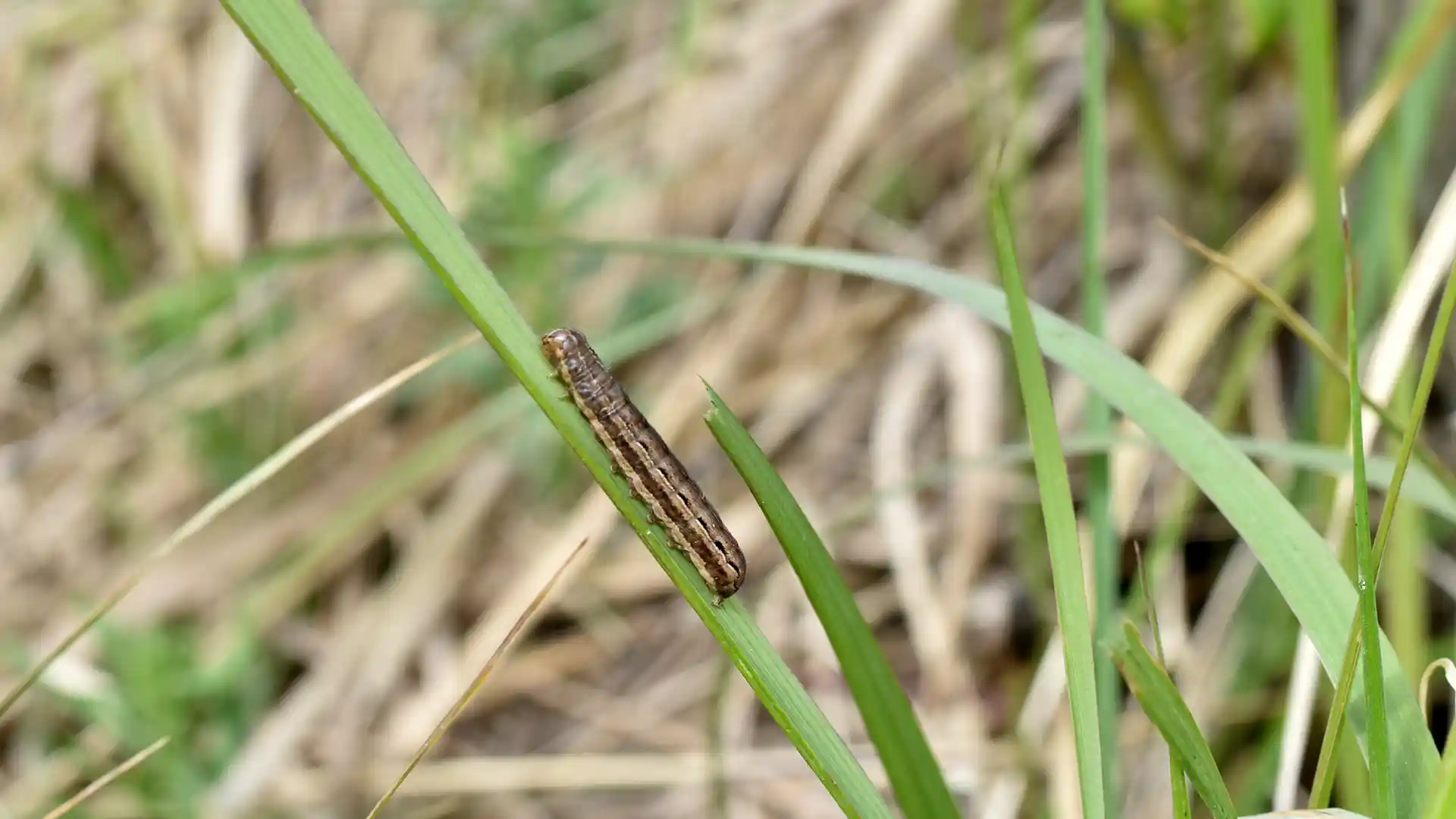
“Army worms” on a Southern lawn means the fall armyworm — the caterpillar stage of a moth. They are called an army for a reason: they feed in a group and move across the grass in a line, stripping it as they go.
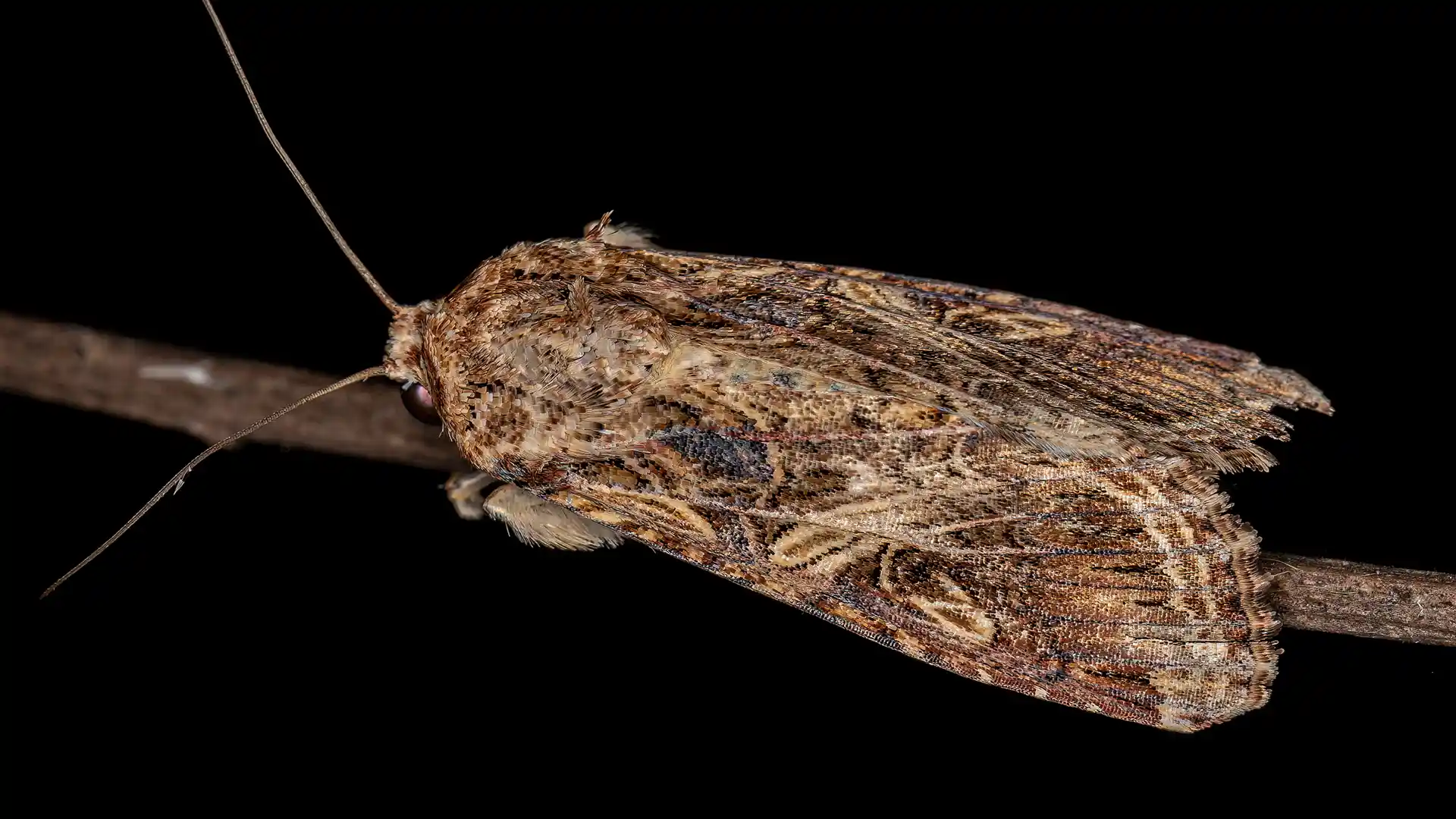
A full-grown army worm is about an inch to an inch and a half long. Color ranges from green to brown to almost black. The tell is a pale, upside-down “Y” on the head, with a dark stripe down each side of the body. The adult is a gray moth about an inch and a half across, with a small white spot on each front wing.
They eat a lot of grasses — bermuda, tall fescue, rye, bluegrass. Bermuda and fresh sod get hit hardest. Zoysia holds up better.

Why your lawn browned “overnight”
This is the part that catches people. Army worms do almost no damage while they are small — you will not even see them. Then they hit their last growth stages and over 90% of their lifetime feeding happens all at once. A lawn can look fine on Monday and be scalped by Thursday.
At heavy numbers — six or more per square foot — they can tear through a lawn in two to three days. So when a customer tells me it happened overnight, they are not exaggerating. The worms were there the whole time; you just could not see them until they got big.
The damage looks like this: first the grass blades get a see-through, “windowpane” look where the green has been scraped off. Then whole patches go brown and ragged, chewed down to stems. You will often notice birds working the lawn hard — starlings especially, sometimes skunks digging at night. They are eating the worms. That is a clue.
How to know for sure: the soap test
Before anybody sprays anything, confirm it. The damage can look like drought or disease, and you do not want to treat for the wrong thing.
Mix a couple tablespoons of lemon dish soap into a gallon or two of water. Pour it over a square yard of grass right at the edge of a damaged spot, where the green meets the brown. Wait about ten minutes. If you have army worms, they will wiggle up to the surface where you can count them.
What that count tells you:
Army worms per square foot | What it means | What to do |
|---|---|---|
1-2 | Light. A healthy lawn shrugs this off. | No treatment needed. Keep watching. |
3-5 | Moderate. You’ll start to see thinning. | Consider treating — it can escalate fast. |
6 or more | Heavy. Can strip a lawn in 2-3 days. | Treat now, while they’re still small. |
I like this test because it is honest. If nothing comes up, you do not have army worms and you just saved yourself a pointless application. That is the whole point — you spray when there is something to kill, not because a patch looks bad.
When army worms show up in NC
Army worms do not survive our winters. Every year they overwinter down in Florida, and the moths ride storms and wind north through the spring and summer. By the time they reach the Raleigh area in real numbers, it is usually late summer.
That is why they are called “fall” army worms — but around here the trouble really runs from about July into September, and it is worst in August and September. After a mild winter, expect them earlier and heavier, because more of them survive down south to make the trip.
Practical version: from July on, keep an eye out. Check for fuzzy, cottony egg masses on the sides of the house, on fences, mailboxes, and posts near the lawn — that is where the moths lay before the worms ever reach the grass. Catching egg masses is the earliest warning you get.
How to get rid of army worms
If the soap test confirms them and the numbers are up, here is how I handle it.
First, check the size. This matters more than anything else. Insecticides work on small army worms. Large ones are basically done eating and about to burrow down to pupate, so a spray is wasted money and will not bring the grass back any faster. Only treat if the caterpillars are still small.
Prep the lawn: mow it, then water it lightly. Then apply.
For an active outbreak, a liquid contact spray works faster than granules. Effective active ingredients include bifenthrin, lambda-cyhalothrin, permethrin, and carbaryl (Sevin). If you want a softer option, spinosad works and is the organic-friendly pick; Bt (Bacillus thuringiensis) handles young caterpillars too. Read the label and match the rate to your lawn.
Two timing details people get wrong:
• Army worms feed most in the early morning and the evening. Treat when they’re up and active, not in the middle of a hot afternoon.
• For contact sprays, don’t water the lawn or spray right before rain — you’ll wash the product off before it works. (One exception: acephate products are meant to be watered in. Follow the label for whatever you buy.)
If you want to get ahead of it on a high-value lawn, a preventive product with chlorantraniliprole (Acelepryn) applied in spring gives season-long protection. That is a program approach, not an emergency fix.
Will your lawn come back?
Almost always, yes — and this is where I talk people off the ledge.
Army worms eat the leaf, not the roots. An established lawn is not dead; it is chewed. Water it deeply, give it a shot of fertilizer, and a healthy Bermuda or fescue lawn greens back up in about three to four weeks. Don’t rip anything out in a panic.
The one real exception is a new lawn. Fresh sod and young seedlings don’t have the reserves to bounce back, and army worms can actually kill them. If you just put in sod and army worms move through, that is an emergency — treat immediately and keep it watered. Established fescue that got hit hard may need a fall overseed to fill the thin spots, but that is a fall job, not a today job.
When to call a pro vs. do it yourself
Honest answer: a lot of army worm situations are a DIY job. If you caught it early, the worms are small, and it is a normal-size yard, a bag of the right granular or a labeled liquid from the hardware store will do it. Do the soap test, treat while they’re small, water and feed after. You don’t need me for that.
Where it is worth a call: a large property, a brand-new sod or seed job you can’t afford to lose, or you’ve already sprayed and they keep coming back — army worms come in waves, and a second generation can hit weeks later. We’re licensed to apply pesticides on turf in North Carolina, and for an active outbreak on a big lawn we can hit it with a fast liquid on the right timing, then set up the fertilization to bring the grass back.
If your lawn is browning out and you’re not sure what it is, text us a photo — text is the fastest way to reach us, at 984-284-5399 — and we’ll tell you whether it’s worth a treatment or whether you can knock it out yourself.
Frequently Asked Questions
Want a Pro to Handle It?
We are licensed to treat turf and ornamental plants across the Raleigh southern suburbs. Tell us what your lawn is doing and we will take it from there.
Sources
NC State Extension / TurfFiles — Fall Armyworms in Turf
Clemson HGIC 2159 — Armyworms: Identification, Damage & Control in Turfgrass
UGA Extension Circular C1335 — Fall Armyworm: Biology and Management in Turfgrass
Texas A&M AgriLife — Managing Armyworms in Lawns
