

Boxwood Care in North Carolina: Blight, Pests, and How to Keep Them Green
By Ken Erickson · Updated June 2026
Good boxwood care starts with knowing the handful of problems that hit them here. Boxwoods are the backbone of a Southern landscape – hedges, edging, foundation plantings, topiary. They are tough and long-lived, but they have a short list of problems that show up over and over, and one of them, boxwood blight, is a genuine threat here in North Carolina. Here is how to keep yours green and how to tell what is wrong when they are not.
Key takeaways
- Boxwoods are slow-growing evergreens that do best in NC’s zone 7b in part shade to full sun with well-drained, near-neutral soil – good drainage is the single biggest factor in keeping them alive.
- Boxwood blight is the number-one threat. It has been established in NC since 2011, causes dark leaf spots, black stem streaks, and rapid leaf drop from the bottom up – and there is no cure once a plant is infected.
- The most-planted types, American and English boxwood, are the most susceptible to blight. Korean and Japanese types and the newer resistant hybrids hold up far better.
- Not every brown boxwood is blight – winter bronzing, root rot, Volutella, and leafminer all look similar, so correct diagnosis drives the fix.
- Prevention is everything: airflow, do not shear when wet, avoid overhead watering, mulch (not too deep), disinfect tools, and never bring in untested plants or holiday boxwood greenery.
Why boxwoods are a Southern landscape staple
Boxwoods are dense broadleaf evergreens that shear into clean formal shapes and hold them all year. They are slow-growing, which is a feature – they stay where you put them – and they are deer- and rabbit-resistant, a real plus in our neighborhoods. The common types you will run into are American and English boxwood (both Buxus sempervirens, including the dwarf English edging box), Korean and Japanese boxwood, and the popular hybrids like Green Velvet, Green Mountain, and Wintergreen.
Choosing and planting boxwoods in NC
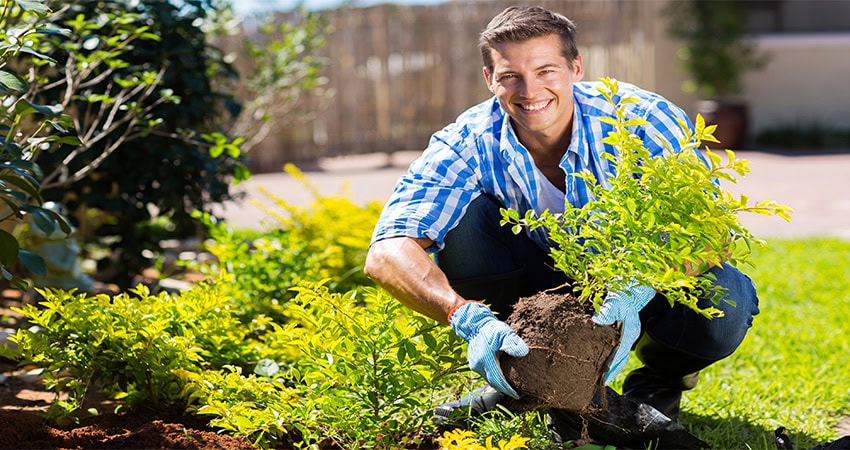
Site them in full sun to part shade with well-drained soil – drainage is the whole ballgame, because boxwoods hate wet feet. They prefer a slightly acidic to neutral pH, roughly 6.5 to 7.2, though they tolerate a wider range; a soil test confirms where you stand. Their roots are shallow, so plant the crown slightly high, keep even moisture the first couple of years, and mulch to hold it. Fall or spring is the time to plant.
Boxwood care basics: watering, mulching, pruning
New boxwoods want about an inch of water a week for the first year or two; after that they only need it in a drought. Water at the base, never overhead – wet leaves spread disease. Keep 2 to 3 inches of mulch over the shallow roots, but pull it back off the stems.
When you prune, do more than shear the surface. Thin some interior branches so light and air get inside the plant – a dense, airless boxwood is exactly what disease wants. Prune in late winter or early spring, never in late summer or fall (new growth will not harden before winter), and never shear when the foliage is wet.
Boxwood blight: the number-one threat
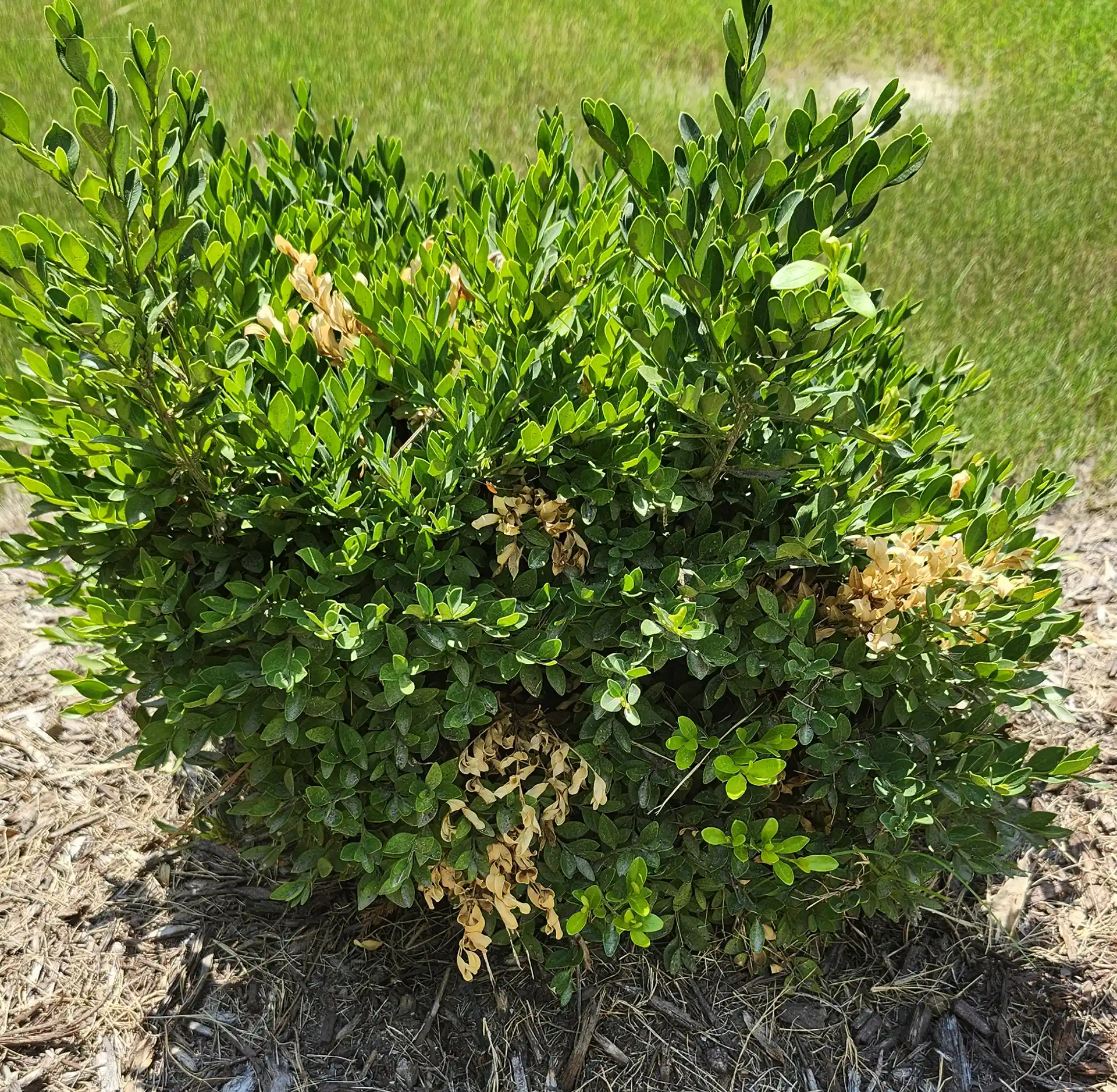
Boxwood blight is a fungal disease that has been established in North Carolina since 2011, and it is the thing to know about. The symptoms: dark leaf spots, black streaks and lesions on the stems, and rapid leaf drop that works up from the bottom of the plant. It moves fast.
Here is the hard truth – there is no cure once a plant is infected. It spreads through splashing water, contaminated tools, infected nursery plants, and even holiday boxwood greenery, and the spores can survive in the soil for years. If you have got it, the move is to remove and bag or burn the infected plants and every fallen leaf, disinfect your tools and shoes, and not replant susceptible types in that spot. Fungicides only protect healthy plants; they do not save a sick one. This is exactly the kind of thing worth having a licensed pro confirm before you tear out a hedge.
Other boxwood problems and pests
Not every brown boxwood is blight. Run through this before you panic:
What you see | Likely cause | What to do |
|---|---|---|
Leaf drop from the bottom up, dark spots, black stem streaks | Boxwood blight | No cure – remove and destroy plants and leaves, disinfect tools; call a pro to confirm |
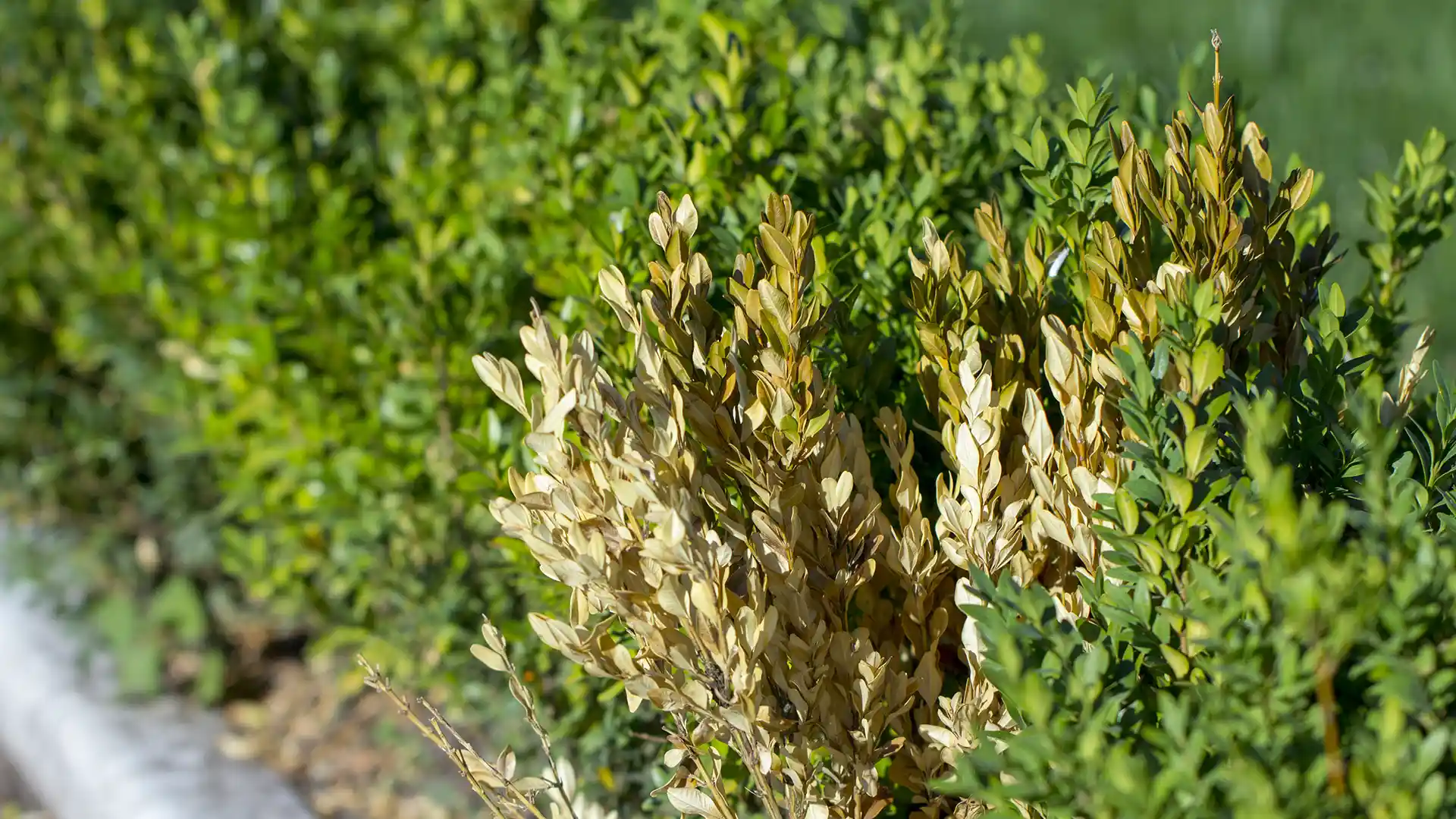
Whole plant bronze or reddish in late winter | Winter bronzing | Usually cosmetic – prune dead tips in spring, water before hard freezes, shelter from wind |
Wilting, straw-colored foliage, dark wood at the base | Phytophthora root rot (wet soil) | Improve drainage, stop overwatering; no cure – re-site |
Brown patches with pink-orange spore masses | Volutella blight | Prune out affected branches, thin for airflow, improve vigor |
Blisters on the underside of leaves, early leaf drop | Boxwood leafminer | Time control to adult emergence – a licensed applicator gets it right (per label) |
New growth cupped or spoon-shaped | Boxwood psyllid | Minor – prune off distorted tips; treat only if heavy |
Blight-resistant varieties worth planting
No boxwood is immune, but some resist blight far better than others – and if you are replacing plants or starting fresh, this is where to spend your attention. American and English boxwood are the most susceptible. The better bets are the Korean types (Wintergreen, Franklin’s Gem, Winter Gem), Japanese Green Beauty, and the newer resistant hybrids bred specifically to hold up. In an area where blight is present, planting a resistant variety is the single smartest thing you can do.
Boxwood care: DIY vs. calling a pro
The routine care is a homeowner job – water at the base, mulch, and shear your boxwoods yourself, and you will keep most of them healthy for decades. Where it is worth a call is diagnosis and control: telling blight apart from Volutella apart from root rot, deciding whether a hedge can be saved, and getting the timing right on systemic control for leafminer. We are licensed by the state of North Carolina to apply pesticides on shrubs and trees, and our background with pests and disease on ornamentals runs deep. If your boxwoods are browning and you are not sure why, text us a photo at 984-284-5399 before you rip anything out.
Frequently Asked Questions
Boxwoods Browning Out?
We are licensed to diagnose and treat shrub disease and pests in North Carolina, and boxwood blight is established here. Text us a photo before you tear out a hedge – it may be something fixable.
Sources
NC State Extension Gardener Plant Toolbox – Buxus (Boxwood)
NC State Extension – Pests of Boxwood
NC Department of Agriculture – Boxwood Blight Compliance Program
Clemson Cooperative Extension HGIC – Boxwood Diseases and Insect Pests
