

How to Prune Overgrown Shrubs in North Carolina Without Butchering Them
By Ken Erickson · Updated July 2026
How to Prune Overgrown Shrubs Without Killing Them
The key to how to prune overgrown shrubs is patience — renewal over a couple of seasons, not one drastic chop. Most overgrown shrubs are saved over two to three seasons, not fixed in one violent cut. You have two real options: gradual renewal pruning — remove about a third of the oldest stems each year for three years — or hard rejuvenation, cutting the whole plant back to 6 to 18 inches at once. Which one you can use depends entirely on the plant.
Overgrown shrubs almost always come from the same two mistakes: the wrong plant in the wrong spot, and years of shearing the outside while the inside goes bare. By the time a homeowner calls us across Fuquay-Varina, Apex, or Cary, the shrub is blocking a window or crowding a walk. The good news is that most of these plants are not dead — they are neglected, and neglect is fixable.
Key Takeaways
- Most overgrown shrubs are saved over two to three seasons, not fixed in one violent cut.
- Two options: gradual renewal (remove a third of the oldest stems per year for three years) or hard rejuvenation (cut to 6–18 inches at once).
- Which you can use depends on the plant: holly, boxwood, ligustrum, nandina, forsythia, and spirea take a hard cut; Leyland cypress, junipers, and conifers do not.
- Most shrubs are cut in late winter to early spring; spring bloomers get pruned right after they flower or you lose a year of blooms.
Why Do Overgrown Shrubs Happen?
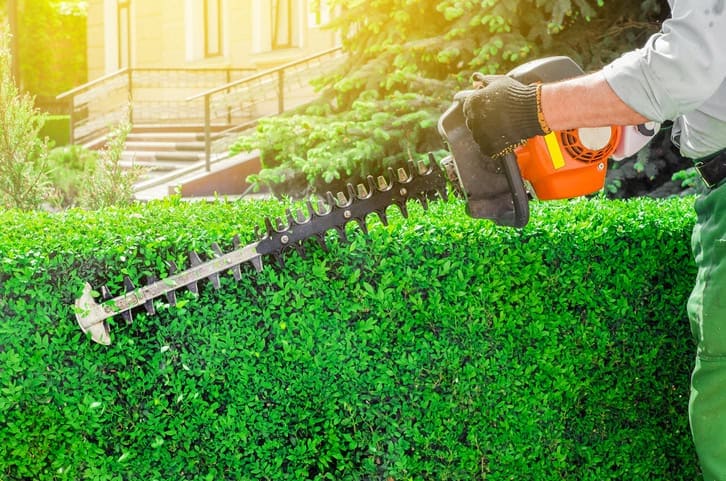
A foundation holly planted three feet from the house was always going to swallow the window. A quick trim every summer just thickens the shell and shades out the interior, so the plant gets leggier and hollower each year.
The instinct to grab the hedge trimmer and take a foot off the top in one afternoon is what actually kills them. We are licensed by the state of North Carolina to work on turf and ornamental plants, and renovating overgrown shrubs is a big part of what we do. When a shrub is too far gone to fix yourself, our hedge and shrub trimming service can renovate it for you.
The Two Root Causes
Wrong plant, wrong place — and repeated shearing. Fix the first with the right variety, and the second with a proper renewal cut instead of a schedule.
Shrub | Can hard-cut? | Method | Timing |
|---|---|---|---|
Holly | Yes | Hard cut or renewal | Late winter |
Boxwood | Yes (slow) | Renewal in stages | Early spring |
Ligustrum / privet | Yes | Hard rejuvenation | Late winter |
Nandina | Yes | Cut tall canes to the base | Late winter |
Forsythia / spirea | Yes | Right after bloom | After flowering |
Lilac / viburnum | Yes | Renewal | After bloom |
Leyland cypress | No | Trim into green only | Spring–summer |
Juniper / arborvitae | No | Trim into green only | Spring–summer |
Renewal Pruning vs. Rejuvenation Pruning
These two terms get used loosely, so let me be precise. Renewal pruning is the gradual method: you remove about one-third of the oldest, thickest stems all the way to the ground each year, over three years. The plant is never bare and looks presentable the whole time.
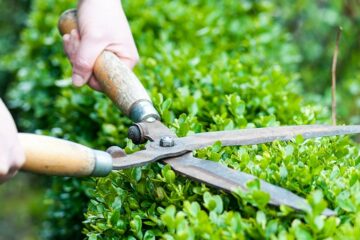
Hard rejuvenation is the drastic method: you cut the entire shrub down to 6 to 18 inches in a single cut and let it push all-new growth from the base. It looks like a stump for a season, then explodes back. Faster and cheaper, but only safe on plants that can take it.
N.C. Cooperative Extension frames it the same way — rejuvenation is cutting older wood back near the ground; for some plants you remove everything in one year, and for others no more than about a third per year.
Knowing which bucket your shrub falls in is the whole game. The table below sorts the common ones.
How Do You Do Gradual Renewal Pruning?
This is the method I recommend to most homeowners, because it is nearly impossible to ruin a plant with it. It works on any multi-stemmed or cane-type shrub — lilac, forsythia, viburnum, dogwood, spirea, and the like.
Year One
In late winter or early spring, cut out anything dead, diseased, or crossing. Then find the oldest, thickest stems — the gray, woody ones — and cut about a third of them all the way down to the ground. Cutting at the base, not partway up, is what forces fresh shoots from the crown.
Year Two
Remove about half of the remaining old stems, again at ground level. Thin the crowd of new shoots that came up last year — keep the strongest, best-spaced ones and cut the rest.
Year Three
Take out the last of the original old wood. At this point the entire plant is young growth, dense from the base up. You are done, and you never looked at a stump.
Three seasons, no ugly stage, and a fully rebuilt shrub.
How Do You Hard-Rejuvenate a Shrub?
When a shrub is too far gone to fix gently, or it is a tough plant that bounces back fast, we cut it hard. Overgrown hollies, ligustrum, nandina, spirea, and privet all take this well. Cut the whole plant back to 6 to 18 inches in late winter or early spring, before new growth pushes. Steve Pettis at N.C. Cooperative Extension notes that most multi-stem shrubs can be cut to a stump and recover — he has done it with 20-foot hollies at the JC Raulston Arboretum in Raleigh. Waiting until late winter means the least time staring at a bare stump before the flush covers it.
Which Shrubs Take a Hard Cut?
Shrubs That Recover
These broadleaf and deciduous shrubs regrow from old wood and tolerate a hard cutback: holly, boxwood (slowly), ligustrum and privet, nandina, and the classic renewal candidates — forsythia, spirea, abelia, lilac, viburnum, dogwood, quince, and ninebark.
Holly resprouts reliably even when large. Ligustrum and privet are nearly indestructible. Nandina refills from the base when you cut the tallest canes to the ground.
Boxwood regrows from bare wood but slowly — expect it to look rough for a season or more.
After the Cut: Feeding and Watering
A shrub you just cut to a stump is running entirely on stored root energy to rebuild a canopy. Help it through the first season.
Shrubs That Will Not Come Back
Do not hard-prune needled conifers: Leyland cypress, junipers, arborvitae, most pines and spruce. They cannot regrow from bare, leafless wood, so any hole you cut into the interior is a hole forever. Lavender and woody single-stem plants belong on that list too. If it is a needled evergreen, assume it cannot come back from bare wood.
Water Deeply
Water deeply and consistently through the first growing season, especially through our July and August heat. New shoots have almost no root-to-shoot buffer, so dry spells hurt more than usual. Deep and infrequent beats a daily splash.
Feed After Growth Starts
Feed after growth starts, not before. A balanced slow-release fertilizer once the new shoots are pushing gives them fuel without forcing tender growth into a late frost.
Mulch and Wait
Mulch two to three inches over the root zone to hold moisture and moderate soil temperature — but keep it off the stems. Then be patient: the first season looks sparse, and the second season is where it earns its shape back.
When to Remove and Replant
I would rather tell you the truth than sell a doomed pruning job. Replace the shrub when it is a conifer with a bare, dead center, when more than about a third of the plant is dead wood, when it is simply the wrong plant for the spot, or when the renovation would leave it ugly for five-plus years. A right-sized plant in the right place is less work and better looking for the next decade.
There is no shame in a clean start.
Sometimes a fresh, correctly sized shrub is cheaper over time than years of babysitting an eyesore.
Should You Do This Yourself?
The Judgment Calls
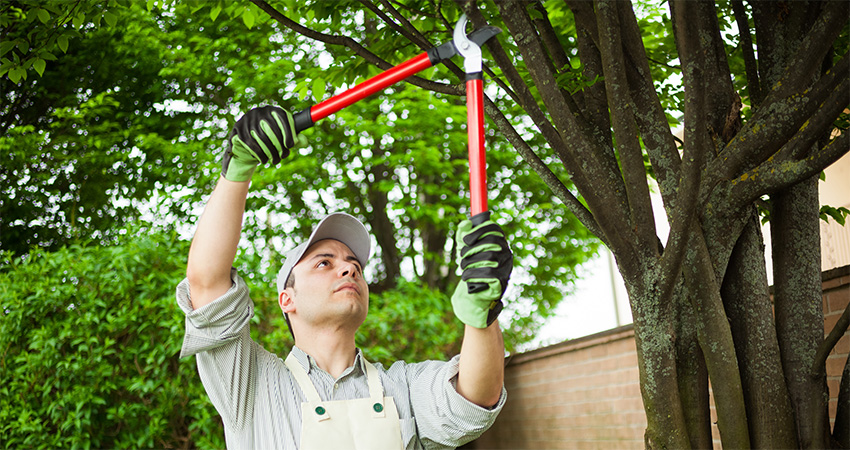
Plenty of this is do-it-yourself. If you have a healthy multi-stem shrub, good loppers, and the patience for the three-year renewal method, do it — that is the low-risk approach and you save the service call. Where people get into trouble is the judgment: whether a specific plant will resprout, whether that evergreen is a broadleaf exception or a conifer one bad cut from the trash pile, and how to feed a stressed plant back to health. That is what we do for a living, and there is no contract to get help with it.
Overgrown Shrub Pruning FAQs
Ready to Rescue Your Overgrown Shrubs?
Overgrown does not mean gone. Most shrubs across Fuquay-Varina, Holly Springs, Apex, Cary, Garner, Angier, Willow Spring, Lillington, and South Raleigh can be brought back — if the right method meets the right plant at the right time. We will tell you honestly when a plant is worth saving versus replacing, and there is no contract to sign. See our hedge and shrub trimming service, then call or text 984-284-5399 for a straight answer on your shrubs.
