

Hellebores (Lenten Rose): The Winter-Blooming Shade Perennial for North Carolina
By Ken Erickson · Updated August 2026
If you have a shady spot under trees where nothing wants to grow, and you are tired of losing plants to the deer, let me introduce you to my favorite fix. Hellebores – most people call them Lenten roses – bloom in the dead of winter, thrive in the dry shade that defeats everything else, and the deer will not touch them. They are one of the most rewarding, least demanding plants you can put in a Triangle yard. Here is how to grow them.
Key takeaways
- Hellebores (Lenten rose) are one of the first perennials to bloom – nodding white, pink, purple, or green flowers from late winter into early spring, when the rest of the garden is bare.
- They thrive in part to full shade, which makes them ideal for the dry shade under trees where little else grows. In our heat, afternoon shade is a must.
- They are deer- and rabbit-resistant, drought-tolerant once established, and long-lived – about as close to bulletproof as a perennial gets.
- Low maintenance: the one real task is cutting off the old, tattered leaves in late winter, just before the flowers emerge.
- They are evergreen and clumping, about 1 to 2 feet tall, and they are toxic if eaten – which is exactly why deer leave them alone.
What is a hellebore (Lenten rose)?
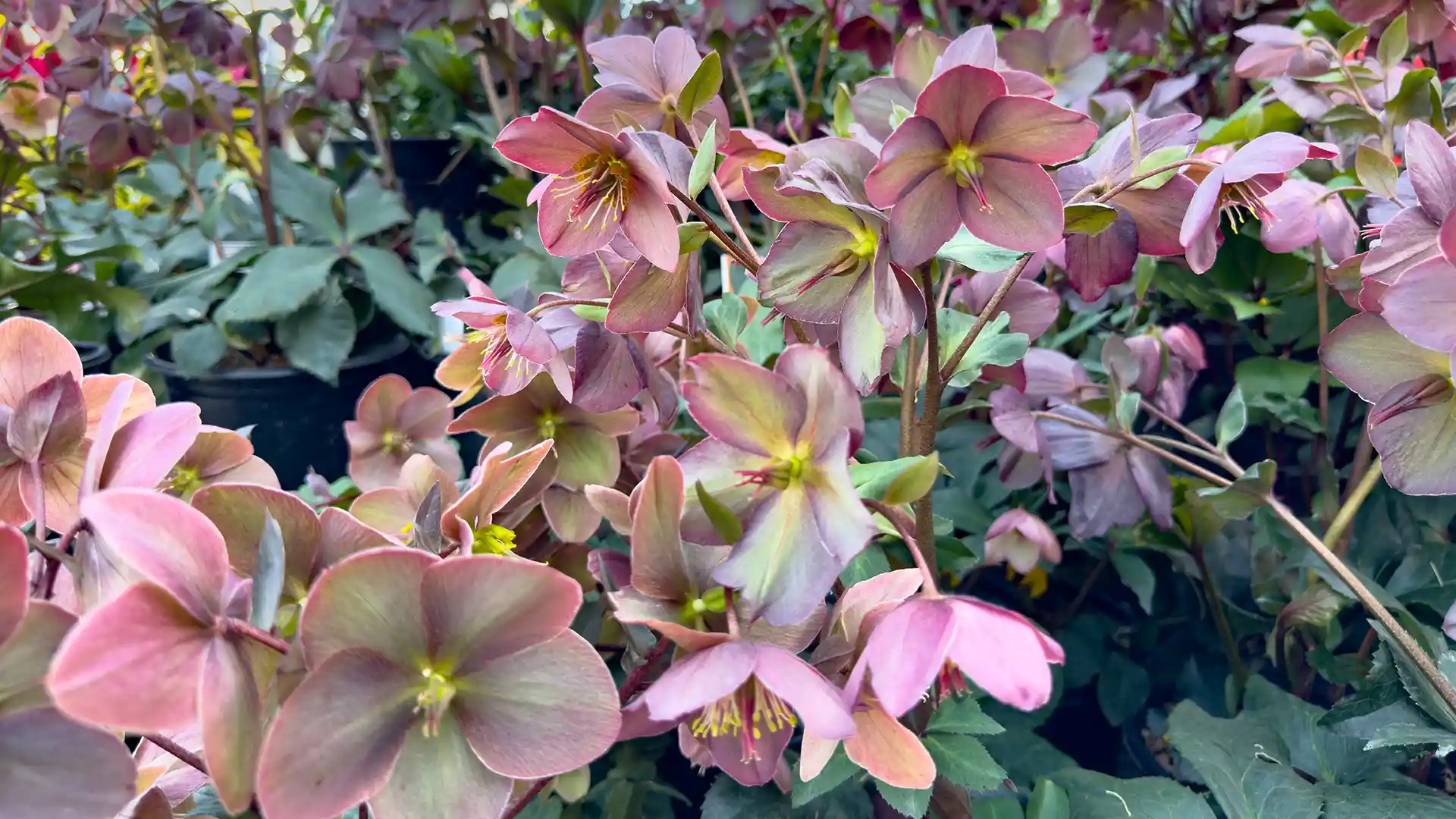
Despite the name, a Lenten rose is not a rose at all – it is a hellebore, an evergreen perennial in the buttercup family. It forms a low, leafy clump about a foot to a foot and a half tall, and in late winter it sends up nodding, cup-shaped flowers in white, soft pink, deep purple, or green, right around the church season of Lent, which is where the name comes from. Those flowers hang on for weeks and weeks, and the leathery evergreen foliage looks good the rest of the year. Here are the quick facts:
Trait | Detail |
|---|---|
Bloom time | Late winter into spring (roughly January to March) |
Bloom colors | White, pink, purple, green, sometimes yellow or near-red |
Light | Part to full shade; afternoon shade is essential in our heat |
Mature size | About 1 to 2 feet tall and wide; clumping, evergreen |
Standout traits | Deer- and rabbit-resistant, long-lived, low-maintenance |
Where to plant hellebores: the perfect shade perennial
Hellebores want shade – part shade, full shade, or dappled light, and they are perfectly happy in the dry shade under deciduous trees like oaks and maples, where the winter sun still reaches them before the leaves come back. Here in zone 7b, afternoon shade is not optional; our summer sun will scorch leaves that get baked all afternoon. Give them a moist, well-drained soil with plenty of organic matter, and that hard-to-fill north side of the house or the bed under the big tree becomes a spot you actually look forward to in February.

How to plant hellebores (crown depth matters)
There is one planting mistake that kills hellebores, and it is easy to avoid: do not plant them too deep. Set the crown – where the stems meet the roots – right at or just barely above the soil line. Bury it and the plant sulks or rots. In our heavy Piedmont clay, work in some compost to loosen the soil and improve drainage before planting. Space them a foot or more apart, plant in fall or early spring, and water them in – and then give them a season to settle before you expect much. Hellebores follow the old rule: first year they sleep, second year they creep, third year they leap.
Caring for hellebores and when to cut back old leaves
The care calendar is almost empty, which is the whole appeal. Water them their first season to establish, and after that they handle dry shade well. The one job worth doing: in late winter, usually February, cut off the old, tattered, winter-worn leaves right before the flower buds push up. This makes the blooms show off against clean ground, improves airflow, and cuts down on leaf-spot disease. Beyond that, a light feeding and a little mulch kept off the crown is plenty. They self-seed, so you may find baby hellebores nearby – a free bonus you can move or share. Pair them with ferns and hostas from the best shade plants for NC and the whole bed carries itself.

Why hellebores win in NC: deer resistance and low maintenance
Two things make hellebores a standout for our area. First, deer and rabbits leave them alone – the foliage is toxic and bitter, so browsing animals skip it, which is a genuine relief if you have watched deer mow down your hostas and daylilies. Second, they are as low-maintenance as flowering plants come, with few pests and a long life. That toxicity is worth a note of caution: keep pets and small children from chewing on them. But for a deer-plagued, shady Triangle yard, there are few better bets.
Types of hellebores: Lenten rose vs. Christmas rose vs. newer hybrids
The one to plant here is the Lenten rose (Helleborus x hybridus) – it is the easiest in our Southern heat and comes in the widest range of colors. The Christmas rose (Helleborus niger) blooms earlier with pure white, outward-facing flowers, but it is fussier and less reliable in our climate. The newer hybrid series like Ice N’ Roses and Frostkiss are worth a look too – they were bred for vigor and for flowers that face outward and up, so you actually see them instead of having to tip the nodding blooms toward you. For most yards, start with Lenten rose and you will not go wrong.
Frequently Asked Questions
Got a Shady, Deer-Plagued Spot?
Hellebores are one of the best fixes for dry shade the deer leave alone – and we design and plant shade beds that look good even in February. Text us about your spot.
Sources
NC State Extension Gardener Plant Toolbox – Helleborus x hybridus
NC State Extension Gardener Plant Toolbox – Helleborus (genus)
Clemson Cooperative Extension HGIC – Hellebore
University of Wisconsin Extension – Lenten Rose
