

How Much Mulch Do I Need? (Calculator and Install Cost)
By Ken Erickson · Updated August 2026
Key Takeaways
- The math is simple: square footage × depth in inches ÷ 324 = cubic yards of mulch.
- One cubic yard covers about 162 square feet at 2 inches deep, or 108 square feet at 3 inches.
- For most Triangle beds, 2 to 3 inches is the sweet spot. Never pile it against trunks (no “volcano mulch”).
- Bulk yards beat bags on price once you pass roughly 500 square feet or about 12 bags.
- Refresh with a 1 inch top-up each year; a full swap runs every 3 to 5 years.
How do I calculate how much mulch I need?
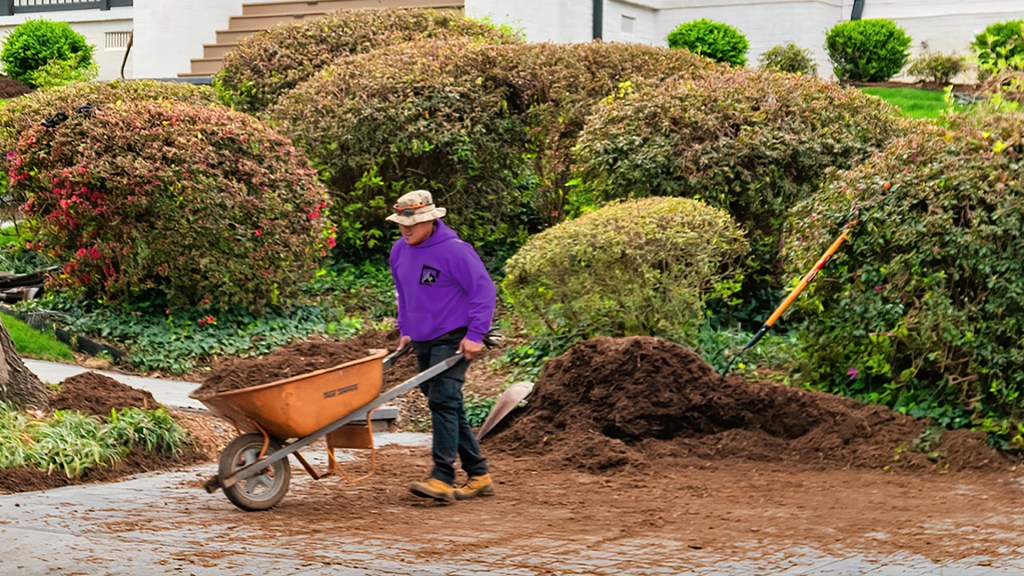
Start by measuring your beds. For a rectangle, multiply length by width to get square footage. For an odd curved bed, break it into rough rectangles and circles, or just walk it off and round up. Add the areas together.
Then use the formula every landscaper keeps in their head:
Square footage × depth in inches ÷ 324 = cubic yards of mulch.
The 324 is not magic. A cubic yard is 27 cubic feet, and spread one inch thick that yard covers 324 square feet. So if you have a 600-square-foot bed and you want 2 inches of mulch, the math is 600 × 2 ÷ 324 = 3.7 cubic yards. Round up to 4. I always add about 5 to 10 percent for settling and for the spots you underestimated, because you never want to make a second trip for the last corner of a bed.
If you would rather skip the arithmetic, measure your beds and tell us the square footage. We will size the order, deliver it, and install it. Getting the amount right is the difference between a clean, finished bed and either a bare-looking job or a wasted half-yard sitting in your driveway.
How much does a cubic yard of mulch cover?
Coverage is entirely about depth. The deeper you go, the less ground one yard covers. Here is the quick reference I use:
Read the table this way: at the 2-to-3-inch depth most homes need, plan on one cubic yard covering somewhere between 108 and 162 square feet. A typical front foundation bed on a Triangle lot lands in the 200-to-400-square-foot range, which usually means 2 to 4 yards.
One more field note for our red-clay soils. Fine, shredded hardwood mats down and holds moisture, so 2 inches of it does the job. Coarse pine bark nuggets are chunkier and let more light through, so lean toward 3 inches to actually shade out weeds. Match the depth to the material.
| Depth | Coverage per cubic yard | Coverage per 2 cu. ft. bag |
|---|---|---|
| 1 inch | 324 sq. ft. | 24 sq. ft. |
| 2 inches | 162 sq. ft. | 12 sq. ft. |
| 3 inches | 108 sq. ft. | 8 sq. ft. |
| 4 inches | 81 sq. ft. | 6 sq. ft. |
How deep should mulch be?
For flower and shrub beds, 2 to 3 inches is the target after the mulch settles. That depth holds soil moisture through a July dry spell, blocks most weed seeds from germinating (our flower bed weed control handles what still comes through), and moderates soil temperature. NC State Extension recommends up to 3 to 4 inches over clean, weed-free soil, and paths or slopes can take the deeper end. Below 2 inches you will not get real weed suppression, and light will reach the soil and wake up weed seeds.
Here is where DIY goes wrong most often: piling mulch high against the base of trees and shrubs, which also traps the damp conditions that mulch fungus favors, the so-called mulch volcano. Do not do it. UGA Extension is blunt that piling mulch around the base of a plant “does more harm than good” and sets it up for long-term stress, rot, disease, and rodent damage. Keep mulch a few inches back from every trunk and stem so the bark can breathe. A flat donut, never a cone.
When you can DIY this: one or two small beds, a few bags, a free Saturday. It is honest, satisfying work. When to call a pro: large beds, a full property, bed edges that need to be re-cut first, or trees where getting the depth and clearance right actually protects a plant worth thousands. That is where doing it correctly pays for itself.
How many bags of mulch are in a yard?
Bagged mulch is sold mostly in 2-cubic-foot bags. Since a cubic yard is 27 cubic feet, it takes about 13.5 bags to equal one yard. If your store carries 3-cubic-foot bags, that drops to 9 bags per yard; the smaller 1.5-cubic-foot bags run 18 to the yard.
Two-cubic-foot bags cover about 12 square feet at 2 inches and 8 square feet at 3 inches. So a 300-square-foot bed at 2 inches needs roughly 25 bags. Once you are stacking 13-plus bags in the car, you are effectively hauling a yard the hard way, one bag at a time.
Should I buy bags or bulk yards?
Bags win for small, one-off jobs: a single planter, a narrow strip, a spot where you have no room for a bulk pile. They are clean, easy to store, and easy to move one at a time.
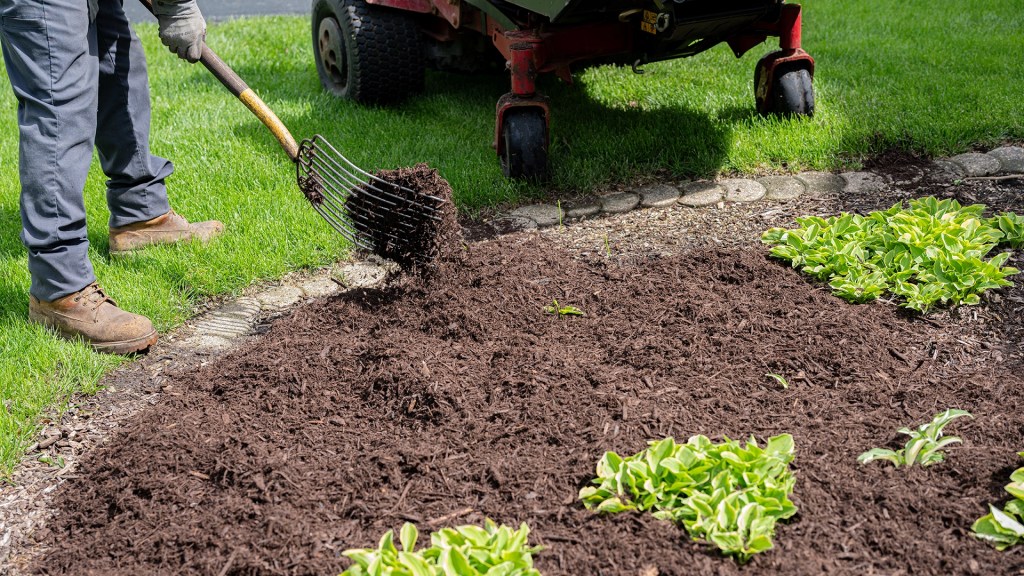
Bulk yards win on everything else. Loose mulch by the yard costs less per cubic foot than the same volume in bags, there is no plastic to strip and stuff in the trash, and it is far faster to spread from a wheelbarrow than to slit open 25 bags. The rough cutover is around 500 square feet, or about a dozen bags. Past that, bulk is cheaper and easier. The catch is that bulk needs a truck, a spot to dump it, and a strong back to move it. That is exactly the point where most homeowners hand the job to us.
How often should I refresh mulch?
Mulch breaks down. That is a feature, not a flaw, because it feeds the soil as it decomposes. In our warm, humid Triangle summers it breaks down faster than in cooler climates. For most beds, a 1-inch top-up once a year brings the color back and restores the depth you have lost. Do not simply keep piling year after year, or you will drift past 4 inches and start smothering roots; rake and fluff the old layer first, then add.
Plan on a full replacement every 3 to 5 years, and sooner if you see matted fungus, a sour smell, or the mulch has turned to soil. Early spring is the classic time in North Carolina, right after you re-cut the bed edges and before the summer weeds get going.
How much does mulch installation and delivery cost?
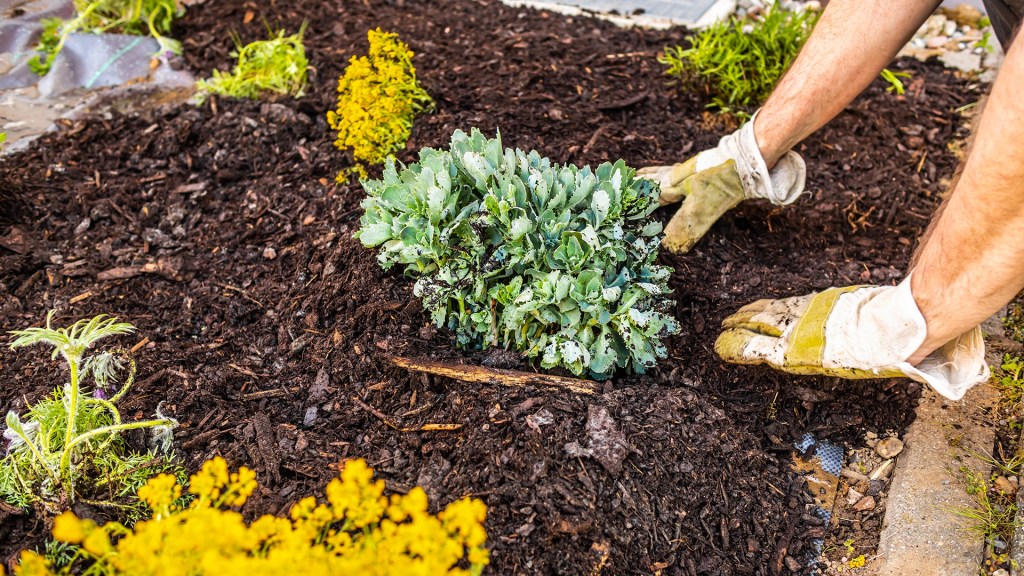
Costs move with three things: how many cubic yards you need, the type of mulch (dyed hardwood, natural double-shredded, pine bark), and how much bed prep, edging, and hauling the job takes. Our mulch installation service covers delivery and spreading. Rather than quote a number that will not match your property, here are honest ranges for our area, with the specifics marked for a real quote.
Lawn Panther delivers mulch and installs it, and we handle the parts that make a bed actually look finished: re-cutting a crisp edge, pulling weeds before we lay anything down, and keeping the mulch pulled back off your trunks. If you want a firm number for your beds, we will measure and give you a flat, no-surprise quote.
Ready for finished beds without the back work?
If you would rather skip the measuring, the hauling, and the 25 bags, we deliver and install mulch across Fuquay-Varina, Holly Springs, Apex, Cary, Garner, and the rest of the Triangle. We cut clean edges, prep the bed, and set the right depth so your landscape matches the care you put into the inside of your home. Call or text (984) 284-5399 for a flat quote on your beds.
Frequently Asked Questions
Ready for Finished Beds Without the Back Work?
We calculate the exact volume, source quality mulch, and install it at the right depth — crisp edges, no volcanoes, no weekend hauling bags. Call or text (984) 284-5399 for a mulch quote.
