

How to Trim Evergreen Hedges in North Carolina
By Ken Erickson · Updated July 2026
How to Trim Evergreen Hedges the Right Way
Learning how to trim evergreen hedges the right way keeps them full to the ground instead of bare and woody. Trim evergreen hedges lightly and often, taper the sides so they are wider at the bottom than the top, and — on conifers like Leyland cypress and arborvitae — never cut past the green into bare brown wood, because it will not grow back. Do the main shaping in late winter to early spring, and stop about two months before first frost.
I trim a lot of evergreen screens across Raleigh’s southern suburbs — Leyland cypress in Holly Springs, arborvitae along Apex lots, boxwood in Cary. Most of the hedges I get called to fix are not overgrown; they are damaged. Someone sheared them flat and hard, once a year, and now the bottom is bare and the top is a shell of green over dead wood. If you would rather hand it off, that is our hedge and shrub trimming service.
Key Takeaways
- Trim light and often — two or three passes a season beats one hard cut a year, which leaves holes.
- Taper the sides wider at the bottom (a narrow A) so light reaches the base and the hedge stays full to the ground.
- Never cut a conifer into brown wood: Leyland cypress and arborvitae do not regrow from bare, needle-free branches.
- Do the main trim in late winter to early spring, then stop about two months before first frost.
Why Light, Regular Shaping Beats Hard Shearing
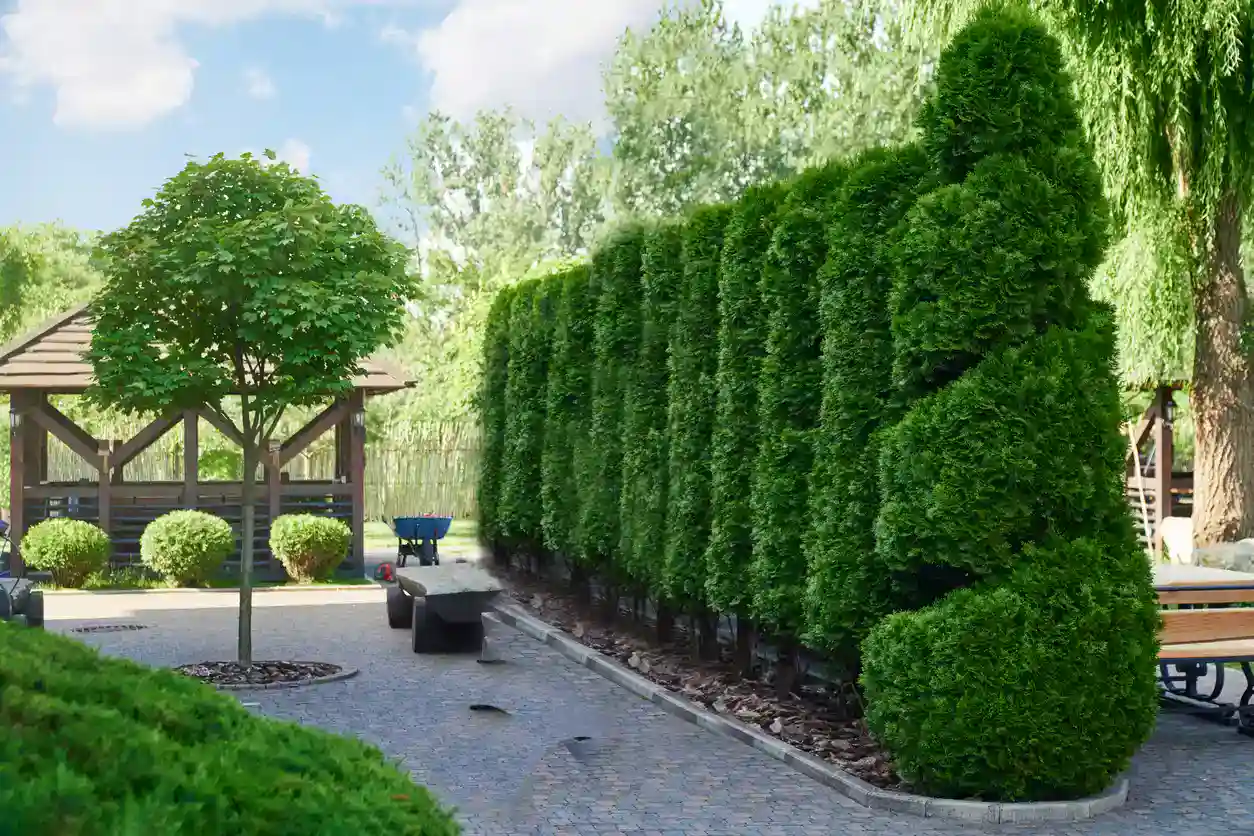
An evergreen hedge is a plant, not a wall. Every time you shear it, you strip leaves off the outside, and the plant answers by pushing new growth at the tips — which thickens the shell and shades out the interior. Do that hard once a season and the inside goes hollow.
The fix is counterintuitive: trim more often, but take less each time. I shape most formal hedges two to three times through the season, never removing more than the recent flush. Trim before the new growth passes about a foot, and never take more than a third at once. Light and frequent keeps the surface tight and the interior alive.
Big-Leaf Plants Are Different
On large-leaved plants like cherry laurel, shearing is doubly bad — the trimmer slices leaves in half and the cut edges brown out. Those I hand-prune stem by stem with bypass pruners so every leaf stays whole.
Plant | Best trim timing (NC) | Regrows from bare wood? | Type |
|---|---|---|---|
Leyland cypress | Apr–Aug; stop 2 mo. before frost | No | Conifer |
Arborvitae (Green Giant) | Late winter/spring; light in summer | No | Conifer |
Juniper | Spring–summer, into green only | No | Conifer |
Holly (American/Nellie Stevens) | Late winter; light touch-up June | Yes | Broadleaf |
Boxwood | Early spring + light late spring | Yes (slow) | Broadleaf |
Wax myrtle | Any time in season; hand-thin | Yes | Broadleaf |
Cherry laurel | Hand-prune March and June | Yes | Broadleaf |
Ligustrum / privet | Late winter or growing season | Yes | Broadleaf |
How Do You Keep a Hedge From Going Bare at the Bottom?
This is the most common mistake I see, and it is easy to fix. Most people trim a hedge with vertical sides — a rectangle. A vertical hedge shades its own base: the top overhangs the bottom, sunlight never reaches the lower branches, and every year the base thins until it is bare sticks.
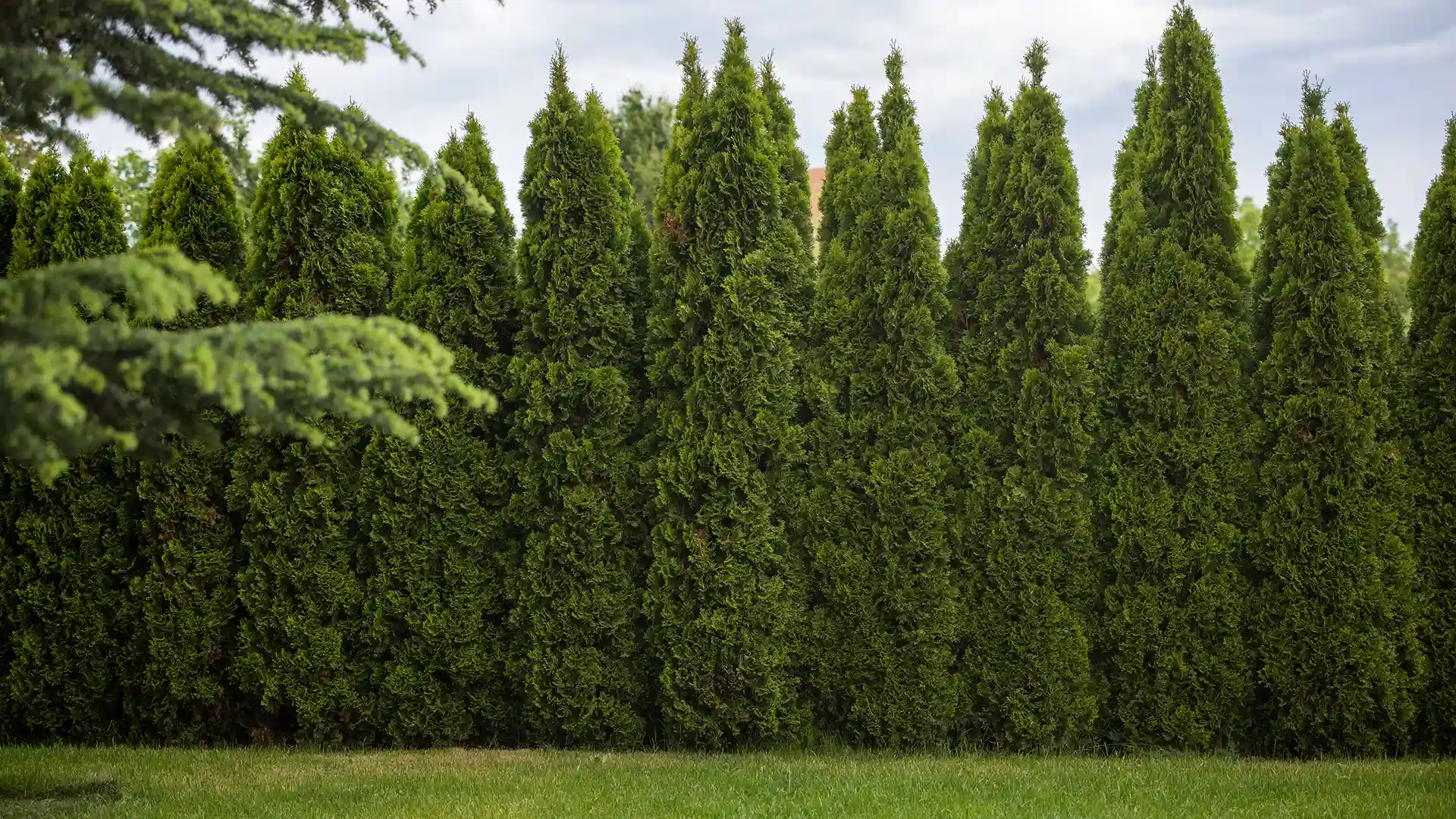
Cut the sides on a slight slope so the hedge is wider at the bottom than the top — picture a narrow letter A. That taper lets light hit the full height, so the hedge stays green all the way to the ground. It also sheds snow and ice instead of splaying open.
A flat or rounded top is fine; the taper on the sides is what matters.
Build the taper in from the start, because once a base goes bare on a conifer, it does not come back.
Why You Cannot Cut a Conifer Into Brown Wood
This is the rule that saves the most trees. Needled evergreens — Leyland cypress, arborvitae, juniper, cedar — cannot regrow from bare, brown wood. They only push new foliage from stems that still carry green needles. Cut into the leafless interior and that spot stays brown permanently; there is no bud there to break.
Leyland Cypress and Arborvitae
So on a conifer hedge, you only ever trim into green growth. When you reduce height or width, leave a layer of green needles below every cut.
Broadleaf Evergreens Are More Forgiving
Holly, boxwood, wax myrtle, and cherry laurel can push new growth from older wood, so a heavier renovation cut is survivable on those. Even there, do it in stages, not all at once.
Reducing a Conifer’s Height
Shortening a Leyland that has outgrown its space is doable — take the top 6 to 12 inches below your target each year and it fills in denser. But you can never reclaim width you have let it get past, because the interior is already bare. A Leyland planted too close to the house is a decade-long problem, not a trimming problem.
When in doubt on any conifer, cut less and leave green.
When Is the Best Time to Trim Evergreen Hedges in NC?
We are in the transition zone — roughly USDA zone 7b to 8a around the Triangle — and that shapes the calendar. The main structural trim goes in late winter to early spring, late February through March here, before the first flush of new growth. From there, light shaping runs through spring and summer as needed.
Timing by Plant
Holly
Holly sets berries on last year’s wood, so if you want the winter berries, do the heavy shaping in late winter and only touch up lightly in June.
The one hard boundary applies to everything: stop trimming about two months before our average first frost. Trimming late forces tender growth that will not harden off, and the first freeze burns it brown.
Do not shear a hedge in October and expect it to look good in December.
Tools, Technique, and Disease
Sharp blades make clean cuts that seal fast; dull blades tear and bruise, which invites disease. For fine shaping, hand shears give control. For large-leaved plants, skip the powered trimmer and use bypass pruners so you cut stems, not leaves.
Boxwood
Boxwood takes an early-spring trim before new growth, plus a light late-spring pass — but never when it is wet.
Leyland Cypress and Arborvitae Timing
Both are best shaped from mid-spring through summer, always cutting into green. They are the plants most often ruined by one hard cut, so go slow.
Sharp, Clean Tools
Powered hedge trimmers are fine on fine-needled and small-leaved plants where you are only skimming the surface. Anywhere you are removing real wood, a clean, sharp blade matters more than speed.
Boxwood Blight and Leyland Canker
Two of our most common hedge plants carry serious diseases that spread on tools. Boxwood blight is established across NC — spores cling to blades, and one pass through an infected plant can seed the next. Leyland cypress is prone to Seiridium canker, which also spreads on shears. Disinfect blades with a ten-second dip in 70% alcohol, or a fresh 10% bleach solution, between plants.
Never Shear a Wet Hedge
Never prune boxwood when the foliage is wet — that is when blight spores move most. Even on healthy hedges, I clean tools between properties as a habit. It costs thirty seconds and it is the cheapest insurance in the business.
Cut into green only on conifers, taper the sides, take a little often, and keep your blades sharp and clean.
Follow those four and most hedge problems never start.
When Should You Call a Pro?
DIY vs. Hiring Out
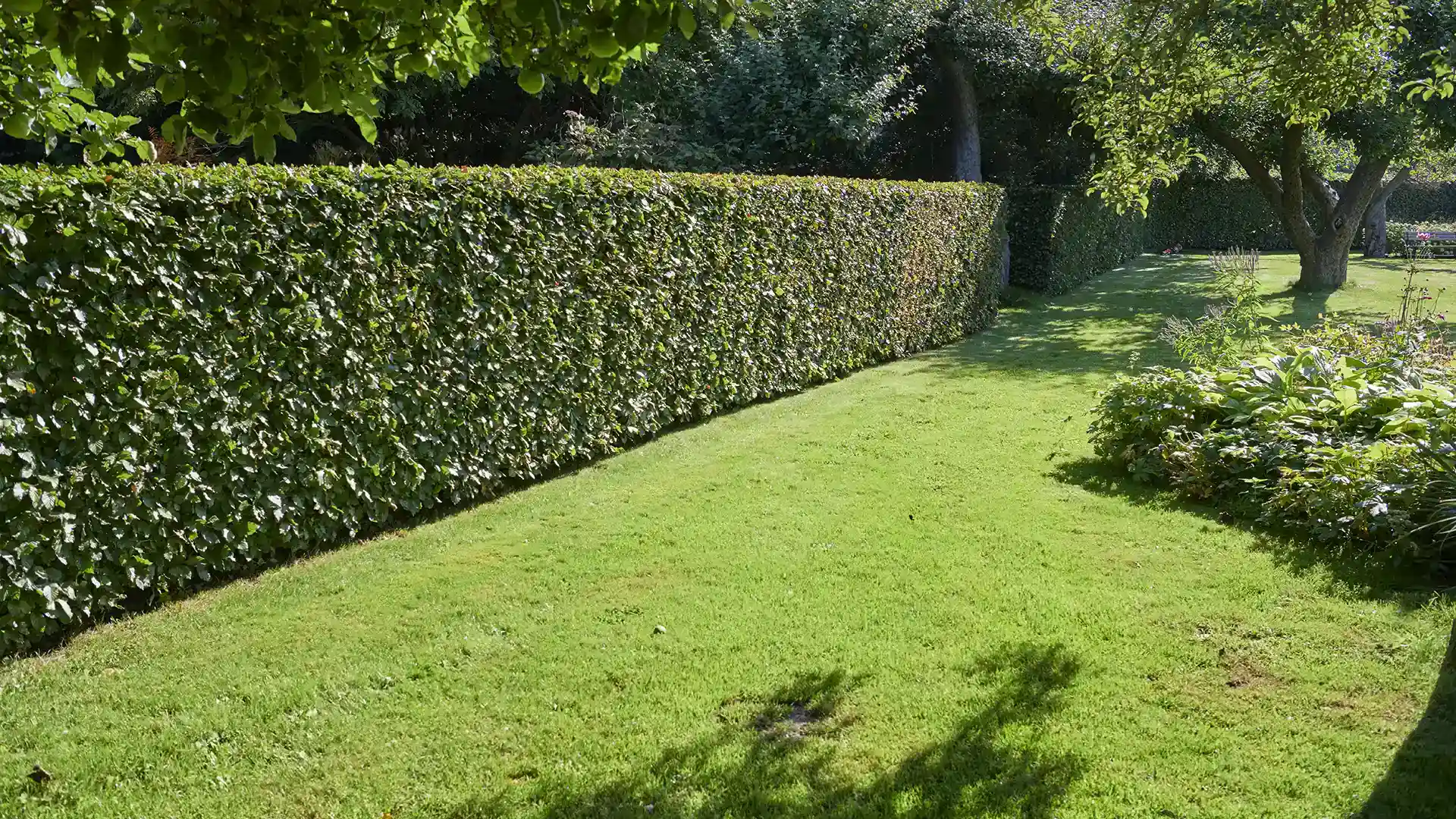
A healthy boxwood row or a young holly hedge at a comfortable height is a weekend job — sharp bypass pruners, stable footing, the taper-and-green rules, and you do not need us. Where it is worth hiring out: tall Leyland and arborvitae screens where the cuts happen on a ladder and one pass into brown wood leaves a permanent scar; hedges you suspect have blight or canker, where sanitation and diagnosis matter; and renovating an overgrown, bare-bottomed hedge that needs staged cuts over a season or two.
Evergreen Hedge Trimming FAQs
Ready for a Sharp, Healthy Hedge?
If your evergreen screen is thin at the base, browning inside, or just outgrew its spot, we can help. We handle hedge and shrub trimming across Fuquay-Varina, Holly Springs, Apex, Cary, Garner, Angier, Willow Spring, Lillington, and South Raleigh — priced per shrub by height, no contracts, and licensed by the state of North Carolina to treat the diseases hedges catch. See our hedge and shrub trimming service, then call or text 984-284-5399 for a quote.
