

Is Professional Weed Control Worth It in NC?
By Ken Erickson · Updated August 2026
Key Takeaways
- Professional weed control is worth it when you want the best lawn on the block. If that’s the goal, call Lawn Panther.
- Pros don’t use more chemical — they use better chemistry: safer, greener, and effective enough to use less.
- A good lawn service puts an actual technician on your yard — one who knows the weeds and the chemistry and catches a pest before it spreads. The big companies just send a sprayer from a call center.
- Weed control is about staying ahead of the weeds, not chasing them. For about a quarter of what it costs to sod your backyard, we clear the weeds and feed the Bermuda you already have until it thrives.
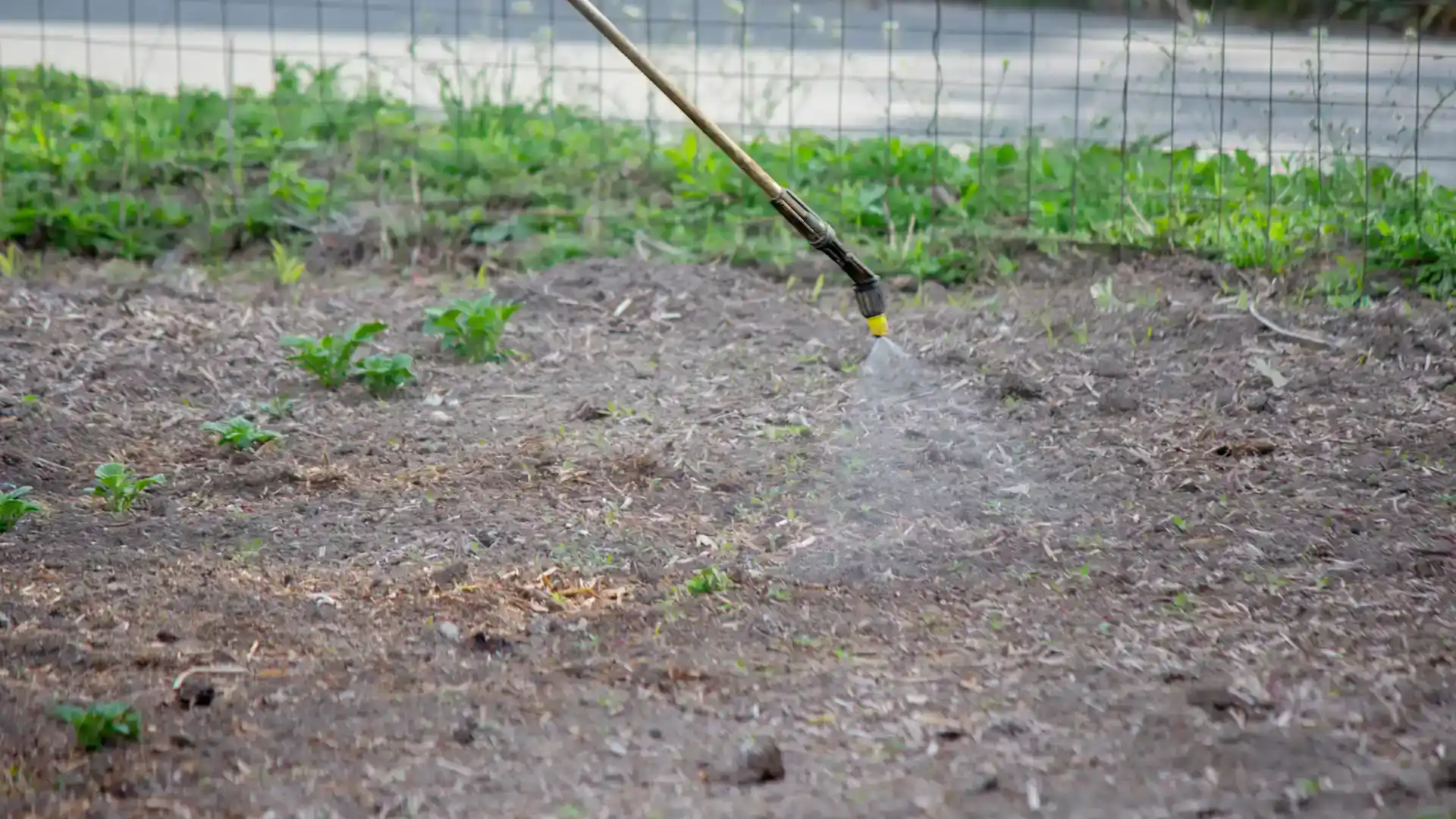
The difference isn’t the schedule — it’s the chemistry and the expert on your lawn
Everyone says they put down pre-emergent and fertilizer. What they don’t say is which products, and how much. The big programs run on volume, so they buy generics in bulk — generics are cheap. We don’t. We use better, name-brand, targeted herbicides the big outfits won’t pay for. That year-long, prevention-first approach is exactly what our weed control program is built to do.
The newer specialized chemistry is more effective, safer, and leaves less environmental residue — and because it works better, we can put down less of it. Better for your family and your yard. That is what costs a little more, and it is worth it. Here is a real example: we put down two treatments of Specticle FLO in the fall so poa annua and the winter weeds never show up in spring. There is nothing worse than a dormant, brown Bermuda lawn speckled with little green clumps of poa — those are weeds, and they make the whole yard look bad. Most companies skip that product because it is expensive.
Summer is the tell. In the heat, the only herbicides that can be applied safely for post-emergent control are the expensive ones — there are no cheap chemicals that work in that heat. That is why the budget programs go quiet in the hottest months and we keep treating. And we apply on conditions — soil temperature, the weather, what the lawn is doing — not a fixed calendar.
We also tell you exactly how much we put down, to NC State’s numbers. Fertilizer and good herbicide are expensive, and the rate is where corners get cut — so if you ever compare us to another program, compare the amount of product going on the lawn, not just the invoice, then look at your lawn next to your neighbor’s.

You get an expert on the lawn, not a spray tech from a call center
The person treating your lawn actually knows turf. I pay attention to the lawn — I look at what weeds and pests are bothering it. If it is a sedge, I know it is a sedge, and I go get the right product and treat it on the spot. If I see a pest problem starting, I tell you before you even ask — you do not have to call in, wait for someone to come look, confirm you have bugs, then schedule a treatment. A lot of pest and disease problems get handled before they ever become a problem, because the person standing on your lawn is the one who knows what to do about it.
You can actually talk to me
The other real difference is access. You can call me, ask me questions, and talk to me about what you are seeing. If you want, text me a picture of a weed and I will tell you what it is — you have that option, it is that personalized. You are never routed through a call center to a name you will not reach again. I am not just a spray guy.
Want to do it yourself?
I do not mind sharing — I wrote up exactly what I put on my own lawn, product by product and when. If you would rather DIY, start there: What a Pro Puts Down on His Own Bermuda Lawn. The catch is consistency: you have to stay a step ahead of the weeds all year, and that is the part most people cannot keep up with. And doing it yourself is not really cheaper — you pay retail for the product and supply the labor, and I buy it for less than the store charges you.
If you invest in your landscape, put an expert on the lawn
If you are spending real money on ornamentals and landscape, and you want a nice lawn all the time, you want someone intelligent on it — someone who knows what a weed is, knows what they are putting down, can answer your questions, check on things, and make recommendations. That is the whole point of paying a little more. You are not buying a spray; you are buying judgment.
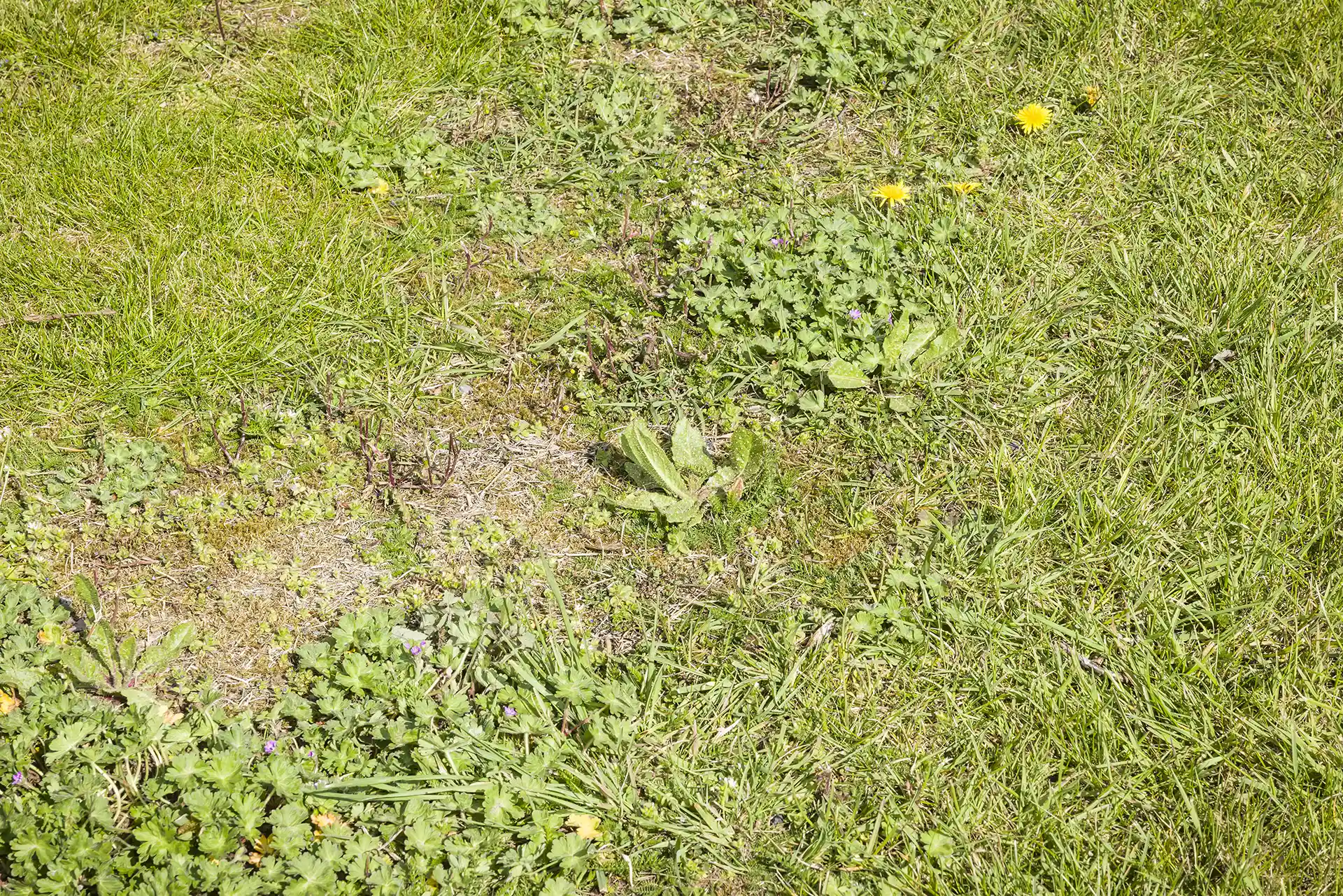
Weed control is prevention — give it a year
Here is the one thing to understand going in: weed control is prevention, not a rescue. Give a program a year. On an average lawn it takes that long to get ahead.
I see it every season. Someone comes on late, gets one round of pre-emergent down instead of four, and by August there is dallisgrass in the lawn. That is just how the calendar works. The turnaround starts when we begin in late August or September: two fall pre-emergent rounds before the winter weeds set, then two more before spring to shut down crabgrass and dallisgrass. Do that and those big, fast weeds — dallisgrass can be six inches tall a few days after a mow — mostly disappear. Spring brings wild garlic and wild onion up through the turf; the sedges come later. We stay ahead of all of it.
And you rarely have to start over. A lot of backyards are half Bermuda, half weeds in poor soil — someone sodded the front and threw seed in the back. For about a quarter of what it costs to sod that backyard, we clear the weeds and feed the Bermuda you already have until it fills in and thrives.
Common weed control questions, answered
Short answers to what people actually search.
Question | Short answer |
|---|---|
What actually kills weeds permanently? | Nothing does. Weed seed is already in your soil and more blows in every season. What actually works is a pre-emergent barrier renewed on schedule so seed never germinates, plus spot treatment on whatever gets through. |
What kills weeds permanently but not grass? | A selective herbicide. It targets broadleaf or grassy weeds and leaves turf standing, where a non-selective kills everything it touches. The product has to match your grass type — what is safe on fescue can damage bermuda. |
What do professional landscapers use for weed control? | Two categories, not one product. Pre-emergent stops seed before it germinates; post-emergent kills what is already up. Licensed applicators buy commercial concentrates not sold at retail, and the rate and timing matter more than the brand. |
Does mowing more often kill weeds? | No, but mowing at the right height suppresses them. Tall, dense turf shades the soil so weed seed never gets the light it needs. Scalping does the opposite and opens the canopy up for them. |
Is it too late to get rid of weeds in a lawn? | Rarely too late to treat, but timing changes the method. Mature weeds are harder to kill and often need a repeat visit. The window that actually gets missed is the pre-emergent one — fall for winter weeds, late winter for crabgrass. |
Who is actually treating your lawn
Our education and background in controlling pests on turf and ornamental plants is extensive. We’re licensed by the state of North Carolina to apply herbicides and pesticides on turf and ornamental plants such as shrubs and trees. I formulate the programs myself and I run them, so the person who knows your lawn is the person standing on it.
Frequently Asked Questions
Get a same-day quote
Want your lawn treated like it matters, by the person who actually treats it? Fill out the online form or text the main number — text is fastest — and I’ll get you a same-day quote.
