

Liriope vs. Mondo Grass: Which One for Your NC Yard?
By Ken Erickson · Updated August 2026
If you have shopped for a border plant or edging, you have run into both of these – and probably heard both of them called monkey grass. Liriope and mondo grass look alike at a glance, but they are different plants with different best uses, and one of them has a spreading cousin that will haunt you. Here is how to tell them apart and pick the right one for your yard.
Key takeaways
- Both are called monkey grass and neither is a true grass – liriope and mondo grass are lily relatives, not turf.
- Liriope is bigger (12 to 18 inches) with wider leaves and purple flower spikes that stand above the foliage. Mondo is smaller (6 to 12 inches), finer, and darker.
- The one to watch is spreading liriope (Liriope spicata) – it runs by underground stems and can take over. For borders, plant the clumping type, Liriope muscari.
- Mondo is the shade and tight-edging pick; liriope is the border, mass-planting, and slope pick.
- Both are low-maintenance and evergreen here in zone 7b – one shear in late winter tidies them up for the year.
Liriope vs. mondo grass at a glance
The quick version, side by side:
Trait | Liriope (monkey grass) | Mondo grass |
|---|---|---|
Height | 12 to 18 inches | 6 to 12 inches (dwarf 2 to 4 in) |
Leaf | Wider, strappy, medium-green | Narrower, finer, darker green |
Flowers | Purple spikes above the foliage | Small, hidden inside the foliage |
Berries | Black | Blue |
Spread | Muscari clumps (behaved); spicata runs (invasive) | Slow, tidy clumps |
Sun/shade | Full sun to full shade | Part to full shade preferred |
Cold-hardiness | Very hardy (zone 5-6+) | Slightly less hardy – shelter in cold spots |
Best use | Borders, mass, slopes, edging | Tight edging, between pavers, shade |
Is monkey grass the same as mondo grass?
Not exactly, and this is where the confusion starts. Monkey grass usually means liriope (Liriope muscari). Mondo grass is a different plant, Ophiopogon japonicus. They are both sometimes lumped together as lilyturf because they are lily-family relatives – and, importantly, neither one is a true grass. They just have that grassy, strappy look. If someone hands you monkey grass, ask which one they mean.
What does liriope look like, and is it invasive?
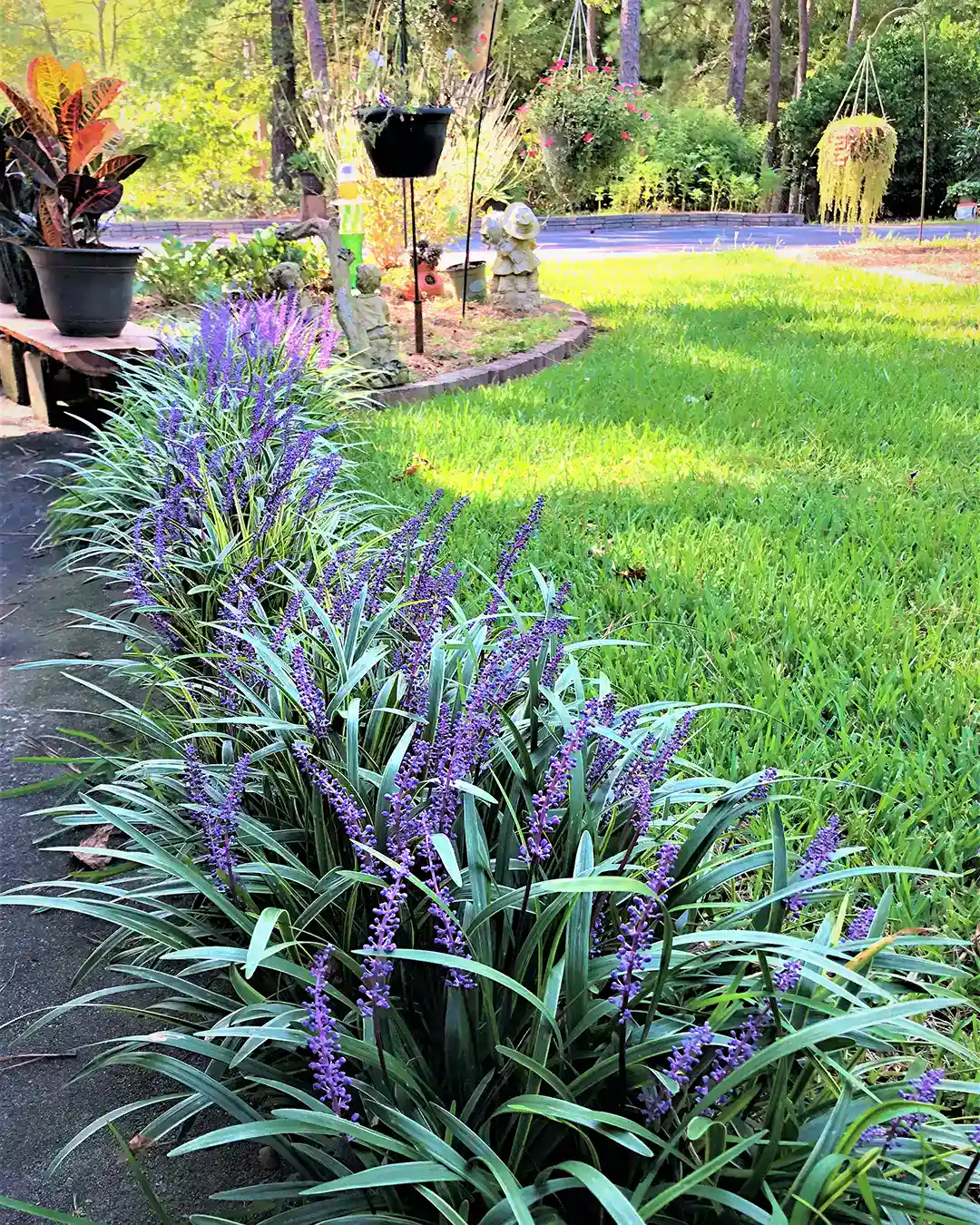
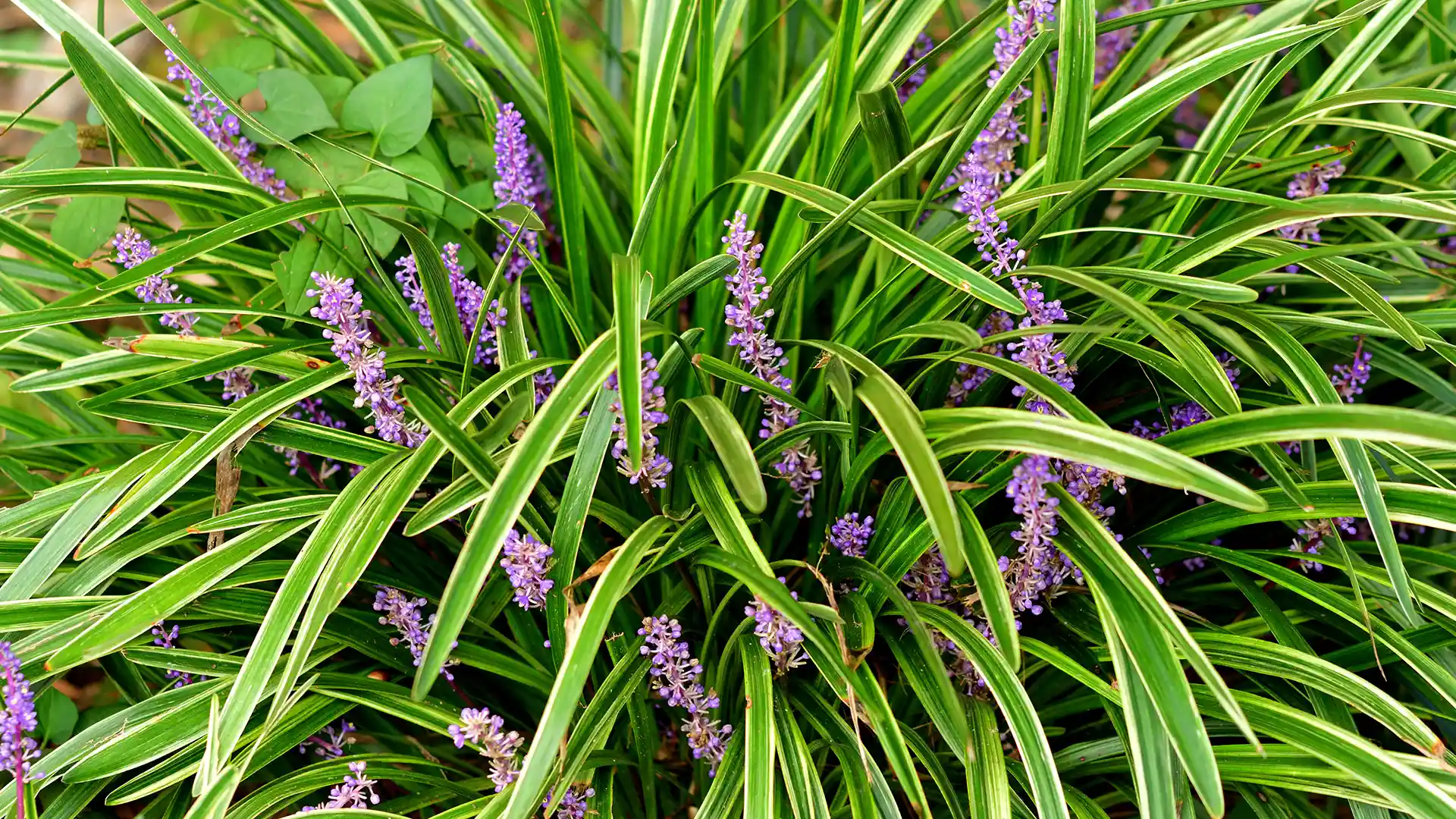
Liriope stands about a foot to a foot and a half tall with wider, strappy leaves and showy purple flower spikes that rise above the foliage in late summer, followed by black berries. It is the bolder, more colorful of the two.
Here is the catch that trips people up: there are two kinds. Liriope muscari is the clumping type – it stays where you plant it and is perfect for borders. Liriope spicata is the spreading type – it runs by underground stems and can invade beds and lawns. They look similar in the pot, so read the label. For a tidy border, you want muscari; only use spicata where you actually want it to spread and can contain it.
What is mondo grass, and what about dwarf and black mondo?
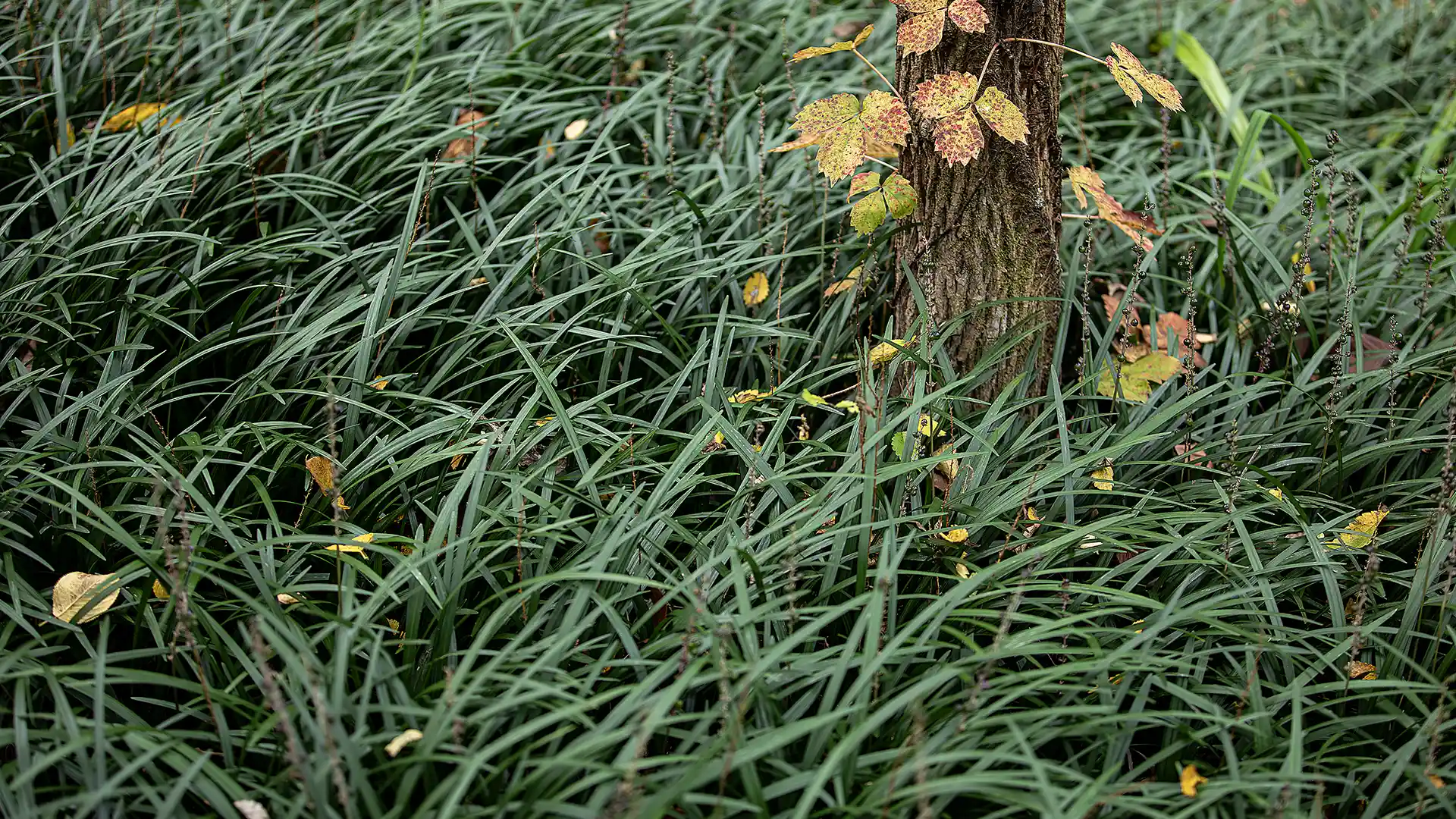
Mondo grass is shorter, finer, and darker than liriope – about 6 to 12 inches, with narrow deep-green leaves, small flowers hidden down in the foliage, and blue berries. It spreads slowly and stays tidy, which makes it great for tight edging. Dwarf mondo tops out around 2 to 4 inches and is the classic plant for filling between stepping stones and pavers. There is also black mondo, an ornamental form with near-black foliage for contrast. Mondo prefers shade and is the better pick under trees and on the north side of the house.
Sun, shade, and cold in the NC Piedmont
Liriope is the more adaptable of the two – it takes anything from full sun to full shade, which is part of why it is everywhere. Mondo leans toward part to full shade and wants more water if you push it into sun. On cold, both are reliably evergreen here in zone 7b, but mondo is slightly less cold-hardy than liriope, so in a windy or exposed microclimate give it a sheltered spot. If you are filling a whole shaded bed rather than edging one, start with the best shade plants for NC.
Best uses in a Raleigh-area landscape
Match the plant to the job. Liriope is your border and mass plant – line a walkway, edge a foundation bed, mass it on a slope for erosion, or use it to divide lawn from bed. Mondo is your fine-detail and shade plant – tight edging, the carpet between stepping stones (dwarf mondo), and a low no-mow cover in the shade where turf will not grow. Use them for what each does best and both look great and ask almost nothing of you.
How to plant and care for liriope and mondo grass
Both are about as easy as plants get. Space mondo roughly 6 to 8 inches apart along an edge, a bit wider for a mounded look; liriope clumps spread a foot or more, so give them room. Once a year, in late winter before new growth, shear or mow the old foliage down so the fresh growth comes in clean – that is basically the entire maintenance calendar. Divide overgrown clumps in spring if you want more plants for free.
Frequently Asked Questions
Not Sure Which One Your Beds Need?
We spec and install the right lilyturf for your borders, edging, and shade – and steer you away from the invasive spreader. Text us to plan your beds.
Sources
NC State Extension Gardener Plant Toolbox – Liriope muscari
NC State Extension Gardener Plant Toolbox – Liriope spicata
Clemson Cooperative Extension HGIC – Mondo Grass
NC State Extension Gardener Plant Toolbox – Ophiopogon japonicus
