

Mole Crickets in NC Lawns: How to Identify and Treat Them
Mole crickets in lawn turf leave the ground spongy and loose, like something ran a tiny plow underneath. A patch of lawn goes spongy underfoot, footprints sink in, and the soil feels loose — like something ran a tiny plow just under the surface. Add raised, snaking trails and turf that browns out and won’t green up no matter how much you water, and you may be looking at mole crickets. They live in the root zone and tunnel through it, and the damage they leave looks so much like drought that most people water harder and watch the patch spread. Mole crickets get pegged as a coastal, sandy-soil pest — and sandy ground is where they hit hardest — but we find and treat them right here in the Triangle, so don’t rule them out. The damage is distinct once you know it, and the fix is all about timing. Here’s how to identify mole crickets, confirm them, and treat them. Not sure what is wrong with your lawn? Start with our lawn diagnosis guide.
Mole Crickets in Lawn: What Do Mole Crickets Look Like?
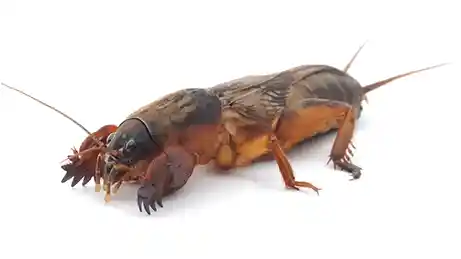
A mole cricket is a strange-looking insect — about an inch to an inch and a half long, tan to brown, with a pair of wide, shovel-like front legs built for digging, exactly like the namesake mole. Short wings, a hard cylindrical body, and they move through the soil rather than across the top of it. North Carolina has two that matter: the tawny mole cricket, which is the most damaging because it feeds directly on grass roots and shoots, and the southern mole cricket, which is more of a predator but still tunnels and loosens the soil enough to dry a lawn out. Both are part of the lineup of turf insects we diagnose before anything gets sprayed.
What Mole Cricket Damage Looks Like (and Why It Fools You)
Mole crickets do their harm two ways. The tunneling itself loosens and lifts the soil, which tears roots and dries out the turf from below, and the tawny species adds insult by eating the roots outright. The signs: turf that feels spongy or springy when you walk it, raised soil trails winding across the surface, footprints that leave a depression, and irregular streaks of thinning, browning grass — worst in sandy spots and along sunny edges. Because the grass is drying from severed roots, it looks exactly like drought stress, so the natural reaction is to water more. You can’t water your way out of it — more water just keeps the lawn limping while the crickets keep tunneling. That drought look-alike is the single biggest reason mole crickets get misdiagnosed.
How to Know If You Have Mole Crickets: The Soap Test
Before you treat, prove they’re there — the test takes about ten minutes and costs nothing. Mix one to two tablespoons of dish soap (any kind; the soap is the irritant, the scent doesn’t matter) into a gallon or two of water and pour it slowly over a square yard at the edge of the damage, where dying grass meets healthy. The soap drives them up, and mole crickets surface within about two or three minutes — faster than most lawn pests. A warm, damp evening works best. If you flush two to four crickets out of that square yard, you’ve got a population worth treating. (It’s the same flush that brings up armyworms and other surface feeders, which is why it’s the first test we reach for.)
The Best Time to Treat for Mole Crickets
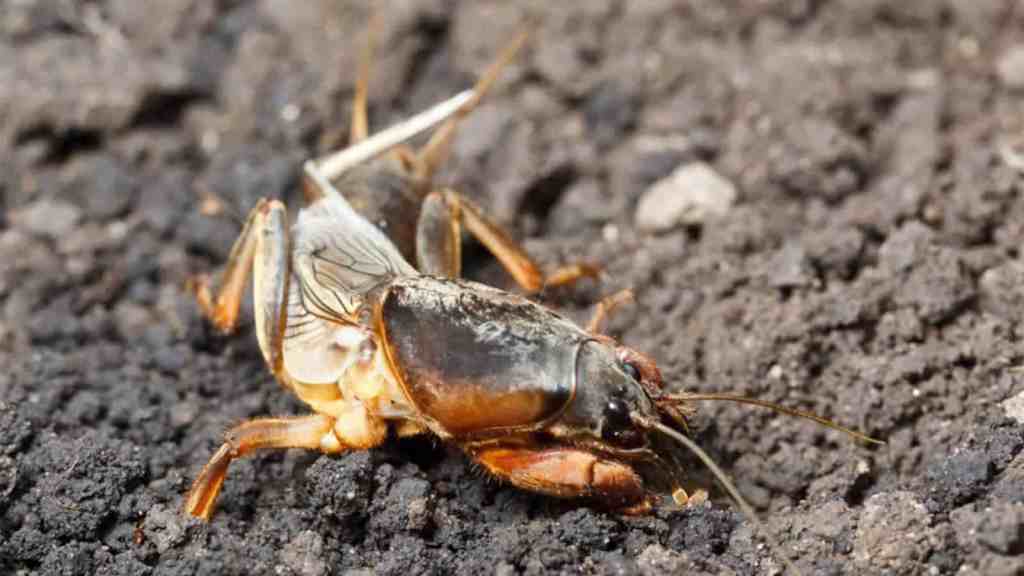
This is the whole game with mole crickets. They overwinter as adults, mate in spring, and the females lay eggs in the soil from late spring into early summer. The eggs hatch into nymphs through late May and June, and those young nymphs are small, close to the surface, and easy to kill. By late summer and fall they’re larger, and the overwintered adults you see in spring are big, mobile, and tough to control. So the target window is June and July, aimed at the immature crickets. Spring isn’t for treating — it’s for scouting and mapping: flush a few test spots in April and May, mark where the adults are active, and you’ll know exactly where the next generation will hatch so you can hit it young.
How to Get Rid of Mole Crickets
Once they’re confirmed and the timing’s right, the products are straightforward — and it’s active-ingredient first, because what’s in the bag matters more than the brand on it:
Prevention and suppression: chlorantraniliprole (the professional version we run is Acelepryn; the homeowner equivalent is GrubEx). Put down in June or July against small nymphs, it suppresses mole crickets while staying about as easy as it gets on bees and earthworms — the same reason we lead with it for grubs. Always read and follow the label.
Active control of larger nymphs and adults: a pyrethroid such as bifenthrin, or a bait such as indoxacarb applied at dusk when the crickets feed at the surface. For heavy, recurring pressure there’s a long-residual professional option (fipronil), which is licensed-applicator territory.
Water it in. Mole crickets live in the soil, so a soil-targeted insecticide needs to be irrigated in to reach them — and baits go out in the evening, not the morning. Get the timing and the placement right and one well-aimed treatment does the job; get them wrong and even good chemistry underperforms.
What to Buy: DIY Mole Cricket Control from the Hardware Store
If you’ve confirmed mole crickets and you’d rather handle it yourself, here’s what actually works off the shelf at Lowe’s, Home Depot, or Ace. Buy by the active ingredient, not the label art — and match the product to whether you’re getting ahead of them or knocking down an active infestation.
To get ahead of them (June–July, small nymphs): Scotts GrubEx (chlorantraniliprole) or BioAdvanced Season Long Grub Control (imidacloprid). Both are sold for grubs but are labeled for mole crickets, both go down on small nymphs, and both get watered in. This is the easy, low-impact route.
To knock down an active infestation (bigger nymphs, late summer): a bifenthrin granule like Ortho BugClear Lawn Insect Killer, or a gamma-cyhalothrin granule like Spectracide Triazicide Insect Killer for Lawns. Both are cheap, on every shelf, and labeled for mole crickets. Spread the granules, then water them in about a half inch so the product reaches the root zone where the crickets live.
Baits, for big adults that shrug off a spray: a mole cricket bait (look for an Amdro mole cricket bait, or a carbaryl or indoxacarb bait) goes out over moist soil at dusk, when the crickets come up to feed. Do not water baits in — put them out dry, in the evening.
The three things that make or break a DIY treatment: confirm with the soap test first, treat while the nymphs are small (June and July beat fighting spring adults), and get the water right — granules watered in, baits left dry at dusk. Read the label and match the rate to your square footage. If you’ve done all that and they keep coming back, that’s when a licensed applicator with a long-residual product (fipronil) earns the call.
Or Is It Grubs, Armyworms, or Drought?
Mole crickets share their damage pattern with a few other problems, so it’s worth ruling out the look-alikes before you treat. Grubs chew roots too, but grub-damaged turf pulls up like a loose carpet rather than going spongy with raised trails. Armyworms strip the blades from above and flush up as caterpillars, not crickets. And plain drought greens back up within a day or two of a good soaking, while mole-cricket damage doesn’t. When the picture is mixed — and a stressed lawn often invites more than one problem — that’s exactly what the “what’s wrong with my lawn” diagnosis is for: identify it first, then treat the right thing.
Mole Cricket FAQs
Not Sure What’s Tunneling Your Lawn?
That’s the point of a licensed program — the diagnosis comes first, then the right product at the right time, instead of guessing with a hose-end bottle. Lawn Panther scouts, identifies, and treats lawn insects as part of our licensed weed control, fertilization, and pest program across our local service areas. Our background is in chemistry, biology, and environmental science, and we’re licensed by the NCDA&CS to apply professional insecticides — so you get a real diagnosis, not a guess, and the right product applied at the right rate and the right time. Call or text 984-284-5399 and we’ll tell you what’s actually wrong before anything gets sprayed — then fix it.
