

Mulch vs Pine Straw: What Actually Works in North Carolina Clay
By Ken Erickson · Updated July 2026
Mulch vs pine straw comes down to cost, looks, and how often you want to redo it. I’ll tell you what I did in my own yard. I moved to the Raleigh suburbs about 15 years ago after a career as an environmental biologist and chemist — most of it spent around the coast and the water. Then I bought a big property with the same red clay everybody down here fights. Fifteen years of buying shrubs, killing a few, and treating the rest taught me exactly where mulch wins and where pine straw wins. Here’s the honest version — real numbers, and I’ll tell you how to just do it yourself.
Key takeaways
- Pine straw is cheaper up front, spreads fast, and stays put on slopes. Mulch costs more but lasts longer and turns into soil.
- The “pine straw acidifies your soil” idea is mostly a myth — NC State says it barely moves your pH. Choose by function, not fear of acid.
- In our red clay I use hardwood mulch — it decays into real compost year after year. I save pine straw for acid-loving beds and slopes.
- Pine straw is loose, warm cover that copperheads like — keep it a foot back from the house. Whatever you pick: weed first, 2–4 inches deep, refresh on time, drip underneath.
What is pine straw, and what is it good at?
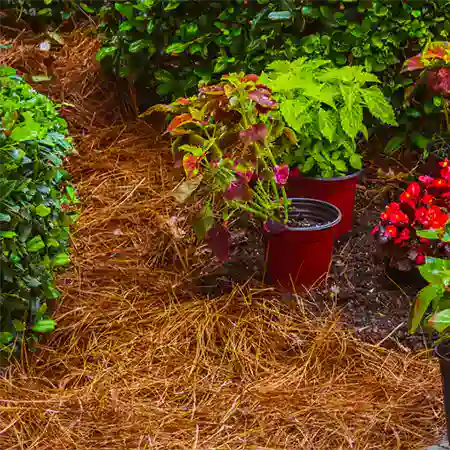
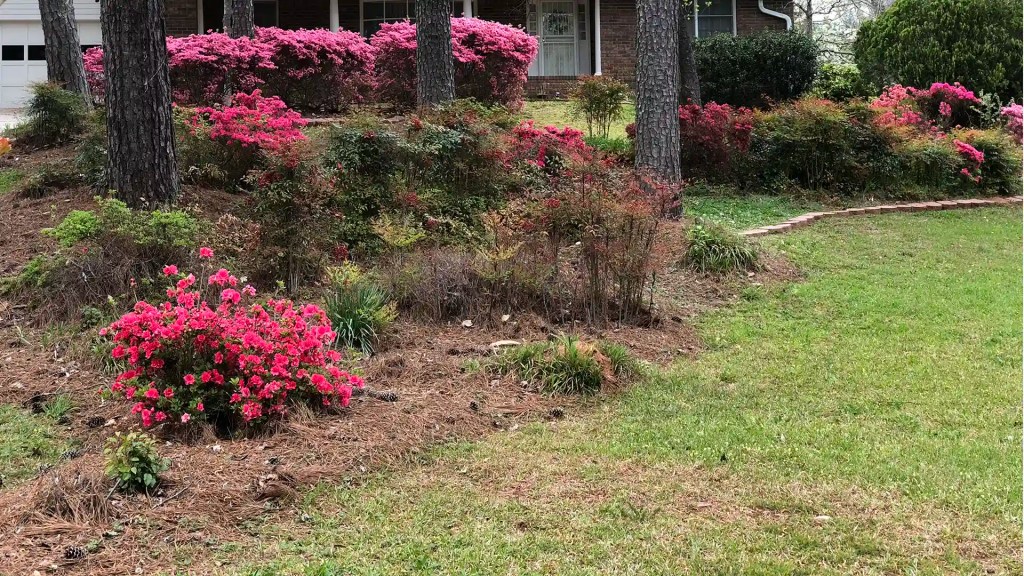
Pine straw is baled pine needles — usually longleaf or slash pine. It’s cheap, light, and fast to spread. A bale runs about $2.50 to $10 and covers roughly 50 to 100 square feet a couple inches deep. It earns its place in two spots. First, acid-loving beds — azaleas, camellias, blueberries, rhododendron, the plants that naturally grow under pines. Second, slopes. On a hill the needles knit together into a mat that stays put in a hard rain, where wood mulch floats and washes out. And here’s the honest part: if you’ve got a small bed and a free Saturday, pine straw is easy to throw down yourself. You don’t need to hire anybody for that.
Factor | Pine straw | Mulch (hardwood/bark) |
|---|---|---|
Upfront cost | Cheaper (~$2.50-$10 a bale) | Higher (~$30-$120 per cubic yard installed) |
Coverage | ~50-100 sq ft per bale (2-3 in) | ~100 sq ft per cubic yard (3 in) |
How long it lasts | 6-8 months; refresh 1-2x per year | ~1 year (hardwood); up to 2 (bark) |
Builds soil? | Barely – breaks down slowly | Yes – decays into real compost |
Moisture | Good, but breathes and dries faster | Better – tighter blanket, less evaporation |
Weeds | Good at 2-3 in deep | Good at 2-3 in deep |
Slopes and erosion | Wins – needles knit and stay put | Washes downhill in hard rain |
Best for | Acid-loving beds, slopes, fast and cheap | Foundation beds, borders, long-term soil |
What is mulch, and why do I use it in clay?
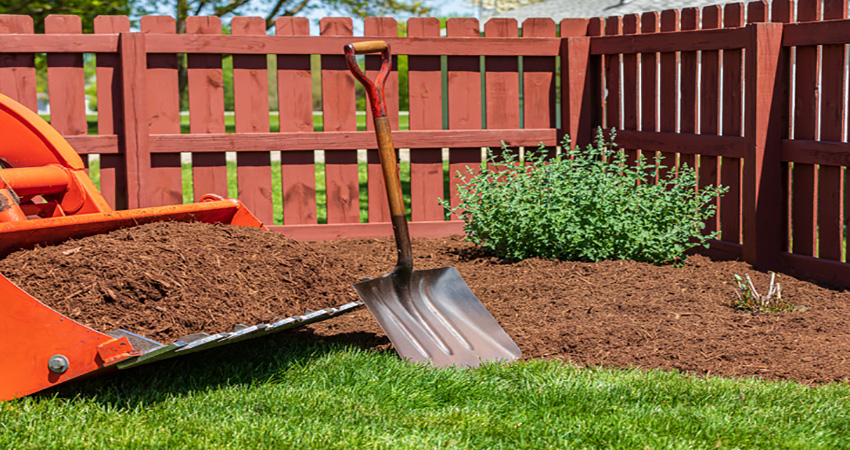
Mulch — shredded hardwood or bark — costs more. Figure $30 to $120 a cubic yard installed, or around $380 to mulch an average yard. If I have to pay for it, I am choosing mulch. Hardwood mulch is also the one that grows the mushrooms and slime mold people call about every spring, though almost none of it hurts anything. It does its job of keeping the beds moist, the shrubs from drying out, and the flowers alive. Then it breaks down into real compost. I leave the leaves that drop, cover them with fresh mulch every spring, and the bed builds itself into rich, dark dirt year after year — no tilling. After this many years my flower beds have soil I’d have paid a fortune to truck in. Pine straw doesn’t do that. Mulch also holds moisture better and evens out the soil temperature. A 2- to 4-inch layer insulates roots through our winters and keeps the water from cooking off the root zone in July. We live in a swamp made out of clay down here — none of us start with good soil, so I’d rather spend the money on material that fixes that.

Does pine straw really acidify your soil?
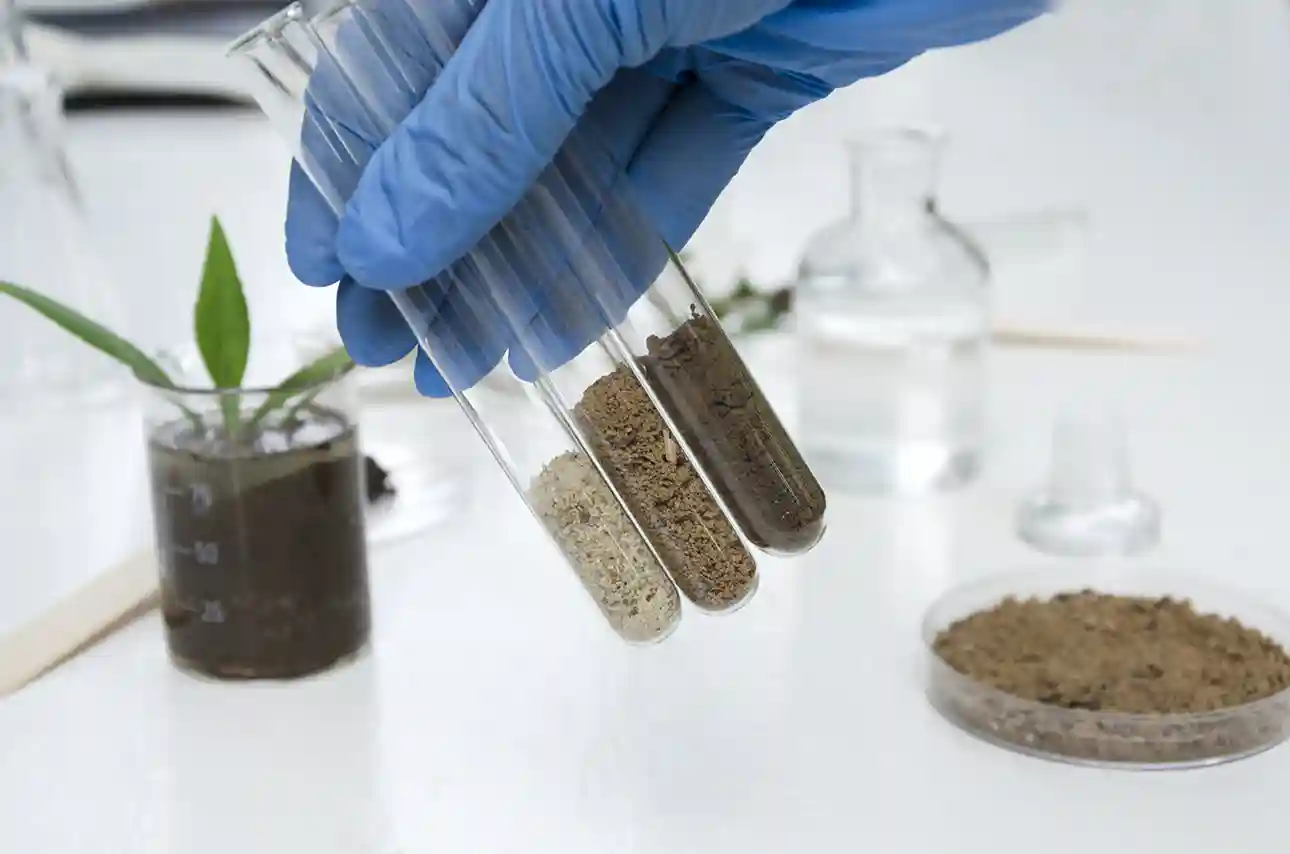
This is where most articles — and a couple of my competitors — get it wrong. Pine straw does not meaningfully acidify your soil. I know everybody says it does. Fresh green needles do test acidic, around pH 3.2 to 3.8. But once they’re baled, dried, and sitting on top of the ground as pine needle mulch, they don’t move your soil’s pH in any way that matters. NC State’s soil scientists put the effect at “no more than any other mulch,” because your soil out-buffers it. The myth sticks around because our NC pines already grow in acidic soil, so people credit the needles for soil that was acidic to begin with. If you want acid-lovers to thrive — azaleas and camellias like a pH around 5.0 to 5.5, blueberries lower at 4.0 to 5.5 — that’s a soil test and a bag of elemental sulfur, not a bale of pine straw. I’m a chemist; I’ll die on this hill. So if you have a lot of pine trees and a lot of pine needles, don’t fight it — stay with pine needles and plant azaleas and blueberries in that area. They’ll do great under those pine trees, especially at the perimeter just inside the sun line.
Which controls weeds and holds moisture better?
Both smother weeds if you go 2 to 3 inches deep over clean, weeded soil — go up to 6 inches only if you’ve got a real weed problem. On moisture, mulch wins. It’s a tighter blanket, so less water evaporates off the root zone. Pine straw is loose and breathes, which is great for air circulation on disease-prone plants but lets more water through and dry out. In my beds I run drip so the water goes straight to the roots and the mulch keeps it there. That combination is why my privets hit ten feet in four years. If you’re putting in new shrubs or trees, landscape drip irrigation under mulch is the single biggest thing that gets them established in a Carolina summer.
What about snakes, termites, and mulch around the house?
Nobody writing these articles will tell you this, so I will: copperheads love pine straw. It’s loose, it holds heat, it’s dry on top, and a snake blends right into it. I’m in my beds constantly and I’ve come across plenty of copperheads over the years — I wear leather gloves and closed shoes for exactly that reason. Pine straw also stays damp underneath, which is where termites and centipedes set up, and those draw snakes in to hunt. It’s not that mulch “attracts” termites from across the yard — it’s that the damp cover lets the ones already in your soil thrive. When you put mulch or pine straw around the house, keep it pulled back about a foot from the foundation. And dry pine straw is flammable — keep it away from the house and the gas meter.
What does each cost, and which is cheaper over time?
Up front, pine straw is cheaper — the bale looks like the deal. Over time, mulch usually wins. Pine straw thins, blows, and needs refreshing once or twice a year; good hardwood mulch lasts about a year and premium bark up to two. Run the math per square foot per year and mulch often comes out around 30% cheaper, and you’re buying soil on top of coverage. If cash up front is the constraint and the yard is big, pine straw is a reasonable call — no shame in it. If you want us to handle it, the mulch installation cost and pine straw installation cost are both quoted per bed — we price it before we start.
So which should you choose?
Here’s how I’d call it, bed by bed. Acid-loving beds or a slope that washes: pine straw — azaleas, camellias, blueberries, and any hill. On a slope the needles knit together and stay put where mulch washes downhill, so that’s the one spot pine straw clearly wins. If you have pine trees, don’t fight it. Foundation beds, shrub borders, anything on drip: hardwood mulch — you want the soil getting better every year. Big property, tight budget, needs doing this weekend: pine straw, and don’t feel bad about it — you can always go to mulch later, a bed at a time. And you can absolutely use both. Pine straw on the sloped and acid-loving beds, mulch everywhere else — plenty of my own yard is exactly that split.
Do this no matter which you pick
Weed the bed first. Spread 2 to 4 inches deep. Keep it off the trunks and stems — no volcano mounds. Refresh it on schedule. And if you’re planting new shrubs and trees, get drip irrigation in before you mulch — new roots need loose, moist soil to take hold, and you will not keep up by hand when it’s 100 degrees out. I learned that one the hard way installing drip in the middle of a July heat wave.
Mulch vs pine straw FAQ
Want it done right — mulch or pine straw, with drip underneath?
We install mulch and pine straw across the Raleigh suburbs, from Fuquay-Varina and Holly Springs to Apex and Cary — bed edging, the correct depth, and drip run underneath for new plantings. Call or text 984-284-5399 for a free quote.
Sources
NC State Extension — Pine Needle Mulch: the Myths and Legends: lee.ces.ncsu.edu
NC State Extension — Mulches: content.ces.ncsu.edu/mulches
UF/IFAS — The Facts About Termites and Mulch: ask.ifas.ufl.edu
