

Powdery Mildew on Trees and Shrubs in NC: How to Spot It, Stop It, and Treat It
By Ken Erickson · Updated June 2026
Powdery mildew treatment is easiest when you start at the first white haze, not after it blankets the leaves. Every summer around July, we start getting the same calls across Raleigh’s southern suburbs: a beautiful crepe myrtle or dogwood suddenly looks like someone dusted it with flour. That white, powdery coating is powdery mildew, one of the most common fungal diseases on ornamental trees and shrubs in North Carolina. Our warm days, humid nights, and shady, crowded landscape beds are close to ideal conditions for it, which is why crepe myrtles, dogwoods, roses, and lilacs here get hit year after year. The good news is that it is manageable. In this guide I will walk you through what powdery mildew looks like, what causes it, which plants get it in our area, how to prevent it, and how we treat it as a licensed North Carolina tree and shrub company.
Key takeaways
- Powdery mildew is a fungal disease that shows up as a white or grayish, dusty film on leaves, stems, buds, and flowers – often on new growth first.
- In the Triangle it thrives in our humid summers, especially on plants in shade, crowded beds, or spots with poor airflow. It usually appears around July.
- It rarely kills an established tree or shrub outright, but it curls and distorts leaves, dulls the plant, weakens vigor over repeated seasons, and can keep flowers from opening.
- Prevention beats cure: full sun where possible, good spacing and airflow, resistant varieties, and watering the roots instead of the leaves.
- Once it takes hold it will not simply go away on its own. Early removal of infected leaves helps, and a properly timed treatment keeps it in check on crepe myrtles, dogwoods, roses, and lilacs.
Powdery Mildew Treatment: What is powdery mildew and what does it look like on trees and shrubs?
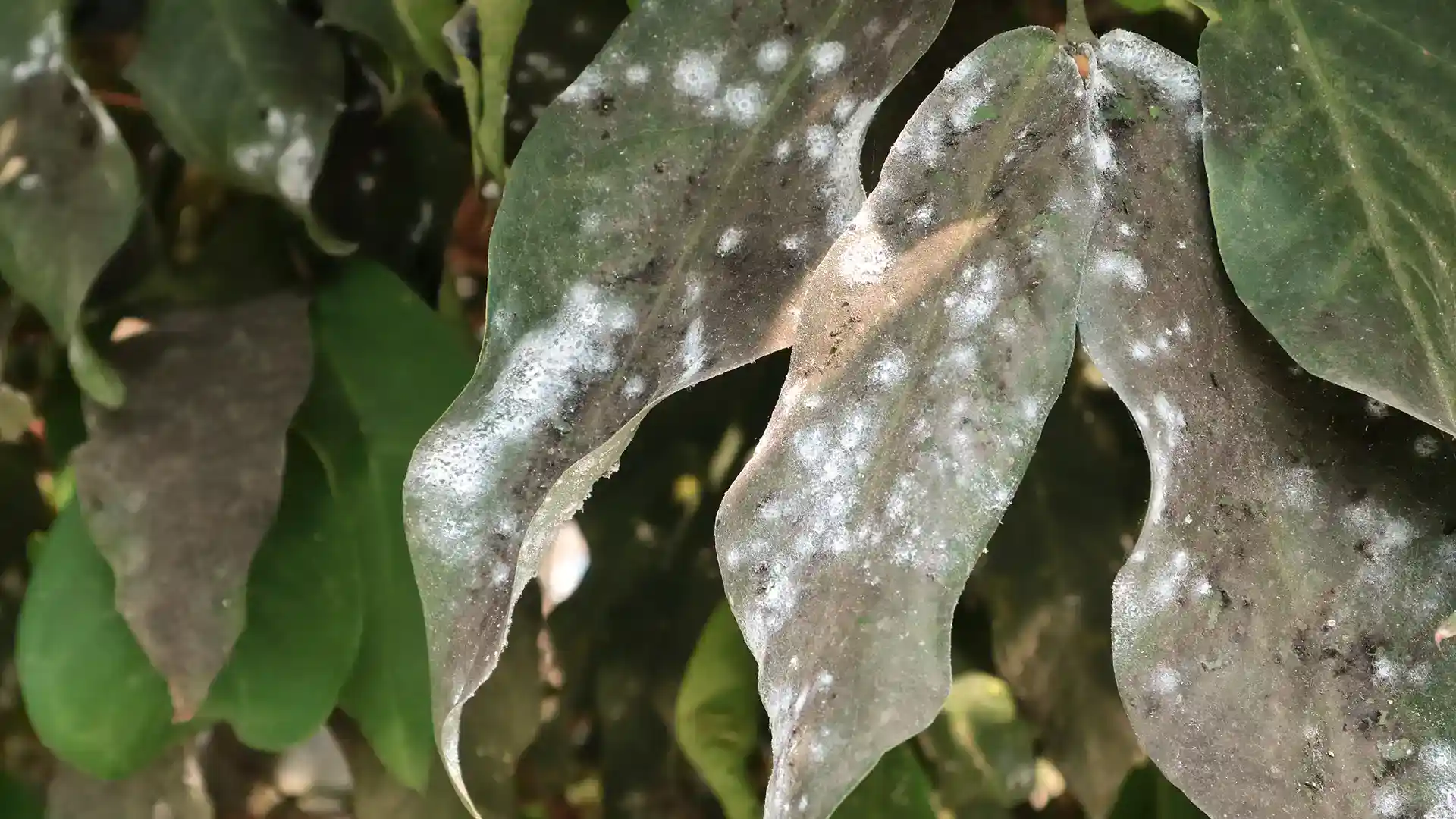
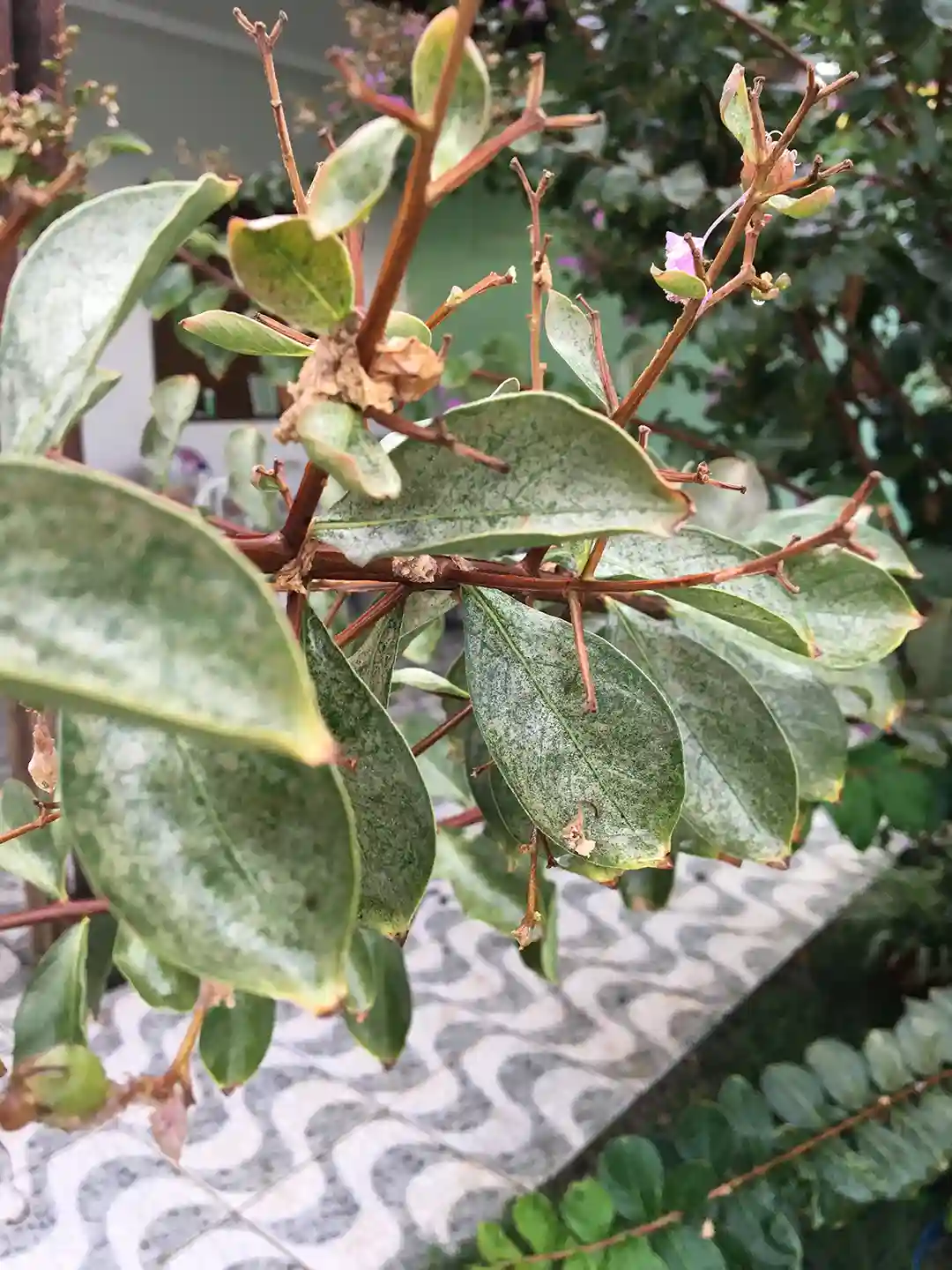
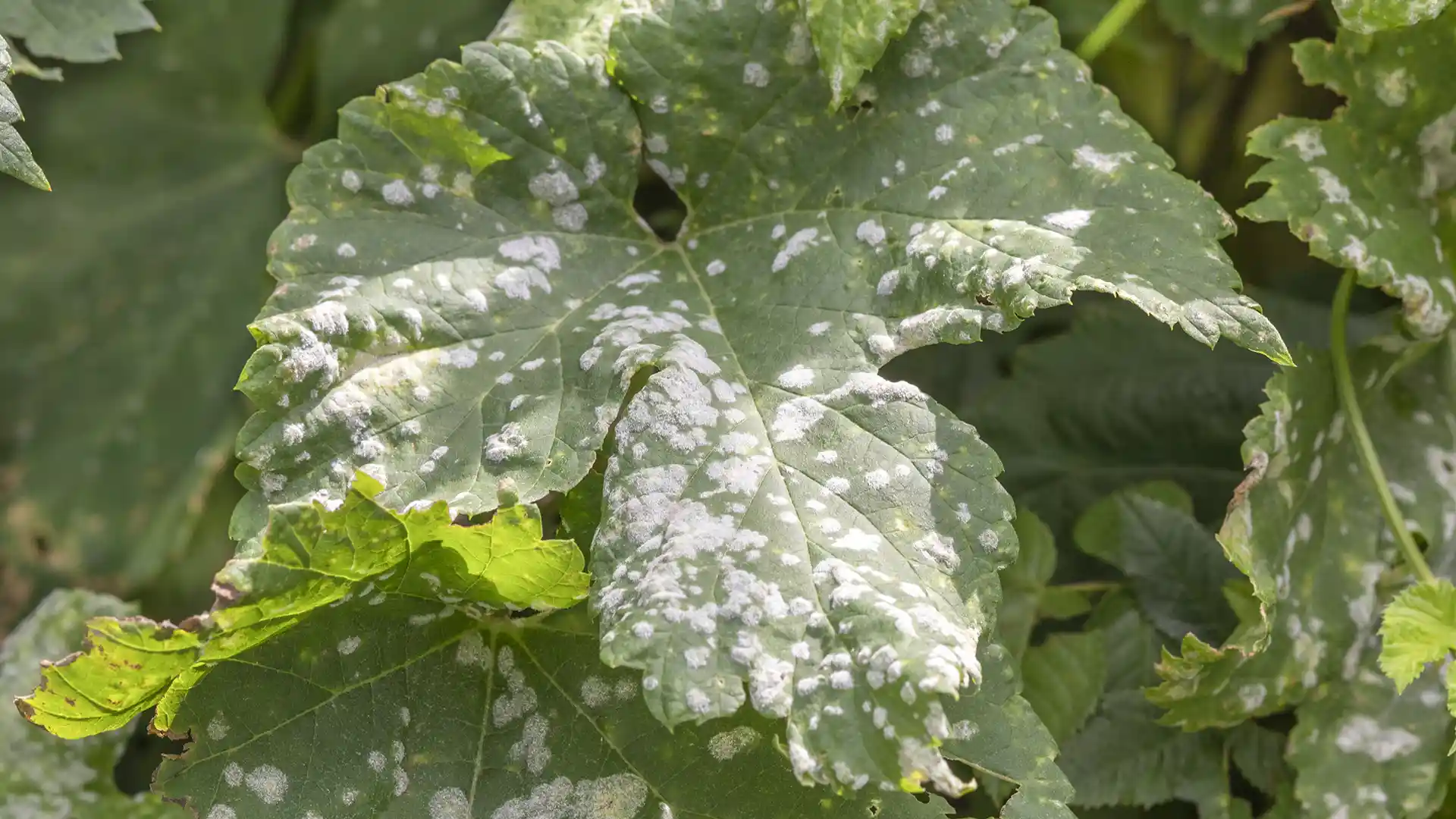
Powdery mildew is the name for a group of closely related fungal diseases, and they all share one telltale sign: a grayish-white, powdery mat on the surface of leaves, stems, buds, and even flower petals. It usually starts as small, circular white spots that spread and merge until a leaf looks like it was sprinkled with talcum powder or powdered sugar. On some plants, like dogwood, you may notice the leaves curling, twisting, or turning a yellowish or reddish cast before the white growth is even obvious. New growth, water sprouts, and the low suckers near the base of a plant tend to show it first. As it advances, leaves become dwarfed, curled, and distorted, and heavily infected flower buds may fail to open at all.
What causes powdery mildew in North Carolina landscapes?
Powdery mildew is driven by humidity, shade, and stagnant air – a combination our Triangle summers deliver reliably. Unlike most fungi, it does not need standing water on the leaf to take hold; a high level of relative humidity is enough, which is why it flares when we have warm days and damp, muggy nights. Moderate temperatures in the 60 to 80 degree range favor it, and it actually eases off during the peak heat of high summer. Shady spots, plants packed too tightly together, and beds with poor air circulation all trap humidity around the foliage and give the fungus exactly what it wants. Overhead watering that wets the leaves and raises humidity in the canopy makes it worse, and the fungus overwinters on fallen leaves and plant debris, so it comes right back the following spring if it is ignored.
What plants get powdery mildew in the Triangle: crepe myrtle, dogwood, roses, lilac?
In our area, the classic hosts are crepe myrtle and dogwood, and they are usually the first plants we see it on each July. Roses are highly susceptible too, and lilacs are a common target. Beyond those, powdery mildew shows up on azalea, rhododendron, euonymus, photinia, spirea, crabapple, oak, English ivy, and a long list of flowering perennials like phlox and zinnia. One important note: each type of powdery mildew fungus tends to have a narrow host range, so the mildew you see on your oak is not the same one attacking your zinnias, and it will not necessarily jump from one to the other. That said, if you have a crepe myrtle or a dogwood in a shady, crowded corner of your yard, it is worth watching closely once summer humidity sets in.
Plant | How common | When you see it in NC | What to watch for |
|---|---|---|---|
Crepe myrtle | Very common | Around July into late summer | White dust on new growth and suckers; curled young leaves; buds that will not open |
Dogwood | Very common | Mid to late summer | Leaves curl or take a yellow/red cast before white growth shows; scorched patches |
Roses | Highly susceptible | Late spring through summer | White coating on leaves and flower buds; distorted, poorly opening blooms |
Lilac | Common | Late summer | Powdery white film on upper leaf surfaces, usually late with little lasting harm |
How do I prevent powdery mildew on my trees and shrubs?
The best defense is a healthy plant in the right spot. Whenever you can, give susceptible plants full sun and enough room to breathe, because good spacing and airflow keep humidity from building up in the foliage. Selective pruning to open up a dense canopy makes a real difference, and pruning off the low suckers on crepe myrtles and dogwoods removes the tissue where mildew usually starts. Water at the roots early in the day so any moisture on the leaves dries quickly, and avoid overhead irrigation that keeps the canopy damp. Go easy on high-nitrogen fertilizer, since it pushes soft new growth that mildew loves. And when you are choosing new plants, pick resistant varieties – many of the mildew-resistant crepe myrtles carry Native American names like Natchez, Tuscarora, Sioux, and Acoma, and there are resistant dogwood and rose cultivars as well.
How do you get rid of powdery mildew once a plant has it?
Once powdery mildew is established, it will not clear up on its own, and the goal shifts to stopping its spread and protecting the rest of the plant. If you catch it on just a few leaves, removing those leaves early can keep it from getting a foothold. At the end of the season, prune out infected stems and rake up and dispose of fallen leaves so the fungus has less to overwinter on – do not compost that material, because the spores survive. For plants with a history of it, the real key is timing: treatments work best when they are applied preventively and on a proper schedule as the season warms, not after every leaf is already coated. On a valued crepe myrtle, dogwood, or specimen rose, a well-timed treatment program keeps the plant clean and blooming instead of letting mildew dull it all summer.
Should I treat powdery mildew myself or hire a licensed pro?
For a single infected leaf or a small shrub you are comfortable pruning, a homeowner can absolutely manage powdery mildew with good cultural practices – better airflow, correct watering, and removing affected foliage. Honestly, if that is all you are dealing with, you may not need us. Where it makes sense to bring in a licensed professional is when you have mature or high-value plants like a large crepe myrtle or a landscape full of dogwoods and roses, a recurring problem every year, or plants too big to treat safely and thoroughly on your own. We are licensed by the state of North Carolina to treat diseases on trees and shrubs. The difference a pro makes is correct diagnosis, the right timing, and full coverage – treating the whole plant on the right schedule so the problem is actually controlled, not just knocked back on the leaves you could reach. If your ornamentals get powdery mildew every summer, that is exactly the kind of thing our tree and shrub program is built to stay ahead of. Text us at 984-284-5399 for a look. For a professional diagnosis and treatment, see our tree and shrub pest control service, or keep disease pressure down all season with our tree and shrub maintenance plan. Crepe myrtles are one of the most mildew-prone plants we treat — see our full crepe myrtle care guide.
Frequently Asked Questions
Crepe Myrtle or Dogwood Dusted White Every Summer?
Powdery mildew is beaten with airflow and the right timing, not a spray after it is coated. We are licensed to treat trees and shrubs in NC. Text us for a look.
Sources
Clemson Cooperative Extension HGIC – Powdery Mildew on Landscape and Garden Plants
NC Cooperative Extension – Powdery Mildew on Dogwoods and Crape Myrtles
NC Cooperative Extension – Powdery Mildew in the Garden
NC Cooperative Extension – Powdery Mildew on Crape Myrtle
