

Pythium Blight in NC Lawns: The Fast-Killing Grease Spot Disease
By Ken Erickson · Updated June 2026
Here in Raleigh’s southern suburbs, our summers give tall fescue a rough time, and few things wreck a fescue lawn faster than Pythium blight. In Fuquay-Varina, Holly Springs, Apex, Cary, and Garner, this disease – also called grease spot or cottony blight – can turn a healthy lawn into slimy, collapsed streaks overnight when the nights stay warm and the grass never dries out. What makes it so dangerous is not just the speed but the biology: it is a water mold, not a true fungus, so the fungicide sitting in your garage probably will not touch it.
Key takeaways
- Pythium blight is one of the fastest-moving turf diseases in North Carolina; under hot, humid conditions it can collapse large areas of tall fescue in as little as 24 to 48 hours.
- It is caused by Pythium species, which are oomycetes (water molds), not true fungi, so many common broad-spectrum lawn fungicides do not control it.
- Outbreaks need warm nights above 65F, daytime highs above 85F, and leaves that stay wet 12 to 14 hours for several nights in a row – which is why it often shows up the morning after a summer evening thunderstorm.
- Look for greasy, water-soaked patches up to a foot wide, matted orange-to-gray blades, and fluffy white cottony growth in the early morning that follows drainage lines and mower tracks.
- Prevention comes down to drainage, airflow, watering before sunrise, and holding back nitrogen in summer; once it is active it requires correct diagnosis and an oomycete-specific fungicide.
What is Pythium blight, and why is it so destructive?
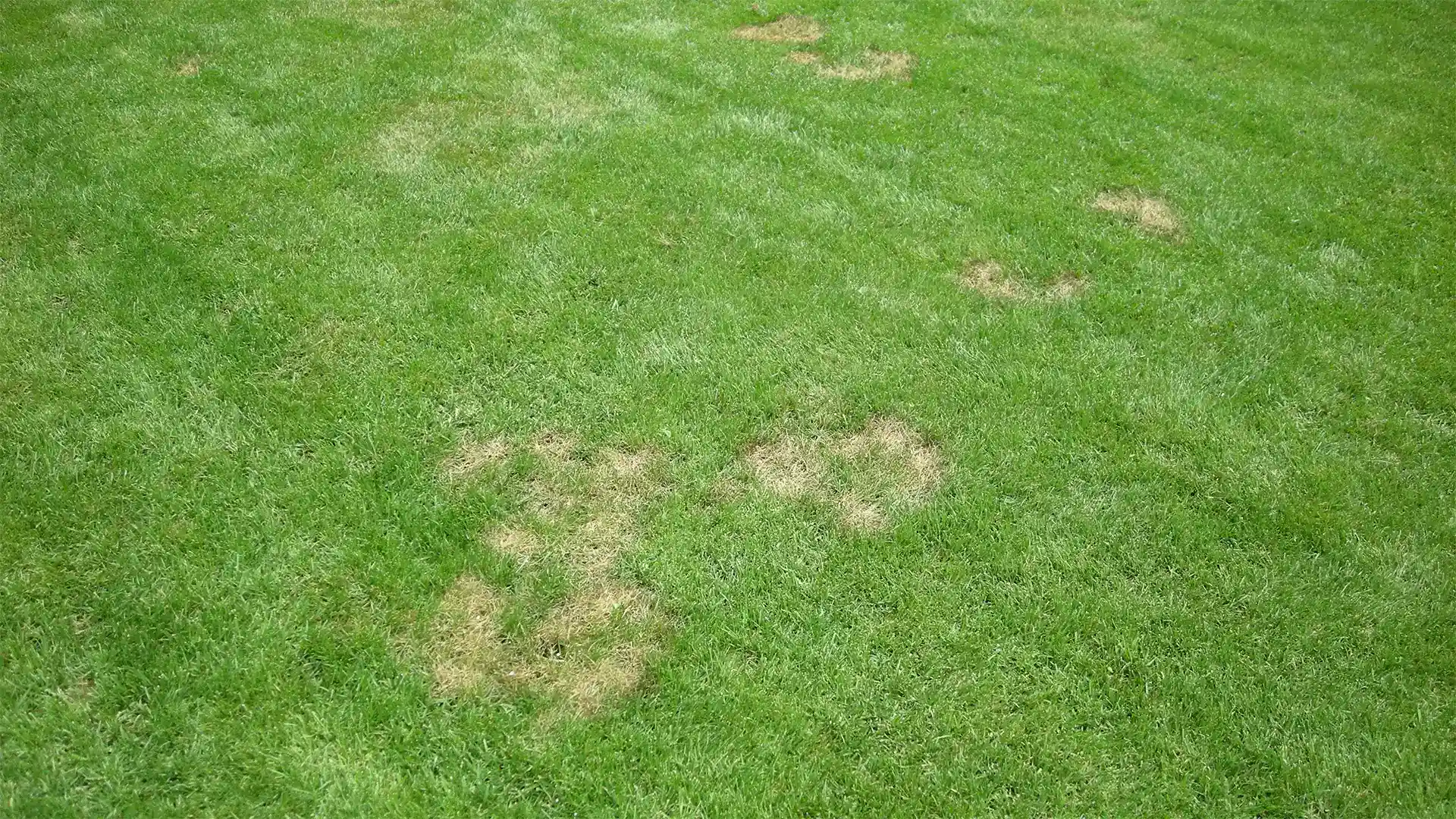
Pythium blight is a turf disease caused by several Pythium species, and it is one of the most aggressive problems we see on cool-season lawns in the Triangle. On tall fescue it shows up as small, sunken, circular patches up to about a foot across during hot, humid weather, and those patches can run together into large blighted areas fast. The reason it earns its reputation is speed: when conditions are right, susceptible grass can sustain significant damage in just two to three days, and a lawn can go from green to collapsed almost overnight. Perennial ryegrass and annual bluegrass are the most prone, while tall fescue is more resistant but still gets hit hard when hot, wet conditions hold for a stretch. Because most Raleigh-area lawns are fescue-based, this is a real summer threat, not a rare one.
What does Pythium blight look like on a lawn?
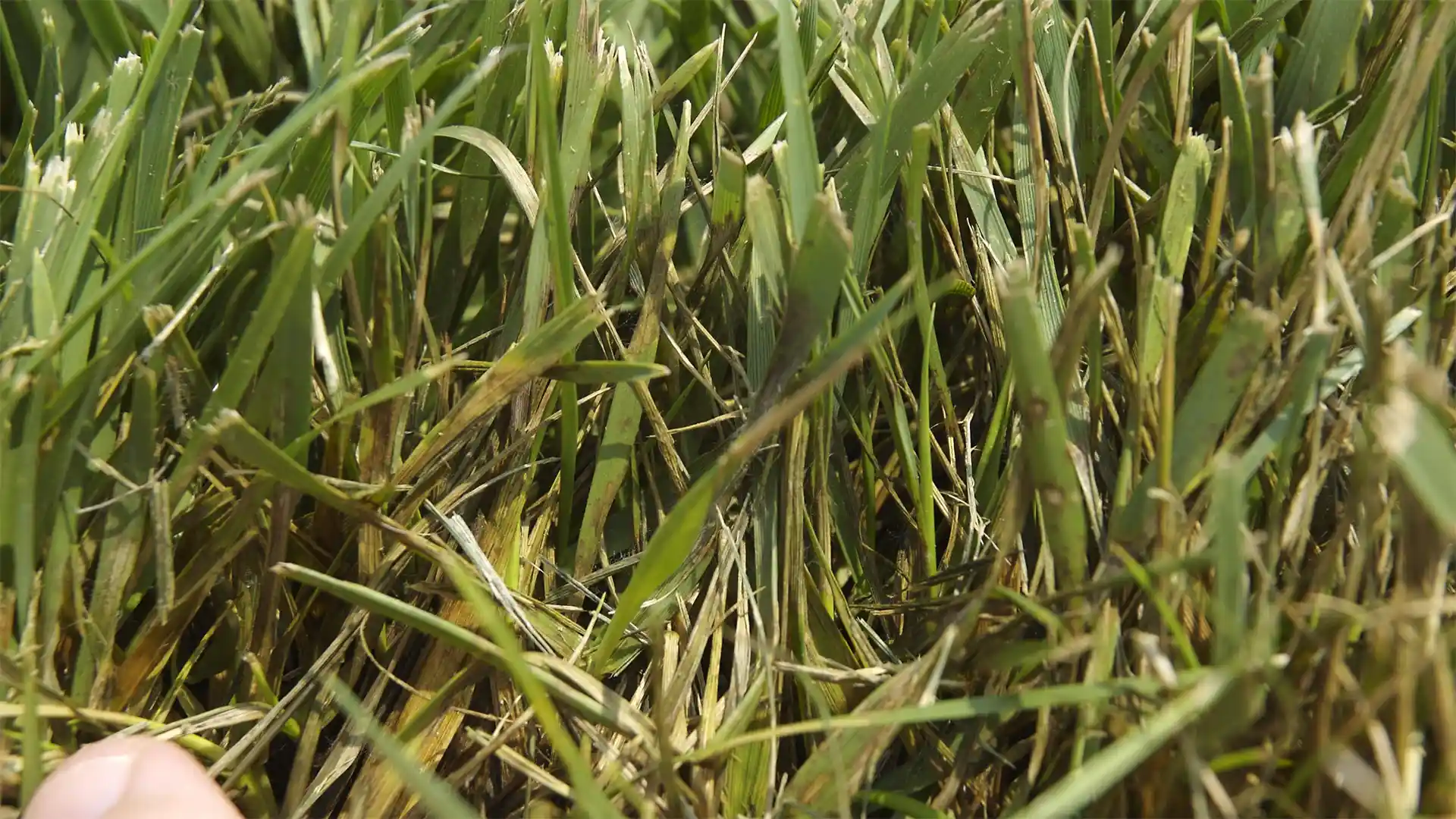
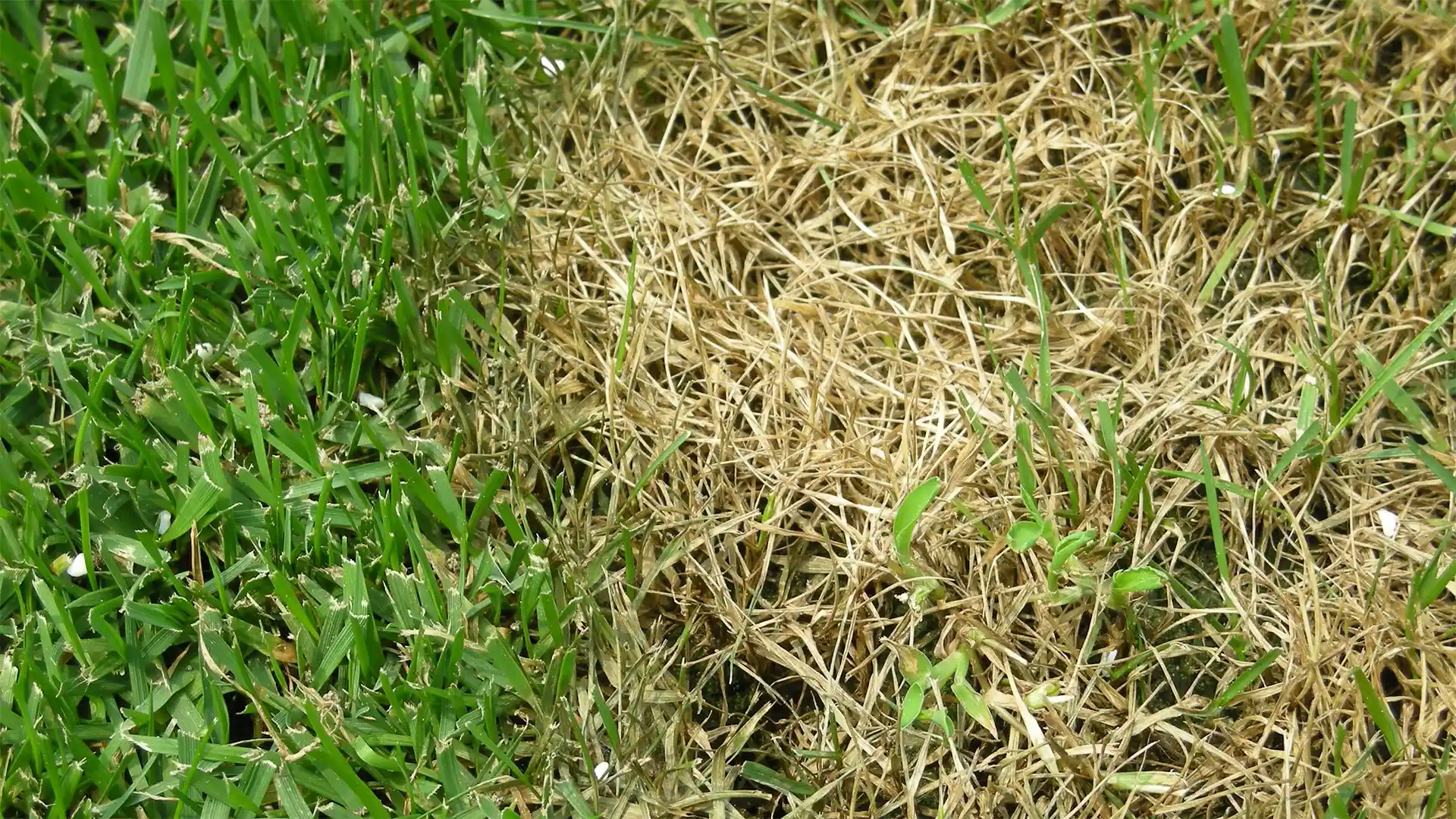
The classic sign is a greasy, water-soaked patch, which is exactly why people call it grease spot. Inside an affected area the blades are matted down, greasy in appearance, and colored orange or dark gray, and the whole patch can look slimy rather than dry and crispy. The tell that separates it from most other diseases is the mycelium: in the early morning, when leaves are wet or humidity is high, you can see gray-to-white cottony, cobwebby growth covering the blighted grass, which usually burns off as the sun dries the lawn. Pythium blight also spreads along drainage patterns and low, wet spots, and it can be physically tracked across a lawn by mowers and foot traffic, so the damage often appears in streaks and lines rather than tidy circles. If you rub a wet, affected blade and it feels oily or greasy, that is a strong clue you are dealing with Pythium and not ordinary summer stress.
What conditions trigger Pythium blight?
Pythium blight is driven by heat plus water, and North Carolina summers supply both. In cool-season turf it develops when night temperatures stay above 65F and the leaves stay continually wet for 12 to 14 hours for several nights running, which is why severe outbreaks so often appear the morning after a late-afternoon or early-evening summer thunderstorm. Daytime temperatures above 85F add to the problem, likely by stressing the fescue. On top of the weather, the setup on your property matters: poor drainage, low spots that hold water, a wet turf canopy, and a thick thatch layer all keep moisture around the crowns where the disease thrives. Overwatering, especially in the evening, and lush, over-fertilized growth from too much summer nitrogen make things worse. In short, the more your lawn stays warm and wet overnight, the higher the risk.
Why do regular fungicides not work on Pythium blight?
This is the part most homeowners get wrong, and it is the single most important thing to understand about this disease. Pythium is not a true fungus. It belongs to a separate group of organisms called oomycetes, or water molds, that are biologically different from the fungi behind brown patch, dollar spot, and most other lawn diseases. Because their cell structure and biology differ, the broad-spectrum fungicides that control ordinary turf fungi often have little to no effect on Pythium. Controlling it takes products built specifically for oomycetes, with active ingredients such as mefenoxam, metalaxyl, propamocarb, cyazofamid, or fosetyl-Al. Grabbing a generic bag of lawn fungicide off the shelf usually wastes both money and the narrow window you have to save the grass. To make it harder, Pythium has developed documented resistance to mefenoxam in parts of the country, so product selection and rotation actually matter, which is why a correct diagnosis has to come before any treatment.
Feature | Pythium Blight (Grease Spot) | Brown Patch |
|---|---|---|
Organism | Oomycete / water mold (not a true fungus) | True fungus (Rhizoctonia solani) |
Patch look | Greasy, water-soaked, matted; often in streaks | Circular brown patches with a darker smoke ring |
Speed | Extremely fast; large areas in 24-48 hours | Fast, but generally slower than Pythium |
Triggers | Nights above 65F, days above 85F, 12-14 hrs wetness | Warm nights, high humidity, extended leaf wetness |
Morning sign | Fluffy white/gray cottony mycelium on wet blades | Little to no cottony growth |
Fungicide | Needs oomycete-specific products; most standard ones fail | Controlled by common broad-spectrum fungicides |
How do you prevent and treat Pythium blight in NC?
Prevention starts with keeping the lawn dry when it matters most. Water in the early morning hours before sunrise so the blades dry quickly, and never water in the evening, since that leaves the canopy wet through the warm night. Hold back on nitrogen in summer; NC State advises not applying more than a quarter pound of nitrogen per 1,000 square feet when conditions favor Pythium, because soft, lush growth is highly susceptible. Improve drainage in low, wet areas, relieve compaction with core aeration, manage thatch, and open up airflow so the turf dries faster. If the disease is already active, do not mow or irrigate while you can see the cottony mycelium on the blades, because that is how it gets spread across the lawn, and clean your equipment before moving to a healthy area. Treatment means applying an oomycete-specific fungicide correctly and, on high-risk lawns, running a preventive program once night temperatures consistently top 65F. We are licensed by the state of North Carolina to apply on turf, so we can identify the disease and put down the right product on the right interval.
Pythium blight vs. brown patch: how to tell them apart
Pythium blight and brown patch both hit NC fescue in hot, humid summers and both make a lawn look sick fast — but they behave differently, and Pythium is the more dangerous of the two.
Brown patch shows up as roughly circular patches, often with a darker “smoke ring” edge in the morning. It thins the turf but usually doesn’t kill it outright, and it responds to common fungicides — see our full brown patch guide.
Pythium moves faster and doesn’t stay in neat circles — it runs in streaks and irregular blotches that follow water flow, drainage, and mower paths. The grass looks greasy, dark, and water-soaked, collapses within hours, and shows cottony white mycelium in the early morning.
The deciding difference: Pythium is a water mold, not a true fungus, so the fungicides that knock out brown patch often do nothing to it. If your “brown patch” is spreading in streaks overnight and shrugging off normal treatment, suspect Pythium and switch to a Pythium-specific product.
Should you treat Pythium blight yourself or hire a pro?
There are lawn problems you can absolutely handle yourself, and we will tell you when that is the case, but Pythium blight is not usually one of them. The problem is speed and specificity: this disease moves in 24 to 48 hours, and the wrong product does nothing, so a weekend of trial and error can cost you the lawn. It is also easy to confuse with brown patch, the other big fescue disease of NC summers, and since the two need different chemistry, a wrong guess wastes the only window you have. A licensed applicator can confirm the diagnosis, choose an oomycete-targeted fungicide, get the rate and timing right, and rotate products to stay ahead of resistance. If you are watching greasy, fast-spreading patches show up on your fescue, do not wait it out. Text us at 984-284-5399 and we will get eyes on it while there is still grass to save.
Frequently Asked Questions
Greasy Patches Spreading Fast Across Your Fescue?
Pythium blight moves in a day or two, and ordinary fungicides do not touch it. We confirm it and apply the right product before the lawn is gone. Text us right away.
Sources
NC State Extension TurfFiles – Pythium Blight in Turf
NC State Extension TurfFiles – Diseases in Turf
Clemson Cooperative Extension HGIC – Brown Patch Disease of Lawns Fighting recurring lawn disease? Our weed control and fertilization program, plus our Fescue and Bermuda and Zoysia lawn maintenance plans, keep turf strong and far more disease-resistant.
Penn State Extension Turf – Pythium Blight
