

Soil pH and Lime: What Your North Carolina Lawn Actually Needs
By Ken Erickson · Updated June 2026
Lime for lawn care is the most misunderstood job at the garden center — here is when it helps and when it is wasted. Lime is the most misunderstood bag at the garden center. People throw it down every spring like clockwork, hoping for a greener lawn, and half the time they do not need it – or they are using the wrong kind. Here in the piedmont our soil runs acidic, so a lot of Triangle lawns genuinely do need lime. But some do not, and over-liming causes its own problems. Here is how to know what your lawn actually needs, and how to do it right.
Key takeaways
- Most NC lawns want a soil pH around 6.0 to 6.5, but our piedmont clay naturally drifts acidic, so a lot of local lawns test too low.
- The only way to know if your lawn needs lime – and how much – is a soil test. North Carolina residents get one free from the state lab April through November.
- Lime is not fertilizer. It raises pH and adds calcium, which unlocks the nutrients already in your soil so your fertilizer actually works.
- Fall is the best time to lime, but it works slowly – 6 to 12 months for a full change. Never put down more than about 50 pounds per 1,000 square feet at once.
- Lime does not green up a lawn overnight and does not kill moss. Those are myths – it just corrects the acidity that was holding your grass back.
Lime for Lawn: What Soil pH Is and Why It Matters
Soil pH is a scale from 0 to 14. Below 7 is acidic, above 7 is alkaline, and 7 is neutral. It matters because pH controls whether the nutrients in your soil are actually available to the grass.
When the pH is off, the nutrients get chemically locked up and the roots cannot take them in. That is the part people miss: you can fertilize all season, and if your pH is too low, the grass still cannot use most of what you put down. Fix the pH first and the fertilizer you are already buying starts working.
What is the ideal soil pH for a North Carolina lawn?
For most lawns here – tall fescue, bermuda, and zoysia – the target is about 6.0 to 6.5. NC State cites 6.5 to 7.0 as the range for peak nutrient availability, so anywhere in that 6.0 to 7.0 band is healthy. The one exception is centipede grass, which actually likes it acidic, down around 5.5, and can be hurt by over-liming.
Grass type | Target soil pH |
|---|---|
Tall fescue | 6.0 – 6.5 (NC State: up to 7.0 for peak uptake) |
Bermuda | 6.0 – 6.5 |
Zoysia | 6.0 – 6.5 |
Centipede | about 5.5 – likes it acidic, do not lime without a test |
Raleigh’s southern suburbs sit in the transition zone, so you will see both cool-season and warm-season lawns on the same street. Your target depends on your grass – which is one more reason to test instead of guess.
Why do North Carolina clay soils turn acidic?
Most soils in North Carolina are naturally acidic to begin with. Our piedmont clay, combined with heavy rainfall over the years, leaches out the calcium and magnesium that would otherwise keep the pH up. On top of that, the nitrogen fertilizer that feeds your lawn is itself acidifying over time.
So a maintained lawn actually trends more acidic the longer you feed it. That is normal. It just means that every few years the pH needs a check, and often a correction.
How do I know if my lawn needs lime?
You get a soil test. Do not lime on a schedule and do not guess from how the lawn looks – guessing is how people push their pH too high and lock out iron and other micronutrients, which creates a brand new problem.
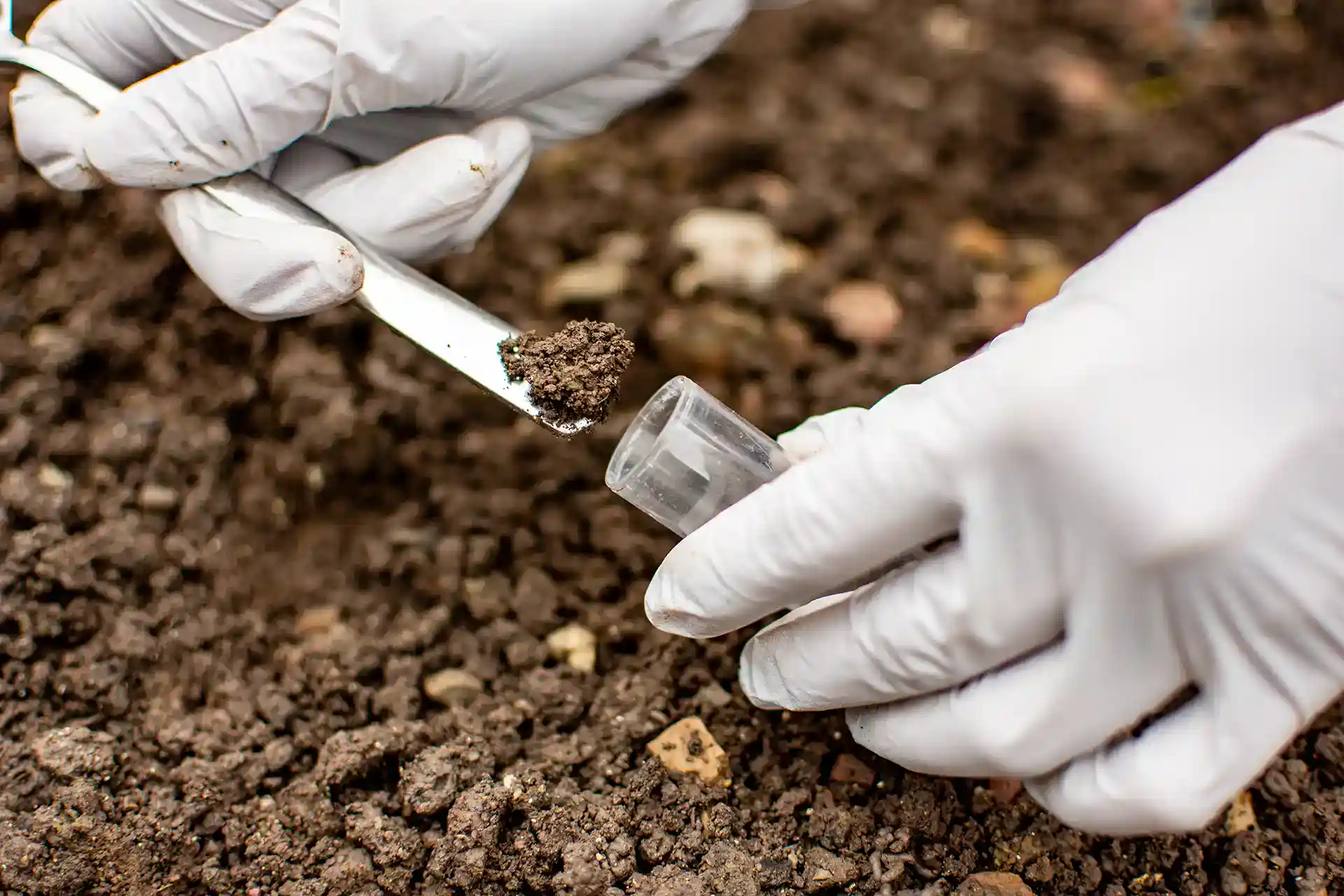
Here is the good part for North Carolina homeowners: the state Department of Agriculture runs a soil-testing lab in Raleigh, and it is free from April 1 through late November. There is only a small per-sample fee in the winter peak season. You pick up boxes and a form from your county Cooperative Extension office, mail in a sample, and the report tells you your exact pH and the pounds of lime to apply – no guesswork.
For an established lawn, testing every two to three years is plenty.
What are the signs of low pH?
These are clues to test, not proof by themselves:
• Your lawn barely responds to fertilizer – you feed it and it stays thin or pale.
• Weeds and moss are creeping in. Moss especially likes acidic, shady, compacted, damp ground.
If you are seeing these, it is worth a soil test. But only the test confirms whether pH is the actual culprit.
What does lime actually do (and what it does not)?
Lime raises your pH toward the target range and adds calcium – and magnesium too, if it is dolomitic lime. That shift is what unlocks the nutrients so your grass can finally use them. Lime is not a fertilizer, though. It adds no nitrogen and will not feed the lawn directly.
Two myths worth killing: lime does not green up your lawn overnight – any greening is the slow pH-and-nutrient effect weeks later. And lime does not kill moss. Moss grows because of shade, poor drainage, and compaction, so correcting pH helps grass compete, but the lime itself is not a moss killer.
Which lime should you use?
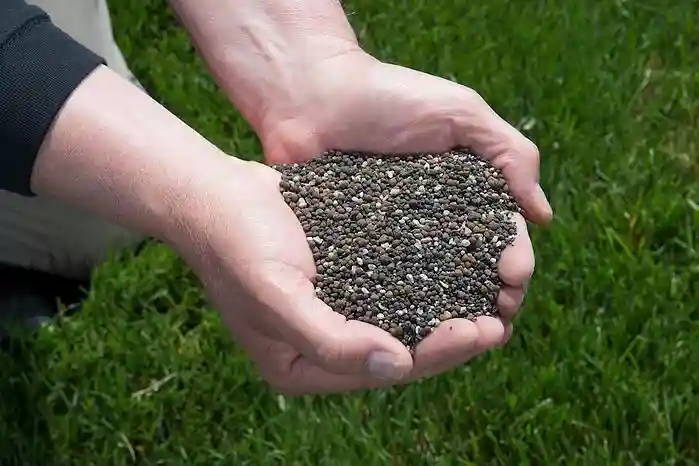
Two choices to make. First, calcitic versus dolomitic: calcitic lime is mostly calcium, dolomitic adds magnesium. Let the soil test decide – use dolomitic only if your magnesium is low, calcitic if it is already fine. Second, pelletized versus pulverized: pelletized spreads evenly with almost no dust and is the easy choice for a lawn; pulverized acts a little faster but is dusty and hard to spread. A 40-pound bag of pelletized lime covers roughly 1,000 square feet.
When and how much lime to apply
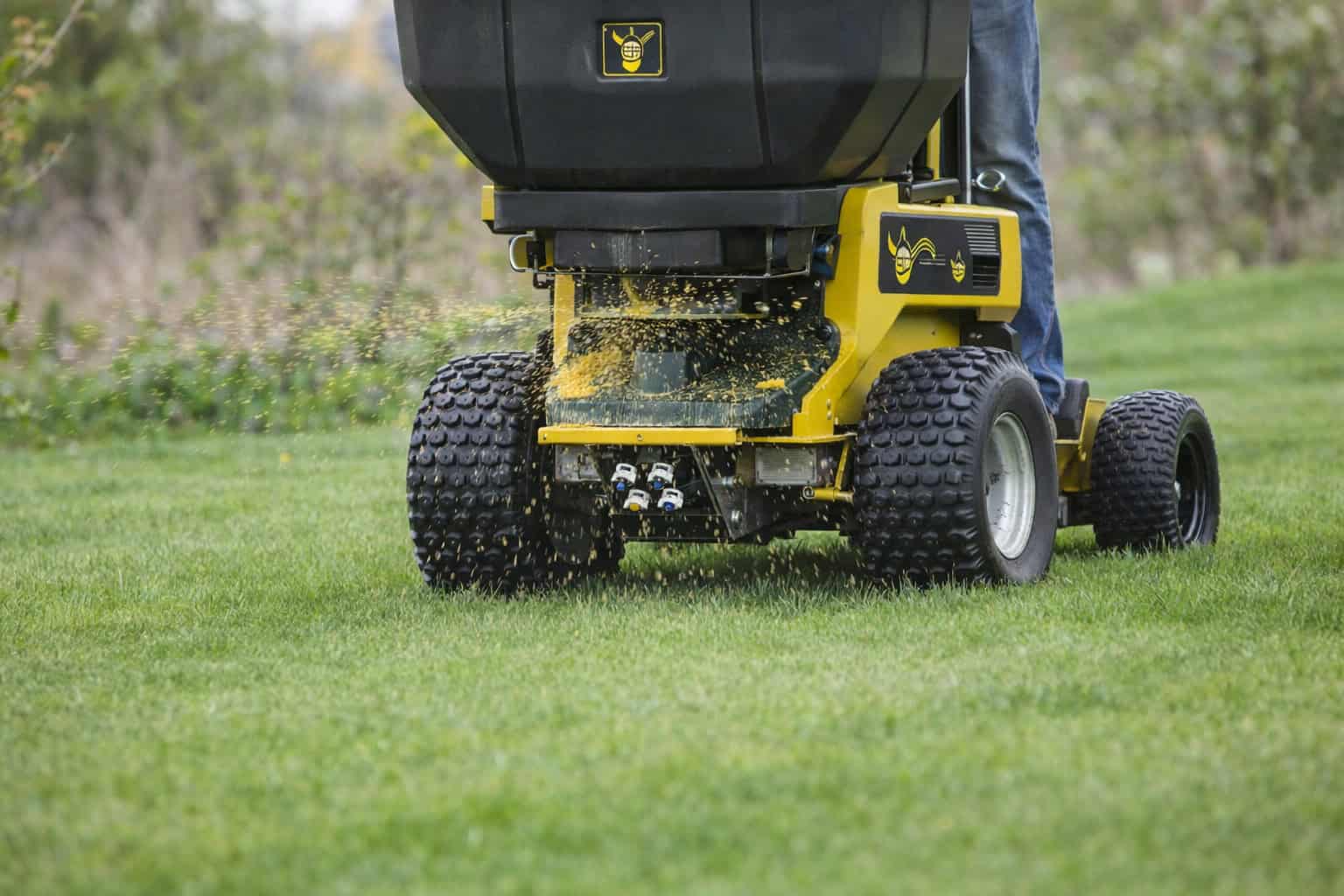
Fall is ideal. Winter rain and freeze-thaw cycles work the lime down into the soil before spring growth kicks in. You can lime almost any time of year, but skip dormant, drought-stressed, or wilted turf.
For the amount, follow the number on your soil-test report. As a rule of thumb, do not put down more than about 50 pounds per 1,000 square feet in a single application – if you need more than that, split it into two rounds a few months apart. And be patient: lime is slow. It takes a few months just to start moving your pH and 6 to 12 months for the full change. Retest before you lime again.
The bottom line
If your fertilizer does not seem to do much, the problem may be under the grass, not on it. Get a soil test, lime to the number if you need it, and give it time. That is the whole game – and it is the difference between feeding your lawn and feeding it in a form it can actually use.
If you would rather not deal with the boxes and math, that is part of what we do. We pull the soil test, read it, and lime to the number – text us a photo of your lawn and we will take it from there at 984-284-5399.
Frequently Asked Questions
Not Sure If Your Lawn Needs Lime?
We pull the soil test, read it, and lime to the number – no guessing and no liming on a schedule. Text us and we will get your lawn’s pH sorted.
Sources
NC State Extension – Carolina Lawns: A Guide to Maintaining Quality Turf
NC State Extension – Soil Acidity and Liming: Basic Information for Farmers and Gardeners Wondering about the budget side? See what lawn care and fertilization cost in the Triangle.
NCDA and CS Agronomic Services – Soil Testing for Homeowners
Clemson Cooperative Extension HGIC – Soil Testing
