

Ground Covers for North Carolina: The Best Low-Maintenance Options for Sun, Shade, and Slopes
By Ken Erickson · Updated August 2026
Ground covers are the answer to the spots where grass just will not cooperate – the bare shade under a big tree, a slope too steep to mow, or a strip you are tired of babying. Done right, a ground cover knits into a low, weed-smothering carpet that needs almost nothing from you. The trick is matching the plant to the spot, and steering clear of the pretty ones that turn into a decades-long headache. Prefer to have it done right? We handle shrub, tree, and ground cover planting across the Triangle.
Key takeaways
- Match the plant to the spot. Sun, shade, and slope each want different ground covers – the number-one reason plantings fail is putting a sun lover under a pine or a shade plant on a hot bank.
- For shade under trees: autumn fern, foamflower, ajuga, hellebore, and green-and-gold thrive where grass gives up.
- For hot sun and no-mow lawns: creeping thyme, sedum, hardy ice plant, and creeping phlox handle heat, drought, and lean clay.
- For slopes and erosion: creeping juniper and clumping liriope lock soil in place on banks too steep to mow.
- Avoid the invasives. English ivy, vinca/periwinkle, and spreading liriope (Liriope spicata) are listed as invasive by NC Extension – choose the non-invasive picks instead.
What makes a good ground cover in North Carolina?
We are in zone 7b with heavy clay soil, humid summers, and a lot of dry shade under pines and hardwoods. A good ground cover here has to take our clay, tolerate the light it is actually getting, and fill in dense enough to shade out weeds. Beyond looks, the good ones earn their keep three ways: they suppress weeds, they hold soil on slopes, and they mean no mowing. The table below sorts the reliable performers by where they belong.
Best low-maintenance ground covers at a glance
Plant | Sun / shade | Evergreen? | Best use |
|---|---|---|---|
Autumn fern | Part to full shade | Semi-evergreen | Shade fill under trees |
Foamflower | Part to full shade | Semi-evergreen | Native woodland shade |
Ajuga (bugleweed) | Part shade to sun | Evergreen | Fast shade cover, spring bloom |
Hellebore | Part to full shade | Evergreen | Winter interest in dry shade |
Creeping thyme | Full sun | Evergreen | No-mow lawn, between pavers |
Sedum (stonecrop) | Full sun | Mostly evergreen | Hot, dry slopes |
Creeping juniper | Full sun | Evergreen | Slopes and erosion control |
Liriope muscari (clumping) | Sun or shade | Semi-evergreen | Edging, mass planting, slopes |

Best ground covers for shade (under trees)
The classic Triangle problem is bare, root-choked, acidic shade under mature trees where grass has given up. These handle it:
• Autumn fern – tough, semi-evergreen, and the new fronds come up coppery. A workhorse for dry shade.
• Foamflower and green-and-gold – natives that carpet a woodland floor and bloom in spring.
• Ajuga – fast to fill, with blue flower spikes; it spreads, so give it room or an edge
• Hellebore – evergreen, deer-resistant, and it blooms in the dead of winter when nothing else does.
• For pachysandra, choose the native Allegheny spurge over the common Japanese type where you can – same job, better citizen.
Best ground covers for full sun and no-mow lawns
These ground cover plants take sun, heat, and drought once established:
• Creeping thyme – a fragrant, walkable living lawn that never needs mowing, perfect between pavers and in full sun.
• Sedum and hardy ice plant – drought-proof succulents for the hottest, driest spots, though they want well-drained soil, so amend our clay or use a raised bank.
• Creeping phlox – a spring sheet of pink or purple bloom on a sunny slope.
Best ground covers for slopes and erosion
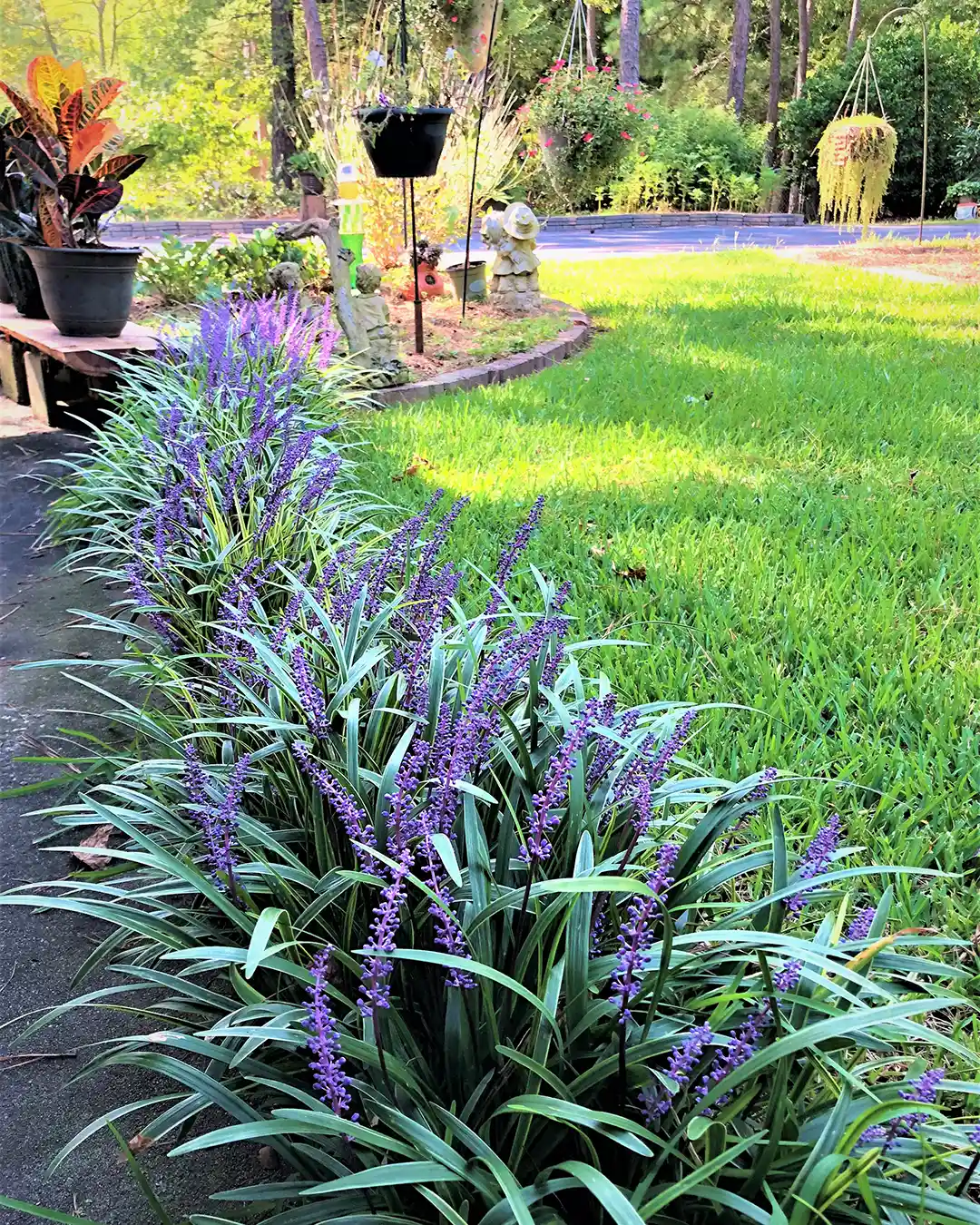
For a bank too steep to mow safely, you want deep, soil-gripping roots. Creeping juniper spreads wide and evergreen and is the go-to for a sunny slope. Clumping liriope holds soil well too and takes sun or shade. A tip when you plant a slope: lay down a biodegradable erosion fabric and mulch with shredded hardwood while the plants fill in, so the first big storm does not wash your work down the hill. For a bank you want handled start to finish, we install and plant slopes with erosion fabric and the right ground cover.
Ground covers to avoid in North Carolina
Here is the part the plant tag will not tell you. Some of the most-sold ground covers are listed as invasive by NC Extension – they escape into the woods and choke out everything, and once they are established you will fight them for years. Skip these:
• English ivy – climbs, smothers trees, and spreads relentlessly.
• Vinca / periwinkle (Vinca minor and major) – sold everywhere, escapes everywhere.
• Spreading liriope (Liriope spicata) – the runner type. The clumping Liriope muscari is well-behaved and fine; it is the spreading spicata that takes over. Buy the clumping form.
There is a non-invasive plant for every one of these jobs, so there is no reason to plant a problem.
Frequently Asked Questions
Want the Bare Spots Filled – Without the Mowing?
We design and install ground-cover beds for shade, sun, and slopes across the Triangle – and steer you away from the invasive ones. Text us to plan yours.
Sources
NC State Extension – Non-Invasive (Mostly Native) Plants for Covering Ground
NC State Extension Gardener Plant Toolbox
NC State Extension – Stabilizing Slopes
NC State Extension – Erosion Control
