


Best Shade Plants for NC (Hostas, Ferns, and More)
By Ken Erickson · Updated August 2026
Key Takeaways
- Grass fails under trees because of shade, root competition, and dry soil — the fix is to stop fighting it and plant a shade bed instead.
- Know your shade: dry shade under hardwoods and moist shade in low spots call for different plants.
- Foliage carries a shade garden — hostas, ferns, heuchera, and carex give texture and color where flowers will not bloom heavily.
- Amend our heavy clay with compost before planting; good drainage is what most shade plants actually want.
- Layer groundcover, mid-height perennials, and a few shade shrubs for a finished, low-maintenance bed under the canopy.
Why won’t grass grow under my trees?
Grass needs sunlight, and a mature hardwood or pine canopy takes most of it. There is also a grass-type reality that catches homeowners off guard. Warm-season lawns, Bermuda and Zoysia, demand full sun and thin out fast in anything less. Cool-season tall fescue is the most shade-tolerant turf we grow here, but even fescue needs roughly four hours of direct or filtered sun to hold a stand. Under a dense canopy you rarely have that.
On top of the light problem, tree roots pull water and nutrients out of the top few inches of soil, which is exactly where grass roots live. That is why reseeding the same shady strip year after year keeps failing. Once shade drops below what fescue can use, the smart move is to convert that area to a shade bed instead of pouring more seed into it.
What is the difference between dry shade and moist shade?
This is the single most important distinction, because it decides which plants live and which sulk. Shade itself comes in a few flavors: dappled or filtered light under a high canopy, partial shade with two to six hours of sun, and full or deep shade with almost none. But moisture matters just as much as light.
Dry shade is the tough one, and it is what most Triangle yards have: under hardwoods and pines, along a north-facing wall, or beneath eaves where rain rarely reaches. Tree roots make it worse by drinking the soil dry. Moist shade is shade that stays consistently damp, like a low spot, a drainage swale, or a north side that holds water in our clay. Hostas and Japanese painted fern love moist shade and struggle in dry root-packed ground. Christmas fern, autumn fern, hellebores, and cast-iron plant shrug off dry shade. Match the plant to the moisture and your success rate jumps.
What are the best shade plants for North Carolina?
Here is the working list, sorted by role in the bed. These are plants I have watched perform in Triangle dry shade and clay, cross-checked against the NC State Extension Plant Toolbox.

| Category | Plant | Light and moisture | Why it works here |
|---|---|---|---|
| Shade perennial | Hellebore (Lenten rose) | Dry to average, part to full shade | Evergreen, deer-resistant, blooms in late winter when nothing else does |
| Shade perennial | Heuchera (coral bells) | Average moisture, part shade | Grown for burgundy to lime foliage; adds color without flowers |
| Shade perennial | Hosta (plantain lily) | Moist shade | Bold texture; best where soil stays damp, not bone-dry under trees |
| Shade perennial | Cast-iron plant (Aspidistra) | Dry, deep shade | Nearly indestructible evergreen for the darkest, driest corners |
| Shade perennial | Wild ginger | Dry to average, shade | Native low carpet of heart-shaped leaves; fills bare ground |
| Fern | Christmas fern | Dry shade, root-packed soil | NC native evergreen; tolerates shallow soil over tree roots |
| Fern | Autumn fern | Dry to average shade | Evergreen, coppery new fronds; tough and low-fuss |
| Fern | Japanese painted fern | Moist shade | Silver-and-burgundy fronds; use where it stays damp |
| Groundcover | Liriope (monkey grass) | Dry to average, sun to shade | Workhorse edger and slope cover; takes clay and root competition |
| Groundcover | Ajuga (bugleweed) | Average, part shade | Dense carpet with blue flower spikes; knits bare areas together |
| Groundcover | Carex (evergreen sedge) | Average shade | Grassy texture that reads like turf without needing sun |
| Shrub for shade | Oakleaf hydrangea | Part shade, average | Native, big summer blooms, burgundy fall color |
| Shrub for shade | Camellia (sasanqua and japonica) | Part shade | Evergreen structure with fall or winter flowers |
| Shrub for shade | Aucuba | Dry, deep shade | Glossy evergreen that thrives where little else will |
| Shrub for shade | Mahonia | Dry to average shade | Evergreen, spiny, winter bloom and berries for wildlife |
Which ferns handle dry shade under trees?
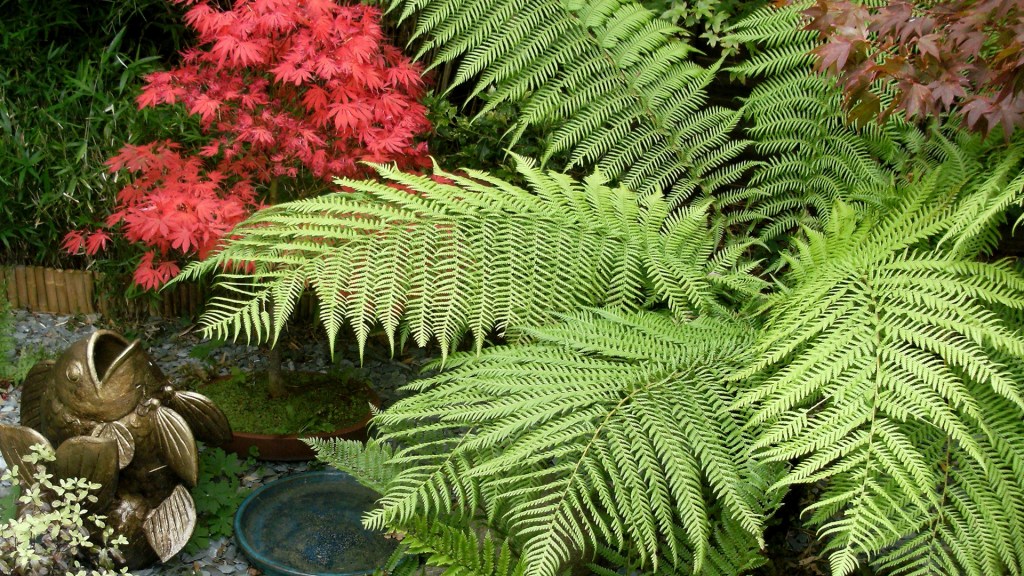
Ferns carry the texture in a shade bed, but not every fern wants the same spot. For dry shade under a canopy, Christmas fern is the anchor. It is a North Carolina native, it stays green through winter, and it tolerates the shallow, root-filled soil where other plants quit. Autumn fern is the next pick, evergreen with coppery new growth and very forgiving once established. Save Japanese painted fern and its silver fronds for the moist, protected spots. It is the showiest of the three but the first to crisp in dry ground. NC State Extension rates ferns highly for shade texture, and pairing two or three kinds gives you depth that a single plant never will.
What shrubs grow in shade in the Triangle?
Shrubs give a shade bed its bones, so it does not disappear when the perennials die back. Oakleaf hydrangea is my go-to for part shade; it is native, blooms big in summer, and turns burgundy in fall. Camellias, both sasanqua and japonica, bring evergreen structure and flowers when the rest of the yard is bare. For the truly dark, dry corners, aucuba and mahonia keep going where most shrubs fail. If you want a fuller rundown of shrub choices for our conditions, our guide on how to choose the best shrubs for North Carolina pairs well with this list.
How do I amend clay soil for a shade bed?
Our red clay is the second half of the shade problem. It compacts, drains poorly, and starves plants of oxygen at the root. The fix is organic matter worked through the whole bed, not one amended hole. Spread two to three inches of compost or aged leaf mold across the planting area and blend it into the top several inches of soil. That improves drainage, feeds soil life, and loosens the clay so roots can spread.
One rule under trees: respect the roots. Do not dig a deep, wide pit right against a trunk, and never pile soil up over the root flare. Work around major roots, keep amendments to a few inches deep near the tree, and let the plants ease in. It is also worth a free soil test through your county Cooperative Extension office (free through late fall most years) so you know whether lime or nutrients are needed before you plant. After planting, mulch with two to three inches of shredded hardwood or pine straw to hold moisture and cut down on watering.

How do I design a shade bed that looks finished?
Shade design is a foliage game more than a flower game. Layer it: shrubs at the back for structure, mid-height perennials like hellebores and heuchera in the middle, and groundcovers such as liriope or wild ginger to knit the front and cover soil. Brighten dark areas with light and variegated foliage, chartreuse, gold, and silver, and use blue and purple tones to calm and cool a space. Repeat two or three plants in drifts instead of buying one of everything; repetition reads as intentional, a plant zoo reads as busy. Mixing fern texture with the broad leaves of hostas or hellebores is the classic Southern shade combination for a reason.
When should I plant, and when should I call a pro?
Fall is the best time to plant shade beds in the Triangle. Cooler air and warm soil let roots establish before summer stress hits, and you water far less than a spring planting. Spring works too if you commit to watering through the first summer.
Here is the honest line on DIY. If you are tucking a few hellebores and ferns into an existing bed with decent soil, that is a good weekend project. Do it yourself. Where it pays to call a pro is the full conversion: killing off a failed grass strip, reshaping and amending a large bed in heavy clay, working carefully around valuable tree roots, and choosing plants that will still look right in five years. That is design and installation work, and getting the soil prep and plant selection right the first time saves you from replanting the same dead zone twice.
Ready to fill in that dead zone under your trees?
If grass has failed under your canopy, the answer is a properly prepped shade bed, and that is exactly the kind of work we do. We handle the soil amendment, the plant selection for your specific dry-shade or moist-shade conditions, and clean installation that respects your trees. We nurture your landscape like it is our own and make the outside of your home match the inside. To turn a bare, shady patch into a finished bed, call or text (984) 284-5399.
Frequently Asked Questions
Ready to Fill In That Dead Zone Under Your Trees?
We design and plant shade beds that thrive where grass will not — matched to your light, your soil, and the deer pressure on your lot. Call or text (984) 284-5399 to plan your shade garden.
