

How to Stop Crepe Myrtle Shoots and Suckers in NC
By Ken Erickson · Updated July 2026
I’ll give you the honest answer first, because most articles won’t. On a living crepe myrtle, you MANAGE suckers — you don’t eliminate them. The shoots come up from the roots, and as long as that tree is alive, the roots will keep sending them. Anybody promising to kill them in one shot is selling you something. I’m a licensed applicator in North Carolina; I treat crepe myrtles on my own property and I mix the herbicides we use. Here’s how to stop crepe myrtle shoots for good — what actually works, what will kill your tree if you’re not careful, and how to keep the shoots out of your Bermuda. Fighting pests on the same trees? Read our guide to crepe myrtle bark scale.
Key takeaways
- On a living crepe myrtle you manage suckers, you don’t eliminate them. Pull or cut them on sight — the roots keep sending shoots as long as the tree lives.
- Never spray a systemic weed killer (Roundup, 2,4-D) on the suckers of a tree you want to keep. It travels to the roots and can kill the whole tree — use an NAA sprout inhibitor instead.
- Shoots in your lawn? Use triclopyr, not Roundup. Triclopyr spares grass; glyphosate kills your Bermuda or fescue too.
- After you cut the tree down the roots resprout for years — treat the fresh stump the day you cut it, then keep knocking down shoots. And prevent it: keep string trimmers and mowers off the trunk.
How to Stop Crepe Myrtle Shoots: What are crepe myrtle suckers and watersprouts?
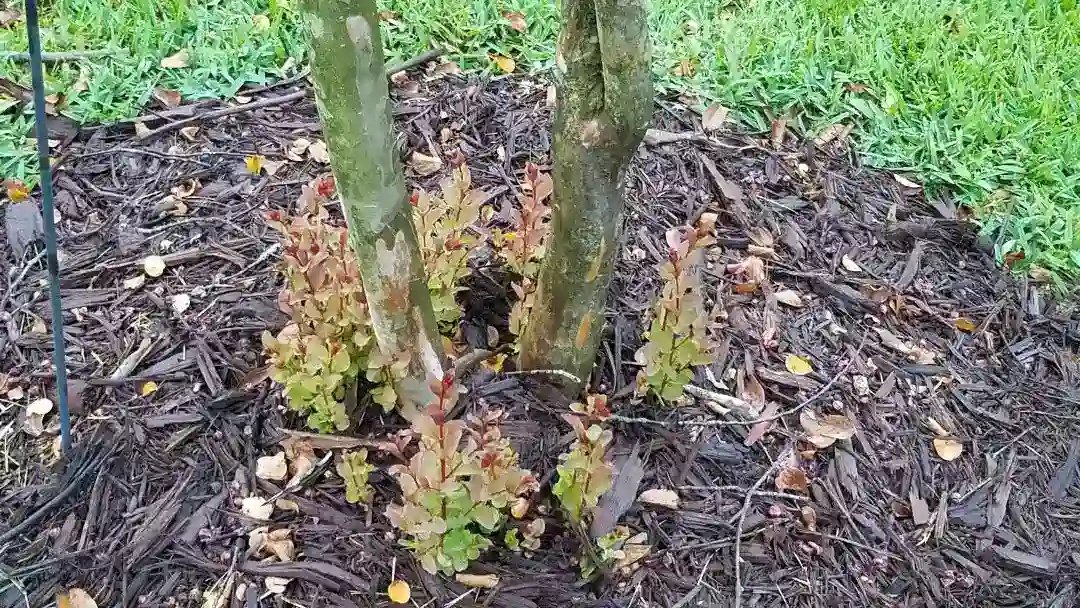
Suckers are the skinny shoots that pop up from the base of the trunk or straight out of the roots, sometimes feet away from the tree. Watersprouts are the same idea up in the canopy — fast, weak, upright shoots. Both are the tree trying to grow more of itself, and both steal energy from the plant you actually want. Crepe myrtle (the botanical name is Lagerstroemia) is a naturally multi-stemmed, vigorous plant, so a little suckering is normal — it does it whether you prune it or not.
Your situation | What to do | What to use | The reality |
|---|---|---|---|
Living tree, suckers at the base | Pull or cut on sight, flush to the base | Hand, or an NAA sprout inhibitor | Recurs – you manage it, not kill it |
Living tree, shoots in the lawn | Spot-treat the shoots only | Triclopyr (spares grass) | Never glyphosate near a tree you keep |
Tree removed, stump left | Treat the fresh cut the day you cut it | Glyphosate or triclopyr, cut-stump | Plus knock down shoots for a year or more |
Want no chemicals | Remove every shoot the moment you see it | Loppers, or mow the lawn ones | Starves the roots over a season or two |
Prevention | Keep trimmers and mowers off the trunk | A mulch island, right-size cultivar | The cheapest fix by far |
Why does my crepe myrtle keep sending up shoots?

Suckering is the tree’s stress response, and a few things crank it up. Topping — the “crepe murder” haircut where somebody cuts the whole top off every winter — is the biggest one; it forces a flush of weak watersprouts every summer. Young trees sucker more than mature ones. And the cause I see most in real yards: mechanical injury from a string trimmer or mower. Every time the line or the deck nicks the base of the trunk or a surface root, the tree answers with more suckers. If you’re fighting shoots at the base, look for trimmer scars first.
How do I get rid of suckers on a tree I want to keep?
Remove them on sight, while they’re small and green. Pull them off with a gloved hand if you can — a clean pull removes the whole shoot bud better than a cut. If they’re woody, cut them flush to the trunk or the ground with sharp pruners, no stubs. Do the light stuff any time you see it; save heavier structural pruning for late winter while the tree is dormant. There’s no magic here — it’s a routine, not a one-time job. Every shoot you remove before it leafs out is energy the roots don’t get back, and if you’re relentless about it — never letting one leaf out all summer — you slowly starve the roots down to almost nothing. That is the chemical-free method, and on a tree you’re keeping it’s the safest one there is.
Do sucker-stopper products actually work?
They help, within limits. The sprout inhibitors — Monterey Sucker Stopper, Bonide Sucker Punch, and Fertilome Prune Smart are the common ones — use NAA, a plant growth regulator (not a weed killer). The method the LSU AgCenter backs: cut the existing suckers off first, then spray the inhibitor on the cut area and the surrounding bark, before new sprouts get past about 10 inches. It suppresses regrowth for a while — the label says up to six months — but it delays suckering, it doesn’t end it. You’ll reapply. It’s a real tool, just not a cure.

Will Roundup kill crepe myrtle suckers, or my tree?
This is the one that costs people their tree, so read it twice. The suckers are part of the living tree — they share the same root system. If you spray a systemic weed killer on them — Roundup (glyphosate), 2,4-D, a brush killer — it gets absorbed and travels back down into the roots of the tree you’re trying to keep, and it can damage or kill the whole plant. On a crepe myrtle you want to keep, the only safe options are pulling the suckers or using an NAA sprout inhibitor. Save the systemic herbicides for a tree you’ve already decided to remove.
How do I stop crepe myrtle shoots coming up in my lawn?
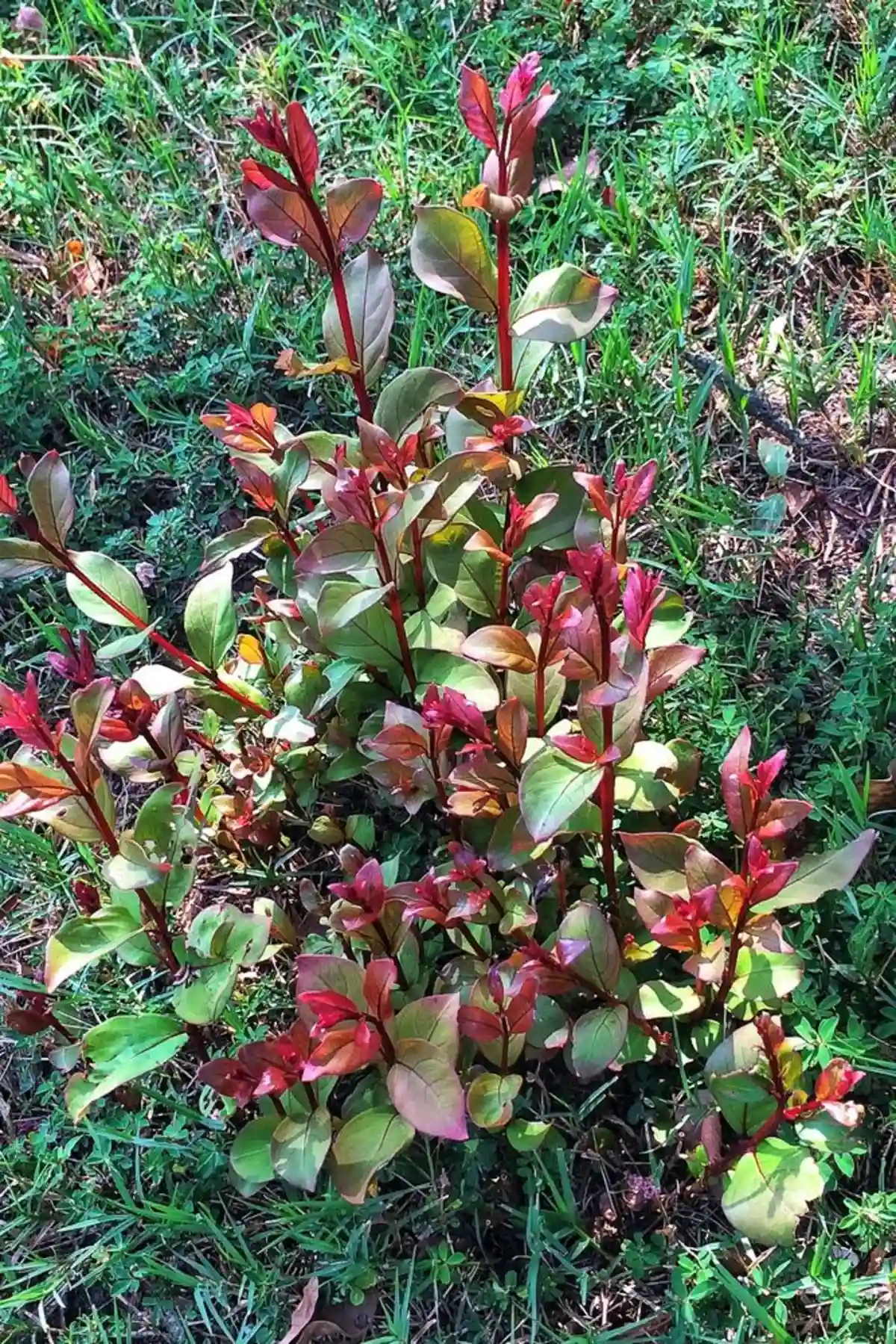
This is the question I get most, and the answer is about selectivity. If the shoots are out in your Bermuda or fescue and the tree is gone (or you don’t mind risking it), don’t reach for Roundup — glyphosate is non-selective and it’ll brown out your turf right along with the shoots. Triclopyr is the better pick here: it’s a broadleaf herbicide that spares grasses, so you can spot-treat the shoots without killing the lawn around them. Either way it takes repeat applications — new foliage, new spray — over weeks. And if the tree is still alive nearby, remember the warning above: even a lawn shoot is wired to that tree’s roots.
How do I stop the suckers after I cut the tree down?
Cutting the tree down doesn’t stop the roots — they keep resprouting for years, because that big leftover root mass is loaded with stored energy. Two things get you there. First, treat the stump the day you cut it: a cut-stump application of glyphosate or triclopyr, painted on the fresh cut surface right at the edge where the living bark meets the wood, so it moves down into the roots. Wait even a few hours and it works far less. Second, keep after the shoots that still come up — cut or spray every one until, over a season or two, the roots finally run out of fuel. Grinding the stump alone won’t do it; the shoots come from the lateral roots, not the stump.
How do I prevent crepe myrtle suckers in the first place?
Prevention beats every treatment. Three things: keep string trimmers and mowers off the trunk — put a mulch island around the base so nothing mechanical ever touches it. Don’t top the tree; prune selectively so you’re not triggering the stress flush. And when you plant, pick a cultivar that actually fits the space — crepe myrtles range from 3-foot dwarfs to 30-foot trees, so choose one you’ll never have to cut back. No cultivar is truly “sucker-free,” but a right-sized, unstressed tree that nobody weed-whacks barely suckers at all.
When should you call a pro?
Pulling a few green suckers is a five-minute job you don’t need to hire out — do that yourself. Call a licensed applicator when it’s herbicide work: cut-stump treatment on a removed tree, selective triclopyr on shoots in your lawn, or a root system that’s been resprouting for a couple of years and you want it done for good. Getting the product, the selectivity, and the timing right is where a license earns its keep — and it’s the difference between killing the shoots and killing your lawn or your neighbor’s tree.
Crepe myrtle sucker FAQ
Fighting crepe myrtle suckers, or want the tree gone for good?
We handle crepe myrtle care and the herbicide side of it across the Raleigh suburbs — selective treatment of shoots in your lawn, cut-stump work on a removal, and keeping your other ornamentals healthy. As a licensed North Carolina applicator I get the product and the selectivity right the first time. Call or text 984-284-5399 for a free quote.
Sources
LSU AgCenter — Summertime Crepe Myrtle Questions (NAA sucker control): lsuagcenter.com
UGA Extension — Keep Mowers and Trimmers Away from Trees: caes.uga.edu
Univ. of Maryland Ask Extension — Roots and shoots of crepe myrtle: ask.extension.org Keep your ornamentals healthy with our tree and shrub maintenance plan and tree and shrub pest control.
