

Sod Webworms in NC Lawns: Spot Them and Stop Them
By Ken Erickson · Updated June 2026
Sod webworm control starts the moment you see little tan moths flushing out of the grass. If little tan moths flush up out of the grass every time you walk across the lawn in August, that is your early warning for sod webworms. The moths do not hurt anything – but their caterpillars do, feeding at night and chewing the turf down to ragged brown patches that look a lot like drought. Here is how to identify sod webworms, the two-minute soap test that confirms them, and when they are worth treating.
Key takeaways
- Sod webworms are the caterpillars of small tan lawn moths – the moths you see flushing up as you walk or mow are the adults laying eggs.
- The caterpillars feed at night, chewing grass blades down to ragged, notched, scalped-looking patches – worst in late summer heat.
- The soap flush confirms it: mix dish soap and water, pour it over a damaged edge, and the caterpillars wriggle to the surface in minutes.
- Damage looks like drought at first, but soap-flush caterpillars, green pellet droppings, and fine silk webbing in the thatch give it away.
- A healthy, well-watered lawn tolerates light feeding; heavy infestations in late summer are worth treating before they thin the turf.
What are sod webworms?
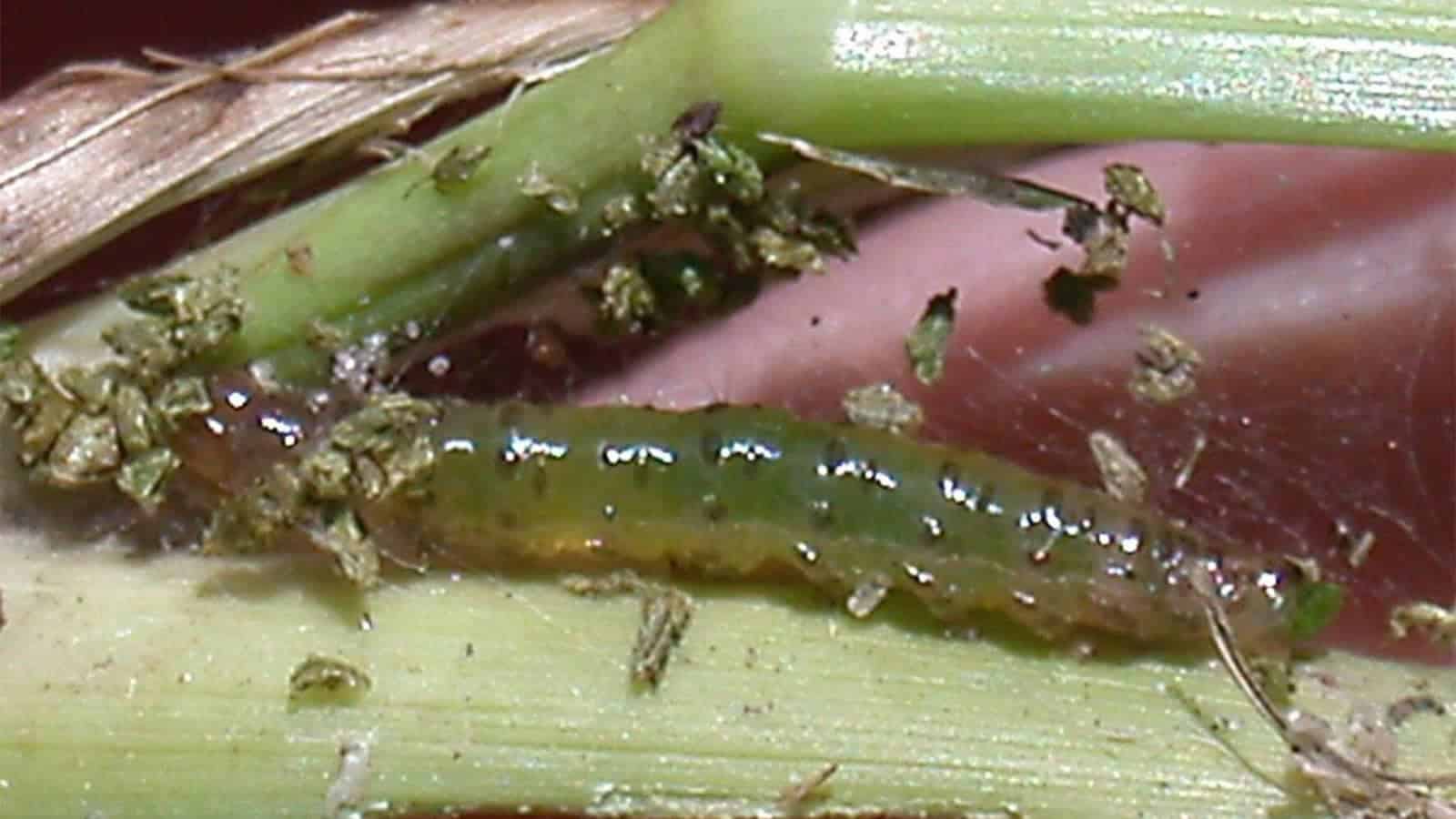
Sod webworms are the larvae of lawn moths – small, buff-to-tan moths, about three-quarters of an inch, that fold their wings tight against the body and fly in a jerky, zig-zag pattern low over the grass at dusk. Those adult moths do no damage; they are just laying eggs. The caterpillars that hatch are the problem: green-to-grayish, up to about three-quarters of an inch, spotted, and they live in silk-lined tunnels down in the thatch. They come out at night to feed on the grass blades, which is why you rarely catch them in the act.
Sod webworm damage and the soap flush
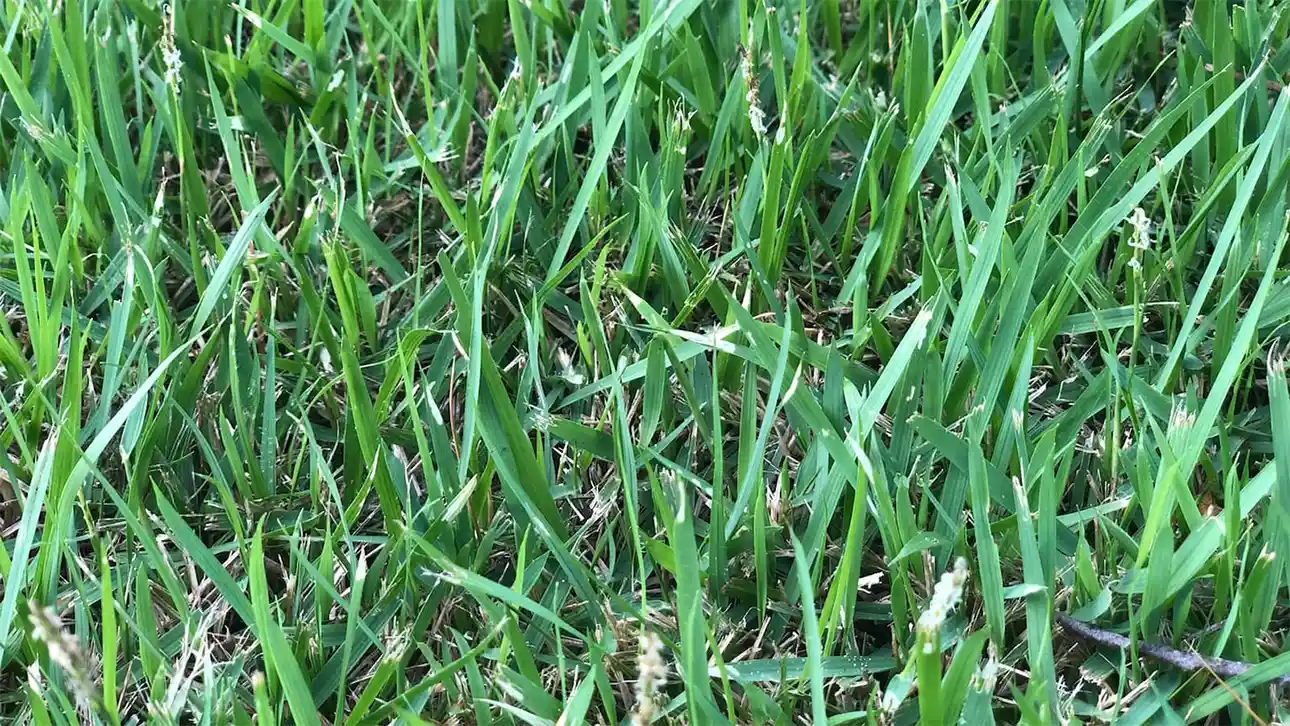
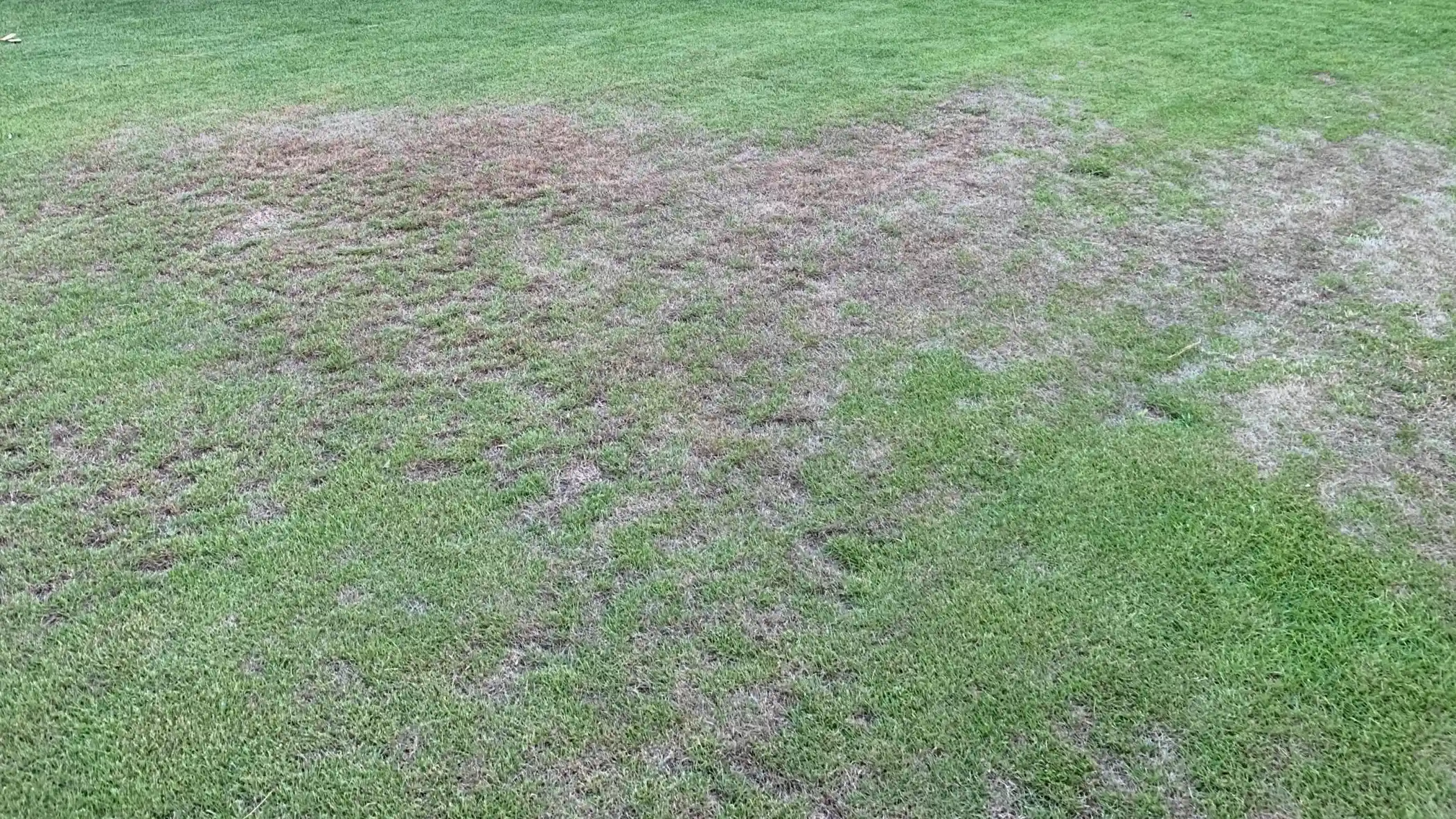
Damage starts as small, ragged, notched patches where the blades have been chewed – often described as looking scalped or closely mowed – that spread and brown out in late summer. To confirm it, do the soap flush: mix a couple tablespoons of dish soap into a gallon of water and pour it slowly over a square yard at the edge of a damaged area. The soap irritates the caterpillars and they wriggle up to the surface within a few minutes. If you count several in that square yard, sod webworms are your problem. Other tells: small green droppings the size of pellets down in the thatch, and fine silk webbing you can see in the morning dew.
Sod webworms vs. drought vs. army worms
Late-summer brown patches have a few suspects. Here is the quick sort:
Clue | Drought | Sod Webworms | Army Worms |
|---|---|---|---|
When | Any dry spell | Late summer, worst in heat | Late summer, can be overnight |
Speed | Gradual | Gradual over days | Fast – a lawn can brown in a day or two |
Moths / signs | None | Tan moths flush up when you walk; silk in thatch | Ragged edges; birds feeding heavily |
Soap flush | Nothing | Green-gray caterpillars in the thatch | Larger striped caterpillars, often many |
Greens up with water? | Yes | No | No |
If tan moths flush up and the soap flush pulls caterpillars from the thatch, it is sod webworms – not drought.
Sod webworm control and timing in NC
A healthy, dense lawn shrugs off light sod webworm feeding, and the grass usually grows back – so not every sighting needs a spray. Treatment is warranted when the soap flush turns up heavy numbers and the damage is spreading, which in NC tends to be late summer. Because the caterpillars feed at night and shelter in the thatch by day, control works best applied late in the day, watered in lightly, and paired with reducing heavy thatch so they have less to hide in. Keep the lawn watered through the heat and it recovers faster either way. We are licensed to apply on turf in North Carolina.

DIY vs. hiring a pro
A homeowner can absolutely run the soap flush, count caterpillars, and keep the lawn watered – and for a light case that may be all it needs. Where a pro helps is on a heavy, spreading infestation in late summer, or when you are not sure whether you are looking at webworms, army worms, drought, or disease – because the treatment and timing differ for each. We confirm the pest, treat at the right time of day, and get the turf back on track. If tan moths are flushing up out of your lawn and patches are going ragged and brown, text us at 984-284-5399 and we will take a look.

Frequently Asked Questions
Tan Moths Flushing Up Out of Your Lawn?
That is your sod webworm early warning. We confirm it with a soap flush, treat at the right time, and get the turf recovering. Text us for a look.
Sources
NC State Extension TurfFiles – Sod Webworms in Turf
Clemson Cooperative Extension – Sod Webworm Management
University of Kentucky Entomology – Sod Webworms in Lawns
Purdue Extension – Sod Webworms in Turfgrass
