

Bermuda and Zoysia Weed Control: DIY Schedule for NC Lawns
By Ken Erickson · Updated July 2026
Bermuda Grass Weed Control: DIY 8-Round Schedule
Bermuda grass weed control works best as a year-round program, not a one-time spray. I run the weed and fertilization side of Lawn Panther, and this is the exact 8-round program we run on Bermuda and zoysia lawns across the NC Piedmont — rewritten so you can do it yourself. Warm-season grasses work on the opposite schedule from fescue: they wake up in late spring, grow hardest in summer, and go dormant in winter. Get the timing right and they’re tough and low-maintenance. Miss the pre-emergent window or feed them in fall, and you fight weeds and disease all year. For a full month-by-month plan, follow our Bermuda grass care guide. I am licensed by the state of North Carolina to apply herbicides and pesticides on turf and ornamental plants such as shrubs and trees. If you want to see what this program looks like when I run it on my own lawn, here is the best weed killer for bermuda grass, round by round, with the grub and fungus rounds in the same calendar.
Key takeaways
- Bermuda and zoysia run on nearly the same schedule in the NC Piedmont — this covers both, with notes where they differ.
- Pre-emergent timing is everything: get it down before crabgrass wakes up (late February) and before poa annua wakes up (late summer).
- Feed from green-up through August, then stop. Never put nitrogen on warm-season grass in fall, or you invite winterkill and spring disease.
- Aerate in late spring through summer, when the grass is growing fast — never in fall.
- This mirrors the 8 timed rounds we run for clients; the dates below are our actual application windows.
Round 1 (Jan–late Feb): Winter Pre-Emergent + Broadleaf Cleanup
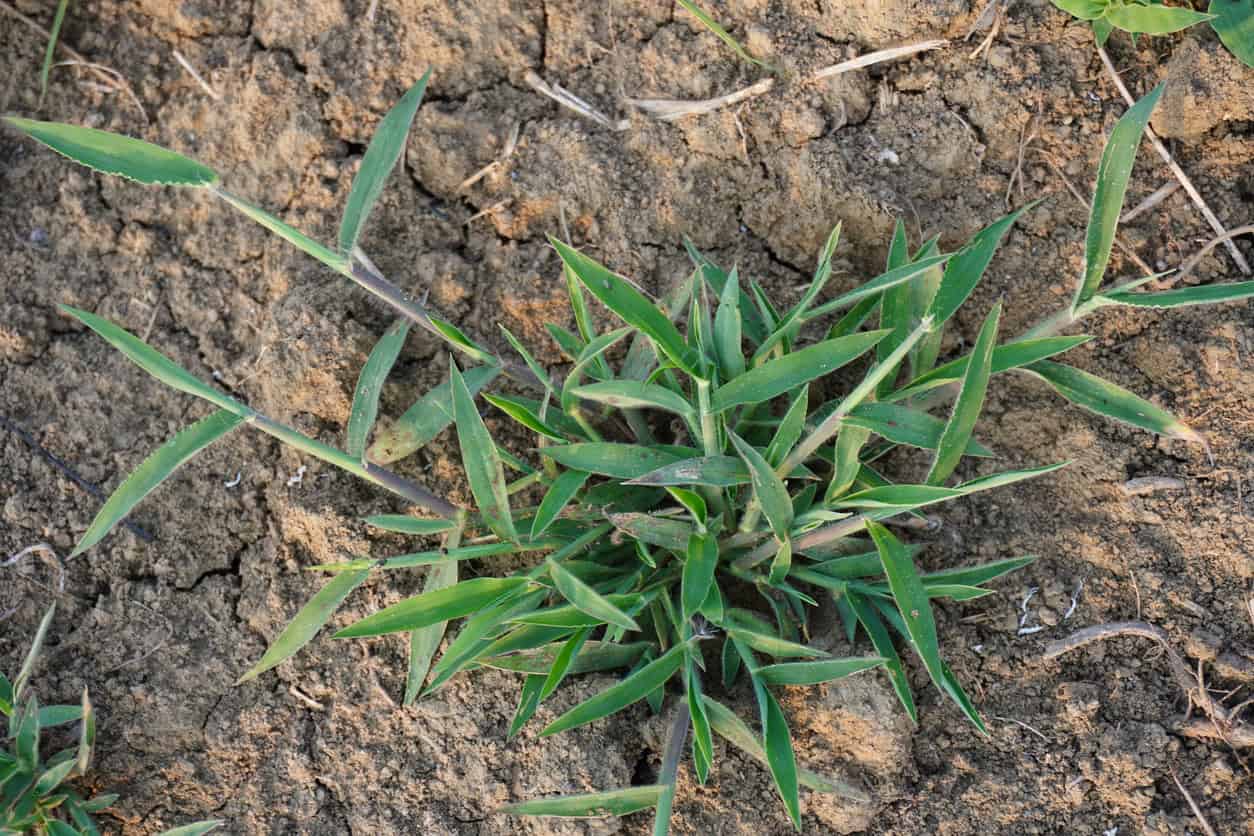
What to do: Put down your first pre-emergent to stop crabgrass before it germinates, and treat the winter weeds already up (clover, henbit, chickweed). Why: crabgrass germinates once soil holds near 55°F, about when the forsythia blooms — the barrier must be down and watered in before that, because once crabgrass is up a pre-emergent can’t touch it.
Products (DIY): Scotts Halts Crabgrass and Grassy Weed Preventer — pendimethalin, no fertilizer in the bag — or a prodiamine granular. Read the bag before you buy it: there is a Turf Builder Halts with Lawn Food version that is a weed-and-feed, and warm-season grass has no business getting nitrogen this early.
The Year at a Glance: Bermuda and Zoysia by Season
Season | Weeds and pre-emergent | Fertilizer | Disease and insects | |
|---|---|---|---|---|
Spring (Feb–May) | Pre-emergent late Feb + late Mar; spot broadleaf | First feeding ~½ lb N, about 3 weeks after green-up (April) | Watch large patch on zoysia | |
Summer (Jun–Aug) | Spot crabgrass and sedge; grub preventive (June) | Feed ½–1 lb N June through August; stop after August | Dollar spot; scout armyworms | |
Fall (Sep–Oct) | Fall pre-emergent for poa annua (September) | No nitrogen | Large patch preventive (especially zoysia) | |
Late fall–Winter (Nov–Feb) | Reinforce fall barrier; winter broadleaf | None; lime per soil test | — |
Round 2 (Feb 21–Mar 31): Pre-Emergent Booster
What to do: Six to eight weeks after Round 1, apply a second, lighter pre-emergent to extend the barrier through late spring, and spot any new broadleaf weeds.
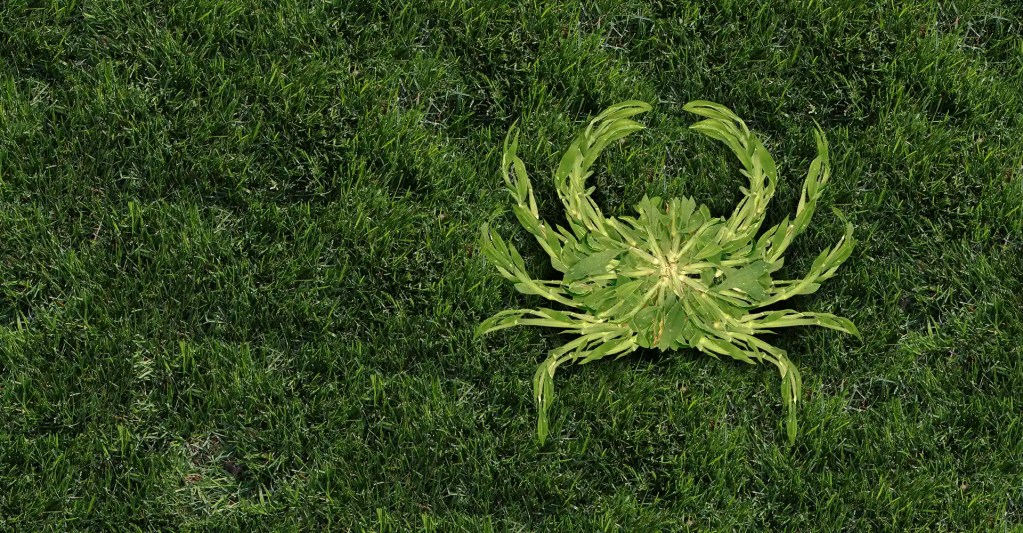
The forsythia rule: the old rule is to have pre-emergent down by the time the forsythia (bright yellow early-spring shrubs) blooms. Forsythia flowers when soil hits about 55°F — the same point crabgrass starts to germinate. Treat first bloom as your LAST call, not your start date.
If the forsythia is already in full bloom, crabgrass may have sprouted and a standard pre-emergent won’t stop what’s already up — it still helps other weeds, and a product with dithiopyr can catch crabgrass that just sprouted while preventing the rest.
Products (DIY): use a prodiamine granular for this round, not a second bag of Halts. The Halts label caps you at two applications a year and asks for two months between them, and six weeks is inside that window. Prodiamine gives you the same barrier without the limit. If you are running late and crabgrass has already sprouted, switch to a dithiopyr product instead.
Round 3 (Apr 1–May 15): Spring Green-Up Feeding
What to do: About three weeks after the lawn fully greens up, apply your first fertilizer of the year — roughly ½ lb of nitrogen per 1,000 sq ft from a slow-release product. For the full month-by-month rates, see how to fertilize Bermuda grass.
Why: feeding before full green-up wastes fertilizer and can feed weeds instead of turf. Once the grass is actively growing, the nitrogen goes to color and density.
Products (DIY): any slow-release lawn fertilizer will work. Check the bag before you assume the ratio — Scotts Turf Builder Lawn Food carries no phosphorus at all, so don’t go looking for a 16-4-8 on that label. Dose by nitrogen, not by product weight: divide 100 by the first number on the bag to get the pounds of product that put down 1 lb of N per 1,000 sq ft, then use half that for this round. Skip phosphorus unless a soil test asks for it. Water it in within 24 hours.
Don’t exceed 4 lb of nitrogen per 1,000 sq ft for the whole year. This is Round 3 of our program.
Round 4 (May 16–Jun 30): Feed + Crabgrass and Sedge + Grubs
What to do: Feed again and spot-treat summer weeds — crabgrass that slipped the barrier, plus nutsedge. This is also the window to core-aerate and put down a grub preventive.
Why: warm-season grass grows hardest now, so it uses nitrogen well and recovers fast from aeration. Grub preventives work on young grubs, so they go down in June as the beetles fly.
Products (DIY): slow-release fertilizer (½–1 lb N). Crabgrass: Ortho Weed B Gon Plus Crabgrass Control (quinclorac); nutsedge: Ortho Nutsedge Killer or SedgeHammer. Grubs: Scotts GrubEx in June, watered in right after you spread it. Scotts says it plainly — watering is what turns the product on and carries it down into the soil where the grubs are, and a good 20-minute soak does it. Granules left sitting dry on the surface do nothing, and that is the most common reason a homeowner’s grub application fails.
Core-aerate while the grass is growing fast. Your pre-emergent went down in late winter, so by this window there is no barrier left to break. If you are aerating soon after a spring pre-emergent, read the label first — plenty of them still advise against it. This is Round 4 of our program.
Round 5 (Jul 1–Aug 20): Summer Feeding and Spot Control
What to do: keep feeding. July and August are the two months bermuda grows hardest. NC State’s bermudagrass calendar (AG-431) calls for 1 lb of nitrogen per 1,000 sq ft every four to six weeks from June through August. Zoysia takes ½ to 1 lb in late June or early July, then again in mid-August (AG-432). Spot-treat weeds as they show up, scout for disease and armyworms, and go easy on herbicides while the lawn is drought-stressed. Why: warm-season grass isn’t fescue. Bermuda and zoysia are growing hardest right now and they use the nitrogen, which is why NC State keeps feeding them through August. Herbicides are the thing to be careful with in this heat — those do injure turf that’s already stressed. Products (DIY): slow-release fertilizer at the rates above; Ortho Weed B Gon Plus Crabgrass Control and Ortho Nutsedge Killer / SedgeHammer (spot only); Scotts DiseaseEx if dollar spot shows up — brown patch is a fescue disease, so don’t go hunting for it on bermuda or zoysia; for armyworms, Spectracide Triazicide — granules for prevention, or the hose-end spray jug to knock them down fast. This is Round 5 of our program.
Round 6 (Aug 21–Oct 10): Fall Pre-Emergent (Poa Annua Barrier)
What to do: put down your fall pre-emergent to stop poa annua and winter weeds, and treat any broadleaf weeds that are up.
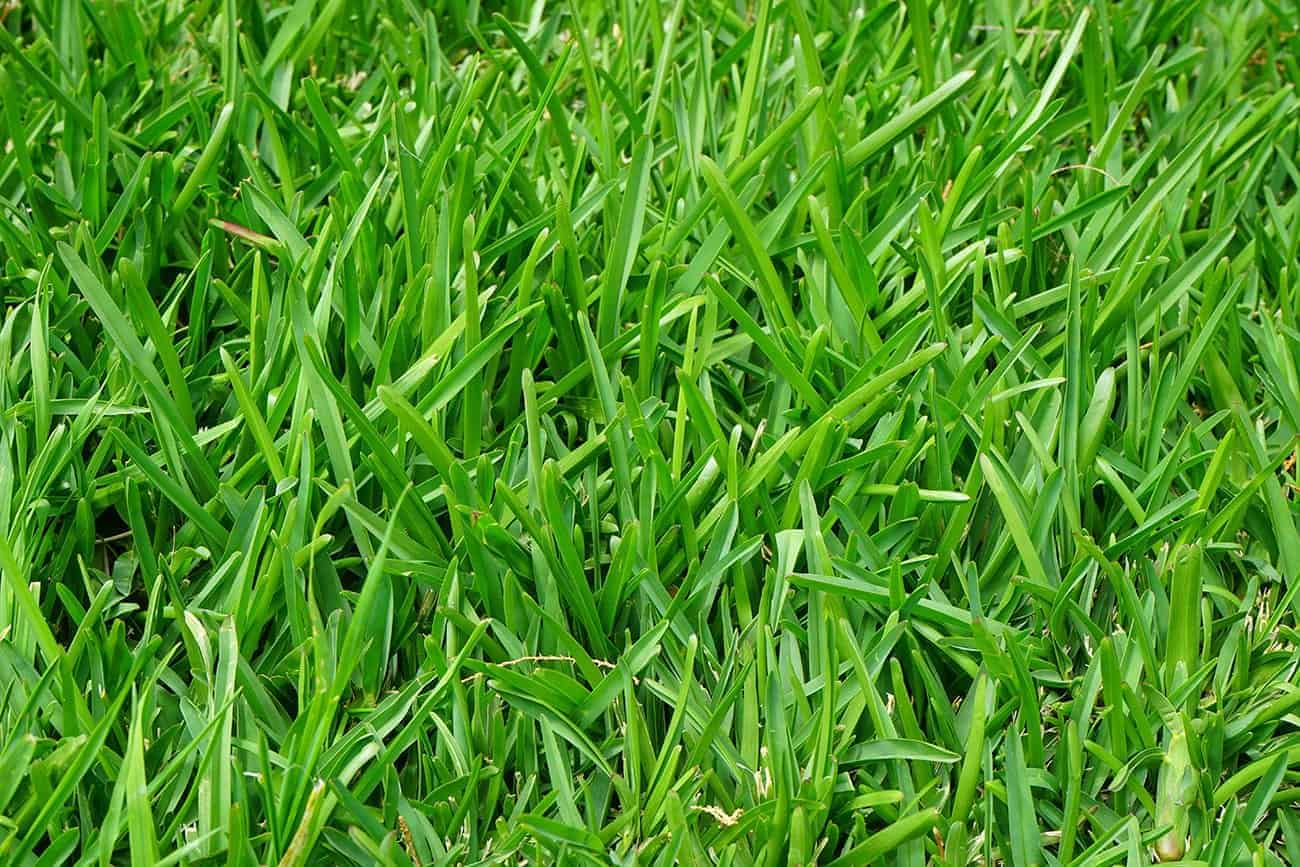
Why: poa annua germinates as soil cools through about 70°F in late summer — miss this window and you fight poa all winter. Large patch also gets going in cool, wet fall soil, especially on zoysia.
Products (DIY): a prodiamine or dithiopyr granular for the fall barrier. Halts is labeled for fall poa annua, but two applications a year is the label limit, so if you already used it in spring you are done with it for the year. Bermuda can get large patch too, but NC State says bermuda is rarely hurt by it and grows out of it fast. On bermuda the fall disease I care about is spring dead spot: if it was a problem last spring, NC State (AG-431) says treat the problem areas with an appropriate fungicide at the highest label rate, and that applications work best when soil temperatures are between 60 and 80°F.
Round 7 (Oct 11–Nov 20): Fall Pre-Emergent Reinforcement
What to do: about 45 days after Round 6, reinforce the barrier with a second fall pre-emergent so poa and winter-weed control holds through winter. Why: one fall application breaks down before winter is over — this is prevention, not a burn-down. Products (DIY): prodiamine again for the reinforcement round. Watch the interval on this one. Forty-five days is fine for prodiamine, but it is inside the two-month minimum the Halts label sets, and that label also caps you at two applications a year. Water it in and leave the soil alone afterward. This is Round 7 of our program.
Round 8 (Nov 21–Dec 31): Lime
What to do: apply lime — but only if a soil test says your pH is low. No fertilizer now.
Why: the grass is dormant, so there’s nothing to feed; lime works slowly over winter to bring pH into range, which makes next year’s fertilizer far more effective. No nitrogen — warm-season grass gets none in fall or winter.
That’s the whole year, and it’s a lot to stay on top of — the timing is the hard part, not the work. If you’d rather hand it off, our NC Bermuda program runs all of it on schedule: pre-emergent, the summer feeding plan, weed control, and disease timing. Text us a photo of your lawn at 984-284-5399 and we’ll tell you exactly where it stands and what it needs.
Bermuda and Zoysia Schedule FAQs
Want Your Bermuda or Zoysia Lawn Handled for You?
The timing is the hard part — pre-emergent in February, the summer feeding plan, weed control, and disease timing all have to hit on schedule. Our NC Bermuda program runs all of it for you. Text us a photo of your lawn at 984-284-5399 and we’ll tell you exactly where it stands. That’s why we run our weed control and fertilization program — eight timed rounds, done for you, across Raleigh’s southern suburbs including weed control in Angier and Lillington.
Sources
NC State Extension — Bermudagrass Lawn Maintenance Calendar (AG-431)
NC State Extension — Zoysiagrass Lawn Maintenance Calendar (AG-432)
Clemson Cooperative Extension (HGIC) — Bermudagrass Yearly Maintenance Program: hgic.clemson.edu
Texas A&M AgriLife Extension — Bermudagrass Home Lawn Management Calendar (general warm-season agronomy): agrilifeextension.tamu.edu
Lawn Care Life (Jason Creel) — Bermuda & Zoysia Lawn Care Academy: lawncarelife.com
