

Best Mowing Height for Zoysia in NC
By Ken Erickson · Updated August 2026
Key Takeaways
- Keep most home Zoysia lawns in the Triangle at 1 to 2 inches. The finer, cultivar-driven lawns look best right around 1.5 inches.
- Zoysia takes a lower cut than tall fescue (which we mow 3 to 4 inches) because it is a warm-season grass that spreads sideways, not up.
- Follow the one-third rule: never remove more than a third of the blade in a single pass. That usually means mowing every 5 to 7 days in summer.
- A reel mower gives the cleanest cut below 1 inch. A sharp rotary mower is fine at 1.5 to 2 inches for most homeowners.
- Zoysia builds thatch fast. Watch it, and dethatch or core when it passes half an inch.
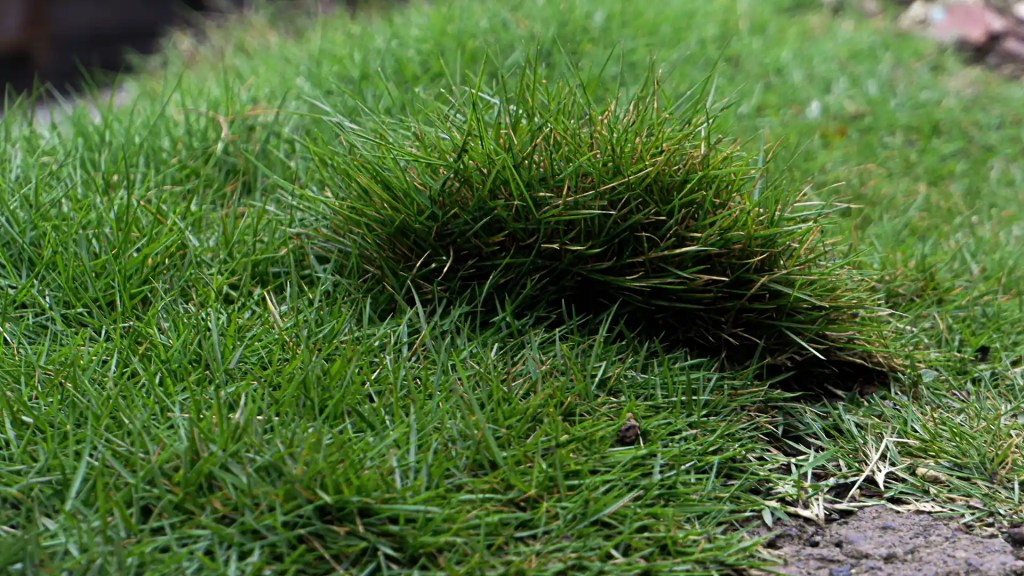
What is the best mowing height for Zoysia in North Carolina?
For the average Triangle homeowner, keep Zoysia between 1 and 2 inches. The exact number depends on your cultivar and your site. Clemson’s Extension puts the full range at 1 to 2.5 inches depending on management, and lists 1.5 inches as the sweet spot for most varieties. That matches what I see on red-clay lawns across the southern suburbs.
A few adjustments matter:
• Shade: If part of your lawn gets less than five or six hours of sun, raise the cut to 2 to 2.5 inches in those spots so the grass keeps more leaf surface for photosynthesis. Zoysia tolerates shade better than Bermuda, but it is not a shade grass.
• Summer stress: In a brutal July, raise the deck slightly until the weather breaks. Taller turf shades its own roots and holds moisture.
• Golf-course lows: Cultivars like Zeon can be maintained at 0.5 to 0.75 inch, but that takes a reel mower and a real maintenance program. For a home lawn, do not chase greens height.
Set your height by measuring, not by the mower’s numbered notch. Deck settings lie once tires and blades wear. Roll the mower onto a driveway and measure from the pavement to the blade tip.
Why does Zoysia take a lower cut than tall fescue?
This is the grass-type fork that trips up a lot of NC homeowners, because the Triangle sits in the transition zone and we grow both. Warm-season grasses (Zoysia and Bermuda) and cool-season tall fescue want completely different heights.
Zoysia grows laterally by rhizomes and stolons, building a dense, low mat close to the soil. Its growing points sit low, so a low cut does not remove the engine that regrows the plant. That is why Zoysia stays thick and carpet-like at 1.5 inches.
Tall fescue is a bunch-type cool-season grass. It grows upward from a crown, and its energy lives higher in the plant. Scalp fescue to Zoysia height and you shave off the leaf area it needs to survive summer heat, which is exactly when fescue is already stressed here. So we mow fescue at 3 to 4 inches year-round in NC and Zoysia at 1 to 2 inches. Same yard, different grass, very different mower setting.
Should I use a reel mower or a rotary mower on Zoysia?
Both work. The right tool depends on your target height:
• Below 1 inch: Use a reel mower. It scissor-cuts each blade cleanly, which matters at low heights where a rotary tends to tear.
• 1.5 to 2 inches: A rotary mower is fine, and it is what most homeowners already own. The one rule is a sharp blade.
Zoysia is stiff. NC State notes it has upright hairs on the leaf and resists the touch more than Bermuda. Those tough blades dull a mower fast, and a dull rotary blade shreds the tips, leaving a grayish, frayed cast a day or two after you mow. Sharpen roughly once a month during the growing season, or after about every 15,000 square feet. If you bag and pick up soil, sharpen more often.
When you can DIY this and when to call a pro: If your Zoysia sits at 1.5 to 2 inches and you keep a blade sharp, mowing it yourself is completely doable. Where I earn my keep is the low-and-tight reel-mowed look, spring scalping done right, and diagnosing when a thin patch is a mowing problem versus disease or grub damage. If you want the cut without the learning curve, that is what our lawn mowing service is for.
What is the one-third rule and how often should I mow?
Never remove more than one-third of the blade height in a single mowing. Cut a 1.5-inch lawn and you should be mowing when it hits about 2.25 inches, taking it back to 1.5. Break that rule and you shock the plant, expose stems, and invite weeds into the thin spots.
In practice, that means mowing every 5 to 7 days during peak summer growth and stretching to 7 to 10 days in spring and fall. Zoysia grows slower than Bermuda, so you will mow it a bit less often than a Bermuda lawn at the same height, but do not let it get away from you. If you skip a week and it is overgrown, do not slam it back to target in one pass. Step it down over two or three mowings a few days apart.
Leave the clippings when you can. Short Zoysia clippings break down fast and recycle nitrogen. They do not cause thatch, contrary to the myth.
Should I scalp Zoysia in spring for green-up?
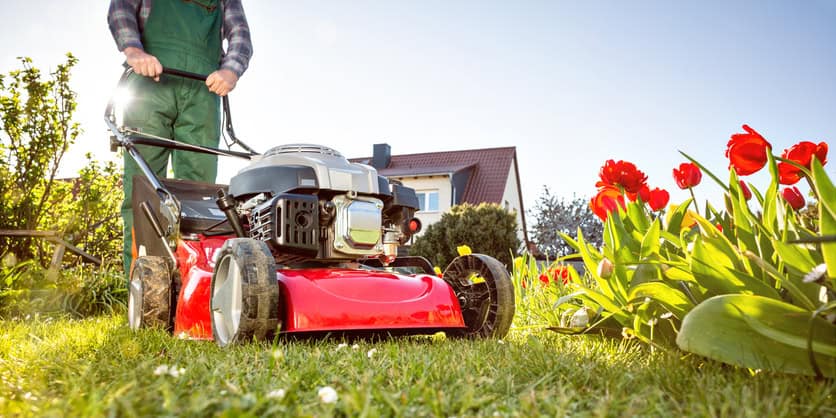
A light spring scalp can help, but it is easy to overdo on Zoysia. As the lawn breaks dormancy in March and April, mow slightly lower than your summer height, down around 1 to 1.5 inches, to strip out the tan, dead top growth from winter. Removing that dead canopy lets sunlight and warmth reach the soil and the new green shoots, and green-up comes in faster and more even.
The caution: do not go so low you tear into the crowns and expose bare soil. True scalping on Zoysia is riskier than on Bermuda because Zoysia recovers more slowly. Take a little off, bag the debris that spring so you are not leaving a mat of dead thatch behind, then return to your normal height once the lawn is actively growing. Time it after the last hard frost, not on the first warm week in February.
How do I keep Zoysia thatch under control?
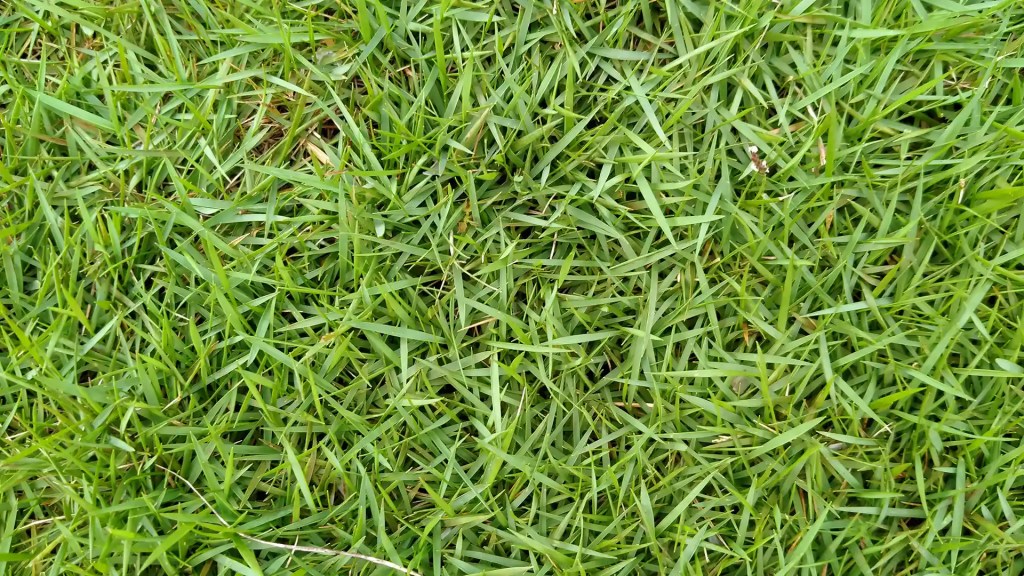
Zoysia’s biggest maintenance quirk is thatch. Its thick network of rhizomes, stolons, and tough stems builds a spongy layer between the soil and the green blades faster than most grasses. A little thatch is fine. Once it passes half an inch, it starts holding water at the surface, harboring disease, and making the lawn feel springy underfoot.
Two things keep it in check:
• Mow correctly. Proper height plus the one-third rule plus not over-fertilizing is your first defense. Excess nitrogen pushes top growth that feeds thatch.
• Dethatch or core when needed. When thatch tops half an inch, verticut or power rake in late spring or early summer while the grass is growing hard enough to recover. If you have more than an inch built up, do not rip it all out at once. Spread the work over two or three seasons. Core aeration is the gentler option and does double duty on our compacted red clay. See our lawn aeration service and our guide to aerating and top-dressing a Bermuda or Zoysia lawn.
Zoysia mowing height chart by season and grass type
Heights below are for typical home lawns in the NC Triangle (USDA zone 7b to 8a). Adjust up in shade and summer stress.
Zoysia height by season
Zoysia vs Bermuda vs tall fescue
For the Bermuda side of that comparison, see our post on the best mowing height for Bermuda grass in North Carolina, and for the cool-season side, our guide on the best mowing height for tall fescue. Still deciding between warm and cool season? Read Bermuda vs fescue for Triangle NC lawns.
Season | Height of cut | Notes |
|---|---|---|
Early spring (green-up) | 1 to 1.5 in | Light scalp to remove dead top growth; bag debris |
Late spring | 1.5 to 2 in | Return to summer height; verticut if thatch is heavy |
Summer | 1.5 to 2 in | Mow every 5 to 7 days; raise slightly in extreme heat |
Fall | 2 to 2.5 in | Raise gradually as growth slows before dormancy |
Winter (dormant) | Leave standing | Little to no mowing; lawn is tan and dormant |
Ready for a Zoysia lawn that looks the way it should?
Mowing height is the foundation, but a premium Zoysia lawn also needs the right fertility, weed control, and thatch management on a schedule built for the Triangle’s clay and climate. That is exactly what we do. Our team is licensed by the state of North Carolina to apply herbicides and pesticides on turf and ornamental plants such as shrubs and trees, and we treat every lawn like it is our own. If you want it handled start to finish, look at our Bermuda and Zoysia lawn maintenance plans and our Bermuda and Zoysia lawn care schedule for NC, then call or text (984) 284-5399 or grab a super fast quote.
Frequently Asked Questions
Ready for a Zoysia Lawn That Looks the Way It Should?
We mow Zoysia at the right height for the season, keep thatch in check, and treat it like the premium turf it is. Call or text (984) 284-5399 to get on the schedule.
