

Spring Dead Spot in NC Bermuda Lawns: Why Your Grass Won’t Green Up
By Ken Erickson · Updated June 2026
Spring dead spot treatment is a timing game — the fix goes down in fall, months before you see the damage. Every spring we get the same call from homeowners across Fuquay-Varina, Holly Springs, Apex, Cary, and Garner: the bermuda lawn is greening up beautifully, except for a scatter of dead, bleached circles that just will not wake up. That is almost always spring dead spot, the single most destructive disease of bermudagrass in North Carolina. The frustrating part is that the damage you see in April was actually caused by a fungus that attacked the roots the previous fall – which is exactly why the timing of treatment matters so much, and why we are writing this.
Key takeaways
- Spring dead spot is the most damaging disease of bermudagrass in North Carolina, caused by soil fungi in the genus Ophiosphaerella that rot the roots, stolons, and rhizomes.
- The fungus infects in fall when soil temperatures drop below 70F, but the dead patches only show up months later at spring green-up, when everything else turns green and these spots stay bleached and dead.
- Patches run from 6 inches to several feet across, come back in the same place every year, expand a few inches each season, and often form a ring as the middle refills.
- Because the roots are dead, there is no quick fix – the lawn only recovers as healthy bermuda creeps in from the edges by stolon, which can take the whole growing season.
- Control is preventive and fall-timed: fungicide applied in the fall while soil is roughly 60 to 80F, plus reducing thatch, aerating, avoiding late-fall nitrogen, and keeping soil slightly acidic. Those two fall fungicide rounds sit inside a bigger calendar — see what a pro puts down on his own bermuda lawn for where they fall against the weed and grub applications.
Spring Dead Spot Treatment: What It Is and Why It Shows Up at Green-Up
Spring dead spot is a fungal disease of bermudagrass caused by one or more species of Ophiosphaerella – soil-dwelling fungi that rot the roots, rhizomes, and stolons of the plant. These fungi are most active infecting the turf during moist fall conditions when soil temperature drops below 70F, and they keep working until the soil falls below about 50F, then pick back up the next spring as soil warms. Here is the key point most homeowners miss: the fall infection does not kill the plant outright, it weakens the grass and makes it far more vulnerable to winter injury. So the fungus does its damage in fall and winter, but the dead patches do not appear until the surrounding lawn greens up in spring and the affected areas stay brown. It can also hit certain zoysiagrass varieties, but in our area it is mainly a bermuda problem.
What does spring dead spot look like in a bermuda lawn?
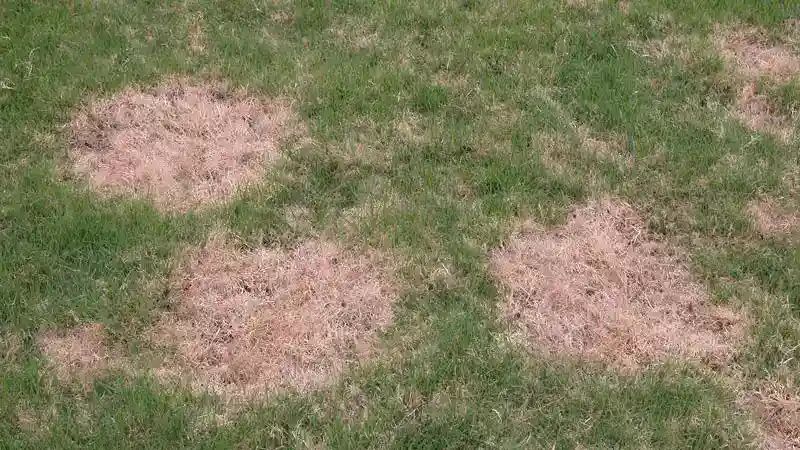
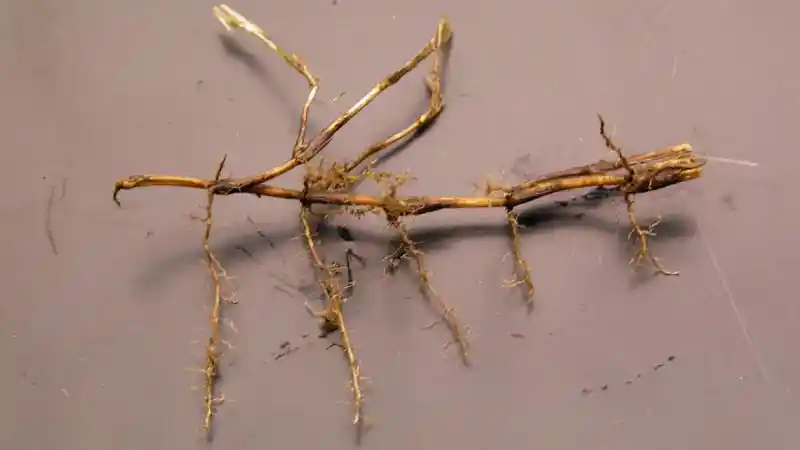
Look for well-defined, bleached-out circular patches – anywhere from 6 inches to several feet across – that stay dead while the rest of the lawn greens up. The grass in these spots is genuinely dead: if you pull it up, the roots, stolons, and rhizomes are dark brown to black and rotted. Patches come back in the same spots year after year and grow by a few inches each season. As they expand, the centers often refill with weeds or new grass, leaving a ring or doughnut shape, and the dead mat can sink slightly below the surrounding turf. Weeds love these weakened areas, so an untreated spot usually turns into a weed patch by summer.
Spring dead spot vs. large patch: which disease do I have?
These are the two big patch diseases people confuse on warm-season lawns, and they call for completely different responses. Spring dead spot is caused by Ophiosphaerella fungi that rot the roots and crown, so the grass is dead and recovery is slow; large patch is caused by Rhizoctonia solani, which attacks the leaf sheaths near the soil line, not the roots. On bermuda specifically, large patch is rare and the grass grows out of it quickly, while spring dead spot is severe and slow to heal – that difference alone usually tells you which one you are dealing with. See our full guide to large patch for that disease.
Feature | Spring Dead Spot | Large Patch |
|---|---|---|
Fungus | Ophiosphaerella species | Rhizoctonia solani |
What it attacks | Roots, stolons, rhizomes (rots them) | Leaf sheaths near the soil line |
On bermuda | Severe – the worst bermuda disease | Rare; bermuda grows out of it fast |
Recovery | Slow; grass is dead, refills from edges | Quick; crowns survive |
Nitrogen link | Worse with excess nitrogen | Worse with excess nitrogen |
Fungicide timing | Fall, soil ~60-80F (preventive) | Fall, as soil drops toward 70F |
What causes spring dead spot, and what makes it worse?
Anything that restricts bermuda root growth or increases winter injury feeds this disease. The big risk factors are excessive nitrogen, potassium deficiency, poor drainage, over-watering, heavy thatch, and soil compaction – plus older, well-established stands, since the disease typically takes three to five years to set in and then gets worse if left unmanaged rather than fading over time. Cold, wet winters make it worse because the fungus-weakened grass cannot handle the freeze; a mild, dry winter means less damage. Soil pH plays a role too – higher pH has been linked to more disease, which is why keeping the soil slightly acidic is part of the plan. In short, an old, thatchy, heavily fertilized bermuda lawn going into a hard winter is the textbook setup.

How do you treat and prevent spring dead spot in North Carolina?
Because the fungus attacks in fall, control has to be preventive and fall-timed – spraying a dead patch in spring does nothing. Fungicides are most effective applied in fall while soil temperatures are roughly 60 to 80F, watered in with at least an eighth of an inch of irrigation so the product reaches the root zone; in the Carolinas that generally means a program of applications through October. Home-lawn products include azoxystrobin, propiconazole, and myclobutanil, and you rotate active ingredients to avoid resistance. Just as important is the cultural side: reduce thatch by dethatching or verticutting and topdressing, core aerate to relieve compaction and improve drainage, keep nitrogen moderate and stop applying it about six weeks before dormancy, keep potassium in the sufficient range, and keep soil pH around 5.8 to 6.2. One trap to avoid – do not apply pre-emergent crabgrass herbicides on a lawn with a history of spring dead spot, because they stop the healthy stolons from rooting into the dead areas and slow your recovery.
Can I treat spring dead spot myself, or should I hire a pro?
You can handle the cultural pieces yourself – aeration, thatch control, sensible fertilizing, and correcting soil pH off a soil test all help and are worth doing. Where it gets tricky is the fungicide, because the whole thing hinges on fall timing tied to soil temperature and on getting the product watered into the root zone at the right rate, and a mistimed spring application is wasted money. The other hard truth is that even perfect treatment will not instantly green up a dead patch – the roots are gone, so the lawn has to refill from the edges over the summer, and that patience is part of the job. Our education and background controlling pests on turf and ornamental plants is extensive, and we are licensed by the state of North Carolina to apply on turf. If you have recurring dead circles every spring, text us at 984-284-5399 and we will map the patches and get you on a fall program before the next infection window.
Frequently Asked Questions
Dead Circles in Your Bermuda Every Spring?
Spring dead spot is beaten in the fall, before you ever see it – and the roots need a full season to fill back in. We map the patches and build the fall program. Text us for a look.
Sources
NC State Extension TurfFiles – Spring Dead Spot in Turf
NC State Extension TurfFiles – Large Patch in Turf
Clemson Cooperative Extension HGIC 2153 – Spring Dead Spot
American Phytopathological Society (APSnet) – Spring Dead Spot of Bermudagrass Fighting recurring bermuda disease? Our weed control and fertilization program and Bermuda and Zoysia lawn maintenance plan keep turf strong and time preventive treatments right. It’s one of several problems in our what’s wrong with my lawn guide.
