

Bermuda Grass Care in North Carolina: A Local Pro’s Playbook
By Ken Erickson · Updated June 2026
Bermuda Grass Care in NC
Bermuda grass care in the Triangle runs on a month-by-month calendar. I run the weed and fertilization side of Lawn Panther. We are licensed by the state of North Carolina to apply herbicides and pesticides on turf and ornamental plants. Most of the Bermuda lawns we treat sit in the Raleigh suburbs — Holly Springs, Apex, Fuquay-Varina, Garner. In the transition zone, the make-or-break factor for Bermuda isn’t babying it through the cold — it’s full sun. Give an improved Bermuda variety full sun here and it does very well, even in our cooler spots; the modern varieties bred for the Southeast are built for exactly this region. This is the month-by-month version of what we actually do on these lawns — not the textbook, the real thing.
Key takeaways
- Bermuda is warm-season: it greens up mid-April to May and goes dormant (brown) after the first hard frost. Brown in winter is normal, not dead.
- The number that actually matters is the one-third rule: never remove more than a third of the blade in one mow. Pick a height you can hold on your real schedule, not a textbook number.
- Feed it so it grows. Start with a polymer-coated slow-release (~33-0-8) at a light rate, then a ~16-0-3 with ~1% iron for a strong, deep green-up, then every 4–6 weeks through the season. Never put nitrogen down in winter.
- Pre-emergent isn’t one spring application — it’s four: two winter doses (late December–January, then February) and two fall doses (late August–September, then October), about 45 days apart. The fall round is the one most homeowners skip.
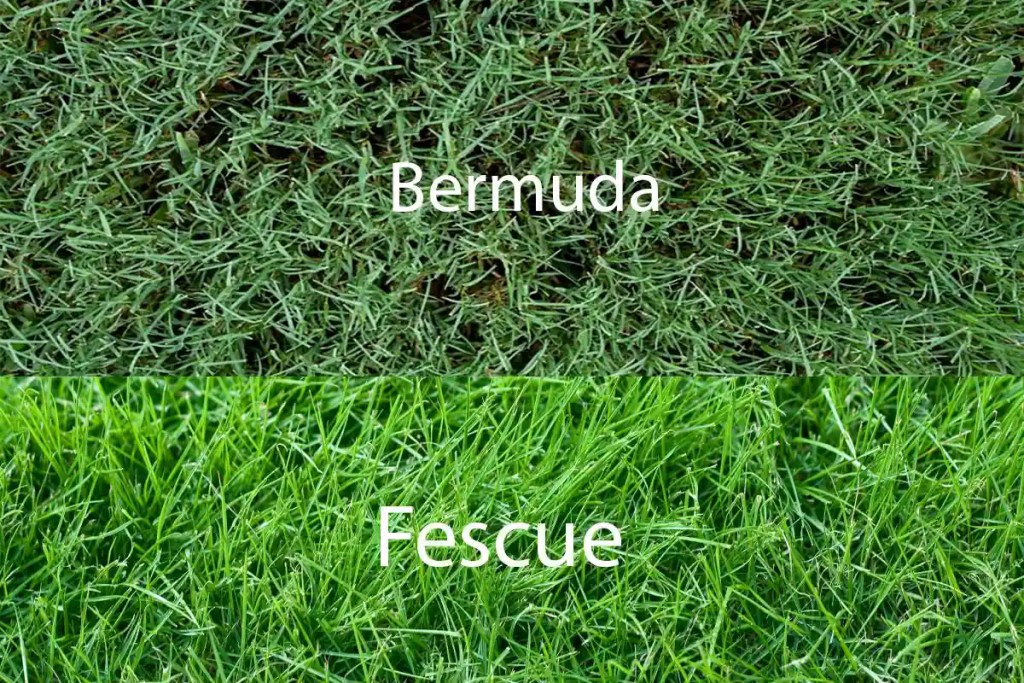
- Bermuda needs full sun. That’s the real requirement — improved varieties handle our region fine in full sun. If your lot is shaded and wooded, you probably have fescue, not Bermuda — and a different playbook.
1. Bermuda in the Triangle: Full Sun Is the Real Requirement
We sit in USDA zones 7a–7b, the transition zone, and there’s a myth that Bermuda is just barely hanging on up here. It isn’t. The improved Bermuda varieties bred for the Southeast are made for this region, and given full sun they do very well across NC — even in our cooler spots. Bermuda greens up a little later here than it would in Georgia (usually mid-April to early May, once soil temperatures hold above 60–65°F) and it browns out earlier in fall, but that dormancy is just how a warm-season grass works, not a sign it’s struggling. Through our hot summers, when fescue is suffering, Bermuda is at its best.
The one thing that actually decides whether Bermuda works on your lot is sun. Give it full sun and it thrives; put it in shade and nothing you do will fix it. If your home sits on a wooded lot with mature trees and real shade, Bermuda will thin and struggle no matter what — that lawn is almost certainly fescue, and it wants a completely different playbook — our month-by-month fescue calendar is the cool-season version of this guide. If you’ve just got some shade — one big tree in the front yard, not full sun edge to edge — you can usually get away with zoysia. Emerald Zoysia is the one to know: homeowners plant it when they have Bermuda but a little too much shade for it, because it carries a similar color and look while tolerating shade Bermuda can’t. Think of zoysia as the in-between option when the lawn isn’t quite full sun.
Bermuda Care at a Glance, Season by Season
Season | Mowing | Fertilizer | Weeds and Disease | |
|---|---|---|---|---|
Spring (Mar–May) | First mow at green-up; reset thatch | Wait for full green-up, then first dose: light slow-release ~33-0-8 | Pre-emergent: 2 winter + 2 fall doses | |
Summer (Jun–Aug) | Hold a height you can maintain; never break the one-third rule | ~16-0-3 + ~1% iron for green-up, then feed every 4–6 weeks | Post-em crabgrass (2–3 apps); water early to avoid fungus | |
Fall (Sep–Nov) | Raise ½” mid-to-late Sept | Cut N back; low-N/high-K (5-10-30) | Treat spring dead spot now | |
Winter (Dec–Feb) | None (dormant) | None | Winter weeds (chickweed, henbit, Poa); lime if soil test says |
2. Spring (March–May): Green-Up, First Mow and Pre-Emergent
Spring is where the year is won or lost, and most of it happens before the lawn looks like it’s doing anything.
Pre-emergent first — and it isn’t one application, it’s four. We run a four-round liquid program: two winter doses (late December–January, then again in February, before soil temps hit the mid-50s and crabgrass germinates) and two fall doses (late August–September, then October) aimed at Poa annua and winter weeds, so the lawn starts clean in spring. Each is spaced about 45 days apart, set by the label limits on the products we use. The February dose is the one everybody remembers; the fall round is the one they miss. Timing is everything here — we cover the exact trigger in when to apply pre-emergent in NC.
We use liquid pre-emergent in every case. Homeowners usually reach for granular, and honestly you can do this yourself — but the math is closer than it looks. Liquid costs us less to apply, so we can treat a lawn for roughly what it’d cost you to buy the product and do it yourself. You might save $20–30 going DIY, but you still have to buy it, haul the bags, calibrate a spreader, walk the whole lawn, and hope your timing and rate were right. I did exactly that as a homeowner before I had the equipment to do it properly — for $20–30, it usually isn’t worth it.
The first mow. When the lawn first greens up, drop it to clear the dead winter canopy and let sunlight hit the soil to warm it. If you want a true reset on a thatchy lawn, this is the one time a deliberate low “spring scalp” is acceptable — once, right at green-up.
Hold the fertilizer. Don’t rush nitrogen. Wait until the lawn is fully green (not just waking up), usually April into May. Feed too early and you push tender growth into a late frost. When it’s ready, the first dose is light — a polymer-coated slow-release (more on the program in Section 4).
3. Mowing Height and Frequency
Every guide online tells you to mow Bermuda at 1–2 inches. For a homeowner cutting once a week, that advice isn’t practical, and it’s worth being honest about why.
The number that actually matters is the one-third rule: never remove more than a third of the grass blade in a single mow. That’s the rule that keeps a lawn healthy. If your Bermuda is sitting at 3 inches by mowing day and you try to drop it to 2 in one pass, good luck — you’re scalping it, and scalping invites exactly the weeds the pre-emergent was supposed to stop.
Can you keep hybrid Bermuda (Tifway, TifTuf) at 1–2 inches? Yes — but only if you’re cutting it about every 4 days so you never break the one-third rule. On a normal once-a-week schedule, that’s not realistic, and that’s fine. Pick a height you can actually maintain at your real mowing interval and hold it there.
There’s one more piece nobody mentions: the lawn has to be growing to look good. Plenty of homeowners mow every week but never fertilize, so the lawn isn’t really growing — it just gets cut. You’ve got to grow your lawn. Feed it so it fills in (see the fertilizer program below), then keep it on the one-third rule at a height your schedule can support. We go deeper on this in the best mowing height for Bermuda grass.
4. Summer (June–Aug): Peak Growth, Fertilizer and Weeds
This is Bermuda’s season — it grows hard, and you feed it to match.
Fertilizer — here’s the program we actually run. Your first dose of the year is a polymer-coated slow-release, roughly a 33-0-8, put down at a light/low rate — just a little nitrogen to wake it up without forcing tender growth. The second dose is roughly a 16-0-3 with about 1% iron, and that’s the one that drives a strong, deep green-up (the iron is what gives you that dark color). From there, feed every 4–6 weeks through the growing season. That steady push, on a lawn that’s getting full sun, is what gives you the dense, carpet-like Bermuda everyone wants. A soil test tells you what else it needs.
Weeds. Even with a good pre-emergent, summer brings crabgrass and goosegrass escapes. Post-emergent control usually takes 2–3 applications, 7–10 days apart — this is where DIY gets frustrating and a licensed program earns its keep, because the effective products and the timing matter. If you’d rather not chase it, that’s what our weed control and fertilization program is for.
Water. Bermuda wants about 1 inch per week including rain. Water deep and infrequent, and run it between 2 and 8 a.m. — watering in the evening leaves the blades wet overnight and invites disease. If you’re hand-dragging hoses on a property worth protecting, a drip and irrigation system pays for itself in both water and weekends.
5. Aeration, Dethatching and Top-Dressing
Bermuda spreads aggressively and builds thatch. Core aerate during the growing season (late spring into summer, when it’s actively growing and can recover) — every year on high-traffic lawns, every couple of years otherwise. Only power-rake/dethatch if the thatch layer is thicker than ½ inch, and do it in late May after full green-up so the lawn bounces back fast. Pair aeration with a light top-dressing to smooth and feed the soil. The full how-to is in how to aerate and top-dress a Bermuda or Zoysia lawn.
6. Watering and Soil: pH, Soil Test and Spring Dead Spot
Bermuda likes a soil pH around 6.0–7.0. Get a soil test every 2–3 years and adjust with lime or sulfur — guessing here wastes fertilizer. Our walkthrough on testing your soil pH at home shows you how.

The disease to know in NC is spring dead spot — circular dead patches that show up as the lawn greens up in spring, caused by a fungus that actually infects the roots the previous fall. If you’ve had it, the fix is a fall fungicide application when soil temps are in the 60–80°F range, not a spring spray. Fungus and insects are the two things that quietly wreck a Bermuda lawn that’s otherwise being cared for right, so don’t assume every brown patch is a watering problem.
7. Fall (Sept–Nov): Wind-Down, Potassium and Raising the Mow
As the lawn slows, change the plan. Cut nitrogen back to no more than ½ lb in September (and stop nitrogen at least a month before the first expected frost). Switch to a low-nitrogen, high-potassium feed (something like a 5-10-30) — potassium toughens the plant for winter. Raise your mowing height about ½ inch in mid-to-late September to give the crowns more protection. And if spring dead spot has been an issue, fall is when you treat for it.
8. Winter (Dec–Feb) and Our NC Bermuda Program
Bermuda goes dormant and turns straw-brown after the first hard frost — leave it alone. No nitrogen December through February, period. Keep leaves cleared so the crowns get light, control winter weeds like chickweed, henbit, and Poa annua, and apply lime if your soil test called for it. Then the cycle starts again with February’s pre-emergent.
That’s the whole year, and it’s a lot to stay on top of — the timing is the hard part, not the work. If you’d rather hand it off, our NC Bermuda program runs all of it on schedule: pre-emergent, the summer feeding plan, weed control, and disease timing. Text us a photo of your lawn at 984-284-5399 and we’ll tell you exactly where it stands and what it needs.
Bermuda Grass Care FAQs
Want Your Bermuda Lawn Handled for You?
The timing is the hard part — pre-emergent in February, the summer feeding plan, weed control, and disease timing all have to hit on schedule. Our NC Bermuda program runs all of it for you. Text us a photo of your lawn at 984-284-5399 and we’ll tell you exactly where it stands.
Sources
NC State Extension — Bermudagrass Lawn Maintenance Calendar (AG-431): content.ces.ncsu.edu/bermudagrass-lawn-maintenance-calendar
Clemson HGIC — Bermudagrass Yearly Maintenance Program: hgic.clemson.edu/factsheet/bermudagrass-maintenance-calendar
