

Fescue Lawn Care: A Month-by-Month NC Calendar
Key takeaways
- Tall fescue is a cool-season grass, so its calendar runs opposite to Bermuda and Zoysia: heavy feeding in fall, light touch in summer.
- The whole lawn is won or lost in about six weeks each fall. Aerate and overseed the Piedmont from September 1 to October 1 at 6 pounds of seed per 1,000 square feet.
- Feed the big nitrogen in September, November, and February. Keep spring feeding light and skip nitrogen in July heat.
- Spring pre-emergent goes down in early March for crabgrass. Do not put a standard pre-emergent where you plan to seed in fall.
- Brown patch is fescue’s summer disease. It shows up in the heat and humidity above 85 degrees.

Why does fescue run on a cool-season clock?
Tall fescue is a cool-season grass. It does its best growing when soil is between 50 and 65 degrees, which in the Triangle means spring and fall. That single fact drives the entire calendar. Bermuda and Zoysia are warm-season grasses that peak in July heat and feed hardest in summer, which is why our Bermuda month-by-month care guide reads almost backwards from this one. Fescue is the opposite. It coasts through summer, then rebuilds in the fall.
I serve Fuquay-Varina, Holly Springs, Apex, Cary, Garner, and the rest of South Raleigh, and most of the shaded, established neighborhoods out here are fescue. If you treat a fescue lawn like a Bermuda lawn, you fertilize at the wrong time, mow too low, and thin it out. The calendar below is built around the rhythm fescue actually follows in our red clay and our zone 7b–8a climate.
The month-by-month fescue calendar
Here is the year at a glance for a Piedmont fescue lawn. Nitrogen is measured in pounds of N per 1,000 square feet.
Two lines carry the year: the September aeration and overseed, and the fall-into-winter nitrogen in September, November, and February. Get those right and the rest is upkeep.
| Month | Mow (in) | Water | Fertilize | Weed control | Aerate + overseed | Disease watch |
|---|---|---|---|---|---|---|
| Jan | 3 | As needed | — | Spot chickweed, henbit | — | — |
| Feb | 3 | As needed | 1 lb N | Spring pre-emergent late Feb–early Mar | — | — |
| Mar | 2.5–3.5 | 1 in/wk | 1/5–1/2 lb N | Pre-emergent at forsythia bloom | — | — |
| Apr | 2.5–3.5 | 1 in/wk | Light if thin | Spot broadleaf | — | — |
| May | 3–3.5 | 1 in/wk | Stop N by mid-May | Spot broadleaf | — | — |
| Jun | 3.5 | 1 in/wk or dormancy | None | Avoid herbicides on stressed turf | — | Brown patch begins |
| Jul | 3.5 | 1 in/wk or dormancy | None | Spot only | — | Brown patch, gray leaf spot peak |
| Aug | 3.5 | 1 in/wk or dormancy | None | Soil test now | Order seed | Brown patch continues |
| Sep | 2.5–3 | 1–1.25 in/wk | 1 lb N | Fall broadleaf after seedlings root | Aerate + overseed Sep 1–Oct 1 | Watch new seedlings |
| Oct | 2.5–3 | 1 in/wk | 0.5–1 lb N | Fall broadleaf | Finish overseed by Oct 1 | — |
| Nov | 2.5–3 | 1 in/wk | 1 lb N | Fall broadleaf | — | — |
| Dec | 3 | As needed | — | Spot winter weeds | — | — |
How short should I mow tall fescue?
Cut fescue tall. In spring I hold 2.5 to 3.5 inches, and once the heat arrives in June I raise the deck to 3.5 inches and leave it there through August. A taller blade shades the soil, keeps roots cooler, and crowds out crabgrass. Mowing fescue short in July is one of the fastest ways to thin it and invite disease.
Follow the one-third rule: never remove more than a third of the blade in a single cut. During the spring and fall flush that can mean mowing every five to seven days. Keep the blade sharp. A torn tip browns and gives brown patch an easy entry.
This is a real fork between grass types. Bermuda gets cut short, often under an inch. Fescue never does. Our guides on the best mowing height for tall fescue and the best mowing height for Bermuda grass show how different the two are, and our lawn mowing service keeps fescue at the right height all season.
When do I fertilize fescue in North Carolina?
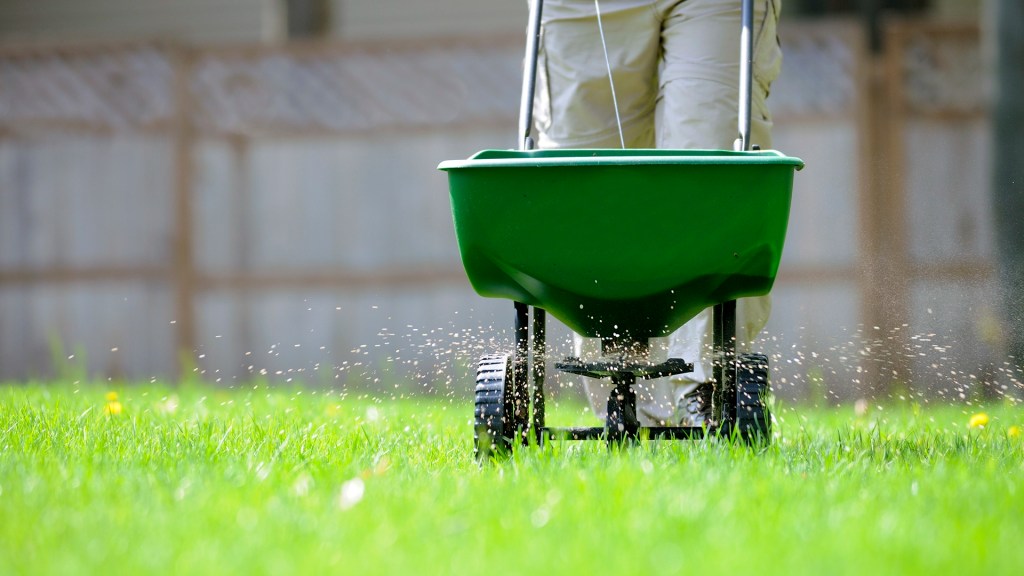
Fall, not summer. Fescue banks its strength when soil cools, so the heavy nitrogen belongs to September, November, and February — our guide on how to fertilize tall fescue carries the rates for each of those passes. NC State’s Piedmont calendar calls for 1 pound of nitrogen per 1,000 square feet in mid-September and again in November, then another pound in February.
Spring gets a light hand. A quarter to a half pound of nitrogen in March is plenty, and I stop nitrogen by mid-May. Through June, July, and August, fescue gets no nitrogen at all. It is trying to survive the heat, not grow.
You can put down a fall feeding yourself if you calibrate a spreader. Where homeowners get in trouble is guessing rates and skipping the soil test. If you would rather not, our lawn fertilization program handles the timing, and our complete NC fertilizing guide walks through both grasses.
When should I aerate and overseed fescue?
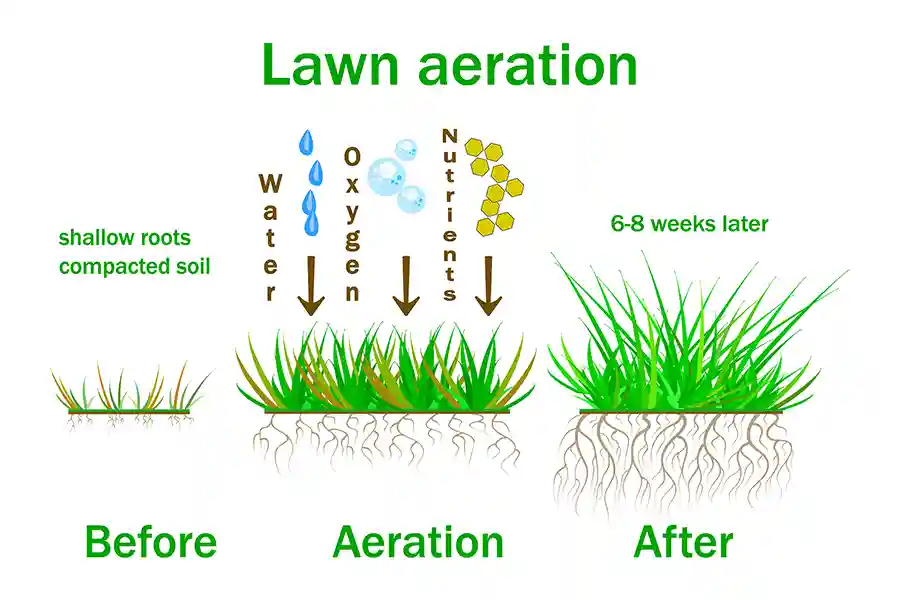
Early fall, and this is the single most important thing you do all year. In the Piedmont, aerate and overseed from September 1 to October 1. Soil is still warm enough for fast germination, nights are cooling, and the new seedlings have two full seasons to root before summer. Seed at 6 pounds of tall fescue per 1,000 square feet on an established lawn.
Core aeration matters more here than almost anywhere, because Triangle soil is heavy red clay. Pulling cores relieves compaction and gives seed real soil contact. On a compacted clay lawn I make two passes in different directions.
Spring overseeding does not work well for fescue here — seed put down in March barely establishes before June heat kills it. See our guide on when to aerate and overseed in North Carolina, and our lawn aeration service if you want the cores pulled for you.
When do I apply pre-emergent on a fescue lawn?
Spring pre-emergent goes down in early March, right as the forsythia blooms, to stop crabgrass before soil temperatures hit the mid-50s. Prodiamine (sold as Resolute or Stonewall) is the standard spring crabgrass barrier and it is fine on fescue.
Now the grass-type fork. Specticle Flo (indaziflam) is labeled for warm-season turf only and is not for fescue. And a standard pre-emergent stops your grass seed from germinating along with the weeds, so you cannot lay one down in the same window you plan to overseed. If you must control weeds while seeding, mesotrione (Tenacity) is labeled to go down at seeding on tall fescue. Keep mesotrione off Bermuda and Zoysia, which the label lists as sensitive.
That timing conflict is why fall is tricky on fescue. Our post on when to apply pre-emergent in North Carolina lays out the windows, and our weed control program works around your overseeding schedule.
How do I stop brown patch in summer?
Brown patch is fescue’s summer disease, and if you own fescue in the Triangle you will meet it. It flares when daytime temperatures push past 85 degrees and nights stay warm and humid, which describes most of July and August here. It shows up as circular tan patches, sometimes with a darker smoke ring at the edge in the morning dew. If you are not certain that is what you are looking at, our lawn problem diagnosis guide walks through the look-alikes.
Most of the defense is cultural. Water in the early morning so blades dry by midday. Do not feed nitrogen in summer, which fuels the fungus. Mow high with a sharp blade and bag clippings while an outbreak is active. When conditions line up for a bad year, a preventive fungicide program timed to the heat holds it off — genuinely a call-a-pro situation.
This is where our background in turf management earns its keep. We specialize in giving you the best fescue lawn you can get and are licensed by the state to apply herbicides and pesticides. Do not just have a landscaper apply weed and feed, whenever. Send them a link to this article.
How much should I water fescue?
Fescue wants about 1 inch of water per week, counting rainfall, delivered deep and infrequent rather than a light daily sprinkle. Deep watering trains roots to grow down, which is what carries the lawn through drought. One or two soakings a week beats seven shallow ones.
In peak summer you can keep watering the full inch to hold color, or let an established lawn go dormant on a half inch every three weeks. What you cannot do is bounce between the two. Newly seeded fall lawns are the exception: keep the top inch of soil moist with short, frequent watering until the seedlings are up and mowed twice. If you are putting in irrigation, our drip irrigation services can help you water beds efficiently.
Ready to hand off the calendar?
Fescue rewards good timing and punishes bad timing, and most of the wins happen in a few tight windows each fall. If you would rather have one crew own the whole cycle, our expert fescue lawn maintenance plan covers aeration and overseeding, cool-season feeding, weed control, and brown patch protection. Call or text (984) 284-5399, or grab a super fast quote.
Frequently Asked Questions
Want the Fescue Calendar Run for You?
I run the fescue year on schedule — March pre-emergent, September seeding and nitrogen, and brown patch protection through the summer. Text or call 984-284-5399.
Sources
