

Shrub and Tree Disease Treatment: A NC Homeowner’s Guide
By Ken Erickson · Updated June 2026
Shrub and tree disease treatment starts with a correct diagnosis — the wrong spray wastes time and money. Spots on the leaves, a white dusty film, branches dying back – shrub and tree disease is one of the most common calls we get, and one of the most misdiagnosed. In our warm, humid NC summers the vast majority of what people call disease is fungal, and a good share of it is actually a watering or airflow problem wearing a disease costume. Here is how to tell what you are looking at, what you can fix yourself, and when it is worth calling a licensed pro.
Key takeaways
- Most shrub and tree diseases in NC are fungal, and our warm, humid climate makes leaf spots, blights, and powdery mildew common every summer.
- Culture beats chemicals: overhead watering, crowded plantings, and poor airflow cause most disease – fixing those often solves the problem without a spray.
- Fungicides prevent new infection; they do not cure leaves already spotted – so timing and correct diagnosis matter more than the product.
- Know when it is not a disease: drought stress, over-watering, and nutrient issues mimic disease and get misdiagnosed constantly.
- Some diseases (fire blight, certain cankers, root rots) can kill the plant – those are worth a licensed diagnosis before you lose the shrub.
Tree Disease Treatment: Why shrubs and trees get sick in NC
North Carolina hands plant diseases everything they need: heat, humidity, and long stretches of leaf wetness. Most ornamental diseases here are fungal, and fungus needs moisture on the leaf to infect. That is why the biggest drivers are cultural, not bad luck – overhead irrigation that wets the foliage, shrubs crammed too close together with no airflow, heavy shade that never dries, and mulch or soil piled against the trunk. Fix those conditions and you starve the fungus. Bacterial diseases like fire blight and viral problems are less common but more serious when they show up.
Common shrub and tree diseases we see
A few show up over and over on Triangle properties: For the full playbook on each, see our guides to powdery mildew, boxwood blight, and needle and tip blight on evergreens.
Disease | Looks like | Common on |
|---|---|---|
Leaf spot / anthracnose | Brown or black spots, blotches, early leaf drop | Laurels, hollies, dogwoods, maples |
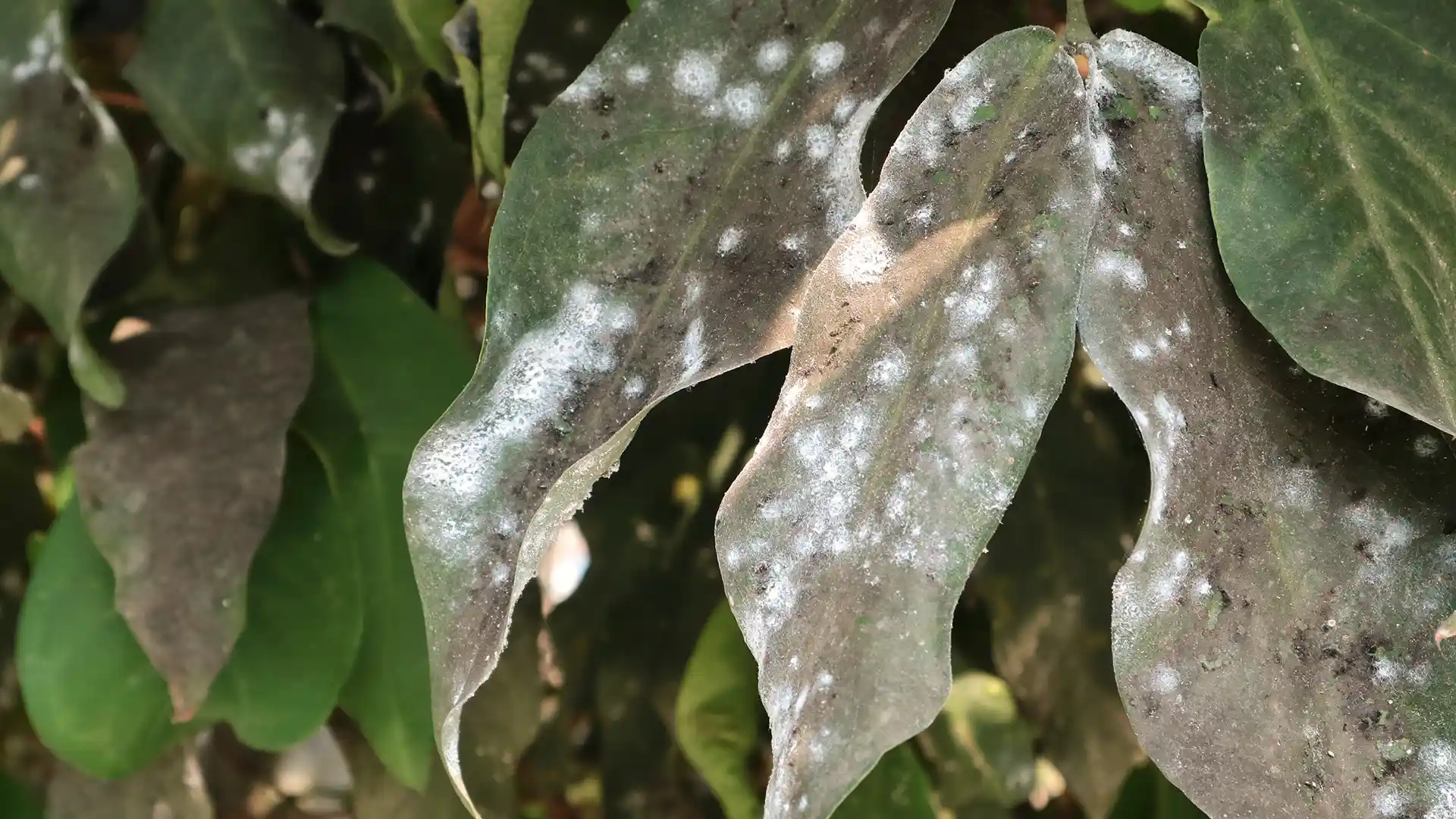
Powdery mildew | White dusty film on leaves and new growth | Crepe myrtle, dogwood, roses, lilac |
Root rot | Wilting despite wet soil, yellowing, decline | Boxwood, azalea, rhododendron, junipers |
Fire blight | Blackened, scorched-looking shoots that curl | Pears, crabapple, pyracantha |
Cankers / dieback | Sunken bark lesions, dead branches | Leyland cypress, maples, dogwoods |
Needle blight | Browning, thinning from the inside out | Leyland cypress, Thuja |
The right treatment depends entirely on which of these it is – which is why diagnosis comes first, spray second.
When it is NOT a disease
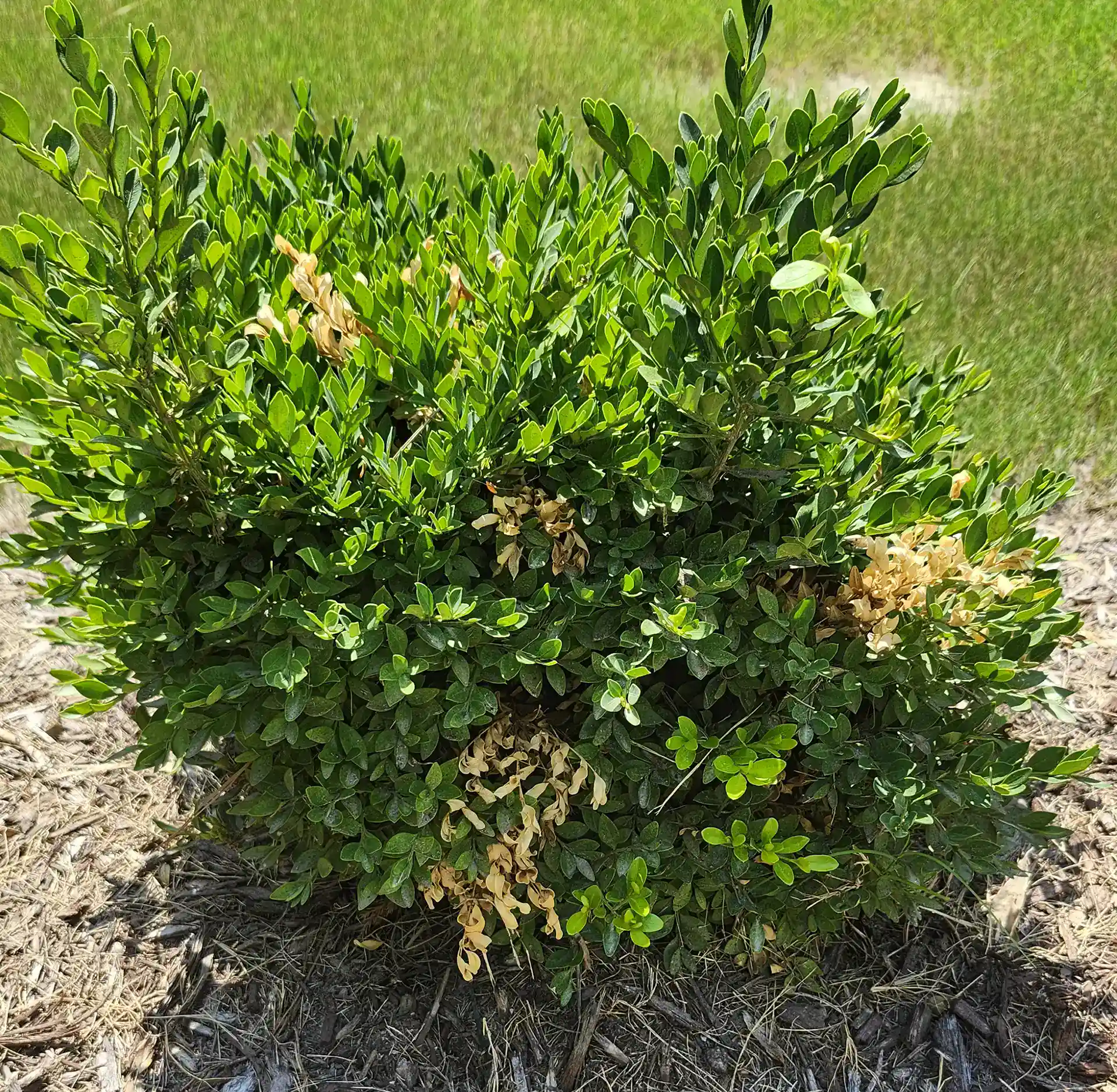
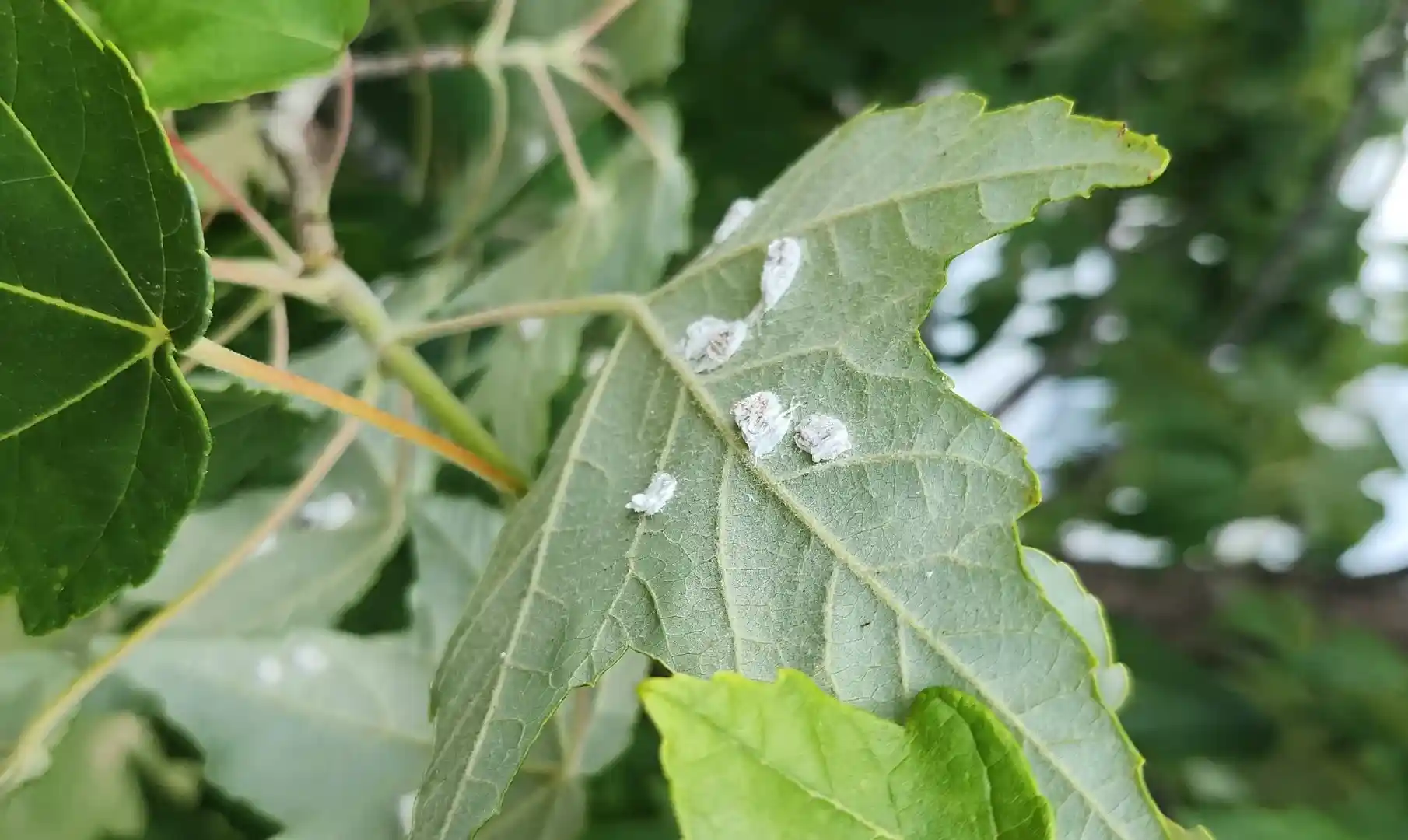
This is the part homeowners miss most. A huge share of what looks like disease is a stress problem: drought scorch (brown leaf edges in dry spells), over-watering and root suffocation (yellowing, wilting in wet soil – looks just like root rot), nutrient deficiency (uniform yellowing between the veins), transplant shock, or physical and chemical injury. Spraying a fungicide on a drought-stressed shrub does nothing but waste money. Before you reach for a chemical, rule out water – too much and too little are the two most common culprits – and check whether the pattern fits a living organism spreading or a whole plant reacting to its conditions. A lot of what looks like disease is actually pests — see our guides to sap-sucking pests (mites, scale, and adelgids) and leaf-chewing pests (caterpillars, bagworms, and beetles).
Treatment: culture first, fungicide second
For most fungal problems, the fix is cultural before it is chemical. Water at the base, not over the top, and early in the day so leaves dry fast. Prune to open up airflow and remove diseased wood, cleaning your tools between cuts. Rake up and dispose of fallen infected leaves so the fungus cannot overwinter and reinfect. Pull mulch back off the trunk. When a fungicide is warranted, understand what it does: fungicides are largely preventive – they protect healthy tissue from new infection but will not un-spot a leaf that is already infected. That means timing (before or at the very start of the disease cycle) and correct product-to-disease matching are everything, which is where a lot of DIY spraying goes wrong.
DIY vs. calling a licensed pro
Plenty of shrub disease is a DIY fix: improve the watering, open up the airflow, clean up the fallen leaves, and many plants recover on their own. Where a professional earns their keep is diagnosis and the serious stuff. Our education and background controlling pests and disease on turf and ornamental plants is extensive, and we are licensed by the state of North Carolina to apply on shrubs and trees. We diagnose what is actually wrong – disease versus stress versus insect – so you are not treating the wrong thing, and we handle the diseases that can kill a valuable plant: fire blight, cankers, and root rots that a homeowner spray will not touch. If a shrub or tree is spotting, wilting, or dying back and you are not sure why, text us at 984-284-5399 and we will diagnose it before you lose the plant. For a professional diagnosis and treatment, see our tree and shrub pest control service, or keep disease pressure down all season with our tree and shrub maintenance plan.
Frequently Asked Questions
Shrub or Tree Spotting, Wilting, or Dying Back?
Half the time it is not even a disease – it is watering or airflow. We diagnose what is actually wrong before you lose the plant. Text us for a look.
Sources
NC State Extension – Plant Disease and Insect Clinic
NC State Extension – Ornamental Disease Management
Clemson Cooperative Extension – Ornamental Shrub Diseases
NC State Extension – Diagnosing Landscape Plant Problems
