

Which NC lawns get chinch bugs, and when
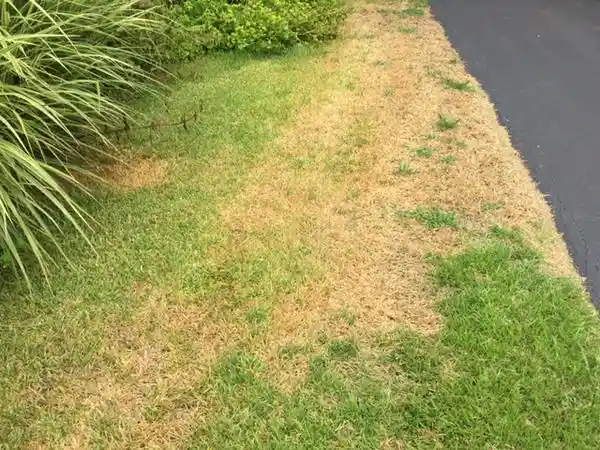
Chinch bug control starts with knowing they hit the hottest, sunniest strips of the lawn first. Chinch bugs go after warm-season grass, and around here that means St. Augustine first, then zoysia and bermuda. They pick the hottest, driest strip of the yard – full sun along a south-facing wall, or the turf baking next to a driveway, sidewalk, or curb where reflected heat cooks the grass. A thatchy lawn makes it worse: that spongy layer between the green and the soil is where they shelter and breed, so if the dying patch is in the sunniest part of the yard while the shaded areas look fine, chinch bugs move to the top of the suspect list. Timing follows the heat – they build all summer, so damage usually shows from about July into September during a hot, dry stretch, exactly when most people blame a thirsty lawn. We can get more than one generation in a season here, which is how a small spot in early July turns into a big dead area by late August if nothing is done.
Here is a scenario I see every summer: one sunny stretch of lawn near the driveway starts yellowing and dying, the homeowner assumes it is drought and waters it harder, and the dead patch just keeps getting bigger. That is the signature of chinch bugs – and watering actually makes them happy. Here is how to know it is chinch bugs and not drought, and what to do about it.
Key takeaways
- Chinch bugs are tiny black-and-white insects that suck sap and inject toxic saliva, so the grass wilts and browns in irregular patches – worst in hot, sunny, dry spots near driveways and sidewalks.
- Their damage is easy to mistake for drought, but chinch bug patches keep spreading even when you water, while drought greens back up.
- Confirm it in five minutes: part the grass at the green-and-brown edge and look at the soil line, or run the coffee-can float test.
- In NC the southern chinch bug peaks in early July and hits St. Augustine, zoysia, and bermuda hardest, especially thick-thatch, full-sun lawns.
- Treatment is a spot-treat of the patch plus a buffer, and fixing thatch and watering – but these bugs are developing resistance, so rotating products matters.
Chinch Bug Control: What They Are and How to Spot Them
Chinch bugs are tiny insects – the adults are only about a tenth to a fifth of an inch, black with white wings and a small triangular mark on each wing. The young are even smaller and bright orange with a white band. In our area the southern chinch bug is the one that matters; it hits St. Augustine hardest but also feeds on zoysia, bermuda, and centipede, and it loves thick-thatch turf in hot, open, sunny spots. One quick note so you do not overreact: there is a beneficial look-alike called the big-eyed bug that eats chinch bugs – it is smaller with much bigger eyes, so do not spray the good guy.
Chinch bug damage vs. drought: how to tell them apart
This is the whole game, because they look so similar. Chinch bugs feed by sucking sap and injecting a toxic saliva that blocks the grass from moving water, so it wilts and browns. Here is how to separate the two:
Clue | Chinch Bugs | Drought |
|---|---|---|
Pattern | Irregular patches that keep expanding, often a yellow-orange halo | Uniform browning across open areas |
Where | Hot, sunny, dry spots next to driveways and sidewalks | Whole lawn or the high, exposed sections |
Response to water | Keeps spreading even when you water | Greens back up after a deep watering |
If you water deeply and the patch keeps growing instead of recovering, stop blaming the weather and check for bugs.

The five-minute confirmation test
Two easy ways to confirm. The quickest: get down at the edge where green meets brown, part the grass, and look right at the soil line and the base of the blades for little black-and-white bugs crawling on the disturbed turf. The other classic method is the coffee-can float test – cut both ends off a coffee can, push it a few inches into the soil at that green-and-brown edge, fill it about three-quarters with water, and wait five to ten minutes. Chinch bugs float up. Three to five of them means you have an infestation. Check a few spots, because they concentrate at the advancing edge.
How to treat chinch bugs and keep them out
Once you have confirmed them and the numbers are up – NC State puts the treatment line around 20 to 25 per square foot – spot-treat the damaged patch plus a buffer strip around it, since the bugs are marching outward. Contact insecticides like bifenthrin work, but here is the catch: chinch bugs are developing resistance, and there were widespread treatment failures reported in a recent outbreak, so rotating chemical classes across applications matters. Just as important is the culture: reduce thatch (they hide in it, and it blocks your treatment), water deeply rather than lightly and often, and go easy on the nitrogen, because lush, thatchy, drought-stressed turf is exactly what they want. If you are reseeding St. Augustine, skip the old Raleigh variety – it is especially susceptible.
Should you DIY or call a pro?
A small patch caught early, with a clear ID, is a fine DIY job – run the can test, spot-treat with a buffer, and fix your watering. Where a pro pays off is a patch that keeps expanding, several generations stacking up through the summer, and the resistance problem – rotating the right products on the right timing is licensed-applicator work, and it is the difference between actually killing them and just annoying them. We are licensed to apply on turf in North Carolina. Text us at 984-284-5399 and we will confirm whether it is chinch bugs, drought, or grubs before we treat.
Frequently Asked Questions
Sunny Patch Dying No Matter How You Water?
That is the chinch bug signature. We confirm it is not drought or grubs, then spot-treat with a buffer and rotate products so they actually die. Text us to get it checked.
Sources
NC State Extension TurfFiles – Chinch Bugs in Turf
UF/IFAS – Managing Southern Chinch Bug in Warm-Season Turfgrasses
Texas A and M AgriLife – Chinch Bugs in St. Augustine Lawns
NC State Extension – Carolina Lawns (AG-69)
What else looks like chinch bug damage?
A hot, browning patch has a few possible causes, and it is worth ruling them out before you spend money on the wrong fix. Drought is the classic mix-up, but drought browns the whole lawn fairly evenly and greens back up after a good watering, while chinch bug patches stay put and keep spreading no matter how much you irrigate. A couple of diseases and another pest look similar too: white grubs chew the roots so the turf feels spongy and peels up like loose carpet; large patch and brown patch are fungal and show up as rounder rings in cooler, wetter weather rather than hot dry sun; and dollar spot leaves small, silver-dollar bleached spots. A dark green ring with a dead center is almost always dog urine, not a bug. When the pattern does not add up, the five-minute float test above settles it fast.
Here is a scenario I see every summer: one sunny stretch of lawn near the driveway starts yellowing and dying, the homeowner assumes it is drought and waters it harder, and the dead patch just keeps getting bigger. That is the signature of chinch bugs – and watering actually makes them happy. Here is how to know it is chinch bugs and not drought, and what to do about it.
Key takeaways
- Chinch bugs are tiny black-and-white insects that suck sap and inject toxic saliva, so the grass wilts and browns in irregular patches – worst in hot, sunny, dry spots near driveways and sidewalks.
- Their damage is easy to mistake for drought, but chinch bug patches keep spreading even when you water, while drought greens back up.
- Confirm it in five minutes: part the grass at the green-and-brown edge and look at the soil line, or run the coffee-can float test.
- In NC the southern chinch bug peaks in early July and hits St. Augustine, zoysia, and bermuda hardest, especially thick-thatch, full-sun lawns.
- Treatment is a spot-treat of the patch plus a buffer, and fixing thatch and watering – but these bugs are developing resistance, so rotating products matters.
What are chinch bugs, and how do you spot them?
Chinch bugs are tiny insects – the adults are only about a tenth to a fifth of an inch, black with white wings and a small triangular mark on each wing. The young are even smaller and bright orange with a white band. In our area the southern chinch bug is the one that matters; it hits St. Augustine hardest but also feeds on zoysia, bermuda, and centipede, and it loves thick-thatch turf in hot, open, sunny spots. One quick note so you do not overreact: there is a beneficial look-alike called the big-eyed bug that eats chinch bugs – it is smaller with much bigger eyes, so do not spray the good guy.
Chinch bug damage vs. drought: how to tell them apart
This is the whole game, because they look so similar. Chinch bugs feed by sucking sap and injecting a toxic saliva that blocks the grass from moving water, so it wilts and browns. Here is how to separate the two:
Clue | Chinch Bugs | Drought |
|---|---|---|
Pattern | Irregular patches that keep expanding, often a yellow-orange halo | Uniform browning across open areas |
Where | Hot, sunny, dry spots next to driveways and sidewalks | Whole lawn or the high, exposed sections |
Response to water | Keeps spreading even when you water | Greens back up after a deep watering |
If you water deeply and the patch keeps growing instead of recovering, stop blaming the weather and check for bugs.
The five-minute confirmation test
Two easy ways to confirm. The quickest: get down at the edge where green meets brown, part the grass, and look right at the soil line and the base of the blades for little black-and-white bugs crawling on the disturbed turf. The other classic method is the coffee-can float test – cut both ends off a coffee can, push it a few inches into the soil at that green-and-brown edge, fill it about three-quarters with water, and wait five to ten minutes. Chinch bugs float up. Three to five of them means you have an infestation. Check a few spots, because they concentrate at the advancing edge.
How to treat chinch bugs and keep them out
Once you have confirmed them and the numbers are up – NC State puts the treatment line around 20 to 25 per square foot – spot-treat the damaged patch plus a buffer strip around it, since the bugs are marching outward. Contact insecticides like bifenthrin work, but here is the catch: chinch bugs are developing resistance, and there were widespread treatment failures reported in a recent outbreak, so rotating chemical classes across applications matters. Just as important is the culture: reduce thatch (they hide in it, and it blocks your treatment), water deeply rather than lightly and often, and go easy on the nitrogen, because lush, thatchy, drought-stressed turf is exactly what they want. If you are reseeding St. Augustine, skip the old Raleigh variety – it is especially susceptible.
Should you DIY or call a pro?
A small patch caught early, with a clear ID, is a fine DIY job – run the can test, spot-treat with a buffer, and fix your watering. Where a pro pays off is a patch that keeps expanding, several generations stacking up through the summer, and the resistance problem – rotating the right products on the right timing is licensed-applicator work, and it is the difference between actually killing them and just annoying them. We are licensed to apply on turf in North Carolina. Text us at 984-284-5399 and we will confirm whether it is chinch bugs, drought, or grubs before we treat.
Frequently Asked Questions
Sunny Patch Dying No Matter How You Water?
That is the chinch bug signature. We confirm it is not drought or grubs, then spot-treat with a buffer and rotate products so they actually die. Text us to get it checked.
Sources
NC State Extension TurfFiles – Chinch Bugs in Turf
UF/IFAS – Managing Southern Chinch Bug in Warm-Season Turfgrasses
Texas A and M AgriLife – Chinch Bugs in St. Augustine Lawns
NC State Extension – Carolina Lawns (AG-69)
Chinch Bugs in Your NC Lawn: Why Sunny Patches Are Dying
By Ken Erickson · Updated June 2026
Here is a scenario I see every summer: one sunny stretch of lawn near the driveway starts yellowing and dying, the homeowner assumes it is drought and waters it harder, and the dead patch just keeps getting bigger. That is the signature of chinch bugs – and watering actually makes them happy. Here is how to know it is chinch bugs and not drought, and what to do about it.
Key takeaways
- Chinch bugs are tiny black-and-white insects that suck sap and inject toxic saliva, so the grass wilts and browns in irregular patches – worst in hot, sunny, dry spots near driveways and sidewalks.
- Their damage is easy to mistake for drought, but chinch bug patches keep spreading even when you water, while drought greens back up.
- Confirm it in five minutes: part the grass at the green-and-brown edge and look at the soil line, or run the coffee-can float test.
- In NC the southern chinch bug peaks in early July and hits St. Augustine, zoysia, and bermuda hardest, especially thick-thatch, full-sun lawns.
- Treatment is a spot-treat of the patch plus a buffer, and fixing thatch and watering – but these bugs are developing resistance, so rotating products matters.
What are chinch bugs, and how do you spot them?
Chinch bugs are tiny insects – the adults are only about a tenth to a fifth of an inch, black with white wings and a small triangular mark on each wing. The young are even smaller and bright orange with a white band. In our area the southern chinch bug is the one that matters; it hits St. Augustine hardest but also feeds on zoysia, bermuda, and centipede, and it loves thick-thatch turf in hot, open, sunny spots. One quick note so you do not overreact: there is a beneficial look-alike called the big-eyed bug that eats chinch bugs – it is smaller with much bigger eyes, so do not spray the good guy.
Chinch bug damage vs. drought: how to tell them apart
This is the whole game, because they look so similar. Chinch bugs feed by sucking sap and injecting a toxic saliva that blocks the grass from moving water, so it wilts and browns. Here is how to separate the two:
Clue | Chinch Bugs | Drought |
|---|---|---|
Pattern | Irregular patches that keep expanding, often a yellow-orange halo | Uniform browning across open areas |
Where | Hot, sunny, dry spots next to driveways and sidewalks | Whole lawn or the high, exposed sections |
Response to water | Keeps spreading even when you water | Greens back up after a deep watering |
If you water deeply and the patch keeps growing instead of recovering, stop blaming the weather and check for bugs.
The five-minute confirmation test
Two easy ways to confirm. The quickest: get down at the edge where green meets brown, part the grass, and look right at the soil line and the base of the blades for little black-and-white bugs crawling on the disturbed turf. The other classic method is the coffee-can float test – cut both ends off a coffee can, push it a few inches into the soil at that green-and-brown edge, fill it about three-quarters with water, and wait five to ten minutes. Chinch bugs float up. Three to five of them means you have an infestation. Check a few spots, because they concentrate at the advancing edge.
How to treat chinch bugs and keep them out
Once you have confirmed them and the numbers are up – NC State puts the treatment line around 20 to 25 per square foot – spot-treat the damaged patch plus a buffer strip around it, since the bugs are marching outward. Contact insecticides like bifenthrin work, but here is the catch: chinch bugs are developing resistance, and there were widespread treatment failures reported in a recent outbreak, so rotating chemical classes across applications matters. Just as important is the culture: reduce thatch (they hide in it, and it blocks your treatment), water deeply rather than lightly and often, and go easy on the nitrogen, because lush, thatchy, drought-stressed turf is exactly what they want. If you are reseeding St. Augustine, skip the old Raleigh variety – it is especially susceptible.
Should you DIY or call a pro?
A small patch caught early, with a clear ID, is a fine DIY job – run the can test, spot-treat with a buffer, and fix your watering. Where a pro pays off is a patch that keeps expanding, several generations stacking up through the summer, and the resistance problem – rotating the right products on the right timing is licensed-applicator work, and it is the difference between actually killing them and just annoying them. We are licensed to apply on turf in North Carolina. Text us at 984-284-5399 and we will confirm whether it is chinch bugs, drought, or grubs before we treat.
Frequently Asked Questions
Sunny Patch Dying No Matter How You Water?
That is the chinch bug signature. We confirm it is not drought or grubs, then spot-treat with a buffer and rotate products so they actually die. Text us to get it checked.
Sources
NC State Extension TurfFiles – Chinch Bugs in Turf
UF/IFAS – Managing Southern Chinch Bug in Warm-Season Turfgrasses
Texas A and M AgriLife – Chinch Bugs in St. Augustine Lawns
NC State Extension – Carolina Lawns (AG-69)
