

White Grubs in Your NC Lawn: How to Spot Them and Stop Them
By Ken Erickson · Updated June 2026
Grub control is about timing — hit them while they are young and feeding near the surface. You water the lawn all summer and one corner still browns out and dies. You tug on it and a whole flap of dead grass peels up like a loose piece of carpet, roots and all. Then the mole runs show up, pushed right through the turf. That is white grubs – beetle larvae eating your grass from the roots up, and the moles are there to eat the grubs. Here is how to know for sure you have them, and how to stop them.
Key takeaways
- White grubs are beetle larvae – fat, C-shaped, cream-white with a brown head – that live in the soil and eat grass roots.
- The tell is turf that peels up like loose carpet because the roots are gone, plus irregular brown patches in late summer and mole runs pushed up through the lawn.
- Confirm before you treat: cut and peel back a square foot of sod and count. A few grubs is normal; about 5 to 10 or more per square foot is the line to treat.
- Preventive control (a systemic put down before the eggs hatch, late spring to early summer) is the reliable route; curative products knock down grubs you already found.
- Timing wins or loses this one – the right product at the wrong time does nothing.
- Moles are a grub symptom. If you have runs pushed up through the turf, go look for grubs before you go after the mole.
- Grub control is a multi-year program. Species here run one to four year cycles and the adults fly back in every summer, so one treatment does not end it.
Grub Control: What White Grubs Are and When to Treat
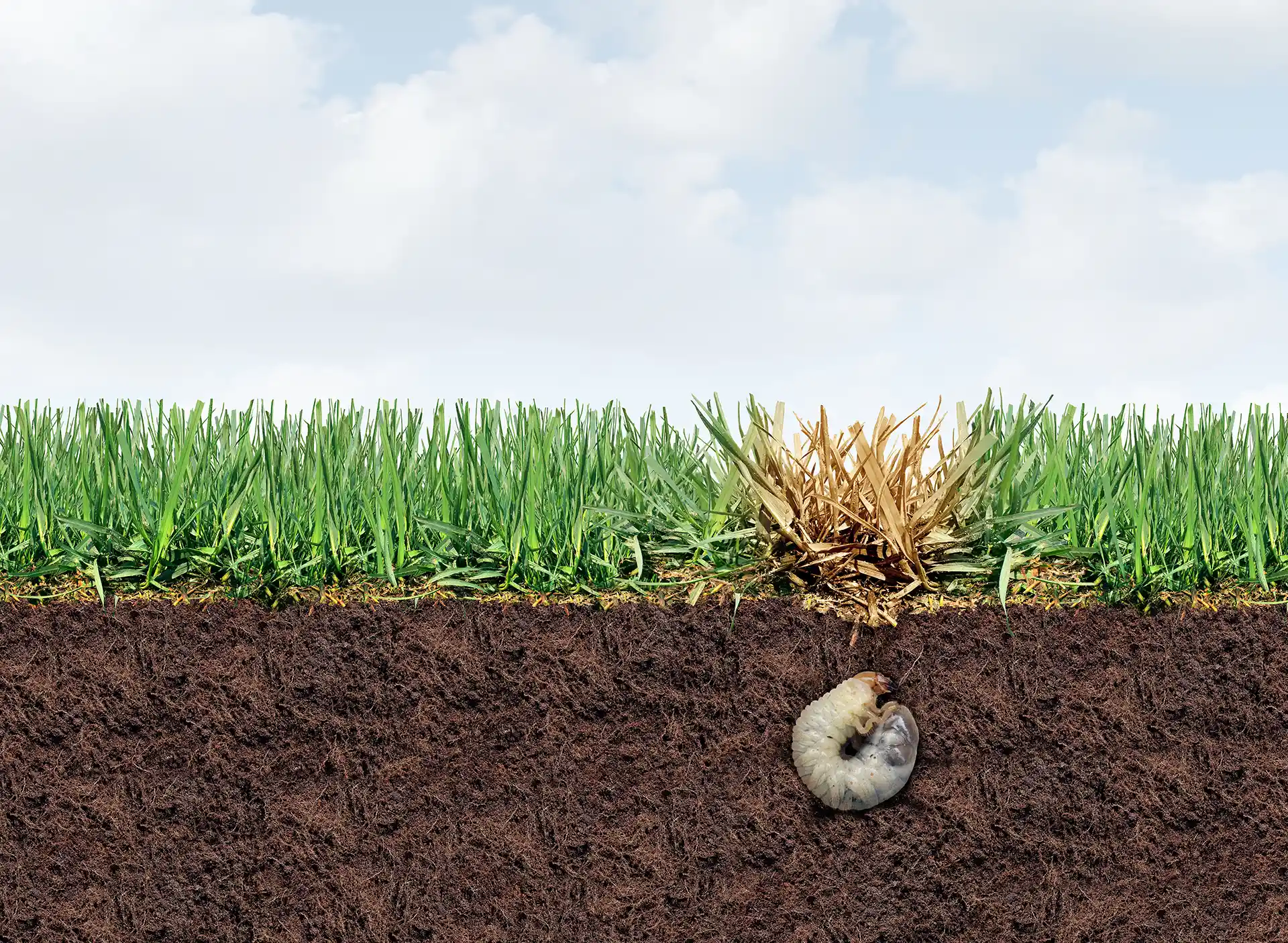
White grubs are the larvae of beetles – Japanese beetles (the most damaging in NC), masked chafers, May and June beetles, and green June beetles. They are fat, C-shaped, cream-white with a tan-brown head and six little legs, and they live in the top few inches of soil where they chew off grass roots. The adult beetles fly in and lay eggs in early summer; the eggs hatch a couple of weeks later and the young grubs start feeding underground, which is why the damage shows up late summer into fall.
Moles in your lawn mean you have grubs
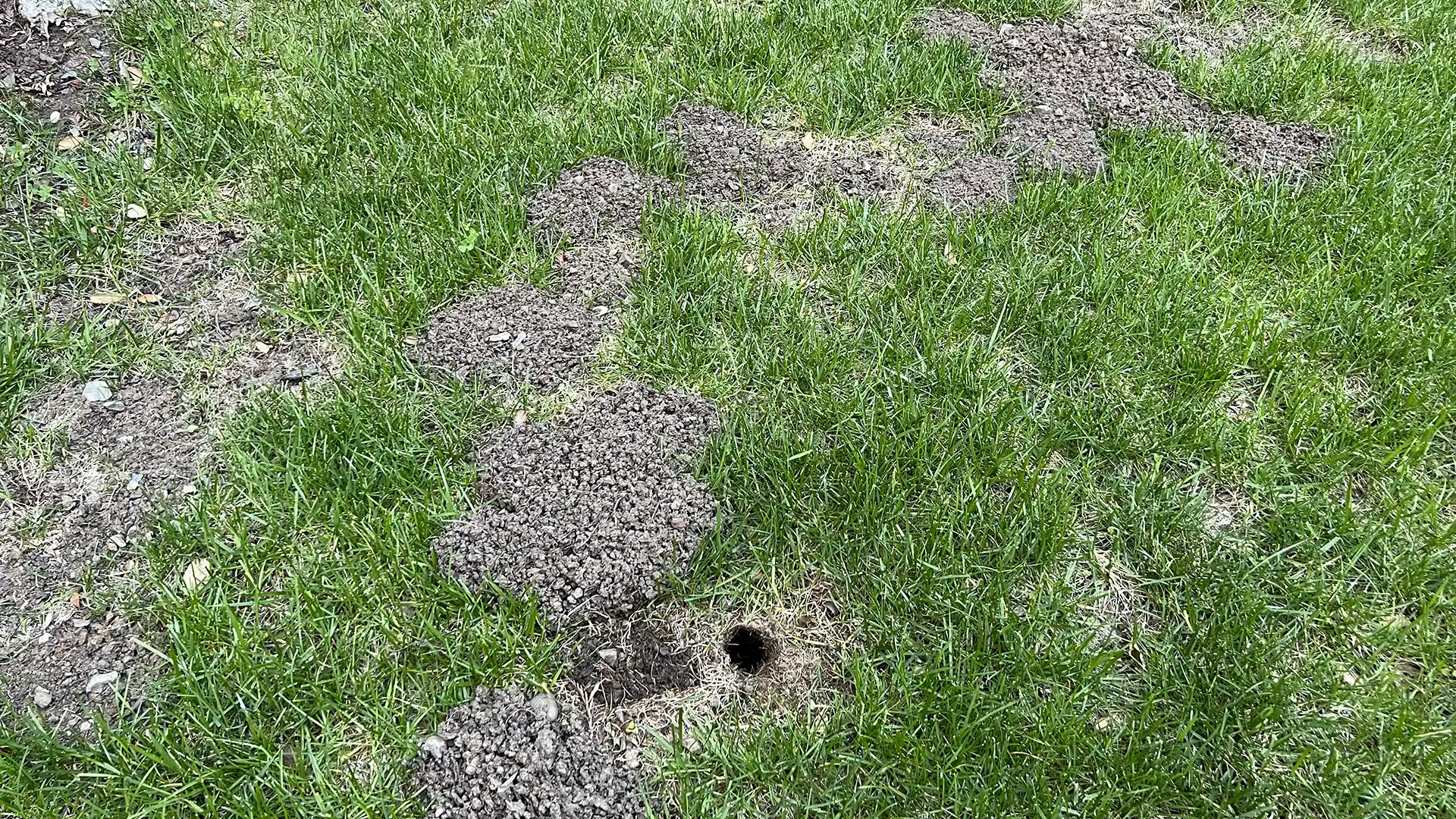
If you are seeing raised runs pushed up through your turf, stop reading about moles and start looking for grubs. That is the short version. The mole is not the problem you found. It is the alarm on the problem you did not.
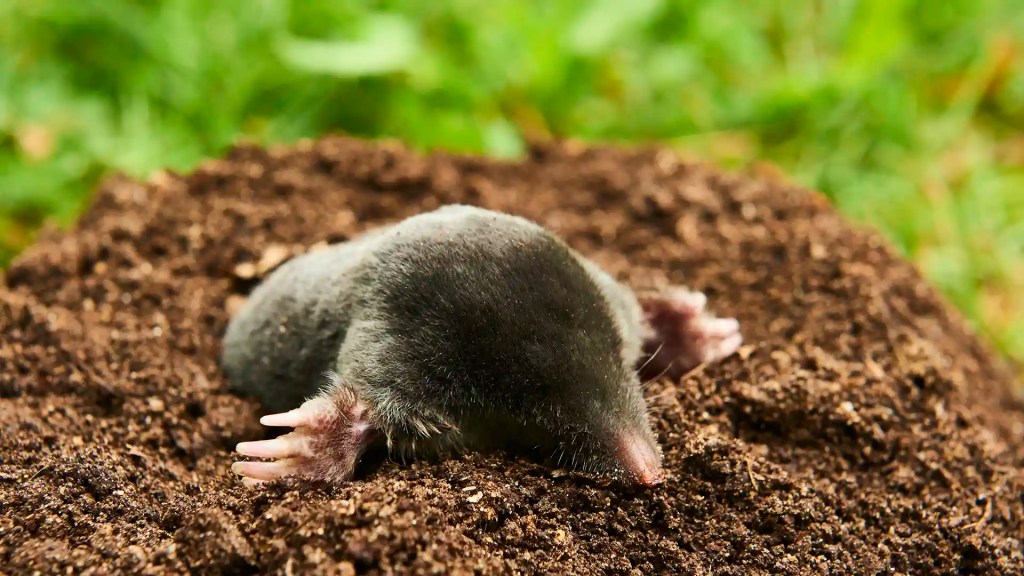
Moles do not eat grass. They do not eat roots and they do not eat bulbs. They are insect hunters working the top two inches of soil, and in a Carolina lawn the richest thing down there is a white grub. A run across your yard is a report on what is under it.
This has been my worst mole year on record here in Fuquay-Varina, and I have not opened up a lawn behind an active run yet that did not have grubs in it. When a customer calls me about moles, grubs are the first thing I go looking for, and I find them.
What do moles eat, and do they really eat grubs?
They do, and here they eat a lot of them. In 2000, Hartman, Whitaker and Munsee published stomach analysis on 374 eastern moles collected year-round from the Coastal Plain of South Carolina. Fifty-two different food items turned up. The three most important were scarab beetle larvae, ants and centipedes. [1]
Scarab beetle larvae are white grubs. Same species of mole, same soil, same part of the country as your yard. That is the closest thing to local data that exists on this question, and it puts grubs at the top of the menu.
Earthworms, the food everybody names first, came in near the bottom. They showed up in 8.3 percent of the stomachs and made up about 3 percent of the volume of the diet. Ants alone were 15.4 percent. [1]
There is a reason for that, and it is simple economics. Tunneling through our clay is expensive work. A grub is large, soft and high in fat, so it pays the energy back. An earthworm is mostly water. A mole can smell and hear what is down there before it commits, and it does not drive a run through packed ground for nothing.
Why you keep reading that moles only eat earthworms
Search this and you will be told, over and over, that moles live on earthworms and that grub control does nothing for them. Purdue Extension says it flatly. Plenty of lawn companies repeat it. I believed a version of it myself once.
That advice is not wrong where it was written. It is Midwestern. One of the same researchers, John Whitaker, also studied Indiana moles, and the numbers came out differently by region. Scarab larvae turned up in about 70 percent of the South Carolina stomachs and about 32 percent of the Indiana ones. [2] Diet follows the menu, and the menu changes with the soil.
The other half of the confusion is a different animal entirely. The European mole is a genuine earthworm specialist, and most of the ninety percent earthworm figures floating around the internet trace back to studies of that animal. We do not have European moles in North Carolina. We have the eastern mole, and NC State Extension describes it plainly as an omnivore. [3]
So when somebody tells you your moles have nothing to do with grubs, ask them where the study was done. Then go peel back a square foot of sod and settle it yourself.
Mole, vole, or grubs? What you are actually looking at
Three different problems get called the same thing in a phone call, and they get treated three different ways. Walk the lawn and match what you see.
What you see | Mole | Vole | Grub damage |
|---|---|---|---|
Main sign | Raised runs that push the turf up | Narrow surface runways, chewed grass | Irregular brown patches anywhere |
Mounds | Cones of loose soil | None | None |
Holes | Rarely an open hole | Open holes the size of a quarter | None |
Turf pull test | Grass heaved but still rooted | Grass chewed off at the base | Sod peels back with no roots |
What it eats | Insects, grubs near the top | Plants, roots and bark | It is the insect |
What it tells you | You have grubs. Go check. | You have a rodent problem | You waited too long |
If the sod lifts like loose carpet and the roots are gone, you have grubs and the mole was telling you so. If the grass is heaved but still rooted, the mole is driving through on its way to them, and you are early enough to do something about it.
What a mole run is telling you
Runs concentrate in the turf and skip the flower beds. Loose bed soil is easier digging and full of worms, so if worms were the draw the beds would be the better hunting. The moles cross the beds and set up in the grass because that is where the grubs are.
Watch how long it goes on. One mole passing through is a mole passing through. A run that is pushed back up every morning for a week means the food under your lawn is worth coming back to, and that is a population number, not a visitor.

How to spot grub damage
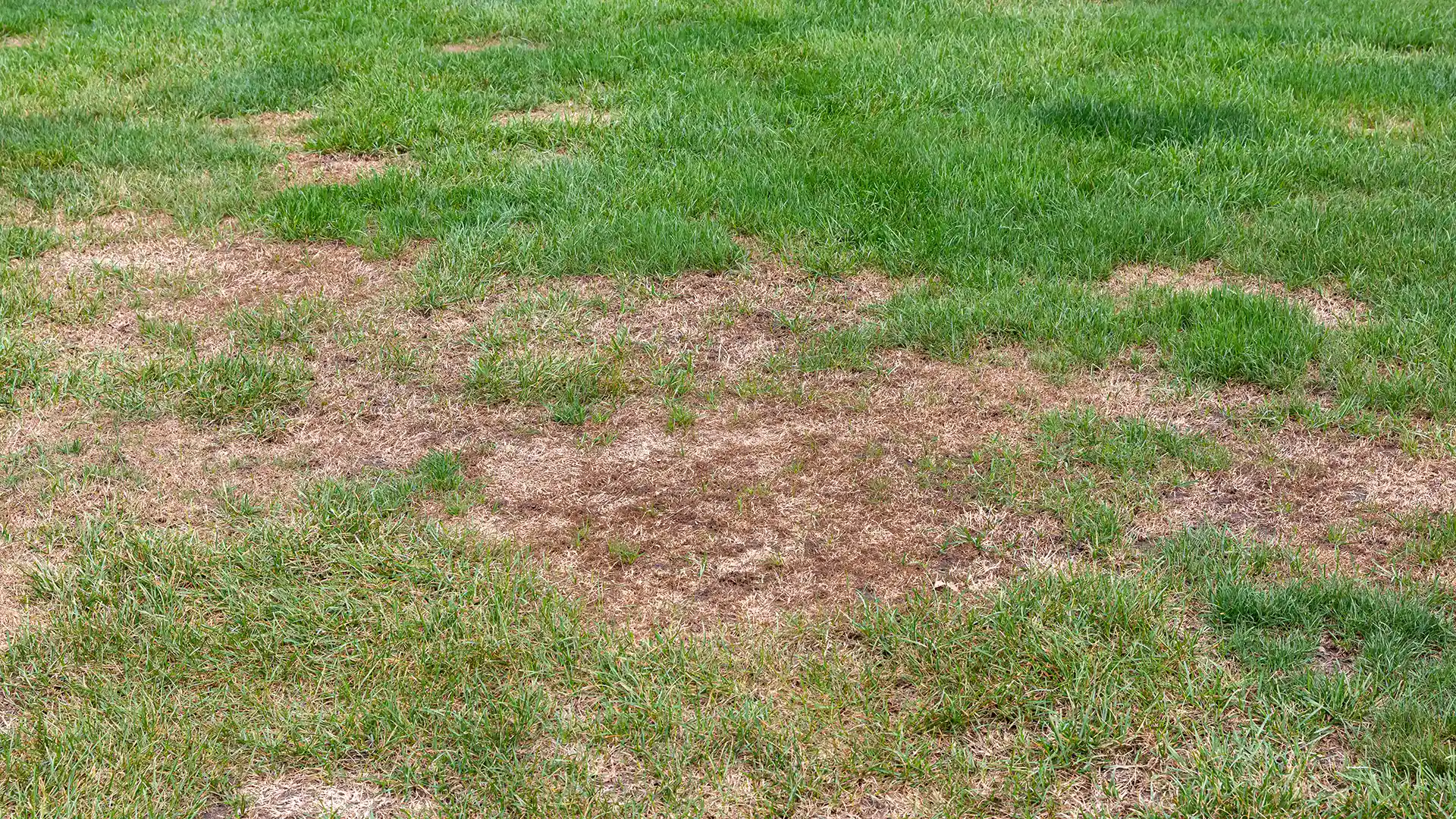
Grub damage fools people because it looks exactly like drought. Irregular brown, wilting patches that do not green back up no matter how much you water, because the roots are gone. The dead area feels spongy underfoot, and if you tug it the turf lifts like a rug.
Here is the part nobody tells you. If the turf is lifting like a rug, you are already too late. That much damage means the roots are gone across that patch, and you are no longer paying to save grass. You are paying to re-establish it. Every article online repeats the rug test as if it were the goal. It is the autopsy.
When we decide it is time to treat
We are not trying to kill every grub, and I want to be clear about that. A healthy lawn carries some and always will. What we are watching for is the point where the population outgrows what the lawn can carry.
The moles tell us that before the turf does. A mole works a lawn night after night only when there is enough food under it to be worth the digging [1]. When one keeps coming back, the grub count has crossed the line. That is the trigger, and it shows up weeks ahead of the brown patches.
Preventive vs. curative – and NC timing
There are two ways to treat grubs, and they are not interchangeable:
Preventive | Curative | |
|---|---|---|
How it works | A systemic the roots take up, so grubs die as they start feeding | A fast contact product that kills active grubs, watered in |
When (NC) | Late spring to early summer, before and as the eggs hatch | Late summer, on the grubs you already found – water it in |
Best for | Lawns with a grub history; protects all season | An active infestation you have confirmed |
Reliability | High – the dependable route | A rescue – needs young grubs and the right timing |
If your lawn gets grubs most years, the preventive route in early summer is the smart play. If you find them chewing now, a curative product watered in can still rescue it while the grubs are young. For where that one June application lands against everything else on a warm-season lawn, see what a pro puts down on his own bermuda lawn.
Why grub control is a multi-year job, not a one-time fix
You do not treat grubs once and move on. You treat them on a schedule, and the reason is sitting in the life cycle.
Japanese beetles, masked chafers and green June beetles all run a one-year cycle. Adults fly in summer, lay eggs in your turf, and the grubs feed on roots into fall. They ride out the winter deeper in the soil and come back up to feed again in spring.
May and June beetles are a different animal. Clemson puts their life cycle at two to three years, and nearly a full year of that is spent as a big third-instar grub eating roots [4]. NC State puts the range across all our species at one to four years [5].
So a Carolina lawn does not have one clean generation of grubs. It has overlapping ones. Clear out this year’s annual grubs and next summer the beetles fly back in and lay again. Meanwhile the multi-year grubs are still down there working on their second or third winter.
That is why I treat it as a two-year job minimum and three years to really get ahead of it. Past that, most people who care about their lawn just keep it on the schedule every year. There is a second reason for that, and it is the one that saves money.
One application, five pests
The preventive we put down early in the season is not only grub control. That same application covers white grubs, billbugs, sod webworms, army worms and chinch bugs.
That changes the math. You are not buying grub insurance. You are taking the whole insect complex off the table for the season, in one trip, before any of it starts.
Every one of those can thin or kill a lawn on its own, and they show up at different times. Billbug larvae work May through October. Chinch bugs are active nearly year-round here and hammer sunny turf in the heat. Army worms can strip a lawn in a few days in late summer. Sod webworms run several generations a season. Chasing them one at a time is how people end up spraying four times and still losing turf.
You may still see a little activity during the year. Nothing is perfect and I am not going to tell you otherwise. But it will not devastate the lawn, and the next spring application resets it.

Will it recover, and should you DIY or call us?
Where the roots are only partly damaged, the grass grows back with steady water and a feeding. Where a patch peeled up completely dead, the roots are gone. Rake it out and reseed or sod in the growing season.
Can you treat it yourself? Yes. A homeowner granular like Scotts GrubEx is a real product and I am not going to run it down. It carries the same class of active ingredient we use, and its label covers grubs, army worms, cutworms, sod webworms and billbug grubs. On chinch bugs it says suppresses where the commercial material we run says controls, and in a Carolina summer that gap matters. But it is a narrower gap than most lawn companies will admit to you.
The real difference is not the jug. It is three things.
First, the calendar. Almost everybody who buys a bag buys it because they already found grubs. That is a corrective application and the feeding damage is already done. The bag works when it goes down before egg hatch, which means buying it in spring while the lawn still looks fine. Very few people do that two years running.
Second, the acreage. One bag covers up to 10,000 square feet. Half an acre is 21,780. Three acres is 130,680, which is thirteen bags spread by hand and calibrated by eye, and all of it has to be watered in properly or it does nothing.
Third, you have to remember. Not once, every year, because the beetles fly back in and the multi-year grubs were never gone.
So should you do it yourself? You can, and on a small lawn with a calendar reminder you will get a decent result. You will not get as complete an effect, and you will not save as much as you expect once you price the bags. What you buy from us is that the timing stops being your problem, and one visit covers the whole insect complex instead of one pest. Our education and background controlling pests on turf and ornamental plants is extensive. We are licensed by the state of North Carolina to apply herbicides and pesticides on turf and ornamental plants such as shrubs and trees. Text us at 984-284-5399 if your lawn is browning and you want it handled.
Frequently Asked Questions
Brown Spots in Your Lawn That Will Not Go Away?
When I see that damage I already know it is pests. It might be grubs, it might be chinch bugs, and for our program the application is the same either way. You do not have to identify the insect. We do that, and we treat it. Text us and we will take a look.
Sources
NC State Extension TurfFiles – White Grubs in Turf
[4] Clemson Cooperative Extension HGIC – White Grub Management in Turfgrass
Michigan State University Extension – How to Choose and When to Apply Grub Control
NC State Extension – Carolina Lawns (AG-69)
[3] NC State Extension – Moles in Turf
[2] Animal Diversity Web, University of Michigan Museum of Zoology – Scalopus aquaticus
[5] NC State Extension – Arthropod Pests of North Carolina Turf: A Guide
